

Wine with red meat: the complete pairing guide
TL;DR:
- Matching wine tannins and body to the meat’s fat content creates better flavors and balances bitterness.
- Cooking method and sauce significantly influence the ideal wine choice, with bold reds for grilled meats and brighter wines for slow-cooked dishes.
Pairing wine with red meat is defined by one principle: match the wine’s tannin and body to the meat’s fat content, texture, and cooking method. Get that balance right and both the wine and the meat taste better. Get it wrong and you end up with a bitter, flat mess on the palate. The science behind it is real. Tannins bind fat and protein residues on the palate, acting like a reset between bites. That physical interaction is why a bold Cabernet Sauvignon alongside a ribeye feels so satisfying. Fat, cooking style, and sauce all shift the equation, so knowing how each variable works gives you a serious edge at the table.
How to match red wine tannins and body with different cuts
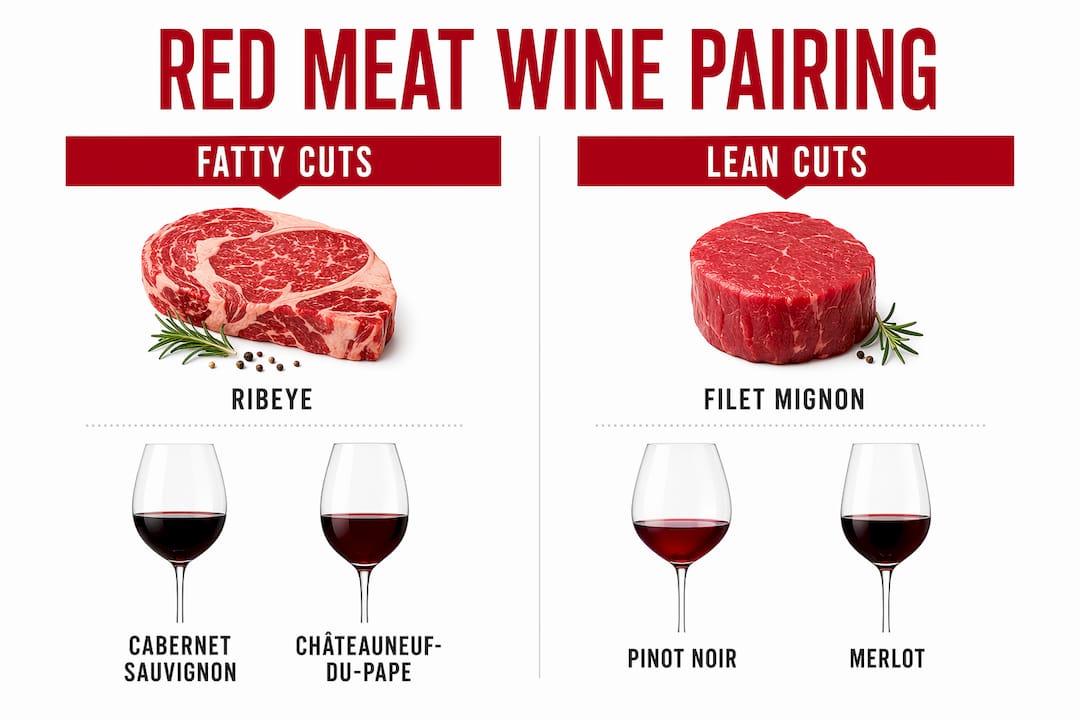
The fat content of a cut is the single most important factor in choosing your wine. High-fat cuts like ribeye demand bold, tannic wines because the fat softens the wine’s astringency and the tannins cleanse the palate. Without enough tannin, a fatty cut makes the wine taste flat and soupy. With too much tannin on a lean cut, the wine turns harsh and bitter.
Classic pairings prove this out. A well-marbled ribeye sings alongside a Napa Valley Cabernet Sauvignon, a Paso Robles Cab, or a Coonawarra Cabernet. Wagyu, which carries extraordinary fat, pairs beautifully with a Châteauneuf-du-Pape or a Burgundy Pinot Noir, where the wine’s acidity cuts through the richness without overwhelming it. These are not arbitrary traditions. They are the result of tannins binding lipids and refreshing the palate for the next bite.
Lean cuts work differently. Filet mignon suits medium-bodied wines with softer tannins because there is not enough fat to buffer a big, grippy red. Burgundy or Willamette Valley Pinot Noir, French Merlot, and Rioja Reserva all work well here. The wine complements the meat’s subtle flavour rather than bulldozing it.
| Cut | Fat level | Recommended wine |
|---|---|---|
| Ribeye | High | Cabernet Sauvignon, Châteauneuf-du-Pape |
| Wagyu | Very high | Burgundy Pinot Noir, Châteauneuf-du-Pape |
| T-bone | Medium-high | Malbec, Shiraz, Zinfandel |
| Sirloin | Medium | Sangiovese, Merlot, Rioja |
| Filet mignon | Low | Pinot Noir, French Merlot, Chianti Classico |
| Lamb rack | Medium | Grenache, Syrah, Côtes du Rhône |
Red wine with lamb follows the same logic. Lamb carries a distinct gamey fat that pairs well with Grenache or Syrah, where the wine’s fruit and spice complement rather than clash with the meat’s character.
Pro Tip: If you are unsure about a cut’s fat level, look at the marbling. More white streaks through the muscle means more fat, which means you can go bolder with your wine choice.
Does cooking method change the best wine for steak?
Cooking method changes the flavour profile of the meat dramatically, and that shifts the ideal wine. A raw ribeye and a char-grilled ribeye are not the same pairing problem. The char from open-fire grilling adds bitterness and smokiness that interacts with wine tannins differently than a pan-seared crust does.
Grilled or pepper-crusted beef pairs best with smoky, spicy wines like Syrah or Shiraz. The wine’s natural savouriness integrates with the char rather than fighting it. Cabernet Sauvignon can work on the grill too, but Syrah handles the bitterness more gracefully. Open-fire grilling creates char and bitterness that finds harmony with Syrah’s inherently smoky, savoury notes.
Braised or slow-cooked cuts are a different story entirely. The long cooking process breaks down connective tissue, softens the meat, and concentrates the sauce. These dishes need wines with moderate tannins and bright acidity, like Sangiovese or Chianti Classico, to cut through the richness without adding more weight.
Sauces matter more than most people realise. Here is a quick guide to matching wine to sauce:
- Peppercorn sauce: Syrah or Shiraz, where the wine’s spice mirrors the pepper.
- Herb butter: Cabernet Sauvignon, where the wine’s structure holds up to the richness.
- Chimichurri: Malbec, where the wine’s fruit complements the herbaceous tang.
- Sweet glaze or barbecue sauce: Zinfandel, where the wine’s jammy fruit matches the sweetness.
- Red wine-based braising sauce: Match wine to the sauce or choose a wine with complementary acidity and moderate tannin to avoid a cloying finish.
Pro Tip: If you cooked the meat with a specific wine, serve that same wine or one from the same region at the table. The flavour compounds align and the pairing feels effortless.
How does serving temperature affect red meat pairings?
Serving temperature is the most overlooked variable in wine and meat pairing. Most people serve red wine too warm, and that single mistake can ruin an otherwise excellent match.
Serving red wines at 60–65°F (around 15–18°C) preserves the wine’s acidity and structural definition. A wine served too warm loses its freshness, the alcohol becomes more prominent, and the whole thing tastes heavy alongside warm, fatty meat. Cooler serving keeps the pairing balanced and lively.
Aged wines deserve special attention. Older, cellar-aged wines develop softer tannins over time, which makes them excellent choices for lean cuts that younger, grippy wines would overpower. An aged Cabernet or Merlot blend brings complexity without the harsh bite of a young wine. If you want to explore cellar-aged options, the difference in texture is immediately obvious in the glass.
A few practical rules to follow:
- Pull red wine from the fridge 20 minutes before serving, not two hours. Room temperature in an Australian summer is far too warm.
- Use a wine thermometer if you are serious about it. Guessing by touch is unreliable.
- Avoid serving wine straight from a warm car or a sunny bench. Heat kills structure fast.
- For highly marbled cuts like wagyu, consider a vintage Champagne or high-acid sparkling wine. Sparkling wines with high acidity refresh the palate against extreme fat in ways that even bold reds cannot always match.
What are the most common mistakes when pairing wine with red meat?
The most common mistake is choosing a wine based on colour alone. “It’s red meat, so grab a red” is a starting point, not a strategy. The cut, the cook, and the sauce all matter just as much as the grape variety.
Here are the mistakes worth avoiding:
- Pairing a tannic young Cabernet with a lean cut. Without fat to soften the tannins, the wine tastes harsh and the meat tastes thin. Drop to a Pinot Noir or a lighter Merlot instead.
- Ignoring doneness. A well-done steak has lost most of its fat and moisture. It pairs better with softer, lower-tannin wines than a medium-rare cut of the same piece of meat.
- Forgetting the sauce. A rich red wine sauce on a braised short rib changes the entire pairing equation. The sauce is now the dominant flavour, not the meat.
- Serving wine too warm. As covered above, this is a structural problem that no amount of good wine selection can fix.
- Treating rules as absolute. Pairing guidelines are starting points. Your palate is the final judge. Experimenting with a white wine pairing approach for lighter red meat dishes like veal can produce genuinely surprising results.
The best pairing you will ever find comes from tasting, adjusting, and staying curious. No rule beats direct experience.
Key takeaways
Matching wine tannin and body to the fat content, cooking method, and sauce of red meat is the single most reliable framework for great red wine food pairings.
| Point | Details |
|---|---|
| Tannin matches fat | Bold, tannic wines suit fatty cuts; softer wines suit lean cuts like filet mignon. |
| Cooking method shifts the match | Grilled meats need smoky Syrah; braised meats need bright-acid Sangiovese or Chianti. |
| Sauces drive the pairing | Match wine to the dominant sauce flavour, not just the cut of meat. |
| Serve wine cooler | Red wines at 60–65°F preserve acidity and keep the pairing balanced with warm meat. |
| Aged wines suit lean cuts | Cellar-aged reds have softer tannins that complement delicate cuts without bitterness. |
Damien’s take: stop following the rules so religiously
Here is something the classic pairing guides rarely admit: the rules were written for a very specific set of conditions that most of us never actually eat in. Restaurant-controlled temperatures, perfectly trimmed cuts, and sauces built to match a wine list. Your backyard barbecue on a Saturday afternoon is a different beast entirely.
The most interesting pairings I have had came from ignoring the obvious choice. A chilled Grenache alongside a lamb shoulder slow-cooked with preserved lemon and olives. A textured Barossa Shiraz with a beef short rib glazed with soy and ginger. Neither of those is in any pairing textbook, but both worked because the underlying logic held: the wine’s weight matched the dish’s weight, and the flavours complemented rather than competed.
Australian wine regions give you a genuine advantage here. Coonawarra Cabernet, Barossa Shiraz, and McLaren Vale Grenache are all world-class options that are genuinely suited to the bold, charred, and sauced meats we cook here. You do not need to reach for a French label to get a great result. Knowing how to assess wine quality helps you find the right bottle without overpaying for a name.
My honest advice: learn the framework, then break it deliberately. That is where the real fun starts.
— Damien
Find the right bottle without paying through the nose
Life is genuinely too short for ordinary wine alongside a great piece of meat. The pairing knowledge is only as good as the bottle in your hand.
Com sources premium and hard-to-find wines at prices that make no sense until you realise there are no middlemen inflating the cost. Think Coonawarra Cabernets, Barossa Shiraz, and boutique Pinot Noirs built for exactly the kind of red meat pairings covered here. Flash deals rotate constantly, and the bottles are the real deal. Not clearance stock. Not bulk filler. Rare, high-scoring wines at prices that feel like a mistake. Browse the FU Wine selection and find your next pairing before someone else grabs it.
FAQ
What is the best wine for steak?
The best wine for steak depends on the cut. Fatty cuts like ribeye suit bold, tannic wines like Cabernet Sauvignon from Napa Valley or Coonawarra. Lean cuts like filet mignon pair better with medium-bodied Pinot Noir or Merlot.
Does red wine always go with red meat?
Red wine is the standard choice, but it is not the only option. High-acid sparkling wines work well with highly marbled cuts like wagyu, and lighter whites can suit veal or herb-crusted lamb.
What wine goes with grilled beef?
Grilled beef pairs best with Syrah or Shiraz. The wine’s smoky, savoury notes integrate with the char and bitterness that open-fire cooking creates.
What wine suits a slow-cooked roast?
Slow-cooked roasts and braised cuts suit wines with moderate tannins and bright acidity, like Sangiovese, Chianti Classico, or a Rioja Reserva. These wines cut through the richness without adding more weight.
Does the sauce change the wine pairing?
Yes, the sauce often matters more than the cut. A peppercorn sauce calls for Syrah, chimichurri suits Malbec, and a rich red wine braising sauce pairs best with a wine that matches its acidity and tannin level.