

Wine vintages explained: Make smarter collector choices
Most people think ‘vintage’ just means old wine. It doesn’t. A wine vintage is the year the grapes were harvested, and it tells a story far richer than age alone. It captures the weather, the season, the soil’s mood, and the winemaker’s response to all of it. Get your head around vintages and you stop guessing at bottle shops. You start buying with genuine confidence, building a cellar that actually makes sense, and drinking wines that reward your curiosity. This guide cuts through the pretension and gives you a practical, no-BS framework for understanding what vintages really mean.
Table of Contents
- What is a wine vintage?
- What factors make a great or poor vintage?
- How are wine vintages rated and why does it matter?
- Vintage vs non-vintage wines: What’s the difference and does it matter?
- Practical tips for using vintages to buy, collect and enjoy wine
- Why understanding vintages matters more than ever in 2026
- Find your next standout wine with FU Wine
- Frequently asked questions
Key Takeaways
| Point | Details |
|---|---|
| Vintage captures the year | A wine’s vintage is the year grapes were harvested, shaping style and value. |
| Vintage quality depends on nature | Weather and regional conditions significantly affect wine quality and cellaring potential. |
| Use charts as a tool | Vintage and maturity charts guide purchases, but great producers can shine even in tough years. |
| Vintage matters for collectors | Single-year wines are key for premium and age-worthy bottles, while non-vintage offers reliable house style. |
| Apply vintage knowledge smartly | Balance chart advice with producer reputation and personal taste for the best wine experience. |
What is a wine vintage?
Let’s get the definition straight. A wine vintage is simply the year the grapes were harvested and the wine was made. That single number on the label is a snapshot of an entire growing season, compressed into a bottle.
As the Grape Grind explains, a vintage primarily reflects the weather and growing conditions of that specific year in a specific region. Think of it like a fingerprint. No two years are identical, so no two vintages taste exactly the same, even from the same producer.
Why does that matter to you? Because vintage tells you a lot about what’s likely inside the bottle.
- Flavour profile: A warm, dry year tends to produce riper, bolder fruit. A cool, wet year often yields leaner, more structured wines.
- Structure and tannins: Heat and sunshine build body and richness. Challenging seasons can strip wines back to something more angular and restrained.
- Ageing potential: Wines from great vintages often have the concentration and acidity to develop beautifully over time. Lesser years can fade faster.
- Drinkability now: Some vintages are ready to open immediately. Others need years in the cellar before they hit their stride.
“Vintage is the wine’s birth certificate. It tells you where it came from, what it survived, and what it might become.”
Not every wine carries a vintage year on the label. Many sparkling wines, Champagnes, fortified wines, and everyday table wines are blended across multiple harvests. This is intentional. Producers blend years to maintain a consistent house style, so every bottle tastes reliably the same regardless of seasonal variation.
For premium and collectable bottles, though, vintage is everything. Collectors, sommeliers, and serious enthusiasts all use it as a primary filter when deciding what to buy, cellar, or open tonight. If you’re spending serious money on a bottle, you want to know what year shaped it.
What factors make a great or poor vintage?
Now that you know what a vintage represents, let’s map out what separates a stellar vintage from a challenging one.
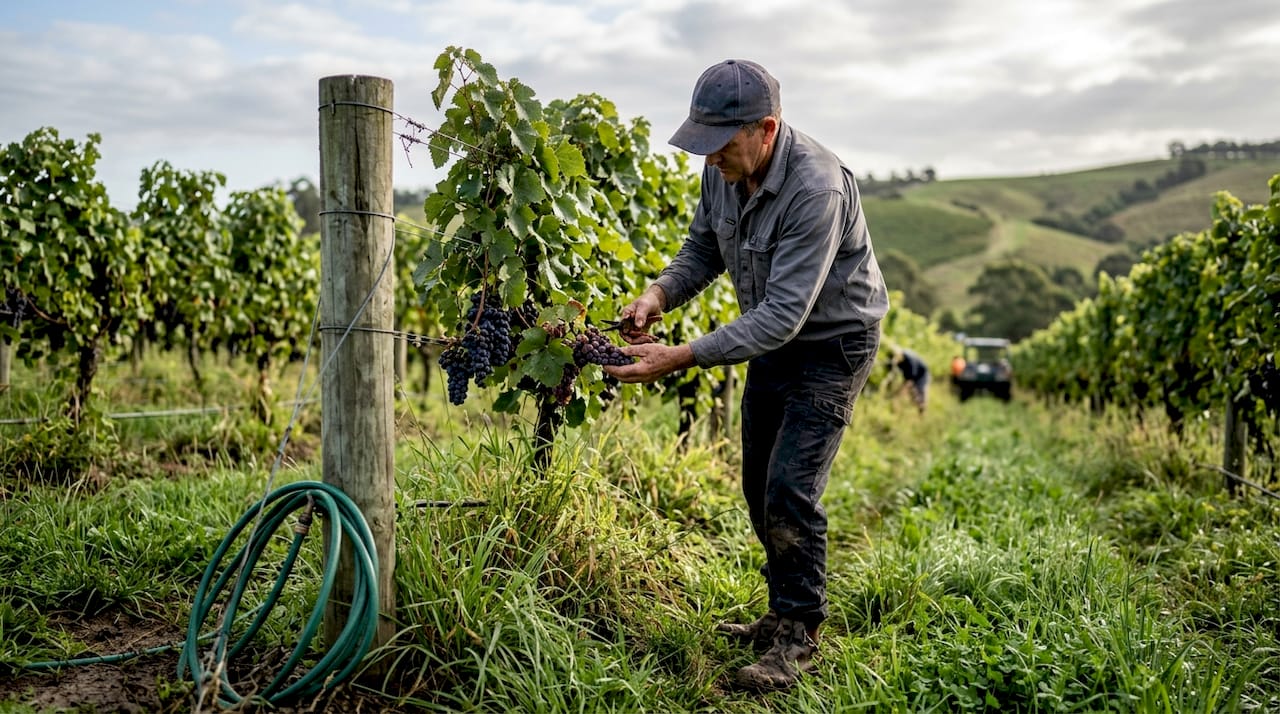
The short answer is weather. But the full picture is more interesting.
Vintage quality is shaped by temperature, rainfall, frost events, crop size, and the decisions winemakers make in response to all of it. A great vintage usually means balanced warmth, well-timed rain, and a long, even ripening season. A poor vintage often involves some combination of extreme heat, unseasonal frost, disease pressure, or harvest rain that dilutes the fruit.
- Temperature: Too hot and grapes lose acidity, producing jammy, flat wines. Too cool and they struggle to ripen fully.
- Rainfall timing: Rain before harvest is the enemy. It swells the berries, dilutes flavour, and invites rot.
- Frost: Late spring frost can devastate young shoots, slashing yields dramatically.
- Disease pressure: Mildew and botrytis thrive in wet conditions and can ruin entire vineyards.
- Harvest timing: Pick too early and the wine tastes green. Pick too late and you lose freshness.
Here’s a quick regional comparison to show how dramatically vintages vary:
| Region | Celebrated vintage | Challenging vintage |
|---|---|---|
| Bordeaux | 2016, 2010 | 2013, 2017 |
| Barossa Valley | 2010, 2012 | 2011 |
| Napa Valley | 2013, 2016 | 2011 |
| Burgundy | 2015, 2019 | 2016 |
One region’s dream year can be another’s nightmare. That’s why vintage charts are always region-specific, never universal.
Pro Tip: Don’t write off a challenging vintage entirely. Top producers often make exceptional wine even in difficult years because they have the skill, resources, and vineyard management to compensate. A second-tier producer in a great year can still disappoint.
The human element matters enormously. Winemaking decisions around canopy management, irrigation, sorting, and fermentation can rescue or ruin a vintage regardless of what the weather did.
How are wine vintages rated and why does it matter?
After understanding what shapes a vintage, the next natural question is: how do you measure which vintages are best?
Major wine publications have developed rating systems to answer exactly that. Wine Spectator rates vintages on a 100-point scale based on blind tastings, weather data, and expert input. Their ratings include readability windows like ‘Ready,’ ‘Hold,’ or ‘Past Peak’ so you know not just how good a vintage is, but when to actually open it.
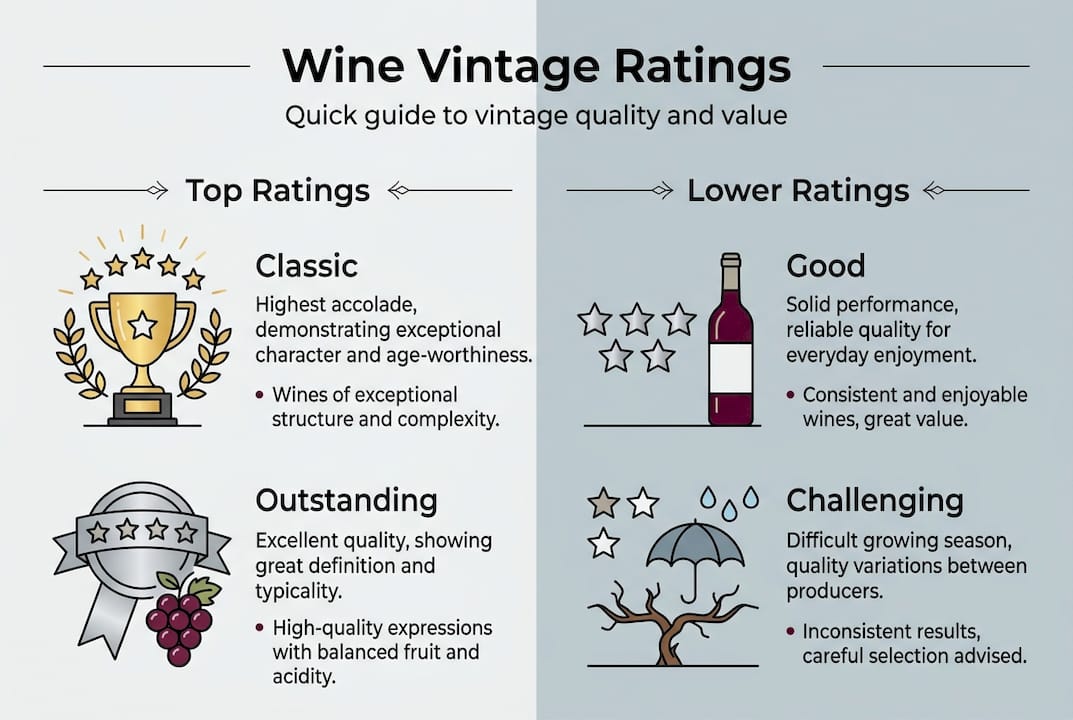
Wine Enthusiast takes a colour-coded approach by region and variety, with scores from 98 to 100 for Classic down through Excellent, Good, and Below Average, each paired with maturity indicators.
Here’s how the major vintage rating scales typically break down:
| Score range | Rating label | What it means |
|---|---|---|
| 95 to 100 | Classic | Exceptional year, age-worthy, seek it out |
| 90 to 94 | Excellent | Outstanding quality, reliable and rewarding |
| 85 to 89 | Very good | Solid vintage, good value options available |
| 80 to 84 | Good | Drink sooner, less complexity over time |
| Below 80 | Average or poor | Approach with caution |
For collectors, these charts are a starting point for vintage ratings for collectors and a guide for cellaring decisions. If a Barossa Shiraz from a particular year scores 96 and is labelled ‘Hold,’ you know to sit on it for a few more years before opening.
The readability windows are genuinely useful. ‘Ready’ means drink now. ‘Hold’ means patience will be rewarded. ‘Past Peak’ means the wine has likely declined and you’ve missed the window.
But here’s the caveat: ratings are generalisations across an entire region. A single vineyard or producer can outperform the regional average significantly. Use wine scoring for premium choices as a guide, not a gospel.
- Always cross-reference the vintage rating with the producer’s reputation.
- Check multiple sources. One publication’s 88 might be another’s 93.
- Look at the drinkability window, not just the score.
Vintage vs non-vintage wines: What’s the difference and does it matter?
So far we’ve focused on vintages. Now let’s compare their role to non-vintage wine styles.
Vintage wines come from a single harvest year. They celebrate the uniqueness of that season and are essential for any wine intended to age and develop over time. Bordeaux, Burgundy, Barossa Shiraz, and Napa Cabernet are all categories where vintage identity is central to the wine’s story and value.
Non-vintage wines, often labelled NV, blend grapes from multiple years. As Wine Spectator notes, NV is common in Champagne and fortified wines, where the goal is consistency rather than uniqueness. Every bottle of a house’s NV Champagne should taste essentially the same, year after year. That’s the whole point.
Here’s a simple way to think about when each matters:
- You’re buying to cellar and age: Vintage matters enormously. You want to know the year, the conditions, and the projected development window.
- You’re buying Champagne for a celebration: NV is perfectly appropriate and often outstanding. The house style is what you’re paying for.
- You’re picking up an everyday sparkling or fortified wine: NV is your friend. Consistent, reliable, and no vintage anxiety required.
- You’re building a serious collection: Vintage is your primary lens. Every bottle in your cellar should have a story attached to the year.
- You’re exploring new producers: NV can be a great entry point to understand a producer’s house style before committing to their vintage releases.
“Non-vintage wine isn’t lesser wine. It’s wine built for a different purpose. Knowing the difference makes you a smarter buyer.”
Climate change is also reshaping this conversation. Some producers in traditionally vintage-focused regions are experimenting with multi-vintage blends to manage increasing year-to-year variation. It’s worth keeping an eye on cellar-aged wine examples to see how this trend is playing out across different styles.
Pro Tip: When a prestige Champagne house releases a vintage Champagne, it means that year was exceptional enough to stand alone. Vintage Champagne is always a statement of quality.
Practical tips for using vintages to buy, collect and enjoy wine
Armed with this understanding, here’s how you can actually use vintage information to make smarter choices.
Vintage charts are your starting point, not your finish line. Vintage charts guide purchasing by indicating quality and ageing potential, and the best ones from Wine Spectator and Wine Enthusiast are genuinely useful tools. But they’re regional averages. Always layer in producer reputation and provenance before committing.
- Cellar standout years: When a region produces a genuinely great vintage, buy more than you need and sit on it. Great vintages from top producers appreciate in both quality and value.
- Buy lesser years from elite estates for value: A challenging vintage from a first-class producer often outperforms an average producer in a great year, and it usually costs less.
- Check storage history: A brilliant vintage stored poorly is worse than an average vintage stored well. Provenance matters as much as the year.
- Use vintage as a filter, not a veto: Don’t refuse to buy a wine just because the vintage chart gives it an 85. Taste it. Context always wins.
- Focus on Australian regions specifically: Barossa, Coonawarra, Margaret River, and the Yarra Valley all have their own vintage rhythms. Generic global charts won’t capture the nuance of a great McLaren Vale year.
Climate change increases vintage variation, which means the old rulebooks are becoming less reliable. Adaptable winemakers in progressive regions are often outperforming their vintage chart scores. That’s an opportunity for collectors who pay attention.
Pro Tip: For building a wine portfolio, mix standout vintage years with solid mid-tier years from trusted producers. You get the upside of great vintages without betting everything on the top end. Check out wine investment benefits if you’re thinking longer term.
Why understanding vintages matters more than ever in 2026
Here’s the bigger picture that most vintage guides skip over.
Climate volatility is reshaping wine regions faster than the charts can keep up. Seasons that used to be predictable are now swinging wildly. A guide to quality and value built on historical data from the 1990s doesn’t fully account for what’s happening in vineyards right now. Vintage knowledge in 2026 means staying curious and updating your assumptions regularly.
The collectors who are winning right now aren’t the ones rigidly chasing five-star vintage years. They’re the ones who understand the interplay between vintage conditions, producer reputation, sub-regional variation, and their own palate. They use vintage charts as a conversation starter, then dig deeper.
Blind tasting is still the ultimate teacher. No chart replaces the experience of opening a bottle from a so-called average vintage and discovering something genuinely brilliant inside. That’s the joy of wine. Vintage knowledge sharpens your instincts. It doesn’t replace them.
The modern collector’s edge is using vintage understanding as a partner, not a rulebook. Stay flexible, stay curious, and never stop tasting.
Find your next standout wine with FU Wine
You’ve got the knowledge. Now put it to work.
At FU Wine, we curate premium vintage and NV bottles specifically for collectors and enthusiasts who know what they’re looking for and refuse to overpay for it. Our wines collection rotates constantly, featuring high-scoring vintages, cellar-aged releases, and boutique producer runs at prices that’ll make you question why you ever paid full retail. Whether you’re starting a cellar or adding to a serious collection, we source the bottles that actually matter. No fluff, no inflated markups, just great wine at prices that feel almost rebellious. Come find your next favourite vintage before someone else does.
Frequently asked questions
What does vintage mean on a wine label?
Vintage means the grapes used were harvested in that year, reflecting that season’s growing conditions. It’s the wine’s origin story in a single number.
How do I know which vintage to buy?
Check vintage charts by region for quality and ageing potential, but always factor in the producer’s reputation alongside the score.
Is vintage important for all wines?
Vintage matters most for premium or age-worthy wines. Non-vintage is standard in Champagne, fortified wines, and everyday sparkling styles where consistency is the goal.
Can a poor vintage ever produce good wine?
Absolutely. Top producers excel even in difficult years, using skill and vineyard management to deliver quality that outperforms the regional average.