

Collectors in Australia: Stop Wine Cooking in Transit at 27°C
Yes, heat can permanently wreck wine, and there’s no undoing it once it’s cooked. Sustained internal bottle temperatures above roughly 27°C put your wine at risk, and anything near 29–32°C is dangerous territory. If you can hold off shipping until cooler weather, do it. If you can’t, demand temperature-controlled transport or serious insulation, and check every delivered bottle for cork movement, seepage or colour change before you pop it.
TL;DR:
- Temperatures above 27°C during transit can chemically damage wine, and risk dramatically increases above 29–32°C, making timing and insulation crucial.
- Visible signs of heat damage include cork movement, seepage, bubbling labels, cloudiness, and off aromas, with damage accumulating over time even at lower temperatures.
- Shipping during cooler shoulder seasons and avoiding weekend deliveries reduces exposure to dangerous heat, especially when combined with temperature-controlled options for valuable bottles.
- Packaging with high-performance insulation, gel packs, and UV or reflective liners can slow heat transfer, but cannot prevent damage if temperatures exceed safe limits for extended periods.
- Upon arrival, inspect the wine carefully and allow it to rest upright for 24 to 72 hours before opening to settle sediment and temperature fluctuations.
Table of Contents
- What actually happens to wine when it gets hot in transit
- When to ship and when to hold off
- Packing and transport options that actually buy you time
- Choosing carriers and protecting yourself on the way through
- A collector’s checklist for shipping valuable bottles
- What to do the moment a bottle arrives
- Damien’s view: balancing collector risk and customer convenience
- Get the bottle, not the gamble
- Sources
- FAQ
What actually happens to wine when it gets hot in transit
Wine doesn’t just “go off” in heat, it breaks down chemically in ways you can’t reverse. Warmth speeds up oxidation and breaks apart the delicate esters that give wine its aroma, so a bottle that’s been cooked smells flat and tastes dull, even if nothing looks obviously wrong. Tannins and pigments shift too, which is why heat-affected reds can look muddier or browner than they should.
The physical tells are usually more obvious than the chemical ones. Liquid expands as it heats, pushing against the cork and sometimes forcing it partway out, and once oxygen gets past that seal, oxidation accelerates and any ageing potential the bottle had is gone. You’ll also see seepage around the capsule, sticky residue on the neck, or labels that have bubbled and discoloured from heat and UV exposure.
The thresholds matter here, and they’re not vague. According to the AWRI’s transport and storage guidance, sustained temperatures above 80°F (27°C) are where damage risk begins, and once you’re pushing 85–90°F (29.4–32.2°C) the risk of genuinely “cooked” wine climbs sharply. The same guidance notes that non-refrigerated delivery trucks can exceed 130°F (54.4°C) inside, which is well beyond anything a bottle can shrug off.
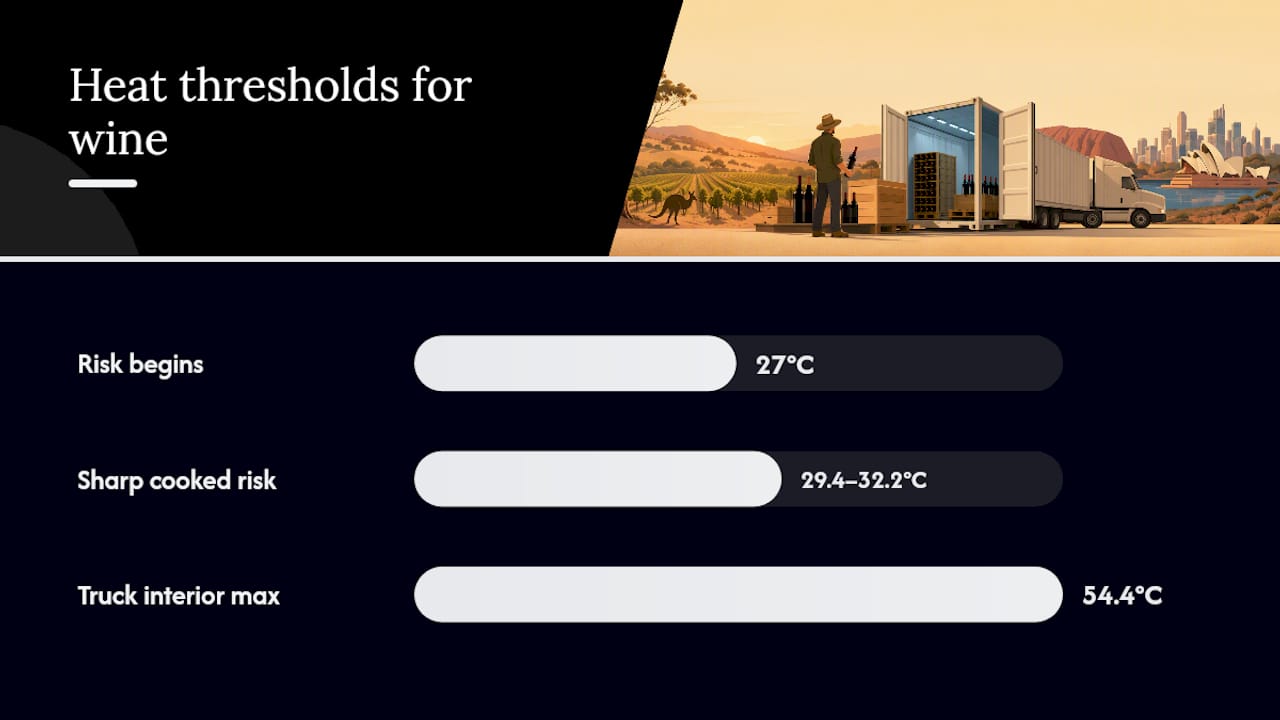
A single hot afternoon in the back of a delivery van can undo years of careful cellaring.
What to watch for on any bottle that’s spent time in the heat:
- A cork sitting higher than it should, or visibly pushed up
- Sticky residue or staining around the capsule and neck
- Labels that look bubbled, peeling or sun-bleached
- Wine that looks cloudy, browner, or oddly bright compared to how it should look
- A faint vinegary or “stewed fruit” smell on opening
Damage from heat is also cumulative, not a one-off event. A bottle that spends two hours at 32°C is in a different situation to one that spends fifteen minutes at the same temperature, even though the peak reading looks identical on paper.
When to ship and when to hold off
Timing solves more heat problems than packaging ever will. The safest windows for shipping wine sit in the shoulder seasons, roughly March–April and October–November, when daytime temperatures are milder and trucks aren’t baking on hot tarmac all afternoon.
If you’re deciding whether to ship now or wait, work through this order:
- Check the forecast for both ends of the journey. A mild day at your end means nothing if the wine is landing in a heatwave three states away.
- Ship early in the week. Monday to Wednesday dispatch avoids the parcel sitting in a depot or on a truck over a weekend, which is exactly the kind of unmonitored dwell time that cooks wine.
- Never schedule delivery for a Friday if there’s any chance the courier misses the window, since that bottle could then sit in a hot depot until Monday.
- If urgency can’t be avoided, pay for it. Expedited freight or a proper cold-chain service costs more, but for a bottle worth a few hundred dollars or more, it’s cheap insurance against a total loss.
The Envirofreeze cold-chain packaging guidance backs this up directly, recommending shoulder-season shipping windows specifically to avoid the compounding risk of peak summer transit.
Packing and transport options that actually buy you time
No box stops heat forever, it just slows it down, and that’s the whole game. Insulation is about buying enough hours for your wine to reach a cooler environment before internal temperatures climb into risky territory.
Your main insulation choices, roughly ranked by protection:
- Thick-walled moulded pulp shippers — decent baseline protection, cheap, widely available, but limited against extended heat exposure.
- EPS foam panels — noticeably better insulating performance than pulp, especially in combination with a lined outer carton.
- Reflective foil liners — cut radiant heat gain, useful for parcels sitting on hot tarmac or in a sun-exposed van.
- UV-blocking liners — worth adding for long summer routes, since sunlight degrades both the wine and the labels through the box in ways heat alone doesn’t. PackWo’s packaging guidance covers this angle well.
Phase-change gel cool packs are the other half of the equation. They don’t freeze the wine, they stabilise the temperature inside the box by absorbing heat as they change state, which is a slower and steadier process than a standard ice brick. Position them against the sides of the shipper rather than directly on the bottles, so the cooling spreads evenly instead of shocking one side of the parcel.
Pro Tip: If a gel pack arrives fully melted, that’s not a packaging failure, it’s the pack doing exactly its job. A melted pack means it absorbed a genuine heat load your wine would otherwise have taken directly.
The Envirofreeze guidance recommends combining high-performance insulation with gel packs and aiming for a transit range of 10–21°C (50–70°F), which is a realistic target rather than an aspirational one. For genuinely valuable or irreplaceable bottles, temperature-controlled transport is worth the premium. Services like Wineshipping’s temperature-controlled network maintain trailers around 13°C (55°F) and top up ice or gel packs at hub transfers, which matters because most heat damage happens at the handoff points, not during the smooth highway stretches.
Choosing carriers and protecting yourself on the way through
The most dangerous stretches of any wine shipment are the first mile and last mile, not the long-haul middle. A parcel can sit for hours in an unrefrigerated depot or on a hot local delivery run, well outside any climate control the main leg of the journey had.
Ways to reduce that exposure:
- Choose carriers that publish an actual temperature-handling policy, not just “fragile” stickers.
- Use tracking and delivery notifications so you know exactly when the parcel is close, and can arrange someone to receive it straight away; for best practices on managing shipments, refer to Logistica per e-commerce - SoftShop Gestionale Magazzino Intelligente.
- Request adult signature on delivery so bottles aren’t left baking on a doorstep.
- Check the weather forecast at both the origin depot and destination before dispatch, and delay if either shows a heat spike.
- Insure the shipment properly, and photograph the packaging and bottles the moment they arrive, before you touch anything.
Hillebrand Gori’s analysis of beverage transport points to the same pattern at industry scale: insulating liners and route-risk planning matter most at the handoff points where climate control briefly disappears.
A collector’s checklist for shipping valuable bottles
For anything genuinely rare or expensive, treat shipping decisions like insurance decisions.
- Set your ship window first. If the forecast is hot at either end, hold the shipment or pay to upgrade to cold-chain transport.
- Pack properly. Combine solid insulation with gel packs, and request weekday delivery with adult signature and full tracking.
- Cover yourself. Insure the shipment, keep photos of how it was packed, and photograph the bottles again the moment they land.
- Let it settle. Give the wine a rest period after arrival before you even think about opening it.
Pro Tip: For a bottle worth several hundred dollars or more, the cost difference between standard post and a cold-chain courier is usually smaller than the cost of replacing the wine, so treat it as insurance instead of an upgrade.
What to do the moment a bottle arrives
Inspect before you celebrate. Look at the cork for any protrusion, check the capsule and neck for seepage, and hold the bottle up to check the wine’s colour against what you’d expect for that variety and vintage. Take timestamped photos immediately, before you move or open anything.
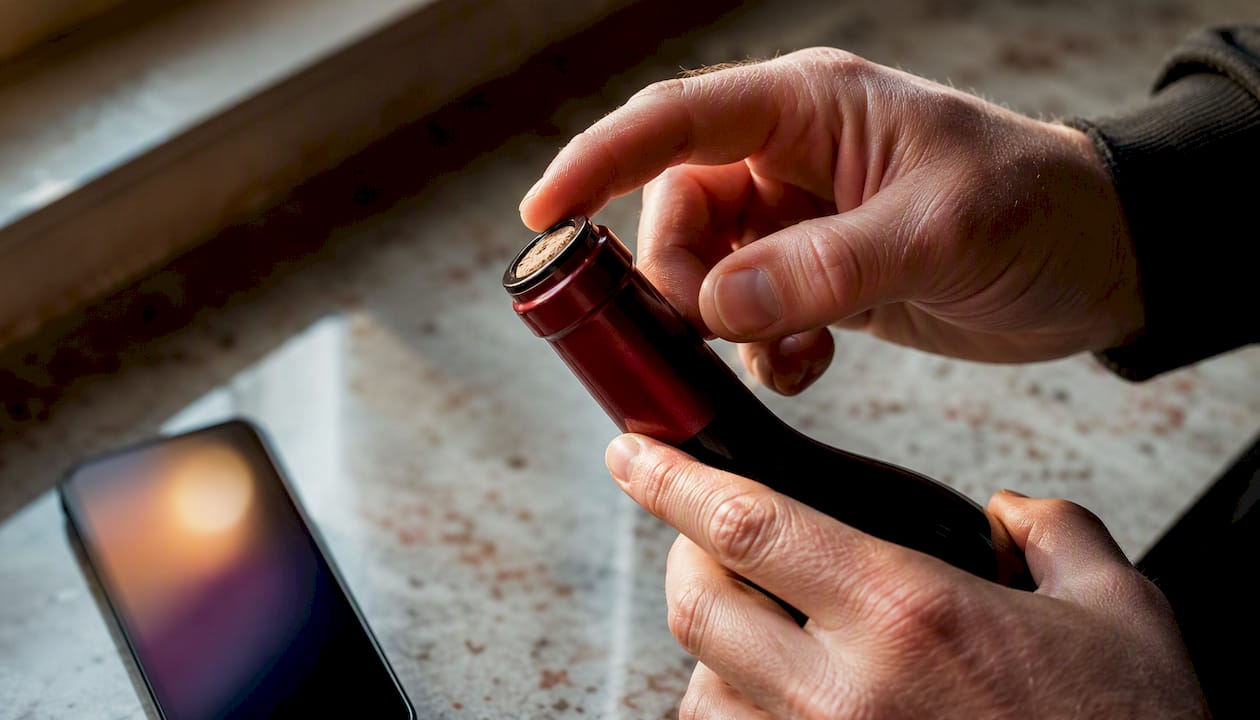
If everything looks intact, still give the bottle a rest. Resting wine after transit for 24 to 72 hours upright lets any disturbed sediment settle and any temperature swings even out before you assess it properly.
A small pour is the real test. A modest tasting check can pick up flattened fruit or a bitter edge that a casual glass would miss entirely, which is exactly the kind of subtle heat damage that doesn’t show up visually.
If something’s clearly wrong, stop. Don’t open the rest of the case, keep the packaging exactly as it arrived, and contact the seller or insurer straight away with your photos.
Damien’s view: balancing collector risk and customer convenience
Most sellers treat shipping as an afterthought. We don’t, because a cooked bottle costs a customer far more than the freight ever saved. That’s why some sellers hold shipments or upgrade to cold-chain transport when the forecast turns against them, and why insured shipping is often recommended for anything rare rather than an optional extra.
Communication matters just as much as the box. Tell the recipient roughly when to expect delivery so someone’s actually there to receive it, and where it’s practical, local pickup beats any courier, heat included.
— Damien
Get the bottle, not the gamble
FU Wine exists because premium wine shouldn’t come loaded with markups, gatekeeping, or, frankly, careless handling once it leaves the cellar.

That means shipments are sometimes held during heatwaves rather than sent out to gamble, and cold-chain and insured delivery are often treated as standard practice for collectible bottles, not a pricey add-on. If you’ve read this far, you already know more about wine shipping heat than most couriers do, so put it to use. Browse the current run of bottles on the FU Wine store, and if you’ve got a high-value order, get in touch with the team beforehand to lock in your shipping preferences before checkout, not after something’s already melted in a depot.
Sources
- AWRI — transport and storage guidance
- Envirofreeze — cold-chain packaging for wine in Australia
- Wine Spectator — should you ship wine in the heat of summer
- Wineshipping — temperature-controlled shipping
- Hillebrand Gori — wine temperature and transport protection
FAQ
At what temperature does wine get damaged in shipping?
Damage risk starts once wine sits at sustained temperatures above 80°F (27°C), and severe “cooked” damage becomes far more likely above 85–90°F (29.4–32.2°C). Non-refrigerated delivery trucks can exceed 130°F (54.4°C) inside, which is why timing and insulation both matter.
Does a melted gel pack mean my wine is ruined?
No, a melted gel pack usually means it absorbed the heat that would otherwise have reached your wine, according to Envirofreeze’s cold-chain guidance. Check the bottle itself for cork movement, seepage or colour change rather than judging the shipment by the pack alone.
How long should wine rest after being shipped?
Rest a bottle upright for 24 to 72 hours after delivery, longer if you suspect it was jostled or exposed to heat. Resting the wine lets any disturbed sediment settle and evens out temperature swings before you open it.
Can heat-damaged wine be fixed or restored?
No, heat damage is generally permanent once a wine has been “cooked” during transit, according to Wine Spectator. This is exactly why prevention through timing and insulation matters far more than trying to fix a bottle after the fact.
Is cold-chain shipping worth the extra cost for expensive bottles?
For anything rare or high-value, yes, the premium usually costs far less than replacing a ruined bottle. Services maintaining trailers around 13°C (55°F) with hub transfers add real protection at exactly the points where standard shipping tends to fail.