

Wine scarcity guide: access premium bottles in 2026
There’s a strange paradox sitting at the heart of the wine world right now. Global wine production is swimming in oversupply, yet if you’ve tried to get your hands on a sought-after premium bottle lately, you’d be forgiven for thinking wine had become rarer than hen’s teeth. The truth is, scarcity in the premium sector is a very different beast from what’s happening in the bulk market. Understanding how and why this split exists gives collectors a genuine edge. This guide breaks it all down, from market forces to smart buying strategies, so you can stop paying inflated prices and start drinking better.
Table of Contents
- Why wine scarcity exists: market forces and myths
- Premium versus bulk: the real supply dilemma in 2026
- How scarcity impacts collectors and pricing
- Smart strategies for accessing premium wines
- Decoding false scarcity and true rarity
- Why questioning wine scarcity pays off
- Want access to premium bottles? Disrupt the old rules
- Frequently asked questions
Key Takeaways
| Point | Details |
|---|---|
| Scarcity isn’t always rare | Most so-called rare wines are strategic releases, not necessarily of higher quality. |
| Bulk oversupply, premium shortfall | While mass wines are plentiful in 2026, premium bottles remain scarce and in demand. |
| Collectors must adapt | Modern collectors succeed by building relationships and staying savvy to market nuances. |
| Direct engagement gives an edge | Engaging digitally with wineries and curators unlocks premium access for buyers. |
| Knowing the difference saves money | Separating true rarity from marketing helps collectors avoid overpaying. |
Why wine scarcity exists: market forces and myths
Let’s get one thing straight. Scarcity in the premium wine world isn’t always about grapes failing or vineyards shrinking. A lot of it is engineered. Deliberately. Strategically. And with a very clear commercial motive.
Cult wineries and prestige producers have long understood that scarcity pricing fuels demand by keeping prices below market equilibrium, creating a frenzy of buyers chasing too few bottles. It sounds counterintuitive, but pricing a wine lower than what the market would bear actually supercharges desire. Waitlists grow. Hype builds. Secondary market prices skyrocket.
Wineries also cap production intentionally. Not because they can’t make more, but because limiting supply protects brand prestige and long-term value. It’s a calculated move, and it works beautifully for producers.
Here’s what’s really going on beneath the surface:
- Allocation systems restrict who gets access, rewarding loyal restaurant and retail partners over everyday collectors.
- Strategic underpricing at the cellar door creates artificial demand and inflated resale values.
- Limited release marketing turns ordinary bottles into perceived collector items.
- Bulk oversupply in mass-market wine coexists with premium shortfalls, creating a split market that confuses buyers.
“The wine industry doesn’t have a shortage problem. It has a distribution and perception problem. Premium scarcity is often a feature, not a bug.”
Understanding wine distribution and scarcity is the first step to buying smarter. And if you’re thinking about wine investment value, knowing the difference between real rarity and manufactured hype is absolutely critical.
Pro Tip: Building a genuine relationship with a winery, even just joining their mailing list and buying consistently, can move you up the allocation queue faster than you’d think.
Premium versus bulk: the real supply dilemma in 2026
Now, building on those market fundamentals, let’s examine how premium and bulk segments diverge and what that means for you.
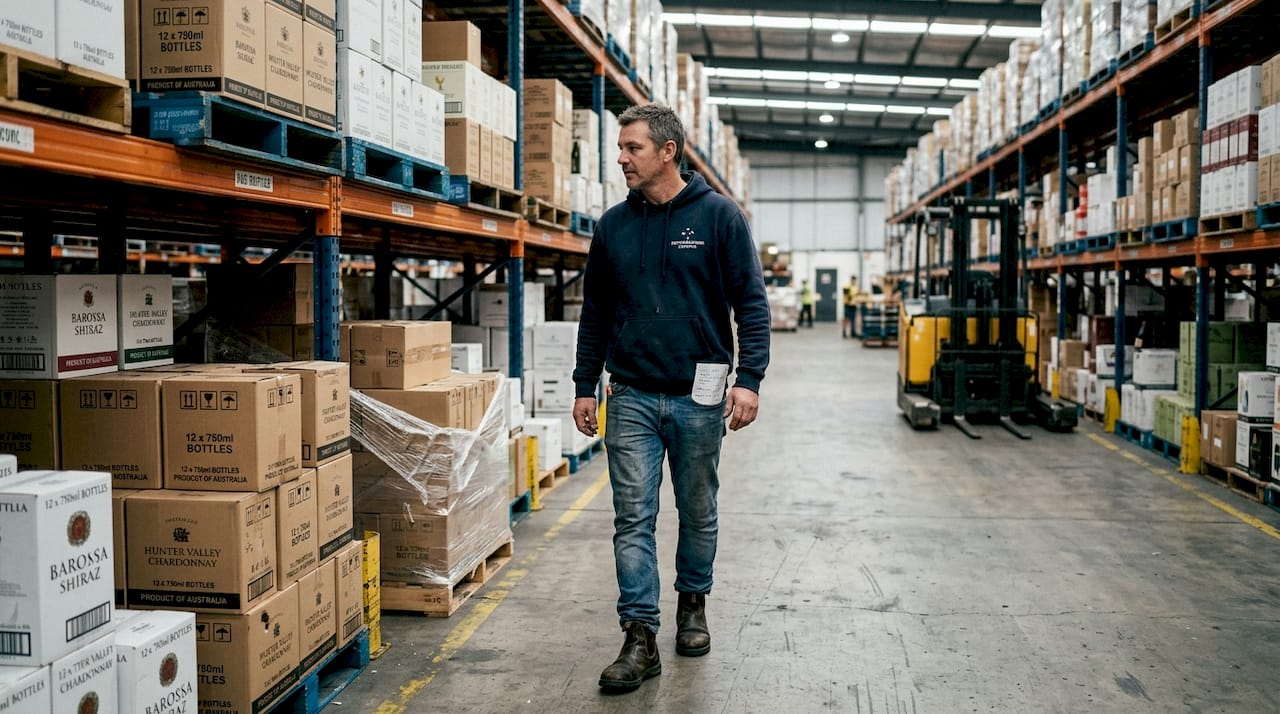
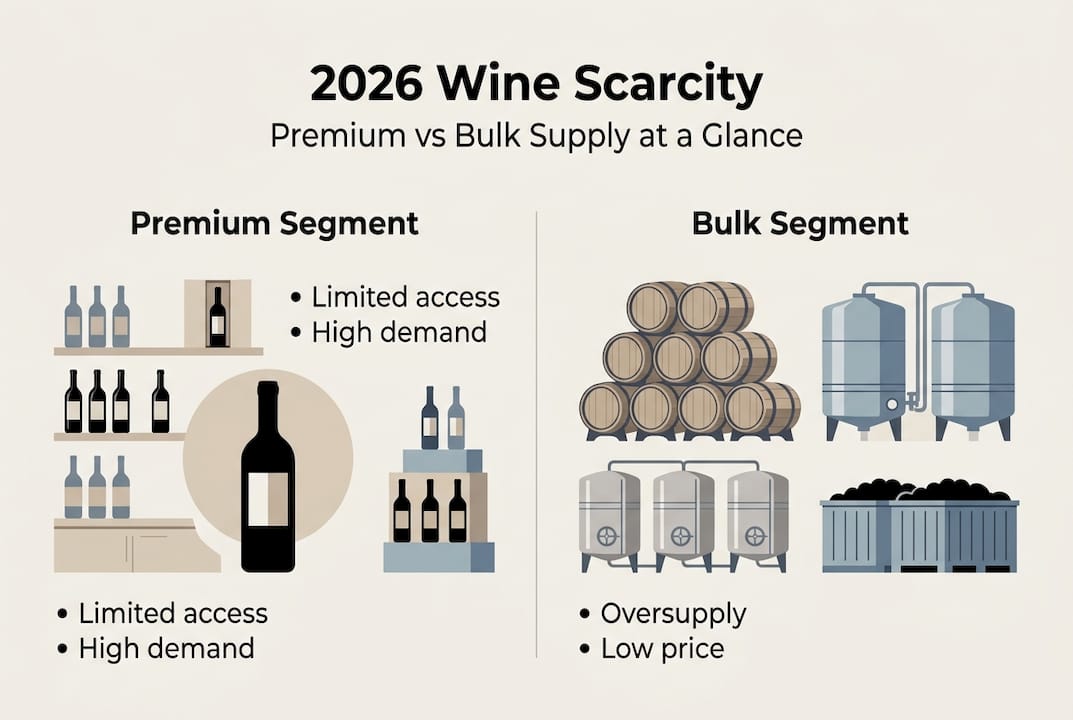
In 2025, global wine supply hit 232 to 233 billion litres, with bulk wine drowning in excess stock. Supermarket shelves are full. Discount bins overflow. Yet simultaneously, premium bottles from Burgundy, Barossa, and Napa remain stubbornly hard to find at fair prices.
This is the great wine paradox of 2026. More wine than ever exists, yet the bottles you actually want feel impossibly out of reach.
Climate volatility is a real factor at the premium end. Smaller harvests in prestige regions do genuinely reduce supply. But consumer behaviour is equally powerful. Premiumisation, the global shift toward drinking less but drinking better, has intensified demand for top-tier bottles while bulk producers scramble to offload excess.
| Segment | Global volume | Avg. price point | Availability |
|---|---|---|---|
| Bulk/mass market | Very high | Low | Oversupplied |
| Mid-range | Moderate | Mid | Stable |
| Premium and rare | Low | High | Scarce |
| Ultra-premium/cult | Very low | Very high | Extremely scarce |
The data tells a clear story. Volume and value are moving in opposite directions. For collectors, this creates opportunity. While bulk buyers fight over discounted excess, savvy premium hunters can identify undervalued bottles in the mid-to-premium tier before the market catches up.
Keeping across premium wine trends in 2026 means you’re not reacting to the market. You’re anticipating it. That’s where the real wins happen.
How scarcity impacts collectors and pricing
With the difference between bulk and premium scarcity understood, let’s zero in on how these forces shape collector behaviour and the market.
Scarcity pricing benefits producers enormously, but it creates real headaches for collectors without established relationships. If you’re not already on the right lists, you’re often stuck paying secondary market premiums that can be two, three, or even five times the original release price.
| Access method | Pros | Cons |
|—|—|—|
| Primary allocation | Release price, first access | Requires relationships, waitlists |
| Secondary market | Immediate availability | Inflated prices, provenance risk |
| Wine curators | Expert curation, fair pricing | Dependent on curator’s network |
| Auction houses | Rare bottles available | Unpredictable prices, buyer’s premiums |
Not all scarcity signals genuine rarity. Some wines are allocated simply because a producer chose to limit distribution to specific markets or partners. The bottle isn’t rare. The access is just restricted.
Here’s how to improve your position as a collector:
- Join mailing lists directly with wineries you admire. Many release allocation spots to subscribers first.
- Build a track record of purchasing. Wineries reward loyal customers with better access over time.
- Work with a trusted curator who already has the relationships you’re building. Learning to access rare bottles through the right channels saves both money and frustration.
- Understand the pricing game by studying wine deal strategies before you spend big.
- Be patient but decisive. When a genuine opportunity appears, move quickly.
Smart strategies for accessing premium wines
Knowing the obstacles, here are smart, actionable strategies to beat the scarcity game as a modern collector.
The biggest shift in wine buying over the last decade is the rise of direct-to-consumer channels. DTC now represents 53% of US wine sales, and that trend is reshaping how collectors everywhere engage with producers. Wineries want to sell direct. You want to buy direct. The alignment of interests has never been stronger.
Here’s how to leverage it:
- Engage digitally with producers. Follow them on social media, subscribe to newsletters, and respond to releases. Wineries notice engaged customers.
- Join allocation lists early. Many boutique producers open lists annually. Getting on early, even for wines you haven’t tried yet, pays off.
- Seek emerging producers. Established cult names are hard to access. Producers on the rise offer better prices, genuine quality, and growing prestige before the crowd arrives.
- Use curators and specialist retailers who have direct relationships with producers and can pass on access that individual collectors can’t easily replicate.
- Explore unconventional regions. Premium wine doesn’t only come from famous postcodes. Regions like the Rhône Valley, Ribera del Duero, and regional Victoria offer extraordinary quality at far more accessible prices.
Using a solid wine scoring guide helps you evaluate bottles objectively rather than being swayed by hype. And if you’re thinking longer term, building a wine portfolio with a mix of drinking bottles and investment pieces is a strategy worth exploring.
Pro Tip: Disruption comes from looking beyond the obvious. The collector who discovers a brilliant producer three years before the critics do is the one drinking extraordinary wine at ordinary prices.
Decoding false scarcity and true rarity
Finally, to apply everything you’ve learned, here’s how to stay alert to false scarcity and spot genuine opportunities.
Scarcity in premium wines is often strategic rather than natural, and knowing the difference protects your wallet and your collection. Not every “limited release” label deserves the reverence it receives.
Here’s how to tell the difference between genuine rarity and clever marketing:
Traits of truly rare wines:
- Produced from genuinely small vineyard parcels with documented history
- Consistent critical acclaim across multiple independent reviewers over many vintages
- Provenance is traceable and verifiable
- Secondary market demand is sustained, not just spiked by a single review
- The producer has a long track record, not just a recent hype cycle
Signs of manufactured scarcity:
- “Limited edition” releases that appear every year like clockwork
- Allocation-only status with no clear reason for restricted distribution
- Heavy reliance on a single critic score or media moment
- Price spikes that don’t align with vintage quality or production changes
- No meaningful secondary market history
Practical pointers matter here. Focus on provenance. A bottle with a clear, documented storage history is worth far more than one with a great label and a murky past. Check independent ratings across multiple sources, not just one influential score. And understand wine vintage and rarity before committing serious money to a bottle.
If you want to go deeper, learning how wine vintages are rated gives you the tools to assess quality independently. That knowledge is your best defence against overpaying for manufactured prestige.
Why questioning wine scarcity pays off
Here’s our honest take. The wine world has spent decades convincing collectors that scarcity equals quality. It doesn’t. Sometimes it does. But often, scarcity is just a story told very well by people who benefit from you believing it.
The collectors who win in this market are the ones who stay curious and sceptical in equal measure. They don’t accept “impossible to get” as a final answer. They ask why. They look sideways at the market instead of straight ahead. They find the cellar-aged wine insights that others overlook because everyone else is chasing the same famous labels.
Today’s collectors have more tools than any previous generation. Direct access to producers, independent critics, specialist curators, and data-driven buying platforms have democratised what was once a closed game. The gatekeepers are losing their grip.
Every bottle is a small rebellion when you buy it on your terms, at a price that reflects real value rather than manufactured mystique. Build relationships. Keep learning. And never let anyone convince you that the wine you want is simply out of reach.
Want access to premium bottles? Disrupt the old rules
Ready to act on your understanding? Here’s how FU Wine gives you an edge.
FU Wine exists precisely because the traditional wine market is rigged in favour of insiders. We cut through the noise, the markups, and the gatekeeping to bring you premium and rare bottles at prices that actually make sense.
Our network gives Australian collectors access to cellar-aged bottles, boutique producer runs, and high-scoring vintages, often at 30 to 70% below what you’d pay through traditional channels. No waitlists. No pretension. Just great wine at honest prices. Explore our premium wine collection and see what’s available right now. Or head straight to FU Wine and start disrupting the status quo, one brilliant bottle at a time.
Frequently asked questions
Is wine scarcity a sign of quality?
Not always. Scarcity is more often strategic than natural, driven by allocation decisions and marketing rather than genuine production limits. Always verify quality through independent reviews and vintage history before assuming a scarce bottle is a great one.
Why is there oversupply in bulk wine but scarcity at the premium end?
Global volume is enormous, but oversupply exists in bulk while premium scarcity persists due to shifting consumer tastes, premiumisation trends, and deliberate underproduction by prestige wineries. The two markets are operating on completely different logic.
How can I get premium wines without paying inflated prices?
Engage with wineries directly, join allocation lists early, use trusted wine curators, and explore under-the-radar producers and regions. DTC now accounts for 53% of US wine sales, and the same direct-access opportunities are growing for Australian collectors too.
Are allocated bottles always rare?
Allocated bottles may be scarce, but scarcity can be manufactured rather than reflecting true rarity. Always check the producer’s track record, independent critical reviews across multiple vintages, and secondary market history before deciding a bottle deserves its premium price tag.