

Wine Sale Calendar: Operator Backed, 3 Monitors and One Shipping Rule
A wine sale calendar is a schedule of retailers’ allocation windows, flash-sale drops and restock rhythms that you track so you never miss a deep, time-limited discount. Start today: point three monitors at a deal page, a specific product page and an allocation page, then set one consolidation rule for shipping. Keep an eye on rotating drops from operators like FU Wine, and add them straight into your schedule.
TL;DR:
- Focus your tracking on allocation releases, flash sales, restocks, and clearance events, each requiring different response strategies and timing.
- Use page-change monitors, RSS feeds, or community alerts to catch signals of upcoming deals without constantly refreshing pages manually.
- Schedule frequent checks during known high-activity periods—such as Tuesday through Thursday for flash sales and early mornings for restocks—based on the event type.
- Build guardrails into buying habits by setting maximum prices, verifying provenance for vintage bottles, and consolidating orders to avoid shipping costs eating into discounts.
- Always verify authenticity by checking provenance details, suspicious pricing, and seller reputation before completing transactions on rare or high-value wines.
Table of Contents
- What should a wine sale calendar actually track?
- How do you monitor deal pages without losing your mind?
- When do wine sales actually happen?
- Buying rules that stop shipping and condition eating your discount
- How do you avoid counterfeit wine during a flash sale?
- How FU Wine schedules its rotating drops
- Where FU Wine fits your monitoring plan
- Monitoring guides and tools worth bookmarking
- Sources
What should a wine sale calendar actually track?
Not every price drop deserves a slot in your calendar. Focus on four distinct event types, because each behaves differently and rewards a different response.
Allocation releases are scheduled drops of limited-production bottles, usually announced in advance and gone within hours. Flash sales are unannounced, time-boxed discounts, often 24 to 72 hours, on stock a retailer wants moving fast. Restocks happen when a sold-out favourite reappears without warning, frequently overnight. Clearance events clear ageing inventory or end-of-financial-year stock, and they tend to stick around longer, giving you breathing room.
Your calendar needs to monitor three URL types for each retailer worth watching:
- Individual product pages for bottles you already want, so you catch price and stock changes the moment they happen.
- Deal or clearance section pages, which often flag a new sale before any single product page updates.
- Winery or retailer allocation pages, where release dates and waitlist windows get posted.
For every entry, log four fields: expected window, check frequency, your price threshold and a provenance flag for anything over a certain age or rarity. That last field matters more than most buyers realise, and we’ll get to why.
How do you monitor deal pages without losing your mind?
You don’t need to refresh browser tabs all day. A handful of tools do the watching for you, and the trick is matching the right tool to the right kind of page.
Page-change monitors like Distill or Visualping (free tiers exist, paid plans add speed and multiple targets) catch section-level changes, the “something new just appeared” signal that flags an incoming flash sale before individual listings update. RSS feeds, where retailers still offer them, work well for slower-moving clearance pages. Product-price watchers track a specific bottle’s price and stock status, confirming the detail once the section monitor has already tipped you off. Watching both signals together gives you a fuller picture than either alone: the section tells you something moved, the product page tells you what and for how much.
For speed, nothing beats a well-run community. Telegram and Discord groups built around wine deals often post a heads-up before a retailer’s own newsletter goes out, because members are refreshing pages manually and sharing what they see in real time.
Set your check frequency by event risk, not by habit:
- Tune to check frequently during known allocation windows or active flash sales.
- Check less often for slower clearance or restock pages that rarely move fast.
- Check periodically for wishlist items with no imminent release news.
Frequency should shift with the event type, not stay fixed across your whole list. Build your shortlist of five to ten target pages first, set a price or stock threshold for each, then send yourself a test alert to confirm it actually lands before you rely on it.
Pro Tip: Run every new monitor through one dummy alert before trusting it. A silent notification setting is the fastest way to miss a drop you were certain you’d catch.
When do wine sales actually happen?
Flash sales don’t fire at random, and once you spot the rhythm, your calendar starts working for you instead of the other way around.
Allocation windows cluster around spring and autumn, when wineries release new vintages and clear cellar space ahead of harvest. Flash sales tend to bunch midweek, particularly Tuesday through Thursday, when retailers want to move stock before the weekend lull. Restocks skew early morning, often before 7am local time, because that’s when warehouse systems refresh inventory counts overnight, and an automated monitor will catch that moment far more reliably than you will half-asleep with your phone.
Here’s a compact weekly template you can copy straight into your calendar app:
- Monday and Tuesday mornings: check allocation pages for the week’s releases.
- Tuesday to Thursday, hourly: watch flash-sale sections on your top three retailers.
- Every night, automated: let a restock monitor run unattended so you catch early-morning stock drops.
- Weekly, Sunday: review clearance sections for slower stock you’re not in a rush on.
- Monthly: audit which monitors actually paid off, and drop the ones that never fire.
Log outcomes as you go. If a retailer’s flash sales always land on Wednesday for three months running, tighten your check window instead of monitoring around the clock.
Buying rules that stop shipping and condition eating your discount
Build these guardrails into your buying process before you click “purchase.”
Consolidation protects your margin. Many flash-sale retailers offer locker features or staged shipping, holding your purchases until you hit a full case or a free-shipping threshold. Combining several smaller wins into one shipment is often the difference between a genuine bargain and a discount that evaporates at checkout.
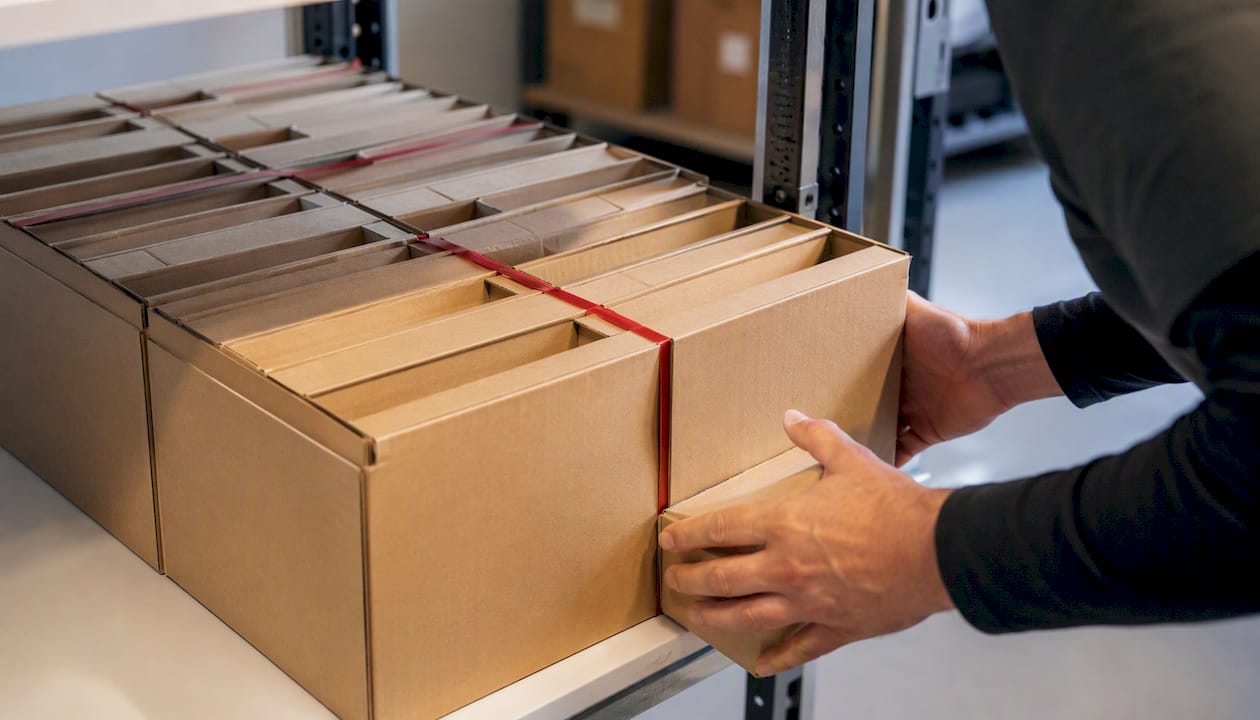
Provenance matters more as the bottle gets older. For anything vintage or collectible, seller history and documented storage conditions carry as much weight as price. A cheap rare bottle with no storage detail is a warning sign, not a bargain.
Run a short buy rule on every purchase:
- Set a maximum price per bottle before you start browsing, not after you’ve fallen for a label.
- Require a provenance statement for anything over roughly ten years old or of clear collectible status.
- Run the shipping impact test: does this purchase get you closer to a free-shipping threshold, or does it sit alone and cost you freight?
- Confirm condition detail (fill level, label condition, storage note) is listed, not just a stock photo.
Pro Tip: Keep a running tally of what’s sitting in your locker or cart. It’s easy to forget you’re three bottles from free shipping until you check your own numbers.
How do you avoid counterfeit wine during a flash sale?
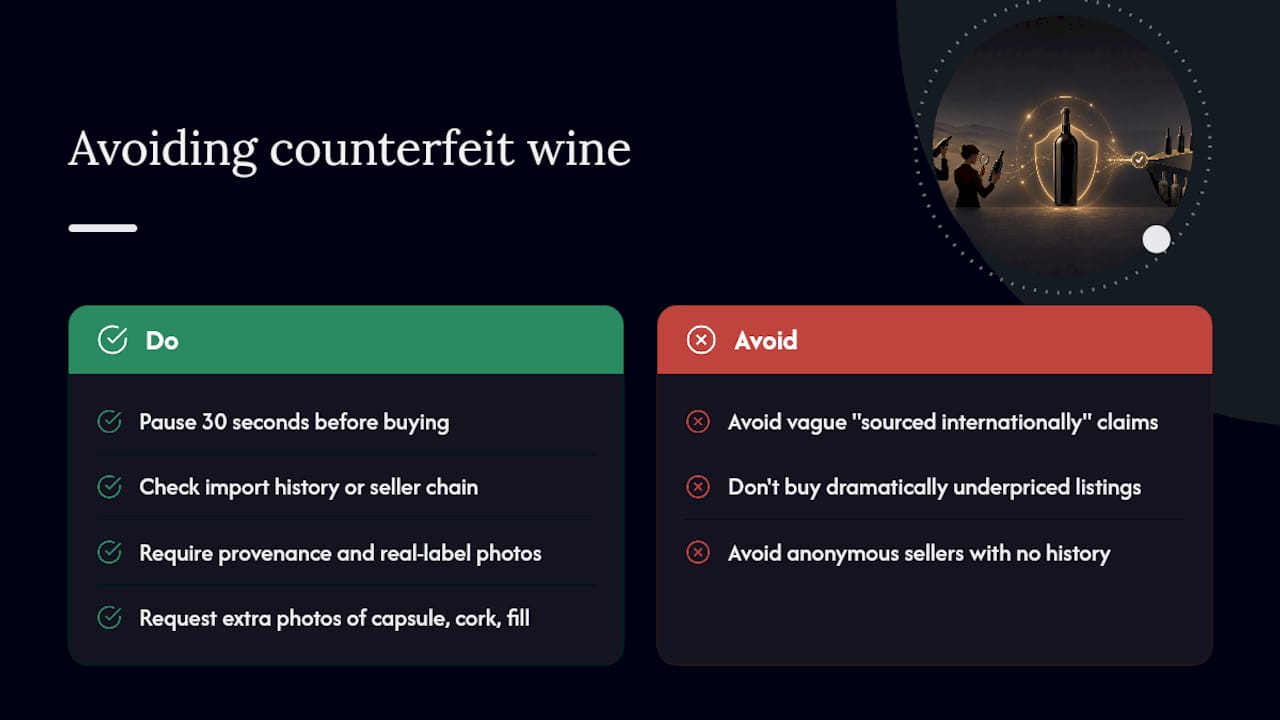
Urgency is exactly what counterfeiters rely on, so slow down for thirty seconds before you buy anything positioned as rare or aged. Check that the listing names a specific import history or seller chain rather than a vague “sourced internationally” line. Genuine sellers of older or high-value bottles typically show a provenance trail: who held the bottle, how it was stored, and often a photo of the actual label rather than a stock image.
Cross-check vintage details against publicly available producer records where possible. A listing citing a vintage or label design the producer never released is one of the clearest counterfeit signals going. Be wary of prices that sit dramatically below every other flash-sale listing for the same wine.
Buy from retailers with a track record and visible customer history rather than anonymous marketplace listings with no seller reputation attached. For anything genuinely rare, request additional photos of the capsule, cork and fill level before completing checkout if the platform allows direct contact. It costs you a day. A counterfeit bottle costs you the full price and the bottle.
How FU Wine schedules its rotating drops
Some wine retailers run a rotating, deal-driven model. Rather than a fixed catalogue at fixed prices, stock moves in and out based on opportunistic buys, distressed inventory, cellar clearances and allocation releases. That means the calendar approach in this article isn’t theoretical for us; it’s how our own customers actually catch the good stuff.
If you’re building your own tracking list, add FU Wine’s current drops page alongside your other monitors and treat it the same way: check it against your price threshold, and hold off buying solo bottles until you’re close to a shipping-friendly quantity. Rotating stock rewards patience paired with fast action when the right bottle appears, which is exactly what a calendar-driven approach gives you.
— Damien
Where FU Wine fits your monitoring plan
FU Wine is built for exactly the workflow this article describes: rotating drops on premium, rare and cellar-aged bottles at prices that sit well below traditional retail, because we’ve cut out the markups and middlemen that inflate normal wine pricing. Add our drops page to your calendar the same way you would any other flash-sale monitor, and apply the same consolidation thinking, waiting for a case-worthy order protects the discount you just worked to find.
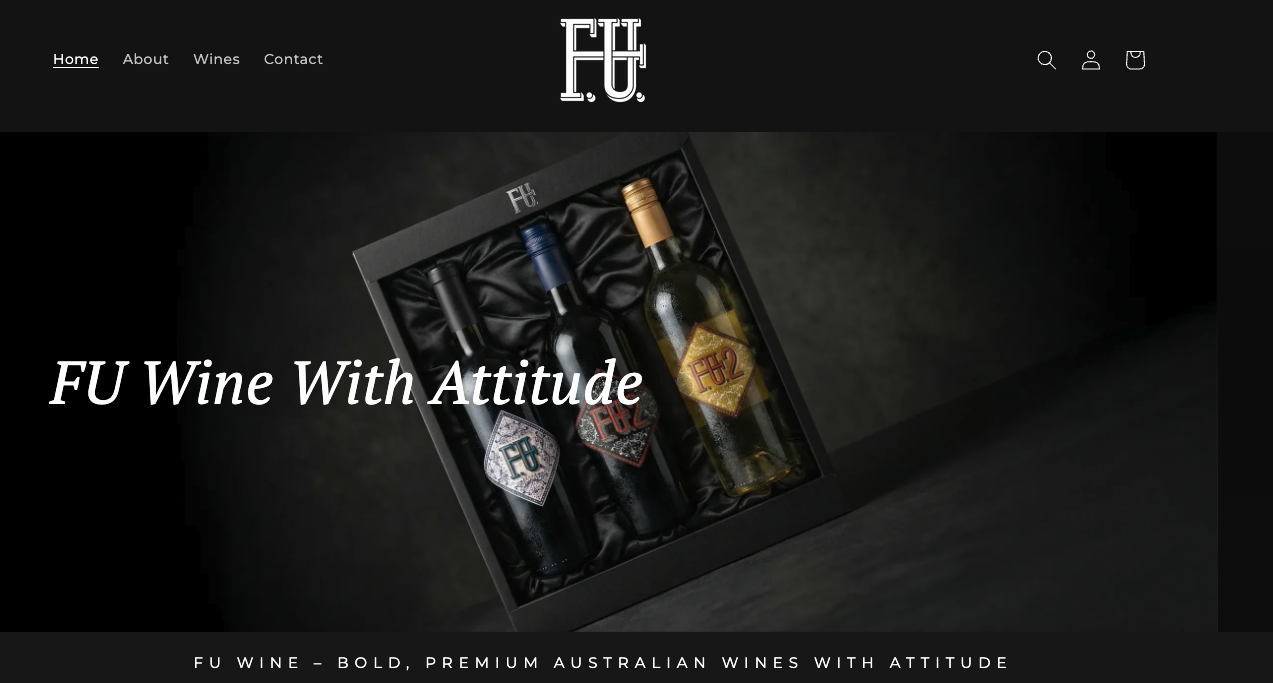
Once FU Wine is one of your tracked pages, treat it with the same buy rules covered above: check provenance where it’s listed, confirm your price threshold, and factor shipping into every order. If you want a head start on the tactics, our guide on snagging premium bottles smart walks through the mechanics we use behind our own rotating stock. Sign up for alerts on the FU Wine site to get notified the moment a new drop lands, and check current stock any time at Fuwine.
Monitoring guides and tools worth bookmarking
For deeper reading, bookmark wine price and restock alert setups, the Wine Spies flash-sale model breakdown, and FU Wine’s own guide to unlocking exclusive wine access.
Sources
- How to track wine prices, restocks, and flash sales online
- Pagecrawl
- How to Evaluate Online Wine Listings
- Inside Wine Spies: How to Get Premium Wine for Less — Sip with Nikki