

Wine in Tasmania: the ultimate guide to cool climate drops
Tasmania produces some of Australia’s most celebrated wines, full stop. The island’s cool maritime climate delivers Pinot Noir, Chardonnay, and sparkling wines with a finesse you simply don’t find on the mainland. Four distinct wine trails carve up the state: the Tamar Valley, North West, East Coast, and Southern Wine Trail. Supply is tight by design. Most producers work tiny parcels of land, which means bottles are scarce, prices hold firm, and the good stuff disappears fast.
Key varieties to know:
- Pinot Noir accounts for 44% of plantings, used for both table and sparkling wine
- Chardonnay makes up 23% of production, prized for sparkling base cuvées and elegant still wines
- Sauvignon Blanc (12%), Pinot Gris (11%), and Riesling (5%) round out the cool climate whites
- Premium sparkling wines, made via traditional method, are the island’s calling card internationally
What makes Tasmania’s four wine trails worth exploring?
Tasmania’s four principal wine trails each have a distinct personality. You’re not just tasting wine. You’re tasting geography.
Tamar Valley Wine Trail sits near Launceston in the north and is the most densely packed of the four, responsible for roughly 40% of the state’s grape production. Cellar doors cluster along the river, making it the easiest trail to cover in a weekend. Expect Pinot Noir and Chardonnay that lean savoury and structured.
North West Wine Trail catches maritime influence from Bass Strait alongside cooler mountain air. It’s quieter, less visited, and genuinely surprising. Producers here tend to work with Pinot Gris and Riesling alongside the usual suspects, and the cellar door experiences feel properly off the beaten track.
East Coast Wine Trail hugs the sunlit coastline near the Freycinet Peninsula, one of the more promising areas for Tasmanian red wine. The warmer microclimate here produces riper, more generous styles. The scenery is absurd. Pink granite, white sand, and a glass of Pinot in hand.
Southern Wine Trail wraps around Hobart and the Derwent and Coal River valleys. It spans everything from boutique hobby producers to larger commercial operations. The Coal River Valley accounts for around 13% of Tasmania’s grape production and is building a strong reputation for reds.
- Plan at least two days per trail given the geographic spread between cellar doors
- Book cellar door visits in advance, especially for boutique producers with limited opening hours
- Combine the East Coast trail with a Freycinet National Park visit for a full weekend
Pro Tip: Pack a cooler bag. Many boutique cellar doors don’t ship interstate, so buying on the day and transporting bottles yourself is often the only way to get your hands on limited releases.
Which grape varieties define Tasmanian wine?
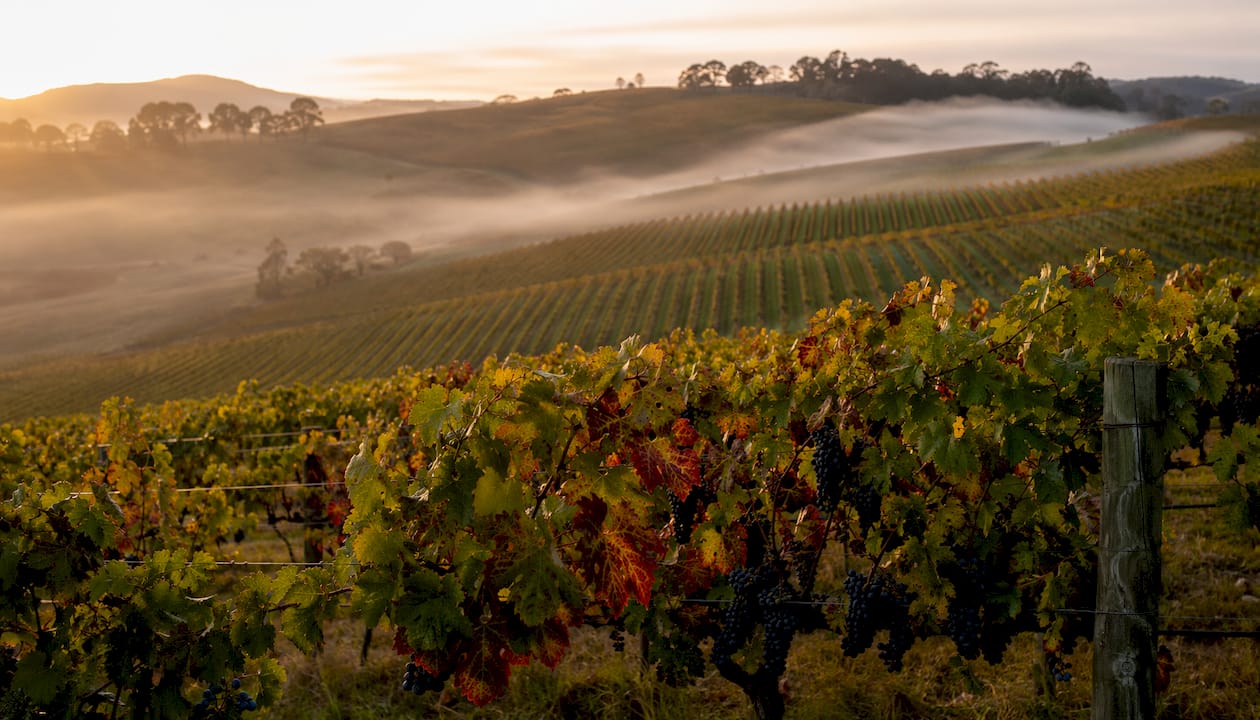
Pinot Noir and Chardonnay dominate, but the full picture is more interesting. Tasmania’s cool maritime climate produces wines with natural high acidity, refined fruit, and real ageing potential. Slow ripening is the key. Grapes hang on the vine well into autumn, building flavour complexity without sacrificing freshness.
Riesling deserves a special mention. Tasmanian Rieslings draw comparisons to Mosel in Germany rather than the broader Australian style, showing lime, slate, and a racy acidity that ages beautifully. Sparkling wine is the island’s international headline act, with traditional method wines using Pinot Noir and Chardonnay as primary grapes earning consistent global acclaim.
Winemakers here tend to work site-specifically. Small batches, minimal intervention, and a focus on terroir expression over commercial consistency. Vintage variation is greater in Tasmania than any other Australian region, which makes multi-vintage tastings from a single producer genuinely revealing.
How to buy Tasmanian wine without paying through the nose
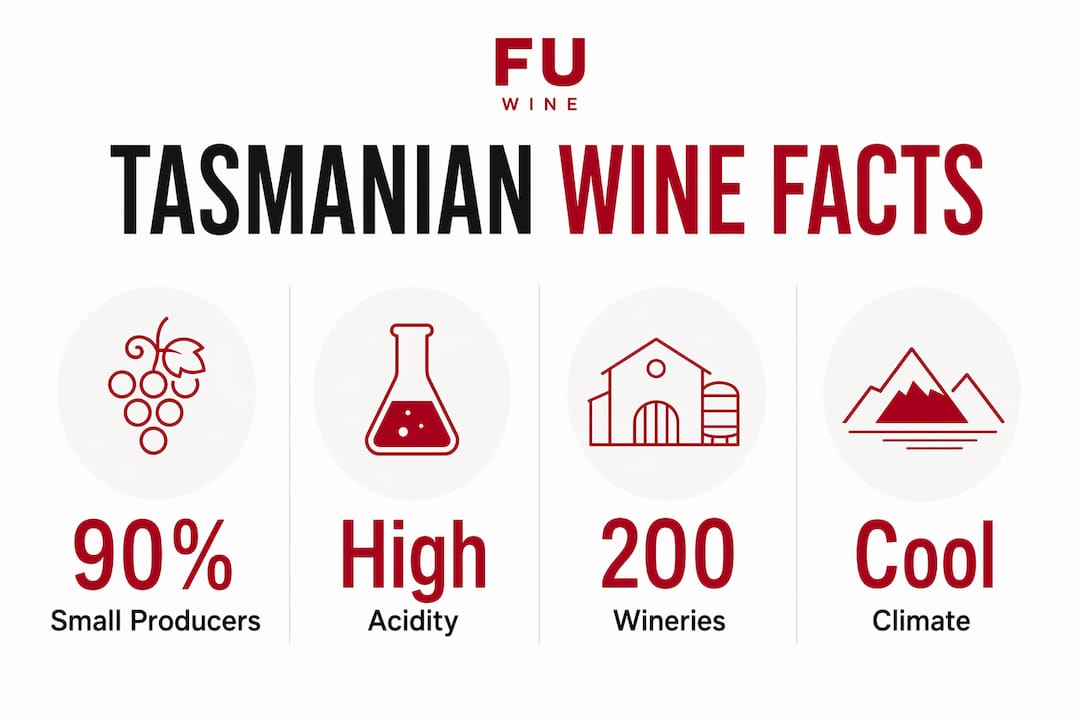
Sourcing Tasmanian wine takes a bit of nous. About 90% of producers farm less than 10 hectares, which means allocations sell out fast and retail availability is patchy at best. Understanding what you’re after before you start looking saves a lot of frustration.
The names that consistently appear at the top of any serious list: Arras EJ Carr Late Disgorged sparkling, Tolpuddle Vineyard Chardonnay, and Tolpuddle Vineyard Pinot Noir. All three appear in the Langton’s Classification as highly sought-after in Australia’s fine wine secondary market. These aren’t casual weeknight bottles. They’re collector pieces.
Knowing what a boutique producer actually is changes how you shop. Small-scale doesn’t mean amateur. It means limited, intentional, and worth chasing.
Your sourcing options, ranked by access:
- Direct from cellar door is the gold standard for rare and unreleased stock
- Specialty wine retailers with Tasmanian focus often hold allocated stock
- Online platforms that buy direct from producers can cut out the middlemen and the markup
If you want to shop boutique wines without paying collector premiums, timing matters. Flash deals and allocation releases move quickly. Get on mailing lists, watch for cellar clearances, and don’t sleep on it.
What the market says about Tasmanian wine in 2026
Tasmania’s wine reputation isn’t hype. Wine Tasmania confirms that demand consistently outstrips supply, which is the primary driver behind the island’s high price positioning in the broader Australian market.
| Factor | Detail |
|---|---|
| Vineyard scale | About 90% of producers farm less than 10 hectares |
| Production share | — |
| Tamar Valley output | Approximately 40% of Tasmania’s grape production |
| Langton’s Classification | Arras EJ Carr Late Disgorged, Tolpuddle Chardonnay, and Tolpuddle Pinot Noir all listed |
| Climate trend | Global warming has aided more consistent ripening and improved vintage reliability |
The Langton’s Classification listing for Tolpuddle and Arras signals genuine secondary market demand, not just critical praise. Collectors pay attention to Langton’s. When Tasmanian wines appear there, prices follow. The premium wine trends driving demand for cool climate bottles globally are working in Tasmania’s favour right now.
A short history of wine in Tasmania
Tasmania’s wine story starts earlier than most people realise. Vines were planted in the early 19th century by European settlers, though the modern industry only took shape from the 1950s and 1960s onward. Pioneers like Claudio Alcorso at Moorilla Estate near Hobart helped establish that the island could produce serious table wine, not just curiosities.
The real turning point came when mainland sparkling wine producers recognised Tasmania’s cool climate as ideal for growing base cuvée grapes. Companies including Moët et Chandon began sourcing Tasmanian fruit for their Australian sparkling wines. That external validation accelerated investment and reputation simultaneously.
By the 1990s, the island had a credible fine wine identity. Today, with nearly 200 wineries and 230 individual vineyards across the state, Tasmania punches well above its weight relative to its tiny share of national production.
How to taste Tasmanian wines properly
Tasmanian wines reward patience. Serve them slightly cooler than you think necessary. Whites, especially Chardonnay and Riesling, show best around 10–12°C. Pinot Noir opens up beautifully at 14–16°C rather than room temperature.
Acidity is the defining thread across all styles. Don’t mistake it for sharpness. That bright, mouthwatering quality is what gives these wines their length and food-friendliness. When tasting multiple vintages from the same producer, you’ll notice how dramatically the character shifts year to year, a reflection of Tasmania’s pronounced vintage variation.
Sparkling wines made via traditional method deserve time in the glass. Let them warm slightly from fridge temperature and watch the texture evolve from tight and citrusy to creamy and complex.
Food pairings that work brilliantly with Tasmanian wines
Tasmania’s food scene and its wine are practically made for each other. The island’s seafood, particularly oysters, abalone, and rock lobster, pairs with Tasmanian Riesling and Chardonnay in a way that feels almost unfair to the rest of the world.
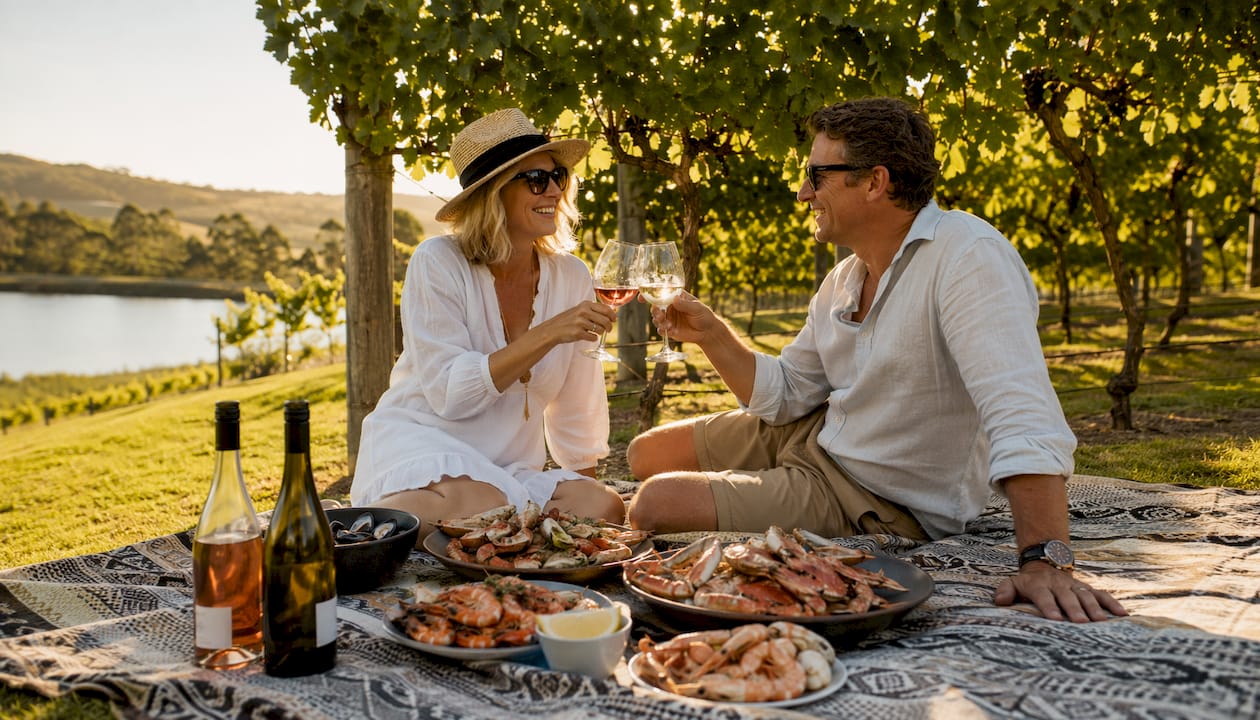
Pinot Noir is the go-to with duck, salmon, and mushroom-based dishes. The wine’s earthy, red-fruited character bridges the gap between rich proteins and lighter preparations without overwhelming either. For a broader guide to pairing white wine with food, the principles that apply to Tasmanian whites hold across most cool climate styles.
Sparkling wines work across the whole meal. Start with oysters and Arras, move through a seafood course, and finish with a cheese board. The acidity cuts through fat and salt with ease. For a more adventurous pairing, try Tasmanian Pinot Gris alongside wine and tapas style small plates. The wine’s texture and spice handle bold flavours without flinching.
Key wineries and producers worth knowing
Moorilla Estate near Hobart is one of the oldest and most storied producers on the island, sitting alongside the MONA museum. The combination of art, food, and wine makes it a destination in its own right.
Tolpuddle Vineyard in the Coal River Valley produces the Chardonnay and Pinot Noir that appear in Langton’s Classification. These are benchmark Tasmanian wines, site-specific and made with minimal intervention.
House of Arras is the name behind the EJ Carr Late Disgorged sparkling, one of Australia’s most awarded and collected sparkling wines. The extended lees ageing gives it a complexity that rivals serious Champagne.
Jansz Tasmania in Pipers River was among the first to produce traditional method sparkling on the island and remains a reference point for the style. Freycinet Vineyard on the East Coast has built a loyal following for its Pinot Noir, benefiting from the peninsula’s warmer microclimate and distinctive granite soils.
Key takeaways
Tasmania is Australia’s most prestigious cool climate wine region, where boutique scale, high acidity, and genuine scarcity combine to produce wines that consistently outperform their production volume.
| Point | Details |
|---|---|
| Cool climate advantage | Maritime conditions produce wines with natural high acidity, elegance, and strong ageing potential. |
| Four wine trails | Tamar Valley, North West, East Coast, and Southern Trail each offer distinct styles and cellar door experiences. |
| Boutique scale | About 90% of producers farm less than 10 hectares, making many wines allocation-based and hard to source. |
| Top benchmark wines | Arras EJ Carr Late Disgorged, Tolpuddle Chardonnay, and Tolpuddle Pinot Noir all appear in Langton’s Classification. |
| Demand outstrips supply | Wine Tasmania confirms that consumer demand consistently exceeds production, sustaining premium price points. |
Life’s too short for ordinary wine, and Tasmania proves it with every bottle. At FU Wine, we track down the rare, the allocated, and the genuinely brilliant, then make them available without the usual gatekeeping. Premium Tasmanian drops. No pretension. No inflated markups. Just the good stuff at prices that make sense.