

Why some wines are so hard to find and how to access them
TL;DR:
- Most sought-after wines are inaccessible because of strategic allocation and distribution barriers rather than genuine scarcity.
- Joining direct-to-consumer lists, working with private brokers, and exploring lesser-known regions offer smarter ways to access rare bottles affordably.
The global wine market produces billions of bottles each year, yet somehow the wines you actually want are always the ones you can’t get your hands on. It feels like a cruel joke. Supermarket shelves groan under the weight of mediocre options, while the bottles worth drinking seem to vanish into thin air before most of us even knew they existed. This isn’t an accident, and it’s definitely not just about price. There’s a whole system at play, built on deliberate choices, entrenched distribution networks, and insider advantages that keep the best bottles firmly out of reach for most buyers. Here’s what’s really going on, and more importantly, how you can beat the system.
Table of Contents
- The surprising reality behind wine scarcity
- From vineyard to shelf: How distribution locks out buyers
- Allocations and the secondary market: Where the real money is made
- Getting your hands on rare bottles: Strategies for real collectors
- The uncomfortable truth about wine scarcity: Prestige or true rarity?
- Ready to discover premium and rare wines without the markups?
- Frequently asked questions
Key Takeaways
| Point | Details |
|---|---|
| Scarcity is often strategic | Many sought-after wines are rare because wineries choose to limit supply and create demand, not just because of nature or land. |
| Distribution shapes access | How wine moves through the supply chain determines who can buy it and at what price, making some bottles nearly invisible to ordinary buyers. |
| Allocations offer insider advantage | Getting on mailing lists or direct allocations can secure bottles at much lower prices than the resale market. |
| Secondary markets drive markups | Wines resold outside primary channels often cost many times more than their original price. |
| Early action pays off | Joining lists, buying direct, and working with trusted brokers help collectors access premium wine without the drama or huge costs. |
The surprising reality behind wine scarcity
Many people assume wine is hard to find simply because of price or hype, but the causes run much deeper than that. There are two very different types of scarcity in the wine world, and confusing them is expensive.
The first type is genuine physical scarcity. Some wines are rare because they come from tiny plots of ancient vines that produce minuscule yields. You can’t manufacture more Romanée-Conti. The vines are old, the soil is irreplaceable, and the production is capped by nature itself. Cult wines like Screaming Eagle or Giacomo Conterno’s Monfortino often produce fewer than 1,000 cases annually, and that number never grows regardless of demand. Similarly, producers who take quality seriously will skip vintages if grapes don’t meet standards, reducing supply even further. That’s genuine scarcity, and it’s worth understanding.
The second type is manufactured scarcity, and it’s far more common than most people realise. Wineries deliberately restrict how much wine they release, to whom they sell it, and through which channels. This isn’t a dirty secret. It’s a calculated strategy to maintain prestige, keep prices strong, and ensure their brand retains an air of exclusivity. When a winery controls allocation tightly, secondary market prices soar, which in turn validates the original price point and keeps the cycle spinning.
“The most coveted bottles aren’t just rare because of what’s in them. They’re rare because of what’s deliberately kept away from you.”
Our wine scarcity guide breaks this down in detail, but the short version is this: real scarcity and manufactured scarcity look identical on the shelf. Both result in empty hands and frustrated collectors. The difference matters when you’re deciding how hard to chase a bottle, and how much you’re prepared to pay.
Key drivers of wine scarcity, whether genuine or strategic, typically include:
- Ultra-low production volumes from old vine parcels or boutique estates
- Deliberate decisions to skip vintages that don’t meet quality benchmarks
- Controlled release schedules that drip feed supply to maintain buzz
- Exclusive allocation systems that bypass general retail entirely
- Strategic pricing that prices most buyers out of the conversation
Once you understand wine allocations at this level, the market starts making a different kind of sense. An annoying, frustrating kind of sense, but sense nonetheless.
From vineyard to shelf: How distribution locks out buyers
Even when a wine exists in reasonable quantities, the path it takes to market can further limit your access and raise the final price dramatically. This is where most collectors get blindsided.
The three-tier distribution system used in the United States, and similar structures in many other markets, forces wine to travel from producer to distributor to retailer before it ever reaches you. Each layer adds its own margin. By the time a $40 bottle at the cellar door hits a retail shelf, you might be paying $80 or more for the exact same wine. That’s not value. That’s the system doing what it was designed to do, which is extract money at every stage.
Here’s the brutal reality of how distribution stacks up for premium bottles:
| Channel | Typical markup on release price | Consumer access level |
|---|---|---|
| Cellar door or DTC (direct-to-consumer) | 0% above release | High, if you’re on the list |
| Distributor to retailer | 40-60% above release | Moderate, dependent on allocation |
| General retail | 60-100% above release | Variable, often out of stock |
| Secondary market | 200-500% above release | Available, but at brutal cost |
The picture is even worse for the most limited wines. When a distributor gets a small allocation of a highly sought-after label, they don’t spread it evenly across their retail accounts. They prioritise their biggest volume buyers, the large chains and established accounts that move the most product overall. Small independent bottle shops and individual consumers often miss out entirely, not because the wine doesn’t exist, but because the distribution hierarchy pushes it to the top of the food chain before it can trickle down.
Pro Tip: Direct-to-consumer (DTC) channels are the most powerful shortcut in wine buying. When producers sell direct, you bypass every layer of markup and often get access to wines that never reach retail at all. It takes patience to get on the right lists, but the savings and access are genuinely significant. See our guide to wine distribution for collectors for a deeper breakdown.
Allocations and the secondary market: Where the real money is made
Now that you understand how wines vanish before hitting shelves, let’s look at what happens to those rare bottles after allocation. This is where things get truly eye-opening.
An allocation is a pre-arranged quantity of wine offered to specific buyers, usually before the wine is even released publicly. Wineries use them to reward loyal customers, control brand perception, and ensure their most prestigious bottles end up in the right hands (or at least the hands they choose). The advantages for allocation holders are substantial. Allocation holders typically receive wines at 30 to 50% below what those same bottles will eventually trade for on the secondary market. That’s an extraordinary built-in advantage.
But here’s the catch. Most of those allocation holders hold, rather than resell, which keeps supply tight and prices even higher. The whole system feeds itself. The winery maintains prestige by restricting access, the allocation holders benefit from the price differential, and everyone else pays through the nose on the secondary market if they want a bottle at all. The secondary market for rare wine regularly sees markups of 200 to 500% over original release prices. That’s not a typo.
How allocations typically work, from the inside:
- The winery determines total production for a vintage and sets aside a percentage for direct allocation
- Existing mailing list members and long-standing clients receive priority offers
- Remaining allocation is distributed to select retail accounts or wine clubs
- Any leftover wine (often very little) hits general retail or auction
- Demand exceeds supply at every stage, pushing prices steadily upward on resale
To access these limited release wines at anything approaching fair prices, you need to be in the allocation system, not chasing it from the outside. The further downstream you buy, the more you pay, often for the exact same bottle that sold for a fraction of the price six months earlier at the winery’s cellar door.
Understanding how these allocation systems actually function is the first step to working around them. And working around them is absolutely possible.
Getting your hands on rare bottles: Strategies for real collectors
So, what actually works if you want affordable, genuine access to rare wines today? The answer involves patience, strategy, and knowing where to look. Let’s be direct about it.
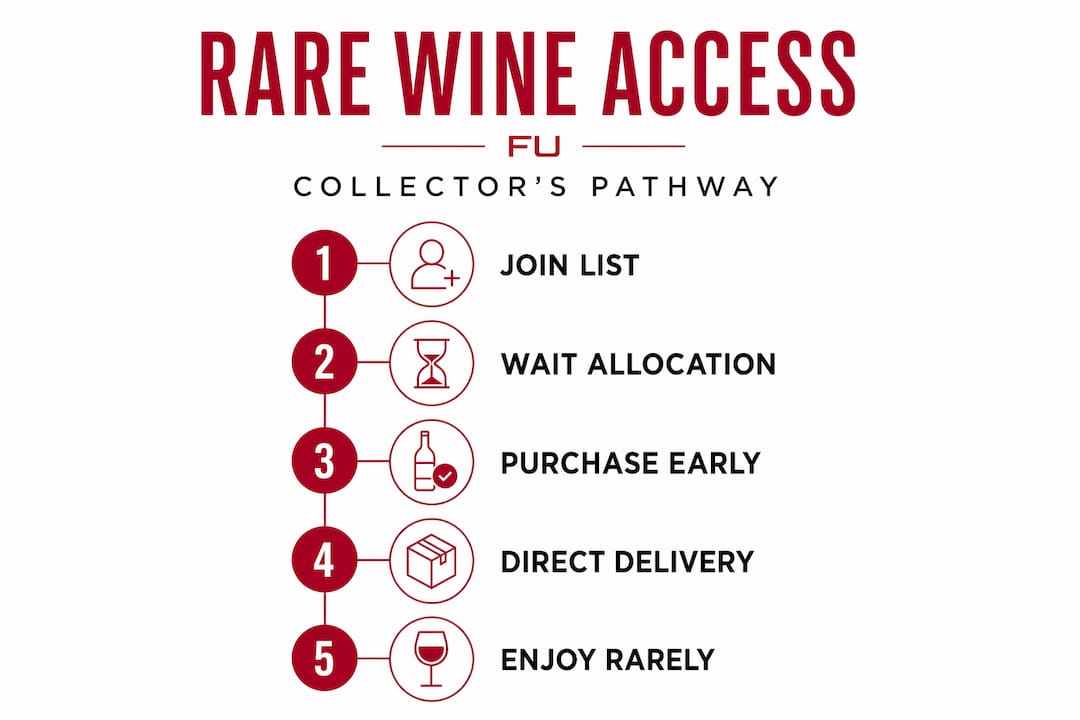
The single most effective long-term strategy is joining winery mailing lists as early as possible. Yes, waitlists can stretch for years at the most prestigious producers. But once you’re in, you’re in. You receive wines at release pricing, before distributors and retailers mark them up, and often before the market even registers what the vintage will be worth. Leonetti Cellar’s waiting list is a well-known example of a winery that distributes its most coveted wines entirely through a direct list, bypassing retail entirely. That’s the insider lane right there.
Beyond mailing lists, practical strategies that genuinely work include:
- DTC channels first: Buying direct cuts out every layer of markup and often gives you access to wines that never appear in retail
- Private client brokers: Specialists who maintain relationships with estates and can source off-market bottles, often at prices well below secondary market rates
- Cellar clearance and distressed inventory: Estates occasionally need to move aged stock quickly, creating genuine opportunities for savvy buyers
- Lesser-known regions and producers: World-class quality often hides in regions that haven’t yet attracted the cult-status spotlight, meaning prices stay sane
- Opportunistic buying: When flash deals or allocation releases surface, acting fast matters more than deliberating for days
Pro Tip: Don’t underestimate the value of a trusted wine curator relationship. A good curator maintains contacts across estates, distributors, and private collections, and can surface bottles you’d never find through retail channels. The difference between retail and curator pricing on premium wine can be remarkable.
The biggest mistake most collectors make is chasing wines through the secondary market without understanding why prices are so high. Paying 400% above release price for a bottle that was available at the winery two years ago feels righteous in the moment, but the strategy review the next morning stings. Our guides to exclusive wine strategies and the guide to rare wine lay out the full picture for collectors who want smarter access without the financial punishment.
The uncomfortable truth about wine scarcity: Prestige or true rarity?
With strategies in hand, it’s worth stepping back and asking a harder question. Is wine scarcity really about supply at all?
Our honest take: for the majority of “hard to find” wines, the scarcity is more strategic than physical. The same allocation systems that restrict access are deliberately designed to keep prices elevated and prestige intact. Some producers actively fight this by selling exclusively DTC and implementing anti-speculation policies. But they’re the exception, not the rule.
Here’s what years of watching this market closely have taught us. The collector who quietly joins five mailing lists, buys direct when allocations open, and grabs cellar clearance stock when estates move it on often drinks better wine, at lower prices, than the enthusiast who spends big on auction platforms chasing the same label everyone else is chasing. The chase itself is often the most expensive part.
There’s also something worth saying about the wine gatekeeping that defines the premium end of the market. It’s real, it’s intentional, and frankly, it benefits a small number of insiders at the expense of everyone else. But transparency is slowly increasing. More producers are questioning whether the allocation model actually serves their customers, and more platforms are building direct, honest access models that cut through the noise. The consumer who pays attention and moves accordingly wins. The one who accepts that scarcity equals value, always, loses. Every time.
The wine doesn’t care about its own prestige. Only the system around it does.
Ready to discover premium and rare wines without the markups?
If you’re tired of playing the allocation and markup game, there’s a better way. At FU Wine, we’ve built our entire model around making premium and rare bottles genuinely accessible, without the inflated pricing, the gatekeeping, or the pretence.
We source opportunistically: cellar clearances, allocation releases, distressed inventory, boutique producer runs. The result is a rotating selection of genuinely exciting wines at prices that make the traditional system look embarrassing. No middlemen pocketing margins you should be keeping. No prestige tax on top of an already expensive bottle. Just great wine at honest prices, and the kind of insider access most collectors spend years chasing. Visit FU Wine and see what’s available right now. The good stuff moves fast.
Frequently asked questions
Why are highly-rated wines so hard to find at regular retail?
Most top-rated wines are produced in very small quantities and distributed through controlled allocations, meaning they rarely reach standard retail shelves. Cult wines regularly produce fewer than 1,000 cases annually, so general retail simply doesn’t factor into the supply chain.
How do wine allocations work and who gets them?
Allocations are reserved for mailing list members, wineries’ best customers, or select retailers, often keeping the most coveted bottles out of general circulation. Allocation holders typically receive wines at 30 to 50% below secondary market prices, making the insider advantage very real.
Is there a way to buy rare wine without secondary market markups?
Yes. Direct-to-consumer channels and joining wineries’ mailing lists early can provide access to rare wines before they reach secondary markets. As Leonetti Cellar demonstrates, some of the best producers sell exclusively through direct lists, bypassing retail and its associated markups entirely.
Why does wine cost so much more on the secondary market?
Secondary market wines often carry markups of 200 to 500% over their original release price because of scarcity and high demand. The secondary market markup exists precisely because allocation holders capture the value advantage, leaving open-market buyers to absorb the full cost of that scarcity.
Are there still affordable premium wines that fly under the radar?
Absolutely. Carefully selected producers and lesser-known regions consistently offer exceptional quality at prices well below their celebrated counterparts, and they’re far less affected by allocation-driven scarcity. The savvy collector learns to look sideways rather than chasing the same overpriced names as everyone else.