

White wine names: your guide to varieties and flavours
TL;DR:
- Knowing white wine names reveals the grape variety, flavor profile, and ideal food pairing options. Recognizing popular varieties like Chardonnay, Sauvignon Blanc, and Riesling helps select wines suited to different tastes and occasions. Lesser-known regional varieties offer unique flavors and excellent value for exploration.
White wine names describe the grape varieties and regional styles that define everything from a crisp, bone-dry Sauvignon Blanc to a luscious, honeyed Sauternes. Knowing a white wine name before you buy means you already know what’s in the glass. The most essential lists cover 9 to 21 distinct varieties, each representing a different flavour world. Whether you’re a seasoned enthusiast or someone who just wants a reliable bottle for Friday night, recognising names like Chardonnay, Riesling, and Pinot Grigio gives you a real shortcut to wines you’ll actually enjoy.
What are the most popular white wine names?
The most recognised white wine names each carry a distinct personality. Learning them is less about memorising facts and more about knowing what to expect when you pull the cork.
Chardonnay is the world’s most planted white grape. It produces wines that range from lean and mineral in Chablis to rich and buttery in California. The style depends almost entirely on whether the winemaker uses oak ageing and malolactic fermentation.
Sauvignon Blanc delivers sharp, grassy, and citrus-driven flavours. New Zealand’s Marlborough region made this variety famous globally, while France’s Loire Valley produces the benchmark expressions in Sancerre and Pouilly-Fumé.
Riesling is one of the most misunderstood varieties on the shelf. It can be bone dry or intensely sweet, but it always carries high natural acidity and vivid fruit. Germany’s Mosel and Australia’s Clare Valley and Eden Valley produce some of the finest examples.
Pinot Grigio (called Pinot Gris in France and Australia) splits into two very different styles. The Italian version is light, neutral, and easy drinking. The Alsatian version is fuller, richer, and sometimes off-dry.
Chenin Blanc thrives in South Africa and France’s Loire Valley. It produces everything from sparkling Vouvray to late-harvest dessert wines, making it one of the most versatile grapes in the world.
Albariño comes from Spain’s Galicia region and Portugal’s Vinho Verde zone. It’s aromatic, saline, and intensely refreshing, with a natural affinity for seafood.
Gewürztraminer is the grape that smells like a florist’s shop. Lychee, rose petal, and ginger dominate the nose. It’s bold, often off-dry, and pairs brilliantly with spiced food.
| Variety | Flavour profile | Typical style | Famous region |
|---|---|---|---|
| Chardonnay | Stone fruit, vanilla, butter | Dry, full-bodied | Burgundy, Australia |
| Sauvignon Blanc | Citrus, grass, passionfruit | Dry, crisp | Marlborough, Loire Valley |
| Riesling | Apple, lime, petrol | Dry to sweet | Mosel, Clare Valley |
| Pinot Grigio/Gris | Pear, almond, spice | Light to full | Alsace, Italy |
| Chenin Blanc | Honey, quince, beeswax | Dry to sweet | Loire Valley, South Africa |
| Albariño | Peach, saline, citrus | Dry, aromatic | Galicia, Vinho Verde |
| Gewürztraminer | Lychee, rose, ginger | Off-dry, aromatic | Alsace, Germany |
Pro Tip: When you see “Blanc de Blancs” on a sparkling wine label, it almost always means 100% Chardonnay. It’s a quick way to identify the grape without reading the fine print.
How do sweet white wines differ, and which names should you know?
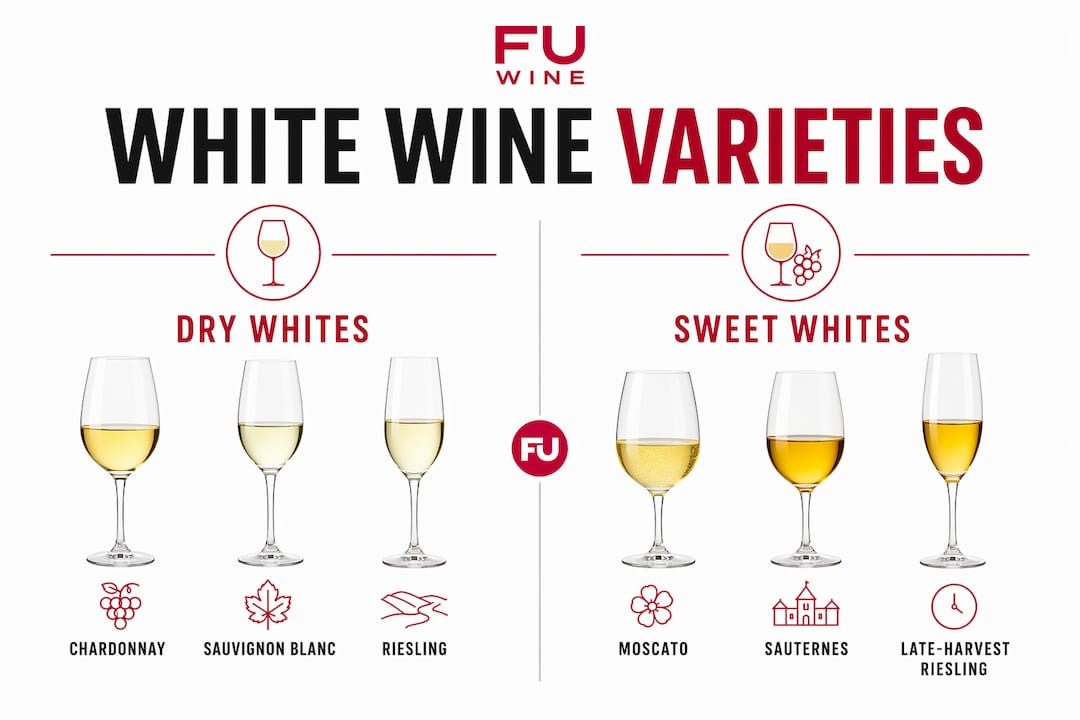
Sweet white wine names occupy a separate category from dry whites, and they deserve far more credit than they typically get. The key difference is residual sugar, which is the natural grape sugar left in the wine after fermentation stops.
Sweet white varieties include Moscato, late-harvest Riesling, Sauternes, and Botrytis-affected Pinot Gris, each with rich, luscious profiles built on layers of fruit and texture. Premium examples like Sauternes blend Sémillon and Sauvignon Blanc to create a full, complex mouthfeel that goes well beyond simple sweetness.
Sweet whites typically carry lower alcohol levels, sitting between 7.5% and 9.5% ABV. That lower alcohol makes them genuinely easy drinking for casual occasions, without sacrificing flavour.
The best sweet whites balance high residual sugar with natural acidity to avoid cloying sweetness. A wine with 99.5 g/L of residual sugar balanced by 7.8 g/L of acidity stays fresh and vibrant rather than heavy and flat. That balance is what separates a great sweet wine from a sugary one.
Master of Wine Jane Skilton makes the point that categorising sweet whites as dessert-only wines is limiting. Sweet whites provide real poise and balance with savoury dishes like blue cheese and liver pâté.
The top sweet white wine names to know:
- Moscato: Light, fizzy, and fragrant with peach and apricot notes. Italy’s Asti region is the benchmark.
- Late-harvest Riesling: Concentrated stone fruit and honey, with piercing acidity keeping it lively.
- Sauternes: France’s most famous sweet white, made from Botrytis-affected Sémillon. Rich, golden, and complex.
- Botrytis Pinot Gris: New Zealand and Alsace produce outstanding examples with marmalade and spice character.
Pro Tip: Try a glass of Sauternes or late-harvest Riesling alongside a strong blue cheese. The sweetness of the wine cuts through the fat and salt in a way that dry whites simply cannot.
How can you use white wine names to choose wines for food pairing?
Knowing a white wine name is the fastest shortcut to a great food match. Each variety carries a set of flavour characteristics, and those characteristics tell you exactly what it will do on the table.
Understanding white wine names aids practical food pairing by helping you match a wine’s acidity, sweetness, and body with the ingredients on the plate. A high-acid wine cuts through fat. A full-bodied wine holds its own against rich sauces. A sweet wine tames heat and spice.
The core pairing principles by variety:
- Sauvignon Blanc with seafood and salads. The high acidity and citrus character mirror the brightness of fresh fish, oysters, and green herbs. It’s a natural match.
- Chardonnay with poultry and creamy dishes. A full-bodied, oaked Chardonnay has the weight to stand up to roast chicken, pasta in cream sauce, or a rich mushroom risotto.
- Riesling with spicy cuisine. The residual sweetness in an off-dry Riesling cools the heat of Thai, Indian, and Sichuan dishes. The acidity keeps the pairing from feeling heavy.
- Gewürztraminer with aromatic Asian food. The wine’s own spice and floral character echoes the flavours in Vietnamese, Moroccan, and Cantonese cooking.
- Chenin Blanc with pork and root vegetables. Its honeyed texture and bright acidity work beautifully with roasted pork belly, parsnip, and apple-based dishes.
- Pinot Gris with smoked fish and charcuterie. The fuller Alsatian style has enough body and richness to complement smoky, cured flavours without being overwhelmed.
The deeper pairing guide on the FU Wine blog breaks these principles down even further with specific dish recommendations. It’s worth bookmarking before your next dinner party.
Are there regional and lesser-known white wine names worth exploring?
The most interesting white wine discoveries often sit outside the mainstream. Regional varieties carry flavours shaped by specific soils, climates, and centuries of local winemaking tradition. That’s what makes them worth seeking out.
Regional white wine names often reflect terroir-driven characteristics like minerality, acidity, or aromatic intensity. Exploring them rewards curiosity in a way that sticking to Chardonnay simply doesn’t.
Grüner Veltliner from Austria is the variety that serious wine drinkers reach for when they want something different. It’s peppery, dry, and intensely mineral, with a savouriness that pairs brilliantly with vegetable-forward dishes and white asparagus.
Vinho Verde from Portugal’s northwest is one of the best-value white wine styles in the world. It’s light, slightly effervescent, and built on varieties like Alvarinho and Loureiro. The low alcohol and bright acidity make it perfect for warm Australian summers.
Picpoul de Pinet from France’s Languedoc region is the oyster lover’s white. The name means “lip stinger” in French, which tells you everything about its sharp, citrus-driven character.
White Rioja from Spain is criminally underrated. Made primarily from Viura (also called Macabeo), it ranges from fresh and unoaked to complex and barrel-aged. The aged styles develop a nutty, oxidative character that’s unlike anything else in the white wine world.
| Variety | Origin | Key character | Best with |
|---|---|---|---|
| Grüner Veltliner | Austria | Peppery, mineral | Asparagus, vegetable dishes |
| Vinho Verde | Portugal | Light, effervescent | Seafood, summer salads |
| Picpoul de Pinet | France (Languedoc) | Sharp, citrus | Oysters, shellfish |
| White Rioja | Spain | Nutty, textured | Aged cheeses, tapas |
Finding these varieties in Australia is easier than it used to be. Specialist bottle shops in Melbourne and Sydney stock them regularly, and the best white wines for summer guide covers several Australian-available options worth trying.
Key takeaways
Knowing a white wine name tells you the grape, the flavour profile, and the best food match before you even open the bottle.
| Point | Details |
|---|---|
| Names signal flavour | Each white wine name carries a predictable flavour profile, from Sauvignon Blanc’s citrus to Gewürztraminer’s lychee. |
| Sweet whites are versatile | Sweet varieties like Moscato and Sauternes pair well with savoury dishes, not just dessert. |
| Acidity drives pairing | High-acid whites like Riesling and Sauvignon Blanc cut through fat and spice better than full-bodied styles. |
| Regional varieties reward curiosity | Lesser-known names like Grüner Veltliner and Picpoul offer distinctive flavours often at better prices. |
| Balance defines quality | The best sweet whites balance residual sugar with natural acidity to stay fresh rather than cloying. |
What learning white wine names actually taught me
Most people treat white wine names as a memory test. I used to do the same thing. I’d scan a label, recognise “Chardonnay,” and feel vaguely confident. But that’s not really knowing a wine.
The shift happened when I stopped treating names as labels and started treating them as flavour promises. When you know that Riesling always brings high acidity and that acidity is what makes it sing with spicy food, the name becomes genuinely useful. You stop guessing and start choosing.
The variety I see overlooked most often is Chenin Blanc. People walk straight past it in bottle shops because it doesn’t have the brand recognition of Chardonnay or Sauvignon Blanc. That’s their loss. A good Chenin Blanc from South Africa’s Swartland or France’s Vouvray is one of the most complex and food-friendly whites you can find, often at a fraction of the price of a comparable Burgundy.
My honest advice for anyone building their white wine knowledge: start with the seven core varieties, get comfortable with what each one tastes like, then deliberately pick one unfamiliar name every month. Grüner Veltliner one month, Picpoul the next. Within six months, you’ll have a palate map that most casual drinkers never develop. And you’ll have a lot of fun getting there.
— Damien
White wines worth drinking, without the inflated price tag
FU Wine was built for exactly this kind of exploration. The full wine collection includes white wines sorted by grape variety and style, so you can browse by the names you’ve just learned and find bottles that actually deliver.
Every bottle on the site comes with FU Wine’s no-nonsense approach: premium quality, no middleman markup, and prices that make trying something new feel like a smart call rather than a gamble. Whether you’re after a classic Sauvignon Blanc, a rare Botrytis Pinot Gris, or something from a region you’ve never heard of, the collection rotates regularly. The deals move fast, so when you spot a variety you want to try, grab it.
FAQ
What does a white wine name tell you?
A white wine name identifies the grape variety or regional style used to make the wine. It signals the expected flavour profile, acidity level, and typical food pairings before you open the bottle.
What are the most popular white wine varieties?
Chardonnay, Sauvignon Blanc, and Riesling are consistently identified as the most widely recognised varieties, alongside Pinot Grigio, Chenin Blanc, Albariño, and Gewürztraminer.
What are the top sweet white wine names?
The most recognised sweet white wine names are Moscato, late-harvest Riesling, Sauternes, and Botrytis-affected Pinot Gris. These styles typically carry lower alcohol, between 7.5% and 9.5% ABV.
Can sweet white wines pair with savoury food?
Yes. Master of Wine Jane Skilton notes that sweet whites pair well with savoury dishes like blue cheese and liver pâté, making them far more versatile than the dessert-only reputation suggests.
Which white wine is best for beginners?
Sauvignon Blanc is the most approachable starting point. Its bright citrus and grassy flavours are easy to identify, and it pairs well with a wide range of everyday foods including salads, seafood, and light pasta dishes.