

White wine colour: what every shade tells you
TL;DR:
- White wine colour ranges from pale lemon-green to deep amber, indicating grape variety, winemaking, and age. It provides insights into a wine’s style, age, and taste, making quick visual assessment a valuable skill. Darker hues in young wines often signal oxidation or poor storage, not quality, while mature wines develop complex tertiary flavours and deeper colours.
White wine colour is the visible spectrum of hues ranging from pale lemon-green to deep amber, shaped by grape variety, winemaking technique, and ageing. That spectrum is not just pretty to look at. It tells you what to expect in the glass before you take a single sip. Whether you’re picking a bottle for a weeknight dinner or hunting down something rare, reading the colour is one of the fastest ways to understand a wine’s character. This is the skill that separates confident drinkers from people who just guess.
What determines the white wine colour in the glass?
White wine is technically a range of yellows, determined largely by human winemaking choices. That framing matters. Grape juice itself is colourless. The skin of the grape holds the pigment, and in white winemaking, skin separation happens immediately after crushing to keep the wine pale. The less time juice spends touching skins, the lighter the final colour.
Grape variety plays a real role too. Chardonnay tends toward golden hues compared to Muscadet, which pours noticeably paler. That difference comes from the grape’s natural phenolic content interacting with fermentation. Climate adds another layer. Cool climate grapes like Sauvignon Blanc from Sancerre, Muscadet, and Vinho Verde often show a subtle greenish tinge linked to residual chlorophyll and young grape characteristics.
Winemaking choices push colour further. Oak ageing introduces vanillin and lignin compounds that shift white wine from pale straw toward medium or deep gold. Barrel fermentation does the same. Oxidation during ageing darkens the wine further through Maillard reactions, the same chemistry that browns bread in a toaster.
The most dramatic colour shift comes from skin contact. Orange wines are white wines made with extended skin contact, appearing amber to deep orange with higher tannin and body. They prove that white wine juice naturally carries deeper colour potential. The winemaker simply chooses whether to release it.
Key factors shaping white wine shades at a glance:
- Grape variety: Chardonnay runs golden; Muscadet and Pinot Grigio run pale
- Skin contact: Zero contact keeps wine pale; extended contact creates orange wine
- Oak ageing: Barrel time deepens colour toward gold
- Oxidation: Controlled or accidental oxidation pushes hues toward amber
- Climate: Cool climates produce greenish tinges; warm climates produce deeper yellows
Pro Tip: Hold your glass against a white background, like a napkin or white wall, to see the true colour without distortion from the table or lighting.
How does white wine colour change with age?
Colour progression in white wine is predictable once you know the pattern. Young whites aged 0–2 years show pale lemon-green, moving through straw at 2–5 years, medium gold at 5–10 years, deep gold at 10–20 years, and amber at 20 or more years. Oxidation of phenolic compounds drives every step of that shift.
The progression works like this:
- Pale lemon-green (0–2 years): Crisp, fresh, high acid. Common in cool climate whites like Riesling and Vinho Verde.
- Pale to medium straw (2–5 years): Slight softening of acidity. Light body, clean fruit. Most unoaked whites sit here at their peak.
- Medium gold (5–10 years): Richer texture, possible oak influence. Aged Chardonnay and white Burgundy land in this zone.
- Deep gold (10–20 years): Complex tertiary flavours. Honey, dried fruit, and nutty notes appear. Colour is noticeably deep.
- Amber (20+ years): Oxidative character dominates. Rare territory for most whites, though Sauternes and aged Riesling can thrive here.
The rim of the glass tells the story faster than the core. Rim colour darkens first as oxidation progresses from the edges inward, making it the most reliable visual cue for age and condition. Tilt your glass at a 45-degree angle over a white surface and look at the very edge of the liquid. A pale, watery rim on a golden wine suggests youth. A brownish rim on a pale wine is a warning sign.
One common misconception deserves a direct correction. A young white wine showing deep gold or amber hues is usually oxidised or heat-damaged, not well-aged. Darker colour early in a white wine’s life is a visual warning of poor storage, not a quality signal. If you crack open a two-year-old Sauvignon Blanc and it pours deep gold, something went wrong in storage.
Sweet and late harvest styles are the exception. Sauternes, Tokaji, and botrytised Rieslings naturally trend toward deeper amber even when young, because their concentrated sugars and noble rot accelerate colour development.
What can white wine colour tell you about taste?
Colour and taste are directly connected in white wine. Pale lemon-green signals crisp, high-acid, fresh wines. Think Sauvignon Blanc from the Loire Valley or a young Riesling from the Clare Valley. These wines cut through food and refresh the palate. They rarely sit in oak.
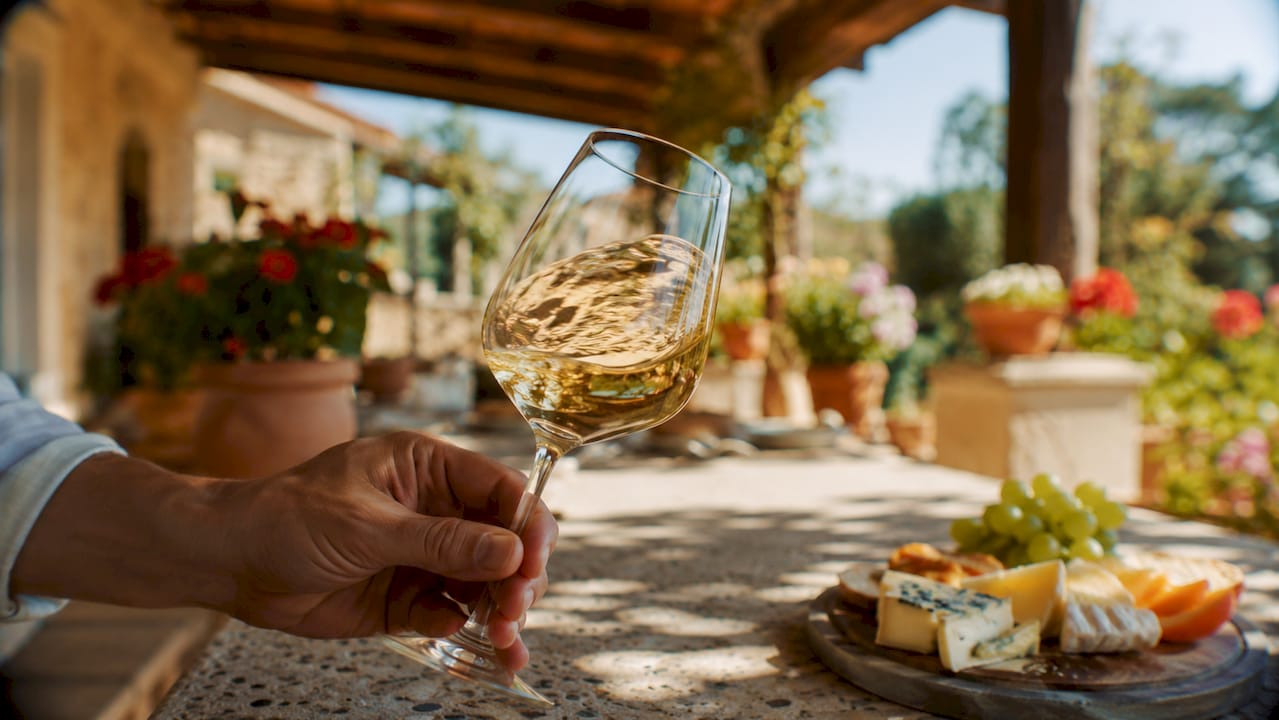
Straw and pale gold hues associate with light to medium body and unoaked styles. Recognising how colour corresponds with taste profiles builds selection confidence fast. A pale straw Pinot Grigio from Alsace will drink differently from a golden Chardonnay from Margaret River, and the colour tells you that before you read the label.
Golden hues signal oak influence, richer body, and buttery or spicy notes. A medium gold Chardonnay almost certainly spent time in barrel. Expect vanilla, cream, and toasted oak alongside the fruit. These wines pair well with richer dishes like roast chicken, creamy pasta, or grilled fish with butter sauce. For more on matching colour cues to the table, the guide on pairing white wine with food covers the full picture.
Deep gold and amber hues point to aged, sweet, or oxidative styles with complex tertiary flavours. Honey, marmalade, dried apricot, and walnut are common descriptors. These wines suit cheese boards, foie gras, or slow-cooked pork. They are not everyday quaffers. They are occasion wines.
| Colour | Typical style | Flavour cues | Best with |
|---|---|---|---|
| Pale lemon-green | Crisp, unoaked, high acid | Citrus, green apple, herb | Seafood, salads, light tapas |
| Pale to medium straw | Light to medium body, fresh | Stone fruit, pear, floral | Chicken, mild cheeses, pasta |
| Medium gold | Medium to full body, oaked | Vanilla, cream, ripe stone fruit | Roast chicken, creamy sauces |
| Deep gold | Full body, aged or sweet | Honey, dried fruit, spice | Rich fish, soft cheeses |
| Amber | Oxidative, complex | Walnut, marmalade, dried apricot | Charcuterie, aged cheese, foie gras |
Pro Tip: When tasting blind, use colour as your first filter. Pale and green-tinged? Think cool climate, high acid, unoaked. Deep gold? Think oak, warmth, or age. You’ll narrow the field before the wine even hits your tongue.
What are the white wine colour variations and terms to know?
The wine industry uses specific terms for white wine shades, and knowing them makes tasting notes and wine descriptions far more useful. These are not arbitrary labels. Each one maps to a real visual category and carries flavour implications.
Pale lemon-green is the lightest category. It describes wines with a faint greenish cast, common in cool climate whites. Sauvignon Blanc from Sancerre and Muscadet are textbook examples. The green tinge comes from residual chlorophyll in young grapes.
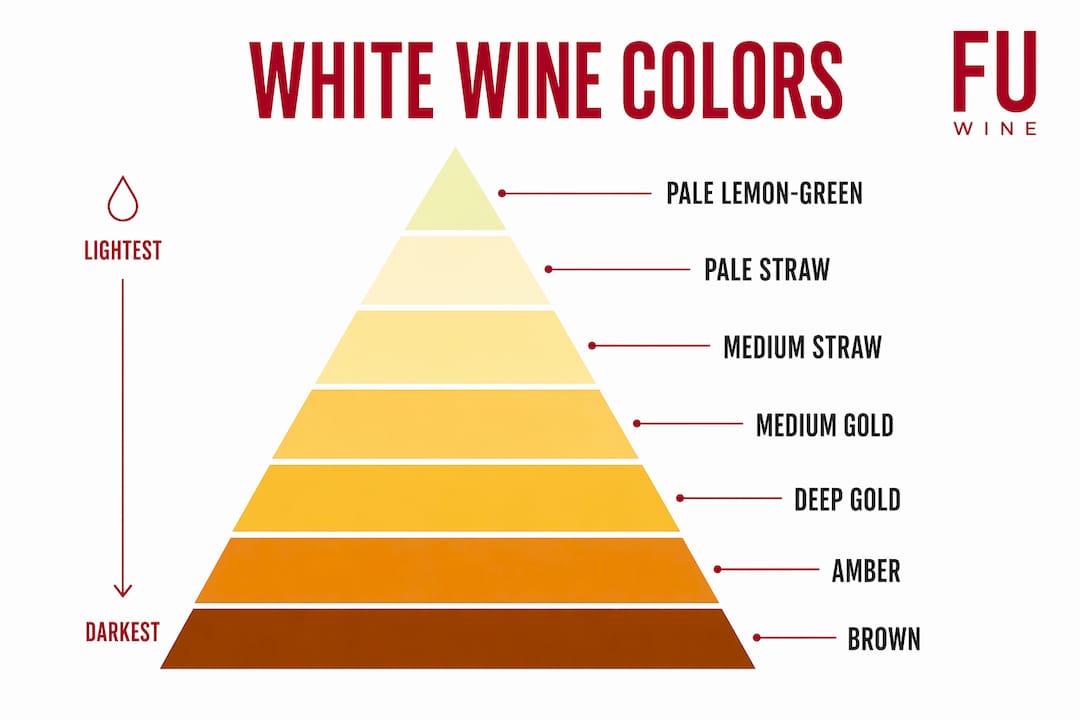
Pale straw is the most common shade for everyday white wines. It describes a very light yellow with no green. Most unoaked whites from moderate climates land here. Pinot Grigio from northern Italy is a reliable reference point.
Medium straw sits a shade deeper. Wines here often have a touch more body and may show some bottle age. Unoaked Chardonnay and dry Riesling often pour medium straw.
Medium gold signals winemaking intervention or some age. Barrel-fermented whites, lees-aged styles, and wines from warmer regions pour medium gold. This is Chardonnay territory. For a full breakdown of white wine varieties and how they map to colour, that guide covers the ground well.
Deep gold describes rich, full-bodied whites. Aged white Burgundy, Viognier from the Rhône, and quality Sémillon from the Hunter Valley all pour deep gold at their peak.
Amber is the territory of oxidative styles, skin-contact orange wines, and very old sweet whites. Colour here is unmistakably brown-gold. Tannins are present. Texture is grippy.
Brown signals the end of a wine’s life. It is not a quality category. A white wine that pours brown has oxidised beyond its drinking window.
Orange wine sits outside the standard progression. It is a white wine made with skin contact, producing hues from pale copper to deep amber. The colour is a direct result of the winemaking choice, not age or variety alone.
Key takeaways
White wine colour is the most reliable first clue to a wine’s age, style, and flavour profile, and reading it correctly takes less than ten seconds.
| Point | Details |
|---|---|
| Colour reflects winemaking choices | Skin separation, oak ageing, and oxidation each shift white wine from pale to deep gold. |
| Rim colour reveals age fastest | The rim darkens before the core, making it the best visual cue for oxidation and ageing. |
| Pale green means fresh and crisp | Lemon-green hues signal cool climate, high acid, unoaked wines like Muscadet or young Riesling. |
| Dark colour in young wine is a warning | Deep gold or amber in a wine under five years old usually indicates oxidation or poor storage. |
| Colour predicts food pairing | Pale whites suit light dishes; golden and amber wines match richer, more complex food. |
Colour is your cheat sheet, not the whole exam
I’ve tasted a lot of white wine over the years, and the single most underused skill I see in casual drinkers is reading the glass before the nose. People rush straight to sniffing and sipping. They skip the visual entirely. That’s leaving free information on the table.
The rim check is the one habit I’d push on everyone. Tilt the glass, look at the edge, and you’ll know within seconds whether you’re dealing with a fresh wine or one that’s been sitting in a warm cellar too long. That skill alone has saved me from ordering oxidised wine at restaurants more times than I can count.
The trap I see most often is people assuming darker means better. It doesn’t. A deep gold Sauvignon Blanc at two years old is not a premium product. It’s a storage failure. Colour confidence means knowing when darkness signals quality maturation and when it signals a problem. Context is everything. A deep gold Sauternes is glorious. A deep gold Pinot Grigio from last year is not.
The other nuance worth sitting with is that colour is a starting point, not a verdict. A pale wine from a warm vintage can still carry weight and richness. An amber-hued orange wine can be bracingly fresh. Use colour to set your expectations, then let the wine confirm or surprise you. That tension is half the fun. For a structured approach to the full wine tasting process, working through appearance, nose, and palate in sequence sharpens every skill fast.
— Damien
Premium whites worth looking at, at prices that make sense
FU Wine sources premium white wines across the full colour spectrum, from pale, racy cool-climate styles to rich, golden barrel-aged bottles that punch well above their price point.
If you’ve been paying full retail for quality white wine, you’ve been overpaying. FU Wine cuts through the usual markups to bring you rare and premium whites at prices that don’t require a second mortgage. The range rotates constantly, so the bottle you want won’t sit around waiting. Flash deals, limited releases, and cellar clearances show up regularly. If you want to put your new colour knowledge to work on a bottle worth drinking, this is the place to start.
FAQ
What colour is white wine exactly?
White wine colour ranges from pale lemon-green through straw, gold, deep gold, and amber. The exact shade depends on grape variety, winemaking technique, and how long the wine has aged.
Why does white wine turn darker with age?
Oxidation of phenolic compounds darkens white wine over time, shifting it from pale straw toward gold and eventually amber. The rim darkens first, making it the earliest visual indicator of age.
Does darker white wine mean better quality?
Not necessarily. Darker colour in a young white wine usually signals oxidation or heat damage rather than quality maturation. Deep colour is only a positive sign in aged, sweet, or intentionally oxidative styles.
What is orange wine and how does its colour form?
Orange wine is a white wine made with extended skin contact during fermentation, producing amber to deep orange hues. The colour comes directly from pigments in the grape skins, which are normally excluded in standard white winemaking.
How can I use white wine colour to choose a food pairing?
Pale, green-tinged whites suit light dishes like seafood and salads. Golden whites pair with richer food like roast chicken or creamy pasta. Amber and deep gold styles match charcuterie, aged cheese, and complex dishes. A full guide to wine and food pairing covers the principles in more detail.