

White fortified wine: the collector's complete guide
TL;DR:
- White fortified wines are made from white grapes with added spirit, resulting in elevated alcohol levels and diverse styles. They offer complex aging potential, especially in rare versions like Carcavelos, and are undervalued options for collectors. Proper serving enhances their flavor, and they pair well with a variety of foods, making them versatile for both drinking and investment.
White fortified wine is defined as a wine made predominantly from white grape varieties, with fermentation halted by the addition of grape spirit to produce an elevated alcohol level and a broad spectrum of styles. The industry term is “fortified wine,” and within that category, white expressions range from bone-dry aperitifs to richly aged dessert wines. Alcohol levels run from 16% to 22% ABV across Portuguese white fortified styles, making these wines significantly more structured than standard table wines. Portugal’s Douro Valley is the spiritual home of the category, though appellations like Moscatel de Setúbal and the rare Carcavelos also produce world-class expressions. If you’ve been sleeping on this category, it’s time to wake up.
What grape varieties define white fortified wine?
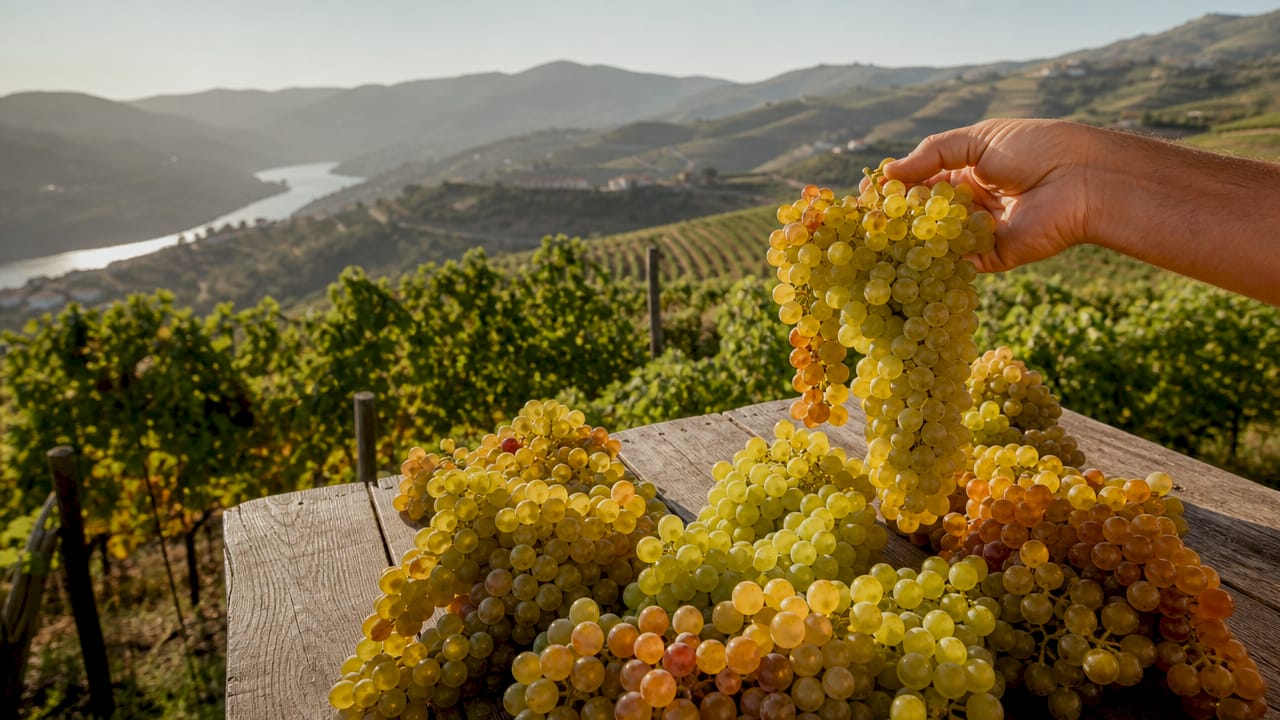
The grapes behind a fortified white wine shape everything: its acidity, aroma, sweetness, and ageing potential. Portugal’s white fortified tradition draws on a handful of native varieties, each contributing something distinct to the final blend.
The principal grapes used across Portuguese white fortified styles include:
- Malvasia Fina: Delivers honeyed, floral aromatics with a soft, round texture. A backbone grape in White Port blends.
- Rabigato: High natural acidity. Acts as a counterweight to richer, sweeter varieties and keeps the wine fresh over time.
- Viosinho: Aromatic and structured, contributing stone fruit and citrus notes with good body.
- Gouveio: Adds weight and a slightly waxy, mineral character that supports ageing.
- Muscat of Alexandria: The star of Moscatel de Setúbal. DOC rules require a minimum of 85% Muscat of Alexandria for the appellation label. It delivers intense orange blossom, apricot, and honeyed richness.
- Galego Dourado: A rare variety used in Carcavelos fortified wine, contributing amber colour, balanced sweetness, and a dry, complex finish.
Blending is not arbitrary. Acidic varieties like Rabigato balance richer grapes to maintain freshness in the finished wine. Without that balance, a sweet fortified white tips into cloying territory. The best producers treat blending as a precision craft, not an afterthought.
Pro Tip: When reading a label, look for Rabigato in the blend. Its presence signals a producer who prioritises freshness and structure over simple sweetness.
How is white fortified wine produced and classified?
Production is where the magic happens, and understanding it separates casual drinkers from serious collectors.
-
Fortification: Winemakers add grape spirit at roughly 77% ABV to fermenting must. This halts fermentation, preserving natural grape sugars and locking in the wine’s sweetness level. Standard White Port reaches 19%–22% ABV through this process.
-
Skin maceration: Premium styles like Moscatel de Setúbal use extended skin contact after fortification. Three to six months of skin contact extracts aromatic compounds and texture that tank fermentation simply cannot replicate.
-
Traditional treading: Some producers still use foot-treading in granite lagares for white Port production. This method contributes complex phenolic extraction and structural depth that supports long ageing.
-
Ageing classifications: Styles are tiered by time in wood. Moscatel de Setúbal requires a minimum of 18 months in wood for the standard white style. Superior classifications demand five or more years. Moscatel Roxo requires a minimum of 36 months. DOC status dates to 1907, and classification rules have been tightly governed ever since.
-
Carcavelos ageing: This rare appellation mandates a minimum of two years in barrel plus six months in bottle. Carcavelos offers complex flavours with genuine ageing potential, making it one of Portugal’s most collectible whites.
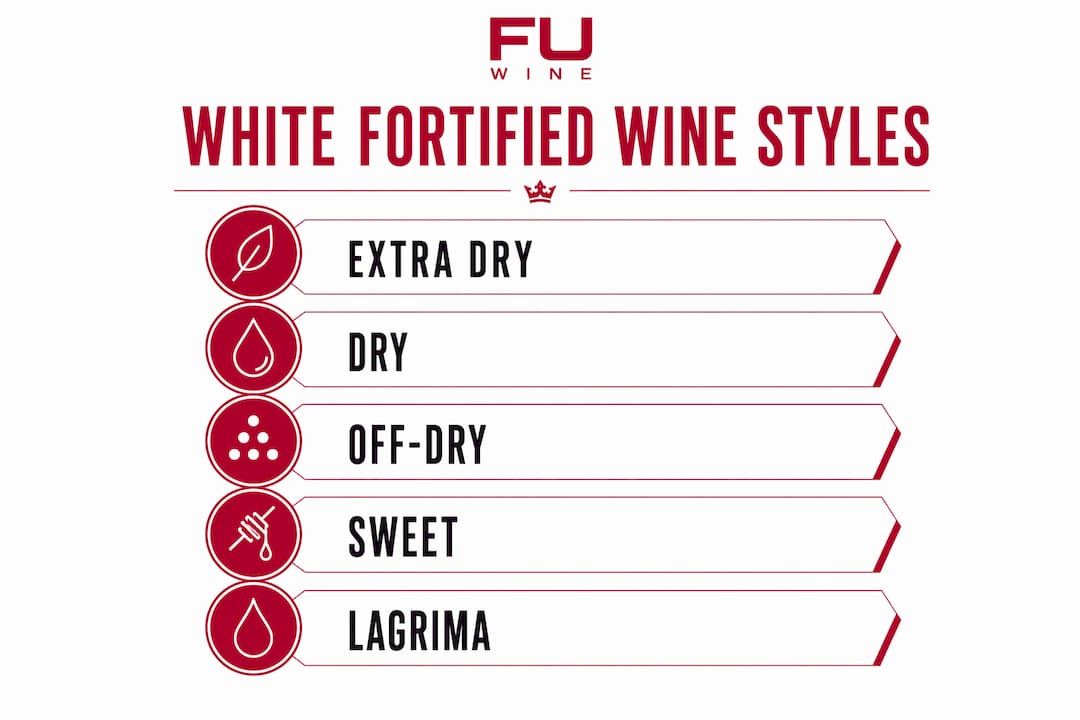
The sweetness spectrum runs from Extra Dry through Dry, Off-Dry, and Sweet, up to Lagrima, which is the richest and most luscious expression. Each level produces a fundamentally different sensory experience. Dry styles sit comfortably alongside a gin and tonic in the aperitif space. Lagrima expressions rival the richest dessert wines in the world.
| Style | Sweetness level | Best use |
|---|---|---|
| Extra Dry / Dry | Bone dry to off-dry | Aperitif, cocktails |
| Off-Dry / Sweet | Medium sweetness | Cheese, light desserts |
| Lagrima | Very rich and sweet | Dessert, solo sipping |
| Aged Colheita | Varies, oxidative | Collector, food pairing |
What do white fortified wines actually taste like?
Tasting notes shift dramatically depending on age and style. Fresh, unaged expressions taste completely different from wood-aged whites.
Young, unaged styles deliver:
- Bright citrus: lemon zest, grapefruit, and white peach
- Floral lift: jasmine, orange blossom, and elderflower
- Light honey and fresh almond on the finish
- Crisp acidity with a clean, refreshing close
Wood-aged whites are a different beast entirely. Aged whites develop dried apricot, honey, toasted nuts, crystallised orange peel, and savoury salinity. These characters evolve over decades in wood casks, and the best examples show a complexity that rivals aged Tawny Port. The key difference is that aged whites remain fresher and more elegant than a Tawny of equivalent age.
Sweet dessert-style expressions, particularly Moscatel de Setúbal, lean into caramel, toffee, candied orange, and a viscous, coating mouthfeel. The extended skin maceration adds a textural richness that makes these wines feel almost chewy. Carcavelos sits in its own lane: amber in colour, with balanced sweetness and a dry, savoury finish that rewards patience.
A Kopke White Colheita is a useful reference point for collectors. It shows the oxidative complexity of a single-vintage aged white, with layers of dried fruit, spice, and salted caramel that develop over years in cask.
How to serve white fortified wine and pair it with food
Serving temperature makes or breaks the experience. Dry and off-dry styles perform best served well chilled, around 8–10°C. Aged, wood-matured expressions open up more at a slightly warmer 12–14°C, allowing their complex aromatics to breathe.
Glassware matters more than most people realise. A medium-sized tulip glass concentrates aromas without trapping them. Avoid oversized red wine glasses, which dissipate the delicate floral and citrus notes in younger styles.
The Portonic cocktail has done more to modernise white fortified wine’s image than any marketing campaign. Mix one part dry White Port with two parts tonic water, serve over ice, and finish with a slice of lemon or a sprig of mint. It’s the Portuguese answer to a gin and tonic, and it works brilliantly as a summer aperitif. For creative pairing ideas beyond the glass, a gourmet popcorn pairing guide offers some genuinely surprising flavour combinations with fortified whites.
Food pairing by style:
- Dry White Port: Olives, salted almonds, charcuterie, and fresh seafood
- Off-Dry styles: Aged manchego, blue cheese, and fig-based condiments
- Moscatel de Setúbal: Crème brûlée, almond tart, and fresh blue cheese
- Aged Colheita whites: Dark chocolate, walnut cake, and foie gras
For a deeper dive into pairing principles, the white wine pairing guide at FU Wine covers the full spectrum of food-friendly white styles.
Pro Tip: Serve a dry White Port in a wine glass over ice with a slice of orange instead of lemon. The orange amplifies the wine’s natural citrus and floral notes without competing with them.
What is the investment potential of white fortified wines?
White fortified wines are undervalued relative to their red counterparts. Collectors increasingly recognise aged White Port Colheitas as hidden gems with exceptional value-to-age ratios compared to red fortifieds. That gap is closing, but there is still time to build a cellar position before the market catches up.
Entry-level bottles are for drinking, not investing. The real opportunity sits in premium, age-indicated whites and single-vintage Colheitas. These wines have the structure and complexity to evolve over decades. Aged White Ports develop complex oxidative characters that demand specialised cellar conditions: consistent temperature, humidity control, and minimal vibration.
Carcavelos is arguably the most collectible white fortified style in the world right now. Production is tiny, the appellation is historically significant, and bottles rarely appear at auction. That scarcity creates genuine upside for collectors who can source them. For a broader view of rare Portuguese styles worth pursuing, the rare wine varieties guide at FU Wine is worth your time.
Authenticity is the key caution. Buy from reputable sources, verify provenance, and be sceptical of any aged expression without clear documentation. The fortified wine types guide covers the broader classification landscape and helps collectors understand what they are actually buying.
Pro Tip: Focus on age-indicated whites (10, 20, 30, 40 year) from established Douro producers. These offer transparent ageing credentials and consistent quality benchmarks for comparison.
Key takeaways
White fortified wine rewards collectors who look beyond the obvious red expressions, offering complex aged styles, rare appellations, and genuine investment upside at prices that still feel like a secret.
| Point | Details |
|---|---|
| Alcohol and style range | White fortified wines run from 16% to 22% ABV, spanning dry aperitifs to rich dessert expressions. |
| Grape variety matters | Varieties like Rabigato, Muscat of Alexandria, and Galego Dourado each shape flavour, acidity, and ageing potential distinctly. |
| Production defines complexity | Skin maceration, foot-treading, and extended wood ageing create layers that standard winemaking cannot replicate. |
| Serving unlocks flavour | Dry styles shine at 8–10°C; aged expressions open at 12–14°C; the Portonic cocktail broadens the aperitif appeal. |
| Investment opportunity exists | Aged Colheitas and rare Carcavelos bottles are undervalued relative to red fortifieds, with strong long-term cellar potential. |
Damien’s take: the white fortified wines the wine world keeps ignoring
White fortified wines are the most overlooked category in serious wine collecting. I’ve watched collectors spend serious money on aged Tawny and vintage Port while walking straight past White Colheitas that offer comparable complexity at a fraction of the price. That’s not a knock on red fortifieds. It’s an observation about where the value actually sits right now.
The versatility of these wines still surprises people. A dry White Port over ice with tonic is genuinely one of the best aperitifs you can pour on a hot Australian afternoon. The same producer’s 20-year-old age-indicated white, served slightly warmer alongside a wedge of aged manchego, is a completely different experience. One wine, two completely different occasions. That range is rare in any category.
The cocktail revival has done something interesting for white fortified wines. Younger drinkers who discovered the Portonic through bar culture are now curious about the aged expressions. That curiosity is driving renewed interest in historic styles like Moscatel de Setúbal and Carcavelos. For collectors, that shift in awareness is a signal worth paying attention to.
My advice for anyone starting out: buy one dry White Port for drinking now and one age-indicated white for the cellar. Taste them side by side over a few years. The education you get from watching a wine evolve is worth more than any tasting note.
— Damien
White fortified wines worth finding at FU Wine
FU Wine exists precisely for moments like this. You’ve done the reading. You know what you’re looking for. Now you want the actual bottle, without paying a premium for someone else’s marketing budget.
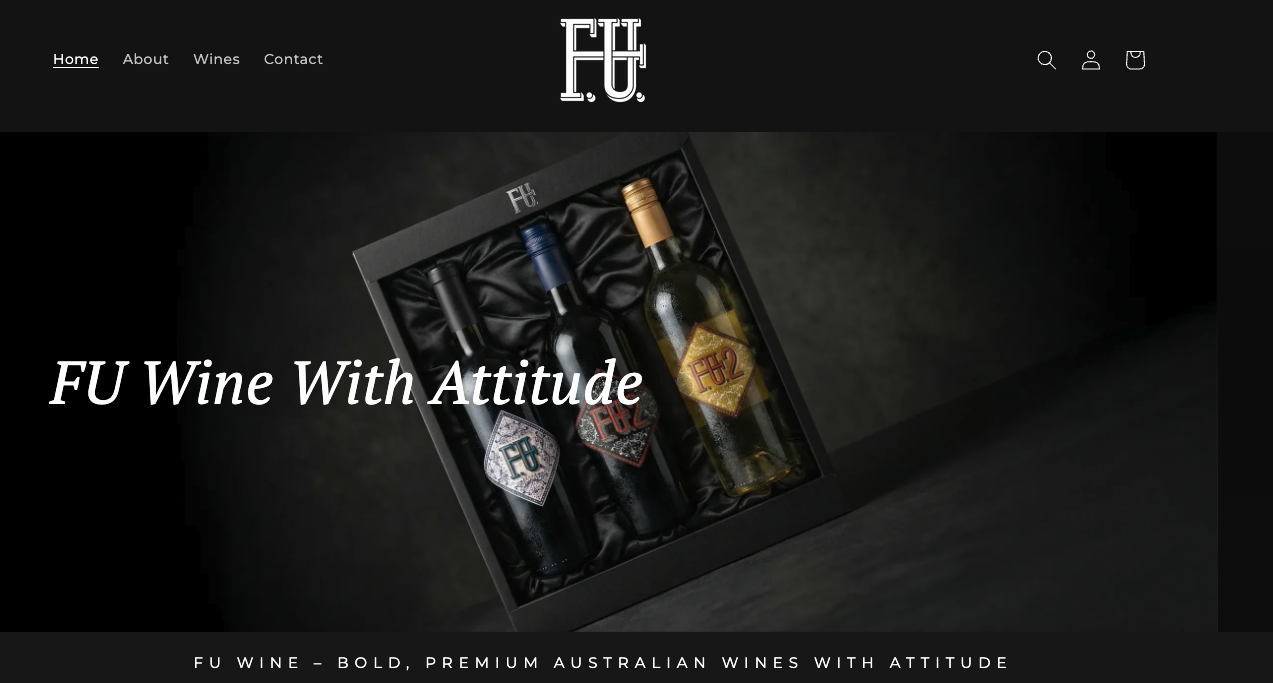
FU Wine sources premium and hard-to-find fortified whites, including aged Colheitas, rare Portuguese appellations, and limited cellar releases, at prices that make the category genuinely accessible. Every bottle is a small rebellion against the idea that quality has to cost a fortune. Browse the FU Wine collection and find your next white fortified obsession before someone else does. Life’s too short for ordinary wine.
FAQ
What is white fortified wine?
White fortified wine is a wine made from white grape varieties with fermentation halted by added grape spirit, producing alcohol levels of 16%–22% ABV and styles ranging from dry aperitifs to rich dessert wines.
What are the most popular white fortified wine styles?
White Port, Moscatel de Setúbal, and Carcavelos are the most recognised Portuguese white fortified styles, each offering distinct flavour profiles from crisp and dry to richly sweet and aged.
How should I serve white fortified wine?
Serve dry and off-dry styles well chilled at around 8–10°C, and aged expressions at 12–14°C. The Portonic cocktail, one part White Port to two parts tonic with lemon over ice, is a popular modern serve.
Are white fortified wines good for collecting?
Aged White Port Colheitas and rare Carcavelos bottles offer strong investment potential. They are currently undervalued relative to red fortifieds and develop complex oxidative characters with long cellar ageing.
What food pairs well with white fortified wine?
Dry styles pair with olives, seafood, and charcuterie. Sweet expressions like Moscatel de Setúbal suit almond tart, crème brûlée, and blue cheese. Aged Colheita whites match dark chocolate and foie gras.