

What limited production wines really mean for collectors
TL;DR:
- The term “limited production” is primarily a marketing label with no legal standardization, allowing producers of all sizes to use it freely. Genuine small-batch wines generally come from producers with total outputs under 10,000 cases, transparent sourcing, and narrow distribution, unlike mass-produced “reserve” tiers from large wineries. To access authentic limited wines, collectors should join direct allocation lists, prioritize transparency, and scrutinize case counts to avoid inflated scarcity claims.
You’ve seen it on the label a hundred times. “Limited production.” It sounds exclusive, rare, and totally worth the premium price tag. But here’s the uncomfortable reality: the term is not regulated, not standardised, and not always honest. Plenty of bottles wearing that badge are produced in quantities that would make a small town blush. Understanding what limited production genuinely means is the difference between building a cellar full of authentic gems and overpaying for clever marketing dressed up in a fancy bottle.
Table of Contents
- What does ‘limited production’ actually mean?
- Inside the numbers: What counts as limited production?
- Why and how limited wines are made
- Access and pricing: How allocation systems and hype shape the market
- The uncomfortable truth: Most ‘limited releases’ aren’t what you think
- Where to start your hunt for authentic small-batch wines
- Frequently asked questions
Key Takeaways
| Point | Details |
|---|---|
| No legal definition | ‘Limited production’ is an undefined marketing term—always check for real transparency. |
| Real rarity is small batch | Wines under 1,000 cases are genuinely rare, especially if single vineyard or hands-on. |
| Mailing lists beat the hype | Get access and honest pricing through allocation or mailing lists, not just retail. |
| Resist the reserve label | Not all ‘reserve’ or ‘limited’ wines are genuinely rare; large producers often use these for marketing. |
| Transparency is your edge | Focus on producers who disclose vineyard, vintage, and total volume details openly. |
What does ‘limited production’ actually mean?
Let’s call it what it is. “Limited production” is, for the most part, a marketing term. There is no legal definition under TTB regulations (27 CFR Part 4), which means any producer, from a garage winemaker to a multinational beverage corporation, can slap it on a label without consequence. No rules. No oversight. No accountability.
So what does the industry actually mean when it uses the phrase? In genuine circles, limited production typically describes intentional runs of under 5,000 to 10,000 cases per year, as opposed to the hundreds of thousands of cases churned out by large commercial operations. But the most sought-after bottlings sit far below that ceiling, often under 500 cases for a single vintage.
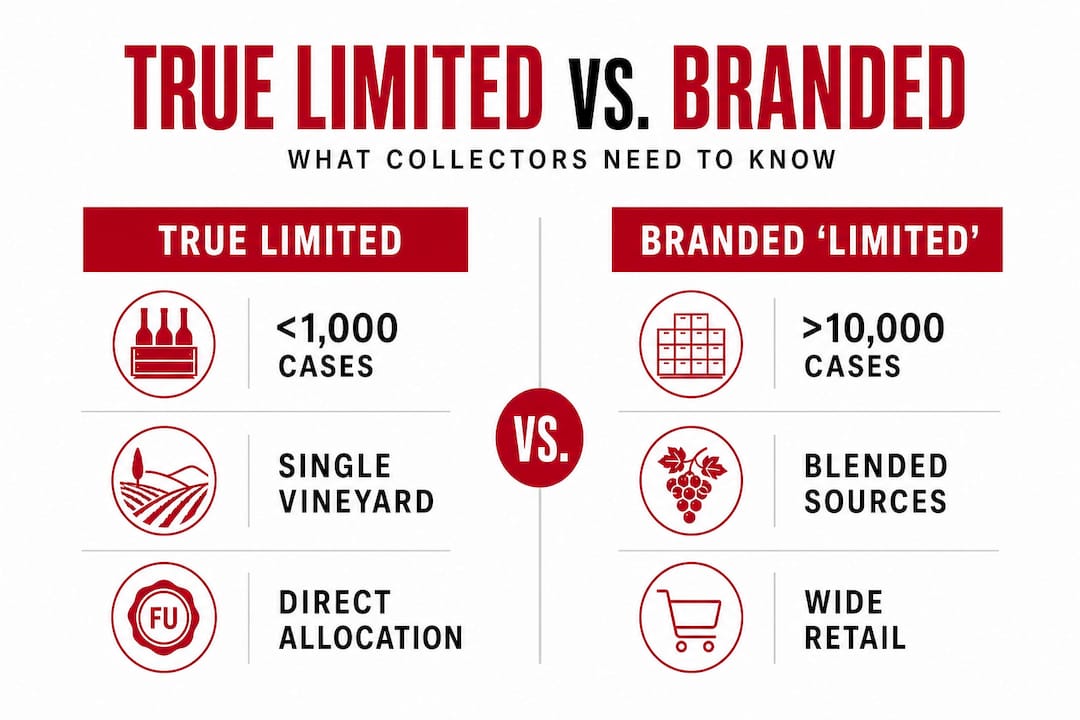
Here is where wine industry gatekeeping really bites collectors. A large producer might make 200,000 cases of their flagship label and a “reserve” tier of just 2,000 cases. They call the reserve limited. Technically, it is. But the winery’s overall scale and commercial infrastructure tells a very different story about how that wine was made and why.
Tell-tale signs a wine is truly small production:
- The total winery output is under 10,000 cases across all labels combined
- The winemaker is named and contactable, not a committee
- Grapes come from a specific, named vineyard block
- Distribution is narrow, often direct to consumer or a handful of retailers
- Vintage variation is acknowledged rather than engineered away
- The producer talks about the season, not just the score
Compare that to French boutique wineries, where the emphasis is firmly on place, transparency, and craft over volume. That is the standard worth chasing.
| Factor | True limited production | Branded ‘limited’ from large producers |
|---|---|---|
| Total winery output | Under 10,000 cases | Hundreds of thousands of cases |
| Tier transparency | Full production figures shared | Reserve volume disclosed, total often hidden |
| Winemaking approach | Hands-on, small-batch decisions | Standardised process, reserve as marketing tier |
| Distribution | Direct, narrow, allocated | Wide retail, often nationally distributed |
| Price rationale | Genuinely driven by scarcity | Premium driven by brand positioning |
| Authenticity | High | Variable, often low |
How limited releases work is something every collector should understand before opening their wallet. The mechanics matter as much as the marketing.
Inside the numbers: What counts as limited production?
With the definition clarified, let’s look closer at the real numbers and what they mean for your cellar.
Case counts are the raw material of this conversation. They give you context. A wine made in 300 cases tells a fundamentally different story than one made in 8,000 cases, even if both labels say “limited.” Here is a practical breakdown.
| Production tier | Annual case count | Typical access method | Price behaviour |
|---|---|---|---|
| Cult or icon | Under 500 cases | Mailing list only, multi-year waitlists | Very high release, exponential on secondary |
| Small boutique | 500 to 2,500 cases | Allocation, select retail, cellar door | Moderate to high, stable appreciation |
| Small-scale limited | 2,500 to 10,000 cases | Specialty retail, some online | Moderate, steady |
| Large reserve tier | 10,000 to 50,000+ cases | Wide retail, national distribution | Premium retail price, limited appreciation |
The most coveted small-production wines sit under 500 cases per year. That is not hyperbole. For the truly iconic end of the spectrum, California cult wines regularly produce fewer than 1,000 cases annually, sold exclusively through mailing lists with waitlists stretching anywhere from three to twenty years.
Why case numbers alone do not tell the full story:
- A producer making 400 cases of a single vineyard wine with full transparency is genuinely rare. A producer making 400 cases of a blend sourced from multiple anonymous appellations is a different beast entirely.
- Access matters as much as quantity. If 400 cases go to 400 loyal mailing list members, the wine will never touch a retail shelf. If 400 cases go to a national distributor, the scarcity is partly fabricated.
- Producer reputation shapes desirability. Numbers only make sense in context of who made the wine and why.
- Vintage variation signals authenticity. If a producer makes exactly the same case count every single year regardless of season, that is an industrial process, not artisan winemaking.
Understanding wine distribution for collectors is critical here, because the route a wine takes from barrel to your glass reveals everything about the producer’s priorities.
You should also explore single vineyard wines as a starting point for understanding why place and scale intersect so powerfully in small-production bottlings.
Pro Tip: Always ask a producer or retailer for the total winery case output, not just the tier you are buying. A “reserve” of 800 cases sounds special until you learn the winery makes 120,000 cases overall. That context changes everything.
Why and how limited wines are made
So what’s the philosophy behind truly small-batch and limited bottlings? Spoiler: it is rarely about the label.
Genuine small-lot winemaking is driven by something much more interesting than marketing. Small-lot production enables granular decision-making per vineyard block, per barrel, or even per fermentation vessel, precisely because the volume is low enough to treat every component as individual. That kind of attention is simply not possible at scale.
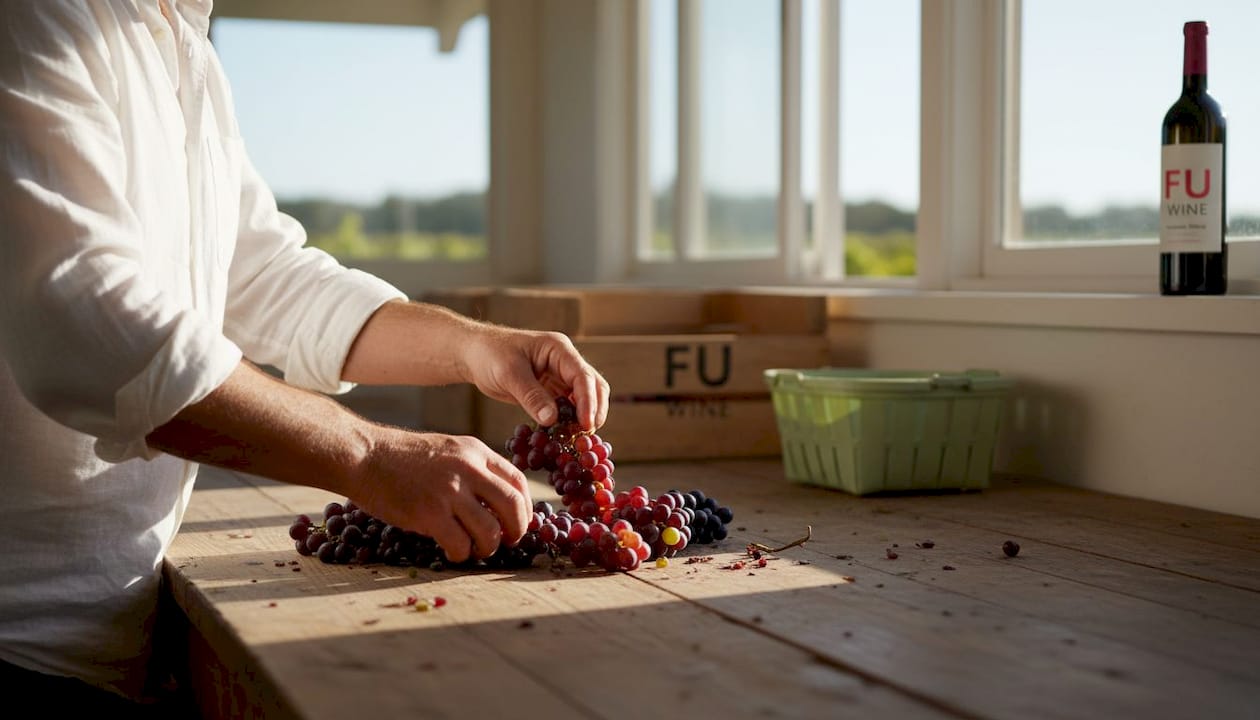
The motivations behind truly limited wines are usually one of three things: an exceptional site that produces only small quantities of fruit, an experimental approach that does not translate to high volumes, or a challenging season that delivered something remarkable in small amounts. All three are legitimate. All three produce wines worth seeking out.
Signs a wine is genuinely small-batch:
- The label names a specific vineyard block, not just a region
- The winemaker has a named profile and public track record
- The producer acknowledges vintage variation openly
- Fermentation details (vessel type, wild yeast, whole-bunch percentage) are disclosed
- Distribution is limited by design, not by lack of demand
- The winery website shows actual production figures rather than vague language
“True small production prioritises terroir focus, hands-on methods, and limited distribution over volume consistency. The goal is to express a place, not to satisfy a supply chain.” The Pip Wine Bar
That quote nails it. When the winemaker’s first instinct is to protect the integrity of a site rather than scale a revenue line, you are in genuinely rare territory. The contrast with “faux-limited” lines from mass producers could not be sharper. Those reserve tiers are designed to create a perception of exclusivity while operating within a fully industrial production system. The wine might be decent. It is rarely irreplaceable.
Collectors who want to understand the real drivers of quality should read up on vineyard sites and wine quality and pay attention to what winemakers are actually saying about their land, not just their scores. You should also keep an eye on hospitality wine trends, because the sommelier world is often the first to call out which small producers are legitimate and which are riding the exclusivity wave.
Producers with full transparency about their vineyard sources, batch sizes, and decision-making process are almost always worth your trust. Opacity, on the other hand, is a red flag dressed in a fancy bottle.
Access and pricing: How allocation systems and hype shape the market
Once you know what to look for and why it matters, here’s how the real market for limited production wines operates.
The honest truth is that the best way to access genuinely limited wine at a fair price is through allocation lists. Full stop. Allocation lists offer access at release prices, which is consistently at a significant discount to the secondary market where prices can run three to ten times higher for the most in-demand bottles.
Getting on those lists takes patience and strategy. Here is how to do it properly.
- Identify the right producers. Focus on small wineries with total outputs under 10,000 cases, verified single-vineyard sourcing, and a track record of transparency. Wine forums, trusted retailers, and restaurant wine lists are good starting points.
- Contact the winery directly. Most small producers manage their own mailing lists. A direct email expressing genuine interest in their work, not just their scores, goes a long way.
- Buy when you get access. List membership is often conditional on purchasing when offered. Missing your first allocation invitation can mean waiting another year or losing your spot entirely.
- Build relationships with specialist retailers. For wineries that do use retail channels, a trusted specialist with allocation access can become your best friend. They often have relationships with small producers who do not actively market themselves.
- Be patient. Mailing lists for cult wines carry waitlists stretching from three to twenty years in some cases. The earlier you get on, the better positioned you are.
The secondary market is a completely different conversation. Auction prices for genuinely rare wines can be extraordinary, but they also attract the hype premium in full force. Paying three times the release price for a wine you could have accessed through an allocation list is not a win. It is what happens when you let FOMO do your buying.
The risks worth watching out for include paying auction prices for wines with wide retail distribution (check before bidding), buying “faux-limited” reserve tiers from large producers without checking total case output, and trusting a high score over actual producer transparency.
Pro Tip: Use proven steps for exclusive bottles to shortcut the research process, and get clear on wine allocation explained before you commit any serious money to the secondary market. And read up on wine accolades for buyers so you understand how scores are applied and where they can mislead.
The uncomfortable truth: Most ‘limited releases’ aren’t what you think
Here is the take nobody in the traditional wine industry wants to say out loud. Most bottles marketed as limited releases are doing exactly what the label implies, which is limiting your ability to see clearly.
Large wineries’ reserve tiers of say 500 cases, from a producer making 50,000 cases overall, are not genuinely limited production. They are marketing architecture. The wine might be the best fruit from that property, vinified with more care than the entry-level tier. But calling it limited while hiding the total production context is, at best, selective honesty.
The collectors who win in this market are not the ones chasing scores or label prestige. They are the ones asking the hard questions. How much total wine does this producer make? What percentage of their output is this tier? Who exactly has access to this allocation and why? If a producer cannot or will not answer those questions directly, that tells you everything.
Authenticity in small-batch winemaking is not subtle. It shows up in how a producer talks about their vineyard, how they handle a difficult vintage, and whether they are willing to tell you when something did not work. Real transparency sounds nothing like polished marketing copy. It sounds like a winemaker who genuinely lost sleep over a hailstorm and wants you to understand what that meant for the fruit.
The smartest move you can make as a collector is to treat knowledge as your edge. Understand the strategies to unlock wine discounts on genuinely rare bottles, and stop paying the hype tax on wines that are manufactured to feel rare rather than actually being rare. Every dollar you spend with your eyes open is a dollar that goes toward something worth drinking, not something worth displaying.
Where to start your hunt for authentic small-batch wines
Ready to find genuinely limited bottles without the smoke and mirrors? Here’s your next step.
FU Wine was built for exactly this moment. When you have done the reading, cut through the noise, and worked out that most “limited releases” are marketing theatre, you want somewhere that actually delivers the real thing at a price that does not require a remortgage.
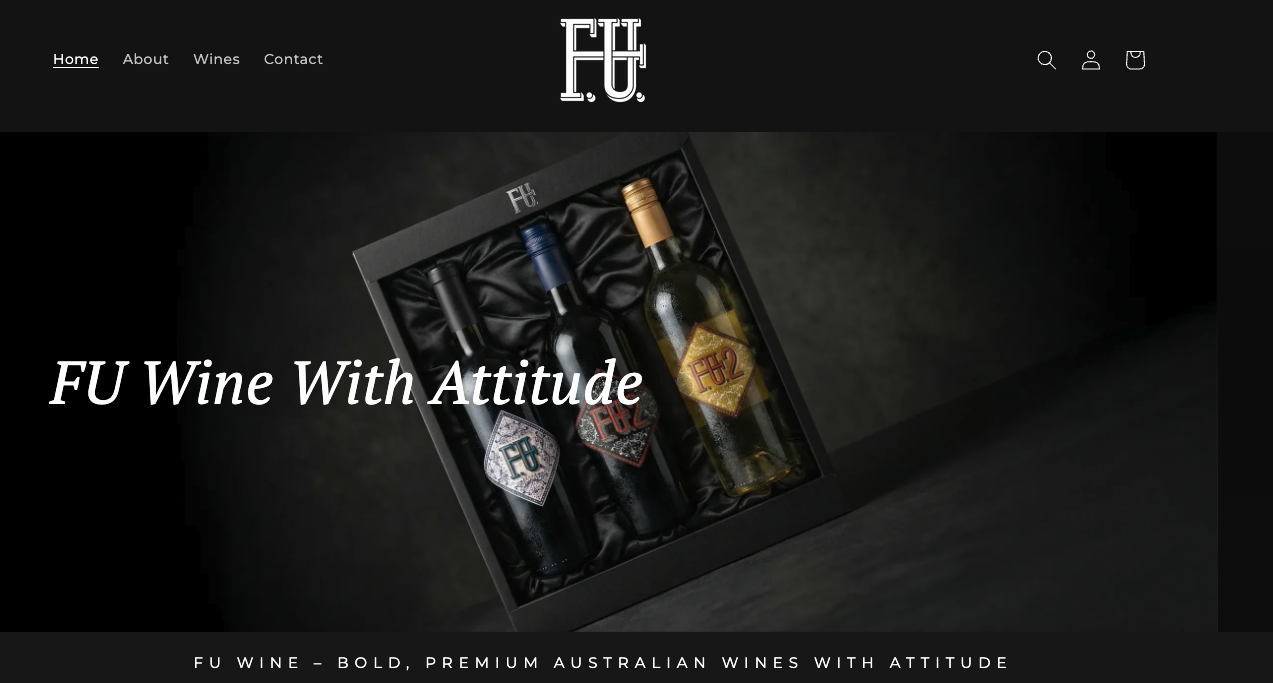
FU Wine sources boutique, small-production, and genuinely hard-to-find wines through direct relationships with producers and opportunistic buying that bypasses the traditional retail markup entirely. No gatekeeping. No fluff. No paying for a label’s idea of exclusivity. The approach is simple: find exceptional bottles from authentic producers, get them to you at 30 to 70 per cent below what you would pay elsewhere, and let the wine do the talking.
If you are serious about building a cellar full of the real thing, without the hype tax, FU Wine is where you start. Every bottle is a small rebellion. And honestly? It tastes better that way.
Frequently asked questions
Is there an official legal definition of ‘limited production wine’?
No, there is no legal definition under TTB regulations (27 CFR Part 4), meaning any producer can use the term freely without meeting a defined standard.
How many cases make a wine ‘limited production’?
Under 5,000 to 10,000 cases is the industry benchmark, but the most coveted wines are typically made in fewer than 1,000 cases per year, with true cult bottlings often under 500.
Are large brands’ ‘reserve’ wines considered limited production?
Not always. Large winery reserve tiers may be small in isolation, but the producer’s overall scale means they do not reflect genuine small-batch winemaking. Always check total production figures.
What’s the best way to access real limited production wines?
Joining mailing or allocation lists directly from small producers is your strongest move, since allocation release prices are consistently lower than the secondary market, sometimes by a factor of three to ten.