

What is a wine vintage: guide to quality and value in 2026
Many wine enthusiasts believe the vintage year stamped on a bottle automatically signals quality, assuming older equals better or that certain years guarantee excellence. This misconception overlooks the nuanced reality of how vintage reflects growing conditions and producer skill rather than age alone. Understanding what vintage truly means empowers you to identify exceptional wines at accessible prices, bypassing inflated labels and focusing on genuine value. This guide unpacks vintage fundamentals, quality indicators, and practical strategies for building a collection without overpaying for hype.
Table of Contents
- What Is A Wine Vintage And Why Does It Matter?
- How Vintage Quality Is Determined And Measured
- The Role Of Non-Vintage Wines And Blending Practices
- How To Use Vintage Knowledge To Find Affordable Premium Wines
- Explore Premium Wines And Vintages At FU Wine
- Frequently Asked Questions
Key takeaways
| Point | Details |
|---|---|
| Vintage signals harvest year | The vintage year indicates when grapes were harvested, reflecting that season’s environmental conditions and weather patterns. |
| Weather drives quality variation | Climate factors like temperature and rainfall explain roughly 75% of vintage quality differences across regions and years. |
| Non-vintage ensures consistency | Blending multiple years creates reliable style and flavour profiles, particularly common in premium sparkling wines like Champagne. |
| Producer skill matters most | Top estates deliver quality even in challenging vintages, making producer reputation more valuable than vintage charts alone. |
| Undervalued vintages offer savings | Targeting lesser-known ‘off’ years from reputable producers unlocks premium wines at significantly reduced prices. |
What is a wine vintage and why does it matter?
A wine vintage refers to the year grapes were grown and harvested, capturing that season’s unique environmental snapshot. Weather patterns, temperature fluctuations, rainfall levels, and soil conditions during the growing season all influence grape development and ultimately shape the wine’s character. This means two bottles from the same vineyard and winemaker can taste distinctly different depending solely on their vintage year.
Vintage matters because it directly impacts three critical factors collectors and enthusiasts care about. First, it influences flavour profiles and wine style, with cooler years producing lighter, more acidic wines whilst warmer seasons yield richer, fuller-bodied expressions. Second, vintage affects ageing potential, as ideal growing conditions produce wines with balanced structure and tannins that evolve gracefully over decades. Third, vintage signals rarity and collectability, with exceptional years commanding attention from serious collectors whilst challenging vintages often hide undervalued gems.
For wine enthusiasts seeking quality without inflated pricing, understanding vintage provides a strategic advantage. You can identify wine varieties and regions that consistently deliver value across different vintages by focusing on producer skill rather than hype. This knowledge helps you navigate wine terminology for enthusiasts and make confident purchasing decisions based on substance rather than marketing.
Pro Tip: Don’t automatically dismiss wines from supposedly ‘poor’ vintages. Skilled producers in regions like Burgundy and Barossa Valley often craft exceptional wines even in challenging years, offering outstanding value for savvy buyers who look beyond vintage charts.
Vintage knowledge transforms wine buying from guesswork into informed decision making. When you understand how growing conditions influence wine character, you can anticipate whether a bottle will suit your taste preferences and ageing goals. This insight proves especially valuable when building a collection focused on drinking pleasure rather than status symbols, allowing you to allocate budget towards genuine quality instead of paying premiums for fashionable labels.
How vintage quality is determined and measured
Weather explains about 75% of vintage quality variance, with warm growing seasons and low August rainfall correlating strongly with superior outcomes. Temperature consistency during flowering and veraison, adequate but not excessive rainfall, absence of extreme events like hail or frost, and optimal sunshine hours during ripening all contribute to ideal conditions. When these factors align, grapes develop balanced sugar levels, phenolic ripeness, and flavour complexity that translate into exceptional wines.
Experts assess vintage quality through systematic evaluation combining multiple data sources. Vintage charts rate vintages on a 100-point scale based on blind tastings, weather data analysis, vintner reports, and quality distribution patterns across producers. These ratings typically classify vintages into categories ranging from Classic (95-100 points) down through Outstanding, Very Good, Good, and Fair, providing collectors with a reference framework for purchasing decisions.
| Rating Category | Point Range | Characteristics | | — | — | | Classic | 95-100 | Exceptional balance, long ageing potential, widespread producer success | | Outstanding | 90-94 | High quality across most producers, excellent drinking and cellaring | | Very Good | 85-89 | Solid vintage with notable successes, good value opportunities | | Good | 80-84 | Mixed results, careful producer selection required | | Fair | Below 80 | Challenging conditions, only top estates deliver quality |
However, vintage charts carry significant limitations that collectors must recognise. Regional variation within appellations means subregions can experience vastly different conditions, with one hillside receiving ideal rainfall whilst another suffers drought stress. Producer skill dramatically influences outcomes, as experienced winemakers adapt techniques to maximise quality regardless of vintage challenges. Vineyard-specific microclimates, harvest timing decisions, and winemaking choices all create quality differences that broad vintage ratings cannot capture.
Pro Tip: Use vintage charts as starting points rather than absolute guides. A premium vintage wine example from a skilled producer in a ‘Good’ vintage often outperforms mediocre producers in ‘Outstanding’ years, offering better value and drinking pleasure.
Research examining wine price and quality relationships reveals that vintage reputation influences pricing as much as actual quality, creating opportunities for informed buyers. Wines from highly-rated vintages command premiums regardless of individual bottle quality, whilst undervalued vintages from top producers offer exceptional value. This disconnect between perception and reality means collectors focusing on producer reputation rather than vintage hype can build superior collections at lower cost.
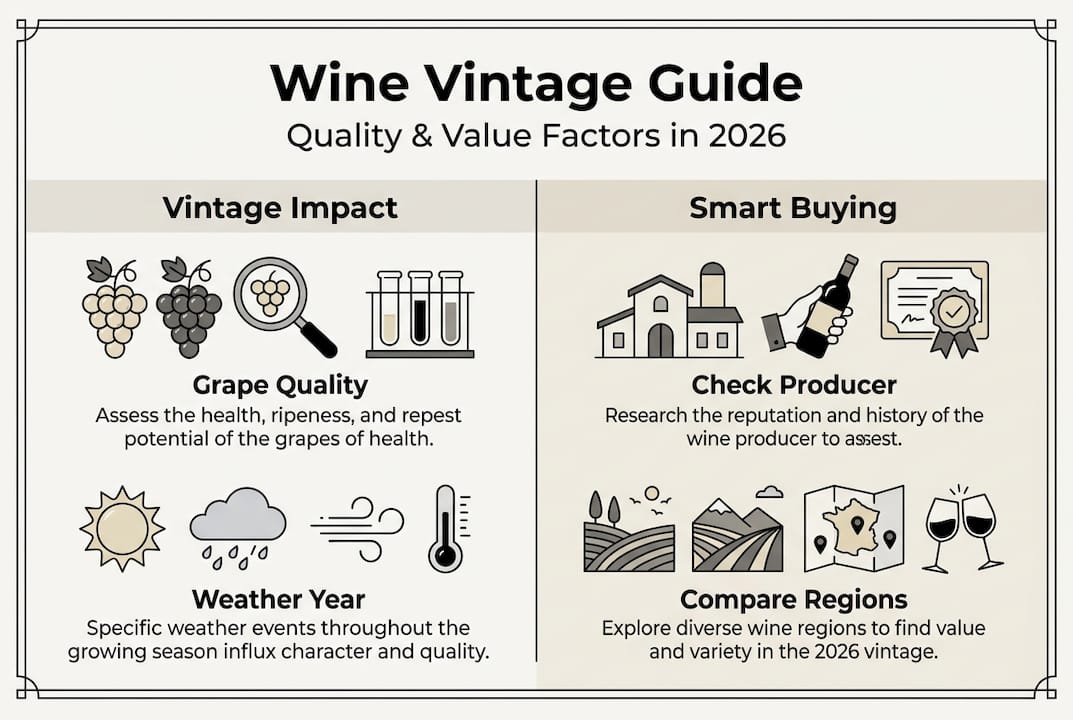
Weather impact extends beyond simple good versus bad classifications. Specific grape varieties respond differently to conditions, with Pinot Noir thriving in cooler years that would challenge Cabernet Sauvignon, and heat-loving varieties like Grenache excelling in warm vintages. Understanding these variety-specific preferences helps you target vintages that suit your preferred wine styles, maximising satisfaction whilst avoiding overhyped bottles that may not match your palate.
The role of non-vintage wines and blending practices
Non-vintage wines blend grapes from multiple years for consistency, particularly common in Champagne and sparkling wine production where maintaining house style across releases matters more than showcasing single-year characteristics. This approach allows producers to balance strengths and weaknesses from different vintages, creating reliable quality that consumers can depend on bottle after bottle. Rather than gambling on variable vintage conditions, NV wines deliver predictable flavour profiles that build brand loyalty.
The blending process for NV wines involves careful selection and combination of base wines from multiple years, often including reserve wines aged specifically for this purpose. Champagne houses typically blend 30 to 40 different base wines from three or more vintages to achieve their signature style. This meticulous approach requires extensive cellar stocks and expert blending skills, representing significant investment and expertise rather than a cost-cutting measure.
NV wines are not inferior but aim to maintain house style and consistency across bottles, providing value through reliability rather than vintage variation. Many prestigious Champagne houses release their NV cuvées as flagship products, pricing them competitively whilst reserving vintage-dated releases for exceptional years only. This strategy ensures consumers receive consistent quality regardless of when they purchase, building trust and repeat business.
“The art of blending for non-vintage wines requires as much skill as crafting single-vintage bottlings, with blenders balancing acidity, fruit character, and structure from different years to achieve seamless integration and house style consistency.”
For collectors and enthusiasts, NV wines serve different purposes than vintage-dated bottles. They provide reliable everyday drinking options without the pressure of cellaring or timing consumption perfectly. A non-vintage premium wine example delivers immediate enjoyment with predictable character, ideal for casual occasions where you want quality without overthinking vintage nuances.
NV wines also offer practical advantages for restaurants and retailers managing inventory. Consistent flavour profiles mean staff can confidently recommend products knowing they’ll taste the same across shipments. This reliability reduces waste from vintage variation and simplifies wine list management, benefits that translate into better availability and often more competitive pricing for consumers.
The distinction between NV and vintage wines reflects different philosophies rather than quality hierarchies. Vintage wines celebrate unique growing season characteristics and offer ageing potential for collectors, whilst NV wines prioritise consistency and immediate drinkability. Both approaches have merit, and sophisticated wine enthusiasts appreciate each for their respective strengths rather than viewing one as superior.
How to use vintage knowledge to find affordable premium wines
Focus on producers with proven track records across multiple vintages rather than chasing highly-rated years from unknown estates. Collectors prioritising quality over branding should focus on producer track record and undervalued vintages in regions with high vintage variation like Burgundy and Barolo. Established producers demonstrate consistent winemaking excellence regardless of weather challenges, adapting techniques to maximise quality even in difficult years. This reliability means their ‘off’ vintage wines often surpass mediocre producers’ best efforts.
Strategic vintage selection for value hunting:
- Identify regions with significant vintage variation where ratings create pricing disparities, such as Burgundy, Piedmont, and northern Rhône appellations.
- Research producer reputations through professional reviews, focusing on estates praised for consistency rather than occasional blockbusters.
- Target vintages rated Good or Very Good rather than Outstanding or Classic, where pricing premiums become excessive relative to actual quality differences.
- Consider climate patterns, recognising that cooler vintages suit certain varieties like Pinot Noir whilst challenging others, creating selective opportunities.
- Monitor market trends, as undervalued vintages often gain recognition years later once drinking windows open and quality becomes apparent.
Pro Tip: Climate change increasingly affects vintage patterns, with traditionally cool regions experiencing warmer growing seasons and established warm regions facing heat stress challenges. This shift creates new opportunities as conventional vintage wisdom becomes outdated, rewarding collectors who reassess regional performance rather than relying on historical assumptions.
| Approach | Vintage Chart Reliance | Producer-Based Strategy |
|---|---|---|
| Primary Focus | Vintage ratings and scores | Producer reputation and consistency |
| Price Sensitivity | Pays premiums for highly-rated years | Targets undervalued vintages from top estates |
| Risk Level | Higher, assumes all producers benefit equally | Lower, relies on proven winemaking skill |
| Value Potential | Limited, follows market consensus | High, exploits pricing inefficiencies |
| Flexibility | Rigid, avoids lower-rated vintages | Adaptable, considers variety and style preferences |
Explore wine collection options that emphasise producer quality over vintage hype, focusing on estates with decades of excellence rather than one-hit wonders. This approach builds a collection with consistent drinking pleasure rather than bottles purchased for status that disappoint when opened. You’ll discover that a well-made wine from a challenging vintage often provides more satisfaction than an overhyped bottle from a celebrated year.
Vintage charts serve as useful starting points but should never override producer assessment. A top Barossa Valley estate’s 2015 vintage might rate lower overall due to regional heat, yet their vineyard management and winemaking adjustments could yield exceptional results. Conversely, a mediocre producer in a Classic vintage still produces mediocre wine, regardless of favourable conditions. This reality creates opportunities for informed buyers who dig deeper than surface-level ratings.
Consider purchasing strategies that leverage vintage knowledge for maximum value. Buy younger wines from undervalued recent vintages before market recognition drives prices up. Seek older vintages from top producers entering ideal drinking windows, where pricing reflects outdated perceptions rather than current quality. Focus on regions and varieties you genuinely enjoy rather than collecting for investment, ensuring every bottle delivers personal satisfaction regardless of market fluctuations.
Explore premium wines and vintages at FU Wine
Now that you understand how vintage knowledge unlocks value, put these insights into practice. FU Wine curates premium and rare vintages at prices that ignore traditional markup nonsense, focusing purely on quality and drinking pleasure. Our collection includes exceptional bottles from both celebrated and undervalued vintages, sourced through direct relationships that eliminate middleman inflation.
Explore our premium wine collection featuring carefully selected vintages from top producers worldwide. Whether you’re seeking aged treasures like the FU Barossa Valley Cabernet Sauvignon 2010 or current releases such as FU Barossa Valley Pinot Noir 2024, every bottle represents genuine quality without pretentious pricing. Shop with confidence knowing your vintage knowledge helps you identify exceptional value.
Frequently asked questions
What determines if a vintage is considered classic or poor?
Classic vintages experience favourable weather throughout the growing season, with ideal temperature patterns, adequate rainfall, and absence of extreme events like frost or hail. Poor vintages face challenging conditions such as excessive heat, drought, or harvest rain that compromise grape quality. Ratings combine expert tastings and weather analysis to classify vintages, though producer skill can overcome difficult conditions.
Are non-vintage wines lower quality than vintage wines?
Non-vintage wines blend multiple years to achieve consistent house style rather than showcasing single-year characteristics. They are not inferior but prioritise reliability and immediate drinkability over vintage variation and ageing potential. Many prestigious producers release NV wines as flagship products, demonstrating that blending multiple vintages requires significant skill and expertise.
How can I find affordable vintage wines with high quality?
Look for undervalued vintages from reputable producers in regions with significant vintage variation, where lower ratings create pricing opportunities despite excellent individual bottles. Use vintage charts as guides but prioritise producer reputation and consistency over scores alone. Explore affordable premium wines from trusted collections that emphasise quality over hype, focusing on drinking pleasure rather than investment potential.
Does older vintage always mean better wine?
Older vintages do not automatically indicate superior quality or readiness to drink. Wine quality depends on growing conditions, producer skill, and whether the wine style suits ageing. Many wines reach peak drinking windows within five to ten years, whilst others require decades. Storage conditions also critically impact older vintages, with poor cellaring ruining even exceptional bottles.
How does climate change affect vintage patterns?
Climate change alters traditional vintage patterns, with historically cool regions experiencing warmer growing seasons and established warm regions facing heat stress challenges. This shift creates new opportunities as conventional vintage wisdom becomes outdated, rewarding collectors who reassess regional performance. Vintage variation may increase in some areas whilst decreasing in others, making producer adaptability more valuable than ever.