

What is wine country culture? A guide for curious visitors
Wine country culture is the set of social practices, rituals, and regional identities built around viticulture, tasting, and communities that grow alongside the vines. It is not about memorising tasting notes or owning the right glassware. It is about place, people, and the shared experience of drinking something made from a specific patch of earth.
Here is what that looks like in practice:
- Viticulture as identity. The vines shape the landscape, the economy, and the local calendar. Harvest is not just a farming event; it is a community ritual.
- Hospitality norms. Cellar doors, winemaker lunches, and tasting rooms are the social infrastructure of wine country. How you behave in them matters.
- Regional character. Every major wine region has a distinct personality, from the Germanic heritage of the Barossa Valley to the coastal cool of Margaret River.
- Seasonal rhythms. Pruning, harvest, and release events mark the year in ways that shape visitor experiences and local life simultaneously.
The practical bottom line for visitors: arrive curious, dress smart-casual, limit yourself to two or three tastings per day, and treat the cellar door like someone’s home. You will leave with better wine and better stories.
Table of Contents
- What does wine country culture actually cover?
- How Australian winemaking history shaped today’s regions
- What to expect on a winery visit in Australia
- Social rituals, seasonal events and wine club culture
- Wine country etiquette and what to wear in Australia
- Key Australian wine regions and their cultural characters
- How wine country shapes communities and land stewardship
- How wine culture is changing for a new generation of drinkers
- Key takeaways
- A note from Damien
- Further reading and authoritative sources
What does wine country culture actually cover?
Wine country regions are built around viticulture driving the local economy, shaping the landscape, and generating tourism. But the culture goes deeper than scenery and Shiraz.
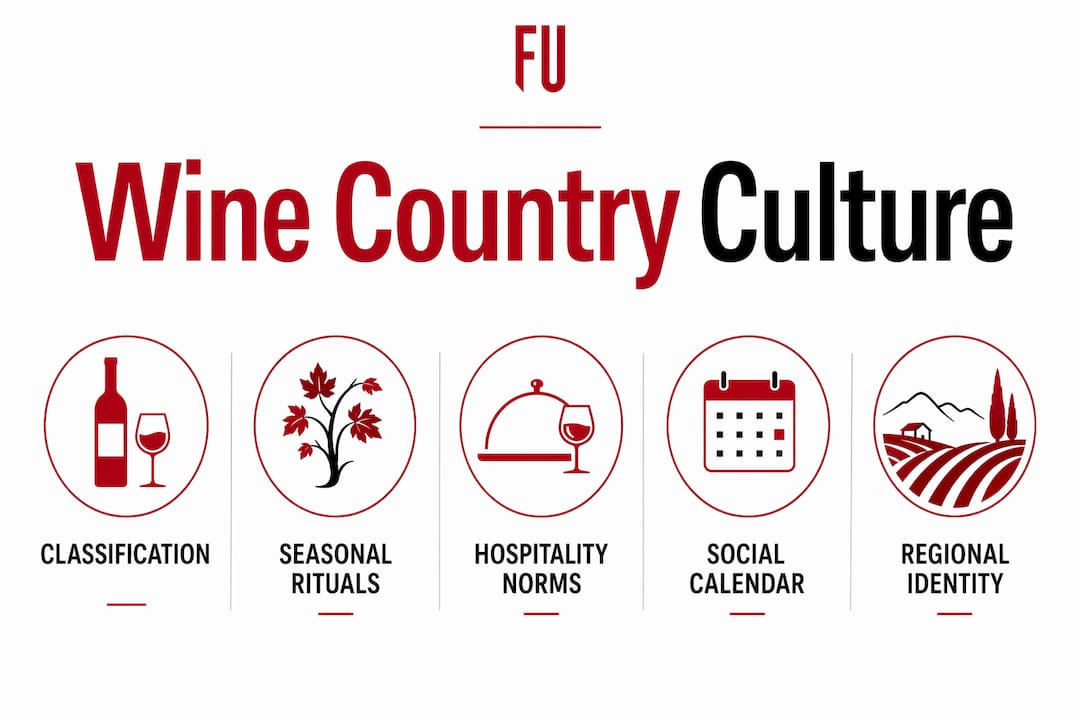
Wine culture operates through four interlocking mechanisms: classification systems, harvest rituals, hospitality norms, and education. Strip away the mystique and that is what you are actually engaging with every time you walk into a cellar door.
Classification systems are the legal backbone. France’s Appellation d’Origine Contrôlée, established in 1935, is the most famous example of law codifying place as quality. Australia uses Geographic Indications (GIs) to do the same job, tying wine identity to specific regions like the Barossa Valley or Coonawarra. When you see a regional name on a label, that is not marketing; it is a cultural and legal statement about origin.
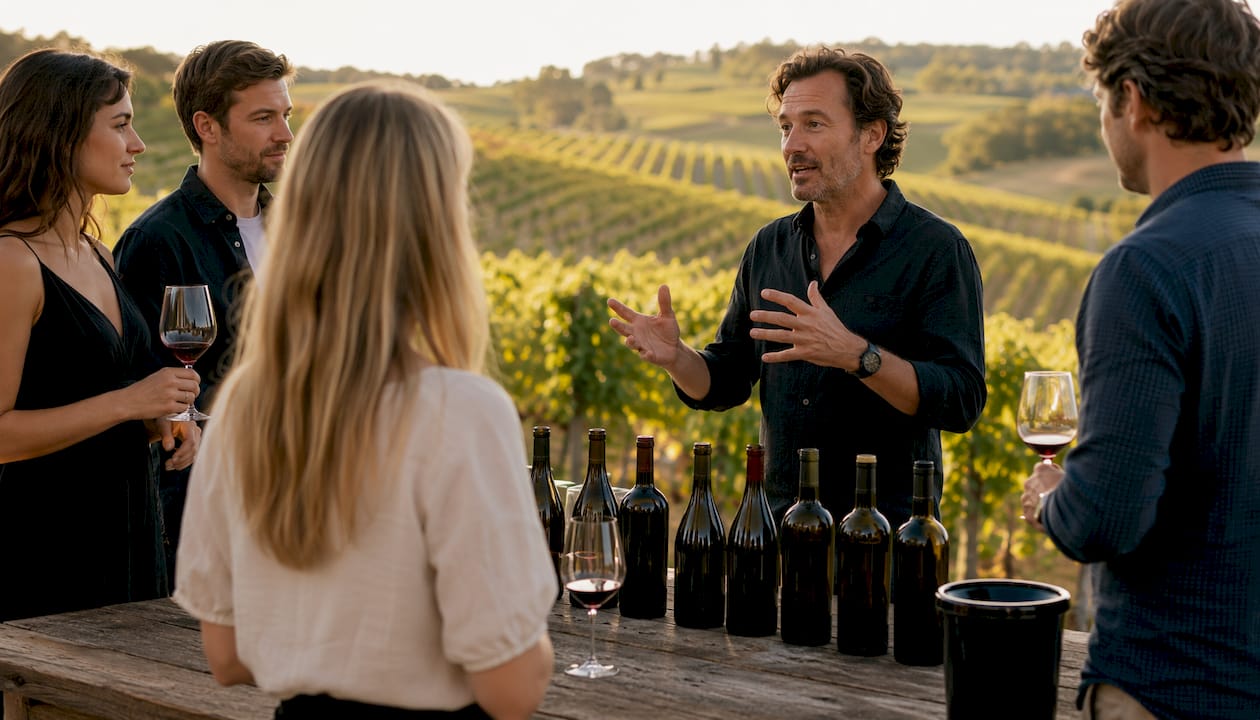
Hospitality norms are where culture becomes personal. The cellar door is the front porch of wine country. A good host pours generously, explains without lecturing, and lets you spit without judgment. Wine clubs extend that relationship beyond the visit, offering members early access to limited releases and a sense of insider belonging that keeps people coming back year after year.
Food and local produce are woven through all of it. Winery lunches in the Yarra Valley or Margaret River are not an afterthought; they are the point. Local cheese, charcuterie, and seasonal produce from the same region as the wine create a sense of place that no tasting note can replicate.
Wine culture is less about pretension and more usefully understood as four mechanisms working together: classification, seasonal ritual, hospitality, and education. Framing it this way helps visitors approach tasting without intimidation.
Understanding wine country as a wine lifestyle rather than a set of rules makes the whole experience more enjoyable.
How Australian winemaking history shaped today’s regions
Australia’s wine story is older and stranger than most visitors expect.
- 1788. Governor Arthur Phillip planted the first vines at Farm Cove in Sydney, bringing cuttings from the Cape of Good Hope. The colony needed wine for medicinal and social purposes.
- 1820s–1840s. Systematic viticulture spread to the Hunter Valley in New South Wales and the Barossa Valley in South Australia, the latter settled heavily by Silesian Lutheran immigrants who brought German grape varieties and winemaking traditions with them.
- Late 1800s. The phylloxera louse devastated European vineyards but largely spared South Australia, which is why the Barossa still holds some of the world’s oldest Shiraz vines.
- Early 1900s. Fortified wines dominated Australian production. Port-style and sherry-style wines were the commercial backbone, and the culture around wine was closer to a working-class pub drink than a fine-dining experience.
- 1950s–1970s. European migration, particularly from Italy, Greece, and Germany, introduced table wine culture to Australian households. Max Schubert’s first Grange Hermitage in 1951 signalled that Australia could produce world-class dry reds.
- 1980s–1990s. The export boom. Australian winemakers cracked international markets with fruit-forward, approachable styles. Margaret River emerged as a premium cool-climate region. Coonawarra’s terra rossa soils became famous for Cabernet Sauvignon.
- 2000s–present. A craft and terroir movement reshaped expectations. Smaller producers, natural wine, and single-vineyard releases pushed the culture toward specificity and storytelling.
Each of these phases left a cultural residue. The Barossa’s Germanic heritage shows up in its food, its architecture, and its community events. The Hunter Valley’s colonial roots give it a sense of history that newer regions simply cannot manufacture. Global wine consumption patterns show Australia punching well above its weight for a country of its size, a direct legacy of this layered history.
What to expect on a winery visit in Australia
A well-planned winery visit follows a rhythm. Knowing it in advance means you spend less time confused and more time enjoying yourself.
Typical visit flow:
- Arrive at the cellar door, often a purpose-built tasting room or a converted barn
- A staff member or the winemaker walks you through four to six wines, usually from lightest to most complex
- You are offered the chance to spit or pour away; do not feel awkward about using the bucket
- A tour of the barrel room or vineyard may follow, especially if booked in advance
- Lunch or a cheese plate at the winery, or a short drive to a nearby restaurant
- Cellar door purchases, often at prices below retail for members or direct buyers
Booking and timing realities:
- Many premium estates in the Barossa, Margaret River, and Yarra Valley require advance bookings, particularly on weekends
- Opening hours vary widely; some boutique producers open only by appointment
- Spring (September to November) and post-harvest (April to May) are the best times to visit: the weather is mild, the vines are active, and winemakers are less frantic than during crush
Pricing ranges:
| Experience | Typical range (AUD) |
|---|---|
| Standard cellar door tasting (4–6 wines) | $10 per person |
| Guided vineyard and barrel room tour | $25 per person |
| Winery lunch (two courses, no wine) | $45 per person |
| Premium or library wine tasting | $50 per person |
These figures are indicative; boutique estates and premium experiences can run higher.
Practical considerations:
- Check accessibility before you go; not all cellar doors are wheelchair-friendly
- Dog and family policies vary enormously; call ahead rather than assume
- Designate a driver or book a guided tour if you plan to visit multiple wineries
Pro Tip: Book wine tourism visits on a weekday when possible. You get more time with the winemaker, shorter queues, and a more genuine conversation about the wines.
Social rituals, seasonal events and wine club culture
Wine country has its own social calendar, and it runs on the vine’s biological clock.
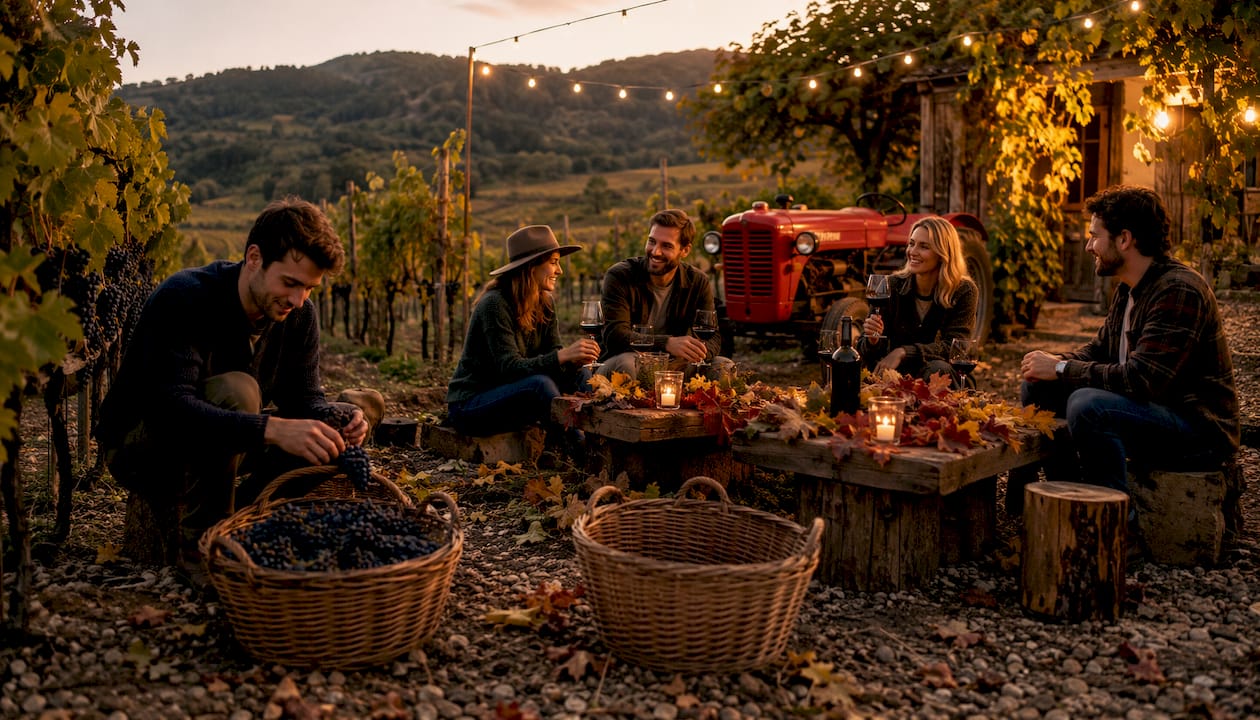
Harvest season (February to April in most Australian regions) is the most electric time to visit. Some wineries invite volunteers to pick, sort, and stomp alongside the crew. It is physical, chaotic, and genuinely fun. Even as a visitor, arriving during harvest means you will see the winery at full intensity: tanks bubbling, forklifts moving, and winemakers running on adrenaline and very little sleep.
Seasonal and release events worth knowing about:
- Barossa Vintage Festival. Held in odd-numbered years, this week-long celebration of harvest includes stomping competitions, winemaker dinners, and cellar door events across the valley.
- Yarra Valley Grape Grazing Festival. A food and wine event timed to late summer, combining local produce with open cellar doors.
- Margaret River Gourmet Escape. One of Australia’s premier food and wine festivals, drawing international chefs and winemakers to the region each November.
- Hunter Valley Lovedale Long Lunch. A beloved annual event where wineries and restaurants collaborate on long-table lunches across a single weekend.
Wine club culture is a significant part of how locals and regulars engage with their favourite producers. Members typically receive:
- Quarterly or bi-annual allocations of new releases, often before public sale
- Discounts on cellar door purchases (commonly 10–20%)
- Invitations to members-only events, vertical tastings, and harvest experiences
- Early access to limited and library releases
For collectors, wine club membership is less a loyalty programme and more a supply chain. The wines that matter most often never reach retail shelves.
Wine country etiquette and what to wear in Australia
Getting the etiquette right is less about following rules and more about showing respect for the people who made what you are drinking.
Attire:
- Smart-casual is the standard across most Australian cellar doors: clean jeans, a collared shirt or blouse, comfortable shoes with closed toes for vineyard walks
- Layer up; barrel rooms and underground cellars are cool year-round, even in summer
- Avoid heavy perfume or cologne; it genuinely interferes with tasting and is considered inconsiderate by winemakers
Behaviour:
- Spit freely; it is expected and respected, not rude
- Do not rush the pour; let the host set the pace
- If you love a wine, say so specifically (“the texture on that Chardonnay is remarkable”) rather than generically (“this is nice”)
- Buying a bottle or two after a tasting is not obligatory, but it is the cultural norm and a genuine way to support small producers
- Tipping is not standard at Australian cellar doors the way it is in the United States; a purchase is the appropriate expression of appreciation
Photography and privacy:
- Most wineries welcome photos of the vines, the cellar door, and the landscape
- Ask before photographing winery staff or private areas of the property
- Working vineyards during harvest are busy, hazardous environments; stay on designated paths
Pro Tip: The best question you can ask a winemaker is not “what score did this get?” but “what were you trying to do with this vintage?” It opens a real conversation and you will learn something you cannot find on any label.
Key Australian wine regions and their cultural characters
Australia’s wine regions are not interchangeable. Each has a distinct personality shaped by history, climate, and the people who settled there.
Hunter Valley, New South Wales
Australia’s oldest wine region, about two hours north of Sydney. The cultural character is colonial and convivial: old sandstone buildings, long lunches, and a visitor scene that skews toward weekenders from Sydney. The signature variety is Semillon, which ages into something extraordinary over a decade. Watch for the tradition of the “cellar door lunch,” which here is less a formal affair and more a relaxed, generous spread.
Barossa Valley, South Australia
The Barossa is the spiritual home of Australian Shiraz and carries a strong Germanic-Lutheran heritage. Community events, church halls, and a deep sense of multigenerational family ownership define the culture. Many of the region’s most celebrated producers are still family-run. The local custom to watch for: winemakers who will pull out an unlabelled bottle from under the counter if they trust you are genuinely curious.
Yarra Valley, Victoria
Cool-climate, close to Melbourne, and increasingly associated with Pinot Noir and sparkling wine. The visitor scene is younger and more food-focused than the Barossa. The Yarra Valley has a strong farm-to-table culture; many wineries grow their own produce or partner with local growers. Expect a more casual, café-style cellar door experience alongside serious wine.
Margaret River, Western Australia
Margaret River punches above its weight globally for Cabernet Sauvignon and Chardonnay. The culture here blends surf, food, and wine in a way that feels genuinely West Australian: relaxed, outdoorsy, and quietly confident. The region attracts serious collectors and casual visitors in equal measure. The Gourmet Escape festival has cemented its reputation as a destination for people who care about both what is on the plate and what is in the glass.
Coonawarra, South Australia
Coonawarra is about one thing: terra rossa soil over limestone, and the Cabernet Sauvignon it produces. The cultural character is quieter and more agricultural than the Barossa or Margaret River. Fewer tourists, more serious wine buyers. If you visit, you are there for the wine, not the scene, and the producers know it. That mutual understanding creates a refreshingly direct tasting experience.
| Region | Signature variety | Cultural character |
|---|---|---|
| Hunter Valley | Semillon | Colonial, convivial, long-lunch tradition |
| Barossa Valley | Shiraz | Germanic heritage, multigenerational family estates |
| Yarra Valley | Pinot Noir | Cool-climate, food-focused, younger visitor scene |
| Margaret River | Cabernet Sauvignon | Surf-and-wine lifestyle, serious collectors |
| Coonawarra | Cabernet Sauvignon | Agricultural, direct, terroir-focused |
How wine country shapes communities and land stewardship
Wine regions are not just tourist destinations. They are living communities where the interests of producers, residents, and the land itself do not always align neatly.
Academic research shows that established wine regions treat vineyards as conservation and heritage assets, while emerging regions can face initial local resistance to the changes viticulture brings. The same study found that wine producers and local residents hold strongly different perceptions of what vineyards provide.
In more traditional wine areas, residents emphasise the conservation of nature and tradition, while in emerging regions, vineyards can represent unwelcome development. Understanding these perspectives helps land-use planners make better decisions for the communities involved.
The economic picture is significant. Seasonal harvest labour supports regional towns that would otherwise struggle with employment gaps. Wine tourism generates income for accommodation, restaurants, and local services well beyond the winery gate. In the Barossa and Hunter Valley, wine is not a niche industry; it is the economic engine.
Land stewardship is increasingly central to how producers present themselves culturally. Concepts like terroir, the idea that a wine expresses the specific character of its soil and climate, carry an implicit conservation argument: you cannot make great wine from degraded land. Many Australian producers have formalised this through biodiversity corridors, dry farming practices, and heritage vine preservation programmes.
The tensions are real, though. Rapid tourism growth can strain local infrastructure, push up property prices, and change the character of small towns faster than residents want. The cultural identity of a wine region is always being negotiated between the people who make the wine, the people who visit for it, and the people who simply live there.
How wine culture is changing for a new generation of drinkers
The gatekeeping is coming down. That is the clearest cultural shift in wine country right now.
Modern wine education and tourism increasingly emphasise accessibility and experiential learning over intimidation. Younger drinkers prioritise personal preference and enjoyment over credentials, and the industry is responding with more casual cellar-door experiences, shorter tasting menus, and staff trained to educate without condescending.
The practical implications for visitors and venues:
- Cellar doors are redesigning their spaces to feel more like bars and less like examination rooms
- Winemakers are talking more openly about process, failure, and experimentation, which makes for far better conversations
- Programmes like WSET (Wine & Spirit Education Trust) are growing in Australia, but the emphasis has shifted toward enjoyment and confidence rather than rote memorisation of appellations
- Natural wine, low-intervention styles, and alternative varieties are creating entry points for drinkers who were previously put off by the formality of traditional wine culture
The push against wine gatekeeping is not just a cultural trend; it is reshaping how producers price, present, and talk about their wines. The idea that premium wine requires premium pretension is losing ground fast. That is good news for anyone who wants to walk into a cellar door and feel welcome rather than tested.
Affordable luxury in premium wine is now a genuine market position, not a contradiction in terms.
Key takeaways
Wine country culture is best understood as four interlocking mechanisms: classification, seasonal ritual, hospitality norms, and education, all rooted in a specific place and shaped by the people who live and work there.
| Point | Details |
|---|---|
| Core definition | Wine country culture combines viticulture, hospitality, regional identity, and seasonal ritual into a shared way of life. |
| Practical visit rule | Limit yourself to two or three tastings per day and book premium estates in advance, especially on weekends. |
| Etiquette essentials | Smart-casual attire, free spitting, and a genuine purchase after tasting are the three norms that matter most. |
| Australian regions | Hunter Valley, Barossa Valley, Yarra Valley, Margaret River, and Coonawarra each have distinct cultural characters worth understanding before you visit. |
| Cultural shift | The industry is moving toward accessibility and no-judgement tasting, making wine country more welcoming than ever for first-timers. |
A note from Damien
Wine country culture gets misread constantly. People arrive expecting a test and leave thinking they failed it. That is the industry’s fault, not theirs.
What actually happens in the best cellar doors in the Barossa or Margaret River is something much simpler: a person who cares deeply about what they made shares it with you and watches your face. That is the whole transaction. The classification systems, the appellation rules, the vintage charts — those are the scaffolding. The culture is the conversation.
Australia’s wine regions carry genuine history. The Silesian settlers who planted Shiraz in the Barossa in the 1840s were not building a tourism industry; they were trying to survive and stay connected to something familiar. The Hunter Valley’s old Semillon vines predate federation. That weight of place is real, and it is worth approaching with curiosity rather than anxiety.
The shift toward accessibility is the best thing happening in wine right now. Younger drinkers asking “what does this taste like to me?” instead of “what score did it get?” is not a dumbing-down of the culture. It is the culture returning to what it was always supposed to be.
Further reading and authoritative sources
These are the primary sources and institutional references used in this guide, organised by purpose.
For planning your visit:
- Wine Australia — the national body for Australian wine, with regional maps, producer directories, and tourism planning resources
- Australian Grape & Wine — the peak industry body representing growers and winemakers, useful for understanding industry structure and regional advocacy
- Sommy Wine Tourism Guide — practical advice on visit planning, pacing, and timing
For deeper cultural study:
- INAO (Institut national de l’origine et de la qualité) — the French authority on appellation systems, foundational for understanding how place-based classification shapes wine culture globally
- Global Wine Authority: Wine culture and traditions by country — a broad comparative overview of how wine culture operates across different countries
- Winkler & Nicholas — perceptions of wine regions (academic study) — peer-reviewed research on how producers and residents perceive vineyard landscapes differently
- FAO: Georgia wine heritage overview — context on the ancient origins of winemaking, with Georgia identified as the earliest known centre of production
For wine discovery and collector access:
- FU Wine — curated premium and rare Australian and international wines at direct-to-consumer prices, with rotating limited releases and flash deals for collectors and enthusiasts