

What is opportunistic wine buying: 2026 guide
TL;DR:
- Opportunistic wine buying is a strategic approach to acquire premium, rare wines at below-market prices during market downturns. It relies on market knowledge, strong relationships, and disciplined research to identify genuine value rather than impulsive discounts, with current opportunities evident in Bordeaux and lesser-known regions. This method demands patience, preparation, and data verification to build a valuable cellar at honest prices.
Opportunistic wine buying is the practice of securing premium and rare wines at below-market prices by exploiting market inefficiencies, distributor overstock, and well-timed purchases during downturns. It is not bargain hunting in the clearance-bin sense. It is a calculated, patient strategy where informed buyers target genuine value rather than speculative froth. Right now, discounts on blue-chip wines are sitting between 16.1% and 50% below 2022 peak prices, which means the window is real, and it is open. If you have been waiting for the right moment to build your cellar without paying prestige-label premiums, this is the guide for you.
What is opportunistic wine buying and why does it matter now?
Opportunistic wine buying is defined as a deliberate acquisition strategy that targets quality wines when sellers face liquidity pressure, inventory surplus, or market disinterest. The key distinction from casual discount shopping is intent and discipline. You are not reacting to a sale email. You are positioning yourself ahead of the deal by understanding where value pools form in the market.

The fine wine market has been through a significant correction since its 2022 peak. Sellers have regained some pricing power in late 2025 and into 2026, but buyer discipline has held firm, keeping genuine opportunities alive. Some Bordeaux châteaux are still trading at 50% below their 2022 highs. That is not a typo. For a collector with patience and a clear brief, that is a career-defining buying window.
What makes this strategy powerful is the combination of market knowledge and relationship capital. Opportunistic buyers target fair value niches rather than chasing cult wines with inflated scores and speculative price tags. They buy sound, ageable bottles from producers with track records, not hype cycles. That discipline is what separates a smart cellar from an expensive one.
How market conditions create opportunities for wine buyers
Wine markets move in cycles, and those cycles create predictable windows for buyers who pay attention. The current cycle is particularly generous. California alone is sitting on a mountain of unsold stock, with bulk Napa Cabernet available for under $20 in early 2026. That is a structural oversupply problem for producers, and a structural opportunity for buyers.
Several forces are converging right now to widen the buying window:
- Distributor overstock: Wholesalers carrying excess inventory will negotiate hard on mixed cases and back vintages to free up warehouse space and cash flow.
- Bulk liquidation: Producers and négociants offloading large parcels at wholesale prices create entry points well below retail.
- Satellite region undervaluation: Lesser-known appellations with genuine quality are chronically underpriced because they lack the marketing budgets of famous names.
- Price discovery fragmentation: The fine wine market lacks a single transparent exchange, which means pricing inefficiencies persist longer than they should, benefiting informed buyers.
The data reinforces the opportunity. In November 2025, only 2.5% of transactions exceeded 11.8% discounts, suggesting the market is finding balance rather than collapsing. That means the deepest discounts are narrowing, but they have not gone. Buyers who act with knowledge and speed will still find exceptional value. Those who wait for the market to announce the opportunity will miss it entirely.
What strategies define successful opportunistic wine purchasing?
The best opportunistic buyers do not stumble onto deals. They build systems that surface them consistently. Here is how the sharpest collectors approach it.
-
Target distressed and overstock inventory first. Distributors sitting on mixed cases and back vintages are motivated sellers. Reliable, unfashionable categories with consistent production and proven ageing potential are the sweet spot. Think classic Rhône producers, traditional Rioja, and structured Barossa Shiraz rather than whatever scored 100 points last month.
-
Build merchant relationships before you need them. The best deals never reach the public website. Access to quiet liquidation lists from distributors is available only to buyers with established trust. Call your merchant. Buy regularly. Ask what they are trying to move. That conversation is worth more than any flash-sale alert.
-
Negotiate the whole package, not just the price. Professional buyers negotiate total value including case breaks, freight, and future allocation access. A 10% price reduction is good. A 10% reduction plus free shipping plus first right of refusal on the next parcel is exceptional.
-
Cross-check every deal against real market data. Use Wine-Searcher to verify that a “limited-time offer” is actually below market. Flash sales that do not represent true discounts are common, and without objective data you cannot tell the difference. Thirty seconds of research can save you from paying full price for a bottle dressed up as a bargain.
-
Avoid the hype trap. The 2026 market shows that perfect scores no longer guarantee premium pricing. Chasing high-rated cult wines is speculative buying, not opportunistic buying. The two feel similar in the moment but produce very different outcomes over time.
Pro Tip: Set up a Wine-Searcher price alert for the specific bottles or producers on your wish list. When the market price drops below your target threshold, you get the notification before the deal disappears.
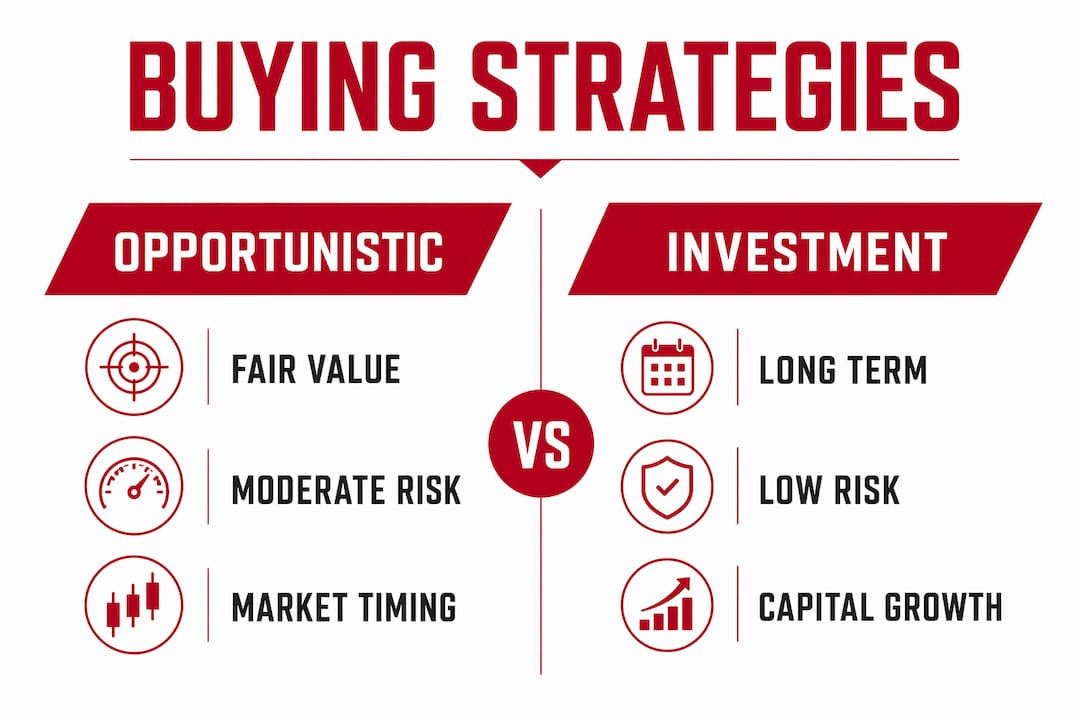
Opportunistic buying vs other wine purchasing strategies
Understanding how opportunistic purchasing differs from other approaches helps you stay disciplined when the market gets noisy.
| Strategy | Primary goal | Risk level | Time horizon | Key behaviour |
|---|---|---|---|---|
| Opportunistic buying | Value at fair price | Low to medium | Medium term | Patient, data-driven, relationship-led |
| Investment buying | Capital appreciation | Medium to high | Long term | Score-focused, blue-chip producers |
| Speculative buying | High-return flips | High | Short term | Cult wines, hype-driven, volatile |
| Consumer buying | Immediate enjoyment | Low | Immediate | Convenience and brand familiarity |
Investment-focused buying concentrates on established blue-chip producers, Bordeaux First Growths, Burgundy Grand Crus, and Barossa icon labels, where provenance and scarcity drive long-term price appreciation. It requires significant capital and a long holding period. Speculative buying chases cult wines and perfect scores hoping for short-term price spikes. It is the highest-risk approach and the one most likely to leave you holding overpriced bottles when the hype fades.
Opportunistic buying sits in the most interesting position. It borrows the patience of investment buying and the value focus of smart consumer buying, without the capital requirements of the former or the lack of ambition of the latter. You are building a cellar around sound, reliable wines that drink well and hold their value, acquired at prices that make the whole exercise genuinely rewarding.
How to apply opportunistic buying strategies in 2026
The 2026 market rewards buyers who combine regional knowledge with timing discipline. Here is where the value is sitting right now and how to act on it.
-
Explore underrated Italian regions. Sommeliers and market experts are pointing to Emilia-Romagna and lesser-known French areas as standout value zones. Quality-to-price ratios on $20 to $30 bottles in these regions frequently outperform famous appellations inflated by brand prestige alone.
-
Target Bordeaux châteaux on the correction. Some châteaux are still 50% below their 2022 peaks. Not every château deserves that discount, but the ones with genuine quality and a track record of ageing are worth serious attention right now.
-
Diversify your cellar with opportunistic buys. Do not let opportunistic purchases crowd out your core cellar strategy. Treat them as a separate allocation, perhaps 20 to 30% of your annual buying budget, dedicated to value plays that complement your long-term holdings.
-
Time your purchases around market reports. Post-auction reports from platforms like Wine Auction Room and Wine-Searcher’s market data give you a real-time read on where pricing is moving. Buy when the data shows softness, not when the press releases say the market is recovering.
-
Rotate your portfolio deliberately. Opportunistic buying works best when paired with smart portfolio rotation. Sell or drink bottles that have reached their value ceiling to free up capital for the next wave of opportunities.
Pro Tip: When assessing an emerging producer or region, look for consistent critical recognition over three or more vintages rather than a single high score. Consistency signals quality. A single score signals marketing.
Key takeaways
Opportunistic wine buying is the most disciplined and rewarding strategy available to collectors in 2026, combining market timing, relationship capital, and regional knowledge to acquire premium wines at genuine discounts.
| Point | Details |
|---|---|
| Definition is precise | Opportunistic buying targets fair value during market inefficiencies, not clearance or speculation. |
| Discounts are real but narrowing | Blue-chip wines are still 16% to 50% below 2022 peaks, but the window is tightening in 2026. |
| Relationships unlock the best deals | Quiet liquidation lists and unadvertised stock go to trusted buyers first, not the general public. |
| Verify every deal with data | Use Wine-Searcher to confirm a discount is genuine before committing to any purchase. |
| Underrated regions offer the best value | Emilia-Romagna, lesser-known French appellations, and satellite regions consistently outperform on quality-to-price ratio. |
Damien’s take: patience is the real competitive advantage
Most collectors I speak with want to buy opportunistically but act speculatively. They see a flash deal on a high-scoring Napa Cab and jump without checking whether the price is actually below market. That is not opportunistic buying. That is FOMO with a wine label on it.
The buyers who consistently win are the ones who have done the groundwork before the deal appears. They know their target producers. They have a relationship with at least two or three merchants who will call them before a parcel hits the website. They use Wine-Searcher not just to shop but to track pricing trends over months. When the opportunity arrives, they recognise it immediately and act without hesitation.
The other thing I have noticed is that the best opportunistic buys rarely come from famous appellations at peak hype. They come from spotting genuine value in regions the market has not caught up with yet. Emilia-Romagna is a perfect current example. The wines are serious, the prices are honest, and the prestige premium has not arrived yet. That is the window.
My honest caution: do not confuse a market correction with a buying free-for-all. The 2026 market is nuanced. Some categories are genuinely cheap for good reason. Others are cheap because they are structurally flawed. Knowing the difference requires research, not just enthusiasm.
— Damien
Find your next opportunistic buy with Com
Com is built for exactly this kind of buying. Every bottle in the collection is sourced through the same opportunistic principles this article describes: distressed inventory, cellar clearances, allocation releases, and direct producer relationships that bypass the usual markups. These are not leftover wines. They are premium and rare bottles acquired at the right moment and passed on to you at prices that make the traditional retail model look embarrassing.
If you are serious about building a cellar without paying for someone else’s margin, explore the current collection at Com. New deals rotate constantly, and the best ones go fast. Every bottle is a small rebellion against overpriced wine. Come and join it.
FAQ
What is opportunistic wine buying in simple terms?
Opportunistic wine buying is the practice of acquiring premium wines at below-market prices by targeting market downturns, distributor overstock, and pricing inefficiencies. It is a patient, informed strategy rather than impulsive bargain hunting.
How much can you save through opportunistic wine purchasing?
Current market data shows discounts ranging from 16.1% to 50% below 2022 peak prices on blue-chip wines, with some Bordeaux châteaux at the higher end of that range in 2026.
How is opportunistic buying different from wine investment?
Investment buying focuses on long-term capital appreciation through blue-chip producers, while opportunistic buying targets fair value across a broader range of quality wines during periods of market softness or oversupply.
Which wine regions offer the best opportunistic value in 2026?
Emilia-Romagna in Italy and lesser-known French appellations are currently highlighted by sommeliers and market experts as offering the strongest quality-to-price ratios, often outperforming famous appellations at a fraction of the cost.
How do I avoid fake discounts when buying wine opportunistically?
Cross-reference any flash sale or limited-time offer against real-time pricing data on Wine-Searcher before purchasing. Genuine opportunistic deals will show a clear gap between the offer price and the current market average.