

What is deal-driven wine buying: a guide for collectors
TL;DR:
- Deal-driven wine buying involves purchasing premium wines at genuine discounts through promotions, allocation programs, and member benefits. It requires verifying total landed costs, provenance, and market value to avoid overpaying and ensure authentic savings. This approach offers access to rare bottles at lower prices but demands discipline and active management.
Deal-driven wine buying is the practice of acquiring premium wines at genuine discounts by targeting temporary promotions, allocation programmes, and member pricing rather than paying full retail. The industry term for this approach is opportunistic or value-driven purchasing, and it sits at the opposite end of the spectrum from passive, full-price collecting. For Australian wine enthusiasts aged 30 to 55, it is the difference between paying cellar-door prices and drinking bottles that most people never get near. The mechanics are straightforward: find a real discount, verify the total cost, and move fast.
What is deal-driven wine buying and why does it matter?
Deal-driven wine buying is defined as purchasing wines by leveraging genuine discounts and special access rather than standard full-price retail. The core principle is simple. You are not just hunting for cheap wine. You are hunting for premium wine priced below its actual market value.
The critical mechanic is the landed cost calculation. Landed cost is the total you actually pay per bottle: purchase price plus freight, duties, insurance, and handling fees. A bottle advertised at 40% off can still be a bad deal once you add $25 in shipping for a single bottle. Landed cost is the only number that matters.
This approach matters because the wine market creates genuine pricing gaps. Wineries clear overstock. Retailers need liquidity. Allocation programmes release bottles below secondary market prices. These gaps are real, they are recurring, and they reward collectors who know how to spot them.
What are the main tactics in deal-driven wine buying?
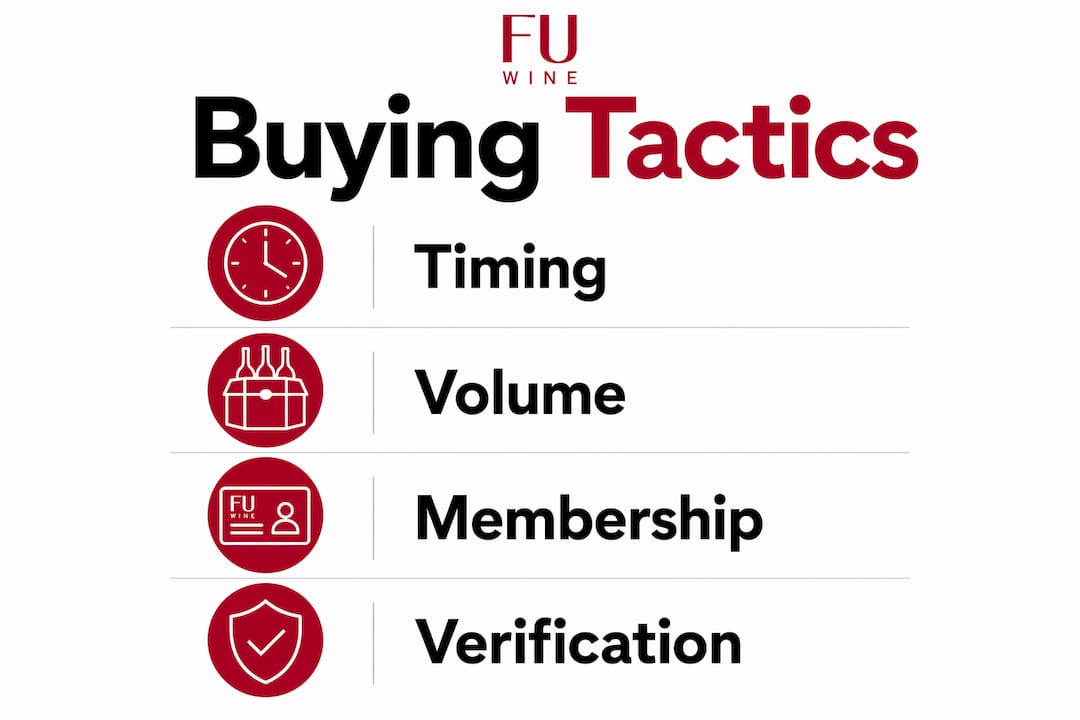
The tactics that consistently deliver results fall into four categories: timing, volume, membership, and cost verification.
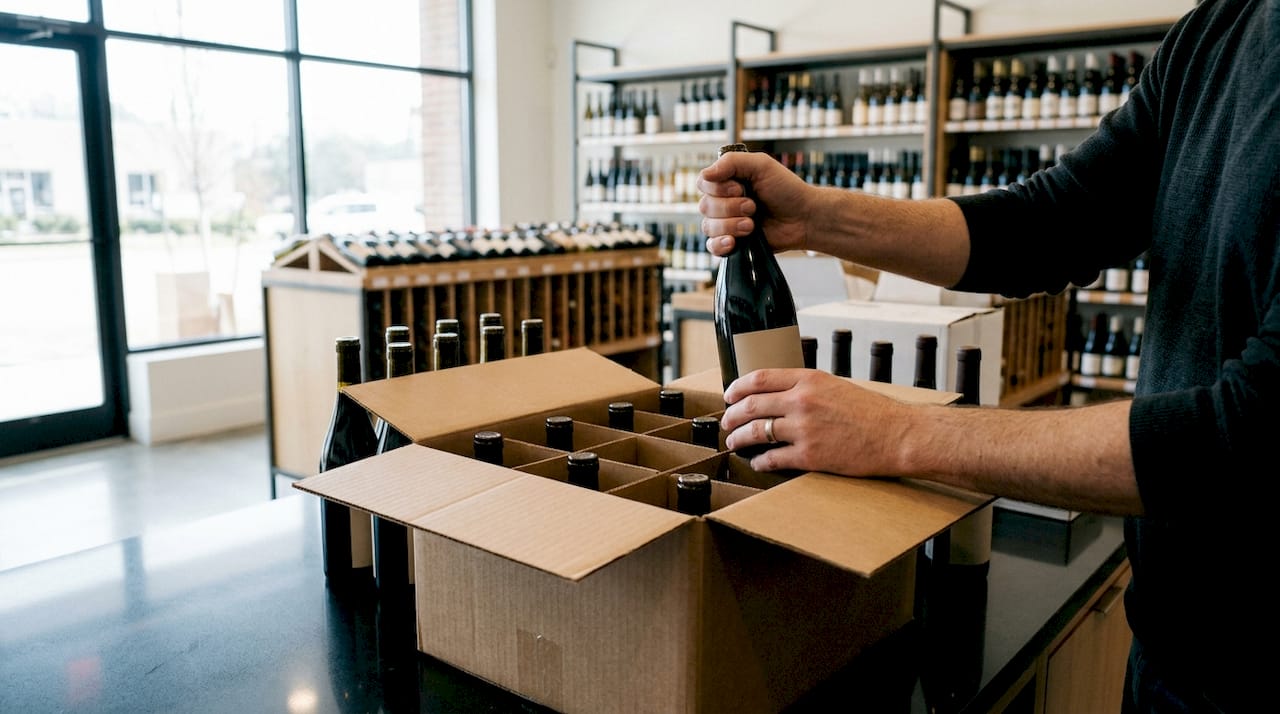
Timing promotions correctly is the first lever. Limited-time promotions like supermarket 25% off events deliver real value when you target the right price bands. Decanter’s wine editors have shown that buying six-bottle bundles in the £10 to £15 per bottle range during these events produces the strongest savings per dollar spent. The same logic applies to Australian retailers running case-deal events.
Buying by the case is the second lever, and it is one most collectors underuse. Buying in 6 to 12 bottle increments can reduce per-bottle shipping costs by up to 65% compared to ordering single bottles throughout the year. That is a significant saving on heavy glass. Volume purchasing also often triggers automatic case discounts from retailers, stacking savings on top of shipping reductions.
Joining allocation programmes and mailing lists is the third lever. Winery allocation programmes price bottles 30 to 50% below secondary market rates for active members. The key word is active. Members who stay engaged and purchase regularly maintain their allocation rights. Passive members get dropped. Napa Valley producers like Screaming Eagle and Harlan Estate operate this way, and Australian boutique producers increasingly do too.
Here is a quick checklist of proven deal sources:
- Winery direct mailing lists for pre-release and allocation pricing
- Retailer member clubs with tiered discount structures
- Seasonal promotions timed to inventory clearances (typically post-Christmas and end of financial year)
- Flash sale platforms offering distressed or overstock inventory
- Cellar clearance events from restaurants and private collections
Pro Tip: Sign up for at least five winery and retailer mailing lists before you need them. The best deals go to subscribers who have been on the list for months, not newcomers who join the day a sale drops.
How do you verify a wine deal is genuinely worth it?
Not every advertised discount is a real saving. Discounted inventory often arises from sellers needing liquidity or clearing unsold bottles, which creates both opportunity and risk around provenance and storage conditions.
The first check is provenance. Ask where the wine has been stored. Temperature fluctuations ruin wine silently. A bottle that has spent two summers in an unrefrigerated warehouse is not a bargain at any price. Reputable sellers provide storage history. If they cannot, walk away.
The second check is comparison pricing. Experts recommend validating discounts through benchmark pricing across multiple retailers before committing. Use platforms like Wine-Searcher to check the going market rate for the specific vintage and producer. A 30% discount off an inflated reference price is not a 30% saving.
Avoid mystery cases and mixed cases with unspecified vintages. These are designed to move stock the seller cannot shift individually. The wine may be fine, but you have no way to verify value or provenance on a bottle you cannot identify.
- Verify storage conditions before purchasing discounted stock
- Cross-check prices on Wine-Searcher or similar platforms
- Avoid cases where the vintage or producer is not specified
- Buy off-season when demand is lower and deals are more negotiable
- Calculate full landed cost before comparing to market benchmarks
Pro Tip: Calculate your total per-bottle cost as (bottle price plus case discount) divided by all-in landed cost including duties, shipping, and fees. That single number tells you whether the deal is real.
Deal-driven buying vs traditional wine purchasing: how do they compare?
The differences between deal-driven buying and traditional full-price purchasing are significant, and not just in price.
| Factor | Deal-driven buying | Traditional full-price buying |
|---|---|---|
| Entry price | 30–70% below retail on targeted bottles | Full retail or above on secondary markets |
| Access to rare wines | High, via allocations and clearances | Limited to what retailers stock |
| Provenance risk | Higher, requires active verification | Lower, standard retail chain of custody |
| Time investment | Active, requires monitoring and timing | Passive, buy when you want |
| Long-term value | Strong if quality is maintained | Predictable but expensive to build |
Traditional buying is passive and predictable. You pay full price, you get the bottle, and the provenance is clean. Deal-driven buying requires more work. You monitor promotions, join programmes, calculate costs, and verify storage. The payoff is access to bottles that would otherwise sit behind a price wall most collectors cannot justify.
Deep discounting can sometimes signal channel pressure or inventory problems rather than genuine generosity from a producer. That is why the evaluation step is non-negotiable. The goal is not to buy cheap wine. The goal is to buy good wine cheaply.
Practical steps to implement deal-driven buying in Australia
Australian collectors have genuine advantages in this space. The local market has strong direct-to-consumer winery relationships, active retailer competition, and a growing number of flash sale platforms.
-
Build your list infrastructure first. Subscribe to mailing lists from at least ten Australian wineries and five reputable retailers. Barossa Valley producers, Margaret River estates, and Yarra Valley boutique makers all run allocation and pre-release programmes. Get on those lists before the deals appear.
-
Set a landed cost threshold. Decide the maximum all-in cost per bottle you will pay for each quality tier. Stick to it. Emotional buying during flash sales is how collectors overpay on bottles they did not need.
-
Buy in volume when the deal is right. A genuine 25% discount on a case of twelve bottles from a reputable Margaret River Cabernet producer is worth acting on. A 10% discount on two bottles is not worth the shipping overhead.
-
Track your purchases and benchmarks. Keep a simple spreadsheet with purchase price, landed cost, and Wine-Searcher market value for every deal you execute. Over time, this data shows you which sources consistently deliver real value and which ones inflate reference prices.
-
Engage with deal-driven wine models built for collectors. Platforms that specialise in opportunistic buying, distressed inventory, and allocation releases give you access to bottles that never appear on standard retail shelves.
The Australian wine market also creates seasonal opportunities. Post-Christmas clearances in january and end-of-financial-year sales in june and july are historically strong windows for deal-driven buyers. Retailers need to move stock. You benefit.
Key takeaways
Deal-driven wine buying delivers genuine access to premium and rare bottles only when collectors verify total landed cost, provenance, and benchmark pricing before committing.
| Point | Details |
|---|---|
| Landed cost is everything | Calculate bottle price plus all shipping, duties, and fees before comparing to market benchmarks. |
| Volume buying cuts costs sharply | Buying in 6 to 12 bottle increments can reduce per-bottle shipping costs by up to 65%. |
| Allocations beat retail pricing | Active winery members access bottles priced 30 to 50% below secondary market rates. |
| Provenance verification is non-negotiable | Always confirm storage conditions before purchasing discounted or clearance stock. |
| Seasonal timing amplifies savings | Post-Christmas and end-of-financial-year windows consistently produce the strongest deal opportunities. |
Why deal-driven buying changed how I collect
I have been buying wine this way for over a decade, and the honest truth is that it took me three years to stop making the same mistake: confusing a low headline price with a genuine deal. I once bought a case of aged Barossa Shiraz at what looked like 45% off. By the time I added freight, the landed cost was barely 12% below what I could have paid at a local retailer. The “deal” was mostly theatre.
What actually works is boring and disciplined. You build your list infrastructure before you need it. You calculate landed cost on every single purchase. You verify provenance on anything that comes from a clearance or distressed source. And you buy in volume when the numbers genuinely stack up.
The market right now is interesting. Deal opportunities expand during market downturns and inventory clear-outs, but they also demand more diligence on provenance. There is more distressed stock moving through the market than I have seen in years. That is good news for disciplined buyers and dangerous news for impulsive ones.
The collectors I know who have built genuinely impressive cellars without spending a fortune all share one trait. They treat deal-driven buying as a skill, not a shortcut. They are patient, they are methodical, and they never let excitement override the landed cost calculation.
— Damien
Where Com fits into your deal-driven buying strategy
Com is built for exactly this kind of buying. Every bottle on the platform is sourced through direct relationships, allocation releases, cellar clearances, and opportunistic purchasing. These are not clearance wines. They are premium and rare bottles priced at what they should cost, not what the traditional retail chain thinks it can charge.
If you are serious about finding premium bottles for less, Com’s rotating deal model gives you the access that used to be reserved for insiders. Sign up for the newsletter and you will get deal alerts before they go public. Life is too short to pay full retail for great wine.
FAQ
What is the landed cost method in wine buying?
Landed cost is the total per-bottle price including purchase price, freight, duties, insurance, and handling fees. It is the only accurate way to verify whether a discounted wine is genuinely cheaper than buying through standard retail.
How much can case buying reduce shipping costs?
Buying wine in 6 to 12 bottle increments can reduce per-bottle shipping costs by up to 65% compared to ordering single bottles throughout the year. Volume purchasing also often triggers additional case discounts from retailers.
Are winery allocation programmes worth joining?
Yes. Active members of winery allocation programmes typically access bottles priced 30 to 50% below secondary market rates. The key is staying active in the programme, as passive members lose their allocation rights over time.
How do I know if a wine discount is genuine?
Cross-check the advertised price against current market rates on platforms like Wine-Searcher. A real discount sits below the going market rate after all landed costs are included. Discounts measured against inflated reference prices are not genuine savings.
What are the biggest risks in deal-driven wine buying?
The two main risks are poor provenance and misleading reference pricing. Always verify storage conditions for discounted or clearance stock, and always calculate total landed cost before comparing to market benchmarks.