

What is a rotating wine offer? your 2026 guide
TL;DR:
- A rotating wine offer involves a curated selection of wines that change on a set cycle to provide fresh, interesting choices. It emphasizes expert curation, variety, and discovery, whether through subscription services or venue by-the-glass programs. When properly executed, it offers honesty, transparency, and ongoing access to diverse, high-quality wines.
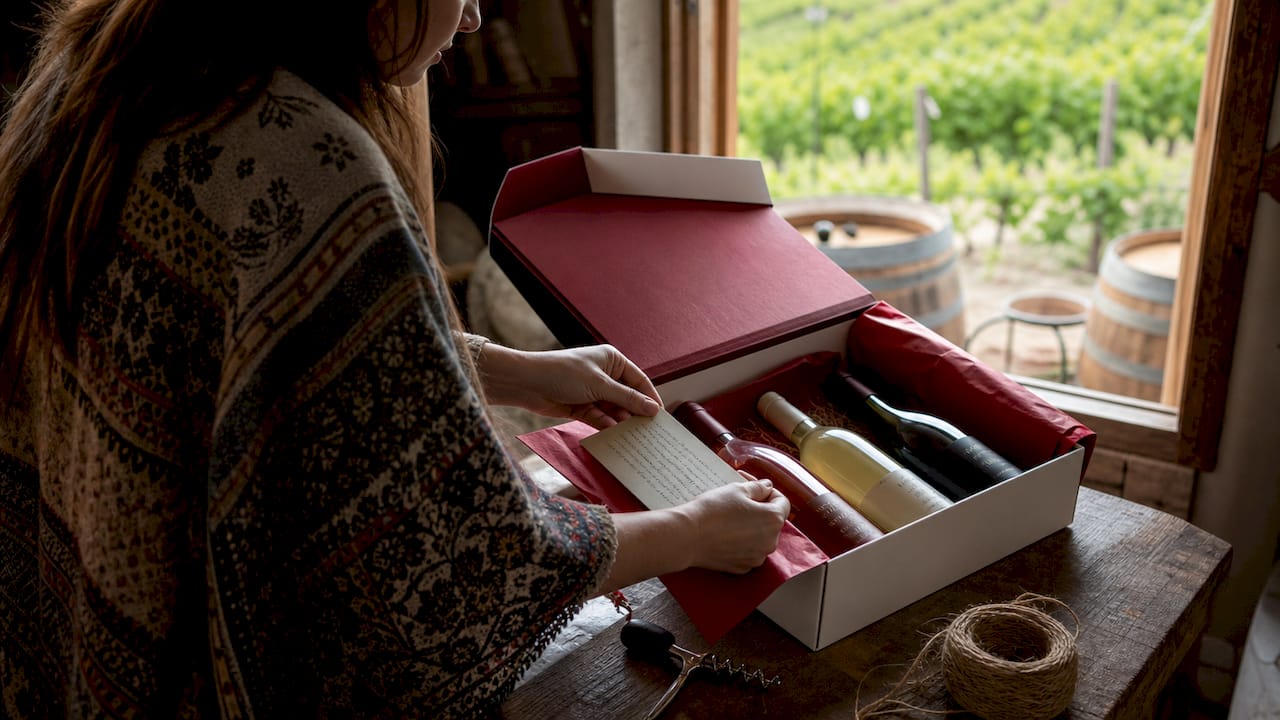
A rotating wine offer is a limited-time deal where a curated selection of wines changes on a set cycle to deliver fresh, exciting choices every period. Think of it as the opposite of a static wine list. Instead of the same bottles sitting on a shelf month after month, the selection turns over on a schedule, bringing new producers, regions, and styles into the mix. Services like Cambridge Wines and Laithwaites have built entire subscription models around this concept. The result is a rotating wine selection that rewards curiosity and keeps every delivery feeling like something worth opening.
What is a rotating wine offer and how does it work?
A rotating wine offer is defined as a limited-time deal with a lineup that changes on a set cycle or continuously to present fresh selections. The industry term you will also hear is a “curated rotating case” or a “by-the-glass rotation programme,” depending on whether you are buying bottles for home or ordering a glass at a restaurant.
The rotation cycle is the key mechanic. Cambridge Wines, for example, delivers 12 bottles selected from a rotating pool of about 18 wines, with a completely new lineup every 60 days. No repeat cases, no filler. Each delivery is a distinct tasting experience, not a reorder of the same bottles you already drank. That is what separates a genuine rotating offer from a standard subscription that just sends you the same house red every month.
Rotation cycles vary widely. Monthly shipments are common in wine subscription services. Some providers rotate every 60 days. Others tie their rotation to seasons, refreshing the list in autumn, summer, and so on. The cadence matters because it determines how quickly you get to explore new wines and how much variety you accumulate over a year.
Curation is the other half of the equation. A rotating offer is only as good as the person choosing the wines. Real curation means buyers taste and select wines explicitly for that cycle, with transparency about who made the picks. Generic services push inventory based on spreadsheets. Genuine curated offers reflect deliberate, expert choices made with the drinker in mind.
How do rotating offers work in subscriptions vs. venues?
The mechanics of rotation look different depending on whether you are dealing with a wine subscription service or a hospitality venue. Both use rotation, but for different reasons and on different schedules.
Subscription models
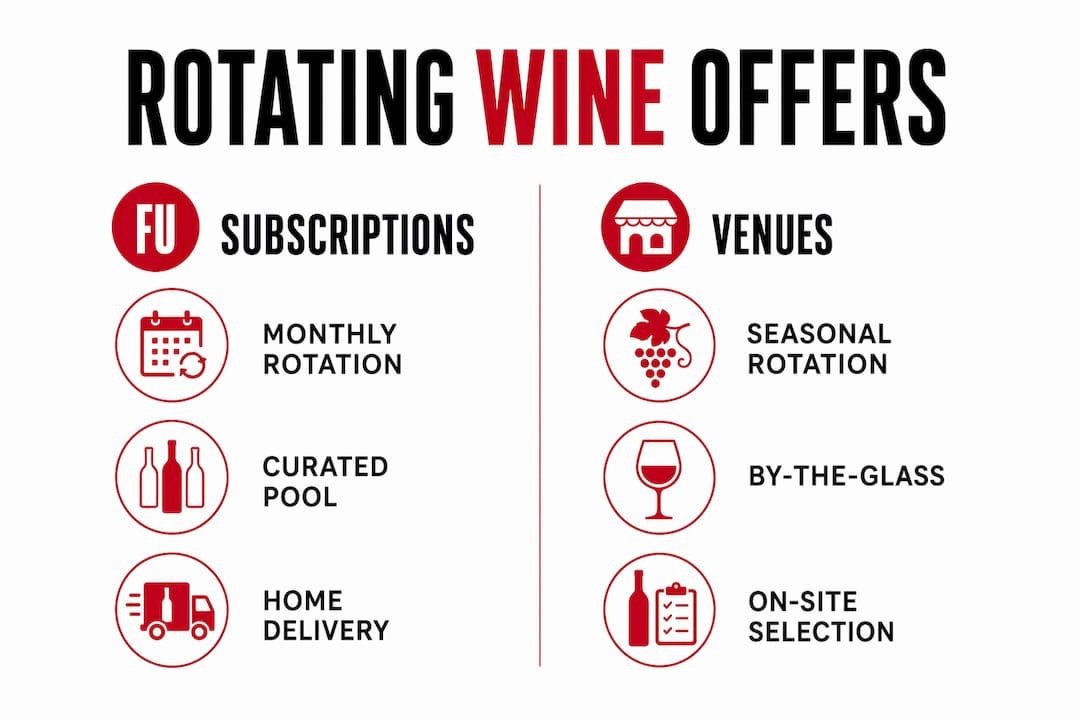
Subscription-based rotating offers work by drawing bottles from a larger pool of pre-selected wines. Each delivery cycle, the provider refreshes the pool and selects a case from it. Laithwaites, one of Australia’s better-known wine subscription services, ships orders within 7–14 days on a fixed schedule. Subscribers can typically choose between red-only, white-only, or mixed cases, and the rotation means no two consecutive deliveries are identical. The excitement comes from not knowing exactly which bottles will arrive, while still trusting the curation behind them.
| Feature | Subscription Rotating Offer | Venue By-the-Glass Rotation |
|---|---|---|
| Rotation frequency | Monthly or every 60 days | Every 3–6 months or seasonally |
| Selection size | 12 bottles from a pool of ~18 | 2–12 wines on the list |
| Curation driver | Expert buyer selection | Freshness, waste management, and trends |
| Customer control | Skip, swap, or cancel | Order from current list only |
| Discovery factor | High, new wines each cycle | Moderate, changes with seasons |
By-the-glass programmes at venues
Restaurants and bars use rotation for a very practical reason. Every open bottle creates potential loss if it does not sell quickly. Keeping a tight, rotating list of 2–12 wines means every bottle on the list moves fast enough to stay fresh. Most venues rotate seasonally, every 3–6 months, though bars in high-traffic areas may refresh even more regularly.
Staff involvement is significant in venue rotation. Sommeliers and floor managers taste through options, consider what is selling, and decide what earns a spot on the list. The SevenFifty Daily guide on by-the-glass optimisation notes that freshness and waste management are the primary operational drivers. Discovery is a secondary benefit, but a real one.
Pro Tip: When dining out, ask your server when the by-the-glass list last changed. A recent rotation usually means the venue is actively managing freshness, which is a good sign for quality.
How to choose a rotating wine offer that actually delivers
Not every rotating wine offer is worth your money. The word “curated” gets thrown around loosely, and plenty of services use it to describe what is really just automated inventory clearing. Here is what to look for.
Check who is doing the curating. Genuine curation involves expert tasting and deliberate selection, distinct from generic subscription offerings that push inventory based on non-curated spreadsheets. A good provider names the buyer or sommelier behind each selection. If the website cannot tell you who picked the wines, that is a red flag.
Understand the rotation frequency. Monthly rotations give you more variety over a year. Every 60-day cycles give you more time to savour each selection before the next arrives. Neither is objectively better. It depends on how fast you drink and how much discovery you want.
Look at the offer structure. Some rotating offers are all-red, some are mixed, and others are themed around a region or grape variety. Themed rotations, such as a Barossa Valley series or a natural wine rotation, tend to deliver more depth and coherence than random mixed cases.
Assess flexibility. The best wine subscription services let you skip a shipment, swap a bottle, or cancel without penalty. Flexibility matters because life changes. A service that locks you in without options is not built around the customer.
Use the tasting notes. Many rotating offers include QR codes or printed tasting notes with each delivery. These are not just marketing fluff. They help you understand what you are drinking, build your palate, and decide what to reorder when a wine you love comes back around.
Pro Tip: Sign up for a single cycle before committing to a longer plan. One delivery tells you more about a service’s curation quality than any website copy ever will.
What are the benefits and challenges of rotating wine selections?
Rotating wine selections deliver real advantages for both consumers and venues, but they also come with genuine operational challenges worth understanding.
The benefits
- Variety and discovery. Rotation exposes you to wines you would never pick off a shelf yourself. That is how casual drinkers become enthusiasts, and how enthusiasts find their next obsession.
- Freshness. Rotation forces providers to move stock regularly. You are not getting a bottle that has been sitting in a warehouse for two years because nobody bought it.
- Excitement. The anticipation of a new selection arriving is a real part of the appeal. It turns wine buying into something closer to a treasure hunt than a grocery run.
- Value. Providers who rotate aggressively often source opportunistically, picking up limited releases and cellar clearances at better prices, which flows through to the customer.
“The most successful rotating lists mix fast-selling favourites with genuine discovery wines. That balance keeps regulars happy while giving adventurous drinkers something to talk about.” — Wine by the Glass Programs, WineWiki
The challenges
Rotation is not without friction. For venues, managing a rotating by-the-glass list means constant stock monitoring, staff retraining on new wines, and the risk of a slow-moving bottle going off before it sells. For subscription providers, sourcing a genuinely fresh pool of wines every 60 days requires strong supplier relationships and real buying power.
For consumers, the main challenge is inconsistency. If you fall in love with a wine from one rotation, it may not appear again for months. The best services address this by offering a “buy more” option alongside each delivery, letting you reorder a favourite before it disappears from the pool.
How rotating offers fit into broader wine subscription trends
Rotating wine offers sit at the intersection of two growing trends: the rise of wine subscription services and the professionalisation of by-the-glass programmes in hospitality. Understanding where they fit helps you choose the right format for your drinking habits.
| Format | Best For | Rotation Style | Delivery Timing |
|---|---|---|---|
| Curated rotating case | Home drinkers wanting variety | New pool every 60 days | 7–14 days after order |
| Standard subscription | Drinkers who want consistency | Fixed selection, rarely changes | Monthly fixed date |
| By-the-glass programme | Venue guests, casual discovery | Seasonal, every 3–6 months | Immediate, at the venue |
| Flash deal / limited offer | Bargain hunters and collectors | Continuous, no fixed cycle | Varies by provider |
Standard subscriptions prioritise reliability. You know what is coming and when. Rotating cases prioritise discovery. You know something good is coming, but the specifics are a surprise. For wine enthusiasts who want to explore hospitality wine trends, rotating offers are the format that most closely mirrors what progressive venues are doing with their lists.
Seasonal and themed rotating offers are also becoming a stronger marketing tool. Providers tie rotations to events, harvests, or regional spotlights, which gives each cycle a story. That narrative makes the offer more memorable and gives drinkers a reason to stay subscribed beyond the convenience factor. Seasonal marketing strategies in hospitality show that themed rotations consistently outperform generic ones in customer retention.
Key takeaways
A rotating wine offer delivers genuine value when the curation is expert-led, the rotation cycle matches your drinking pace, and the provider gives you flexibility to manage your subscription on your terms.
| Point | Details |
|---|---|
| Core definition | A rotating wine offer changes its selection on a set cycle to deliver fresh, curated choices each period. |
| Curation quality matters | Real curation means expert buyers taste and select wines deliberately, not push excess stock. |
| Rotation frequency varies | Cycles range from monthly to every 60 days; choose based on how fast you drink and how much variety you want. |
| Flexibility is non-negotiable | The best services let you skip, swap, or cancel without penalty. |
| Venues rotate for freshness | By-the-glass lists rotate every 3–6 months to manage waste and maintain quality. |
Why rotating offers are the most honest format in wine
I have spent years watching people overpay for wine they did not enjoy because the label looked impressive or the recommendation came from someone trying to move stock. Rotating wine offers, when done properly, cut through that noise.
The rotation model forces honesty. A provider cannot hide behind a single flagship bottle forever. Every cycle, they have to find something genuinely worth drinking and worth sending. That accountability is built into the format in a way that static subscriptions simply are not.
The misconception I hear most often is that rotation means inconsistency. People worry they will not be able to reorder a wine they loved. That is a fair concern, but the better providers solve it. The real inconsistency is in services that claim to curate but are actually just clearing warehouse space. Rotation done right is the most consistent thing in wine: consistently interesting, consistently fresh, consistently worth opening.
My honest advice is to treat your first rotating case as a tasting session, not a commitment. Drink everything with attention. Note what surprised you. That is the whole point. The wines that rotate through a well-run programme are the ones that would otherwise only reach insiders with the right connections. Rotation is how you get access without the gatekeeping.
— Damien
Discover what’s in the current FU wine rotation
FU Wine is built for drinkers who are done paying inflated prices for bottles that should have been accessible all along. The rotating offers at FU Wine pull from premium stock, limited releases, and cellar clearances, delivering serious quality at prices that make sense.
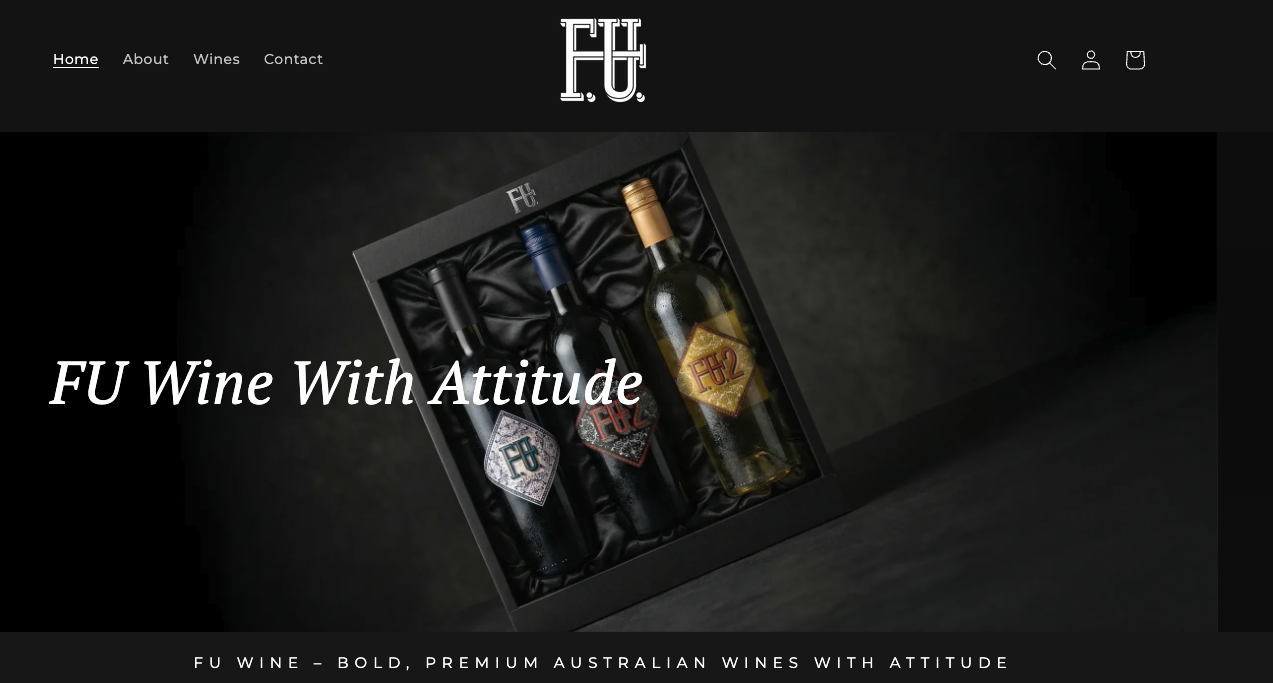
Every cycle brings something new. Skip a shipment, swap a bottle, or cancel whenever you like. No lock-ins, no pretension, no filler. Just genuinely good wine at prices that feel like you found a loophole. Head to FU Wine to see what is rotating right now and grab a bottle before it disappears. These deals do not wait around.
FAQ
What does “rotating” mean in a wine offer?
A rotating wine offer changes its selection on a set schedule, such as monthly or every 60 days, so customers receive different wines each cycle rather than the same bottles repeatedly.
How often do rotating wine selections change?
Subscription services typically rotate every 30–60 days, while restaurant by-the-glass lists rotate seasonally, roughly every 3–6 months.
What is the difference between a rotating offer and a standard wine subscription?
A standard subscription sends a fixed or predictable selection each period. A rotating offer draws from a changing pool, meaning each delivery is a distinct experience with no repeat wines.
How do i know if a rotating wine offer is genuinely curated?
Look for transparency about who selected the wines. Genuine curation means a named buyer or sommelier tasted and chose each wine deliberately, not an algorithm clearing inventory.
Can i reorder a wine i loved from a rotating offer?
Many providers include a “buy more” option with each delivery so you can reorder a favourite before it leaves the rotation pool. Check this feature before subscribing if reordering matters to you.