

What is a boutique producer? Your guide to artisan wine
TL;DR:
- A boutique wine producer makes fewer than 5,000 cases annually using artisanal methods and estate-sourced fruit. They focus on quality, manual processes, and direct sales to ensure exclusivity and preserve terroir. Genuine boutique wines are characterized by limited volume, transparency, and a strong connection to specific vineyards or vintages.
A boutique producer is a small-scale winemaker dedicated to artisanal, high-quality production, typically sourcing estate-grown or single-vineyard fruit and releasing fewer than 5,000 cases annually. There is no formal legal definition, but the wine industry recognises a clear set of parameters that separate genuine boutique producers from the mass-market crowd. If you have ever wondered what is a boutique producer and why collectors obsess over them, the answer comes down to three things: scale, focus, and craft.
What is a boutique producer in wine?
A boutique wine producer is defined by small-scale annual output, typically between 500 and 5,000 cases per year, with an emphasis on estate-grown or single-vineyard sourcing. That volume ceiling is not arbitrary. It reflects the physical limits of hands-on winemaking, where every decision from pruning to bottling receives personal attention.
The boutique producer definition sits in contrast to the “small producer” category, which can extend to around 10,000 cases annually. Boutique producers sit at the artisanal end of that spectrum. They prioritise quality over output, and their wines often reflect a specific place, season, and set of hands rather than a consistent house style engineered for mass appeal.
No government body certifies a winery as boutique. The term is industry-recognised rather than legally protected. That distinction matters enormously for collectors, because it means the word “boutique” on a label requires scrutiny rather than blind trust.
What production volumes and processes define a boutique producer?
Production volume is the clearest marker of boutique status. Boutique wineries produce under 100,000 litres per year and prioritise manual, artisanal processes over automation. That threshold translates to roughly 5,000 cases, and most genuine boutique operations sit well below it.
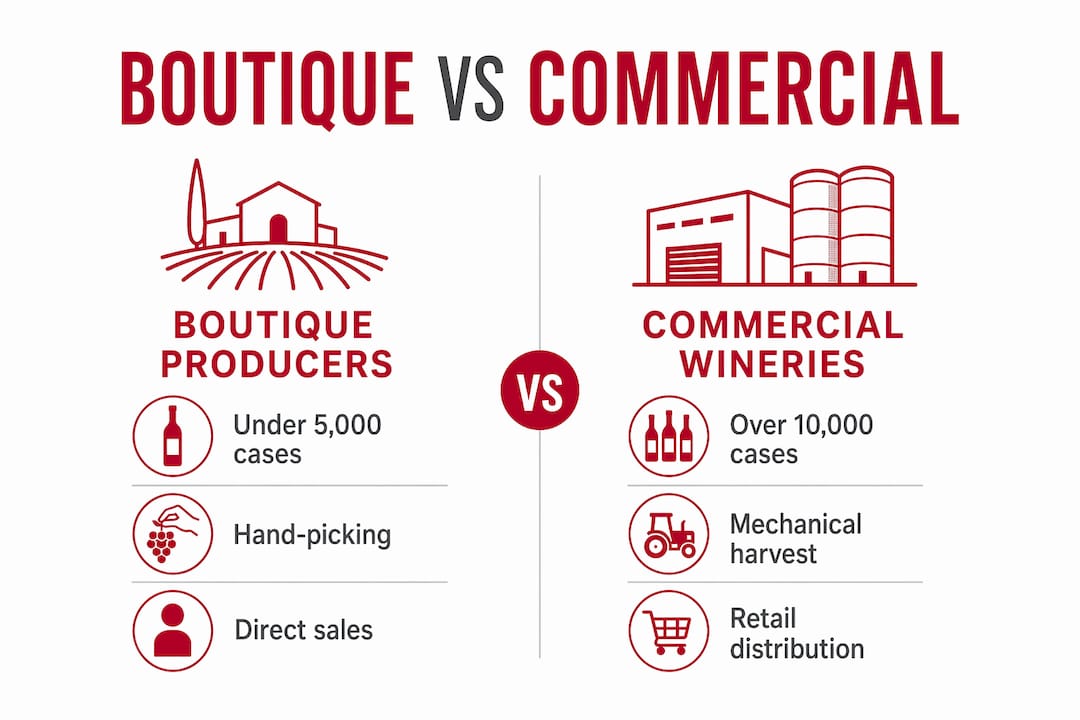
The processes inside a boutique winery look nothing like a commercial facility. Hand-picking, small-batch fermentation, and block-level vineyard management are standard practice. Each block of vines may be harvested separately, fermented in small open-top vessels, and aged in individual barrels rather than large tanks. The winemaker often knows every row of the vineyard personally.
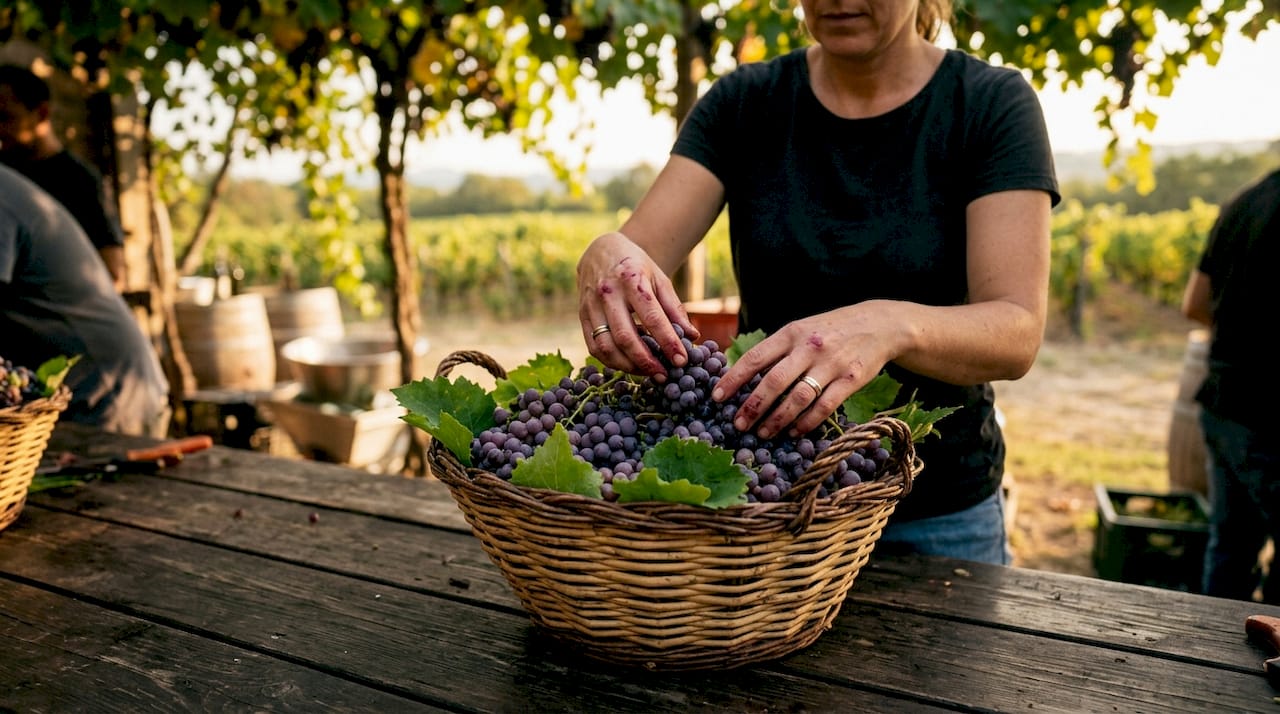
Pro Tip: Ask a producer how many people oversee their fermentation. At a genuine boutique winery, the answer is usually one or two people. At a commercial facility, it is a production team following a formula.
Quality control at boutique scale is intense by necessity. Every case represents a significant percentage of total output, so errors carry far greater consequences than they would at a large winery producing hundreds of thousands of cases. This pressure drives the meticulous care that collectors pay a premium for.
The financial reality of boutique production is striking. A winery producing 1,200 cases annually with 80% direct-to-consumer sales generates approximately $978,000 in gross revenue before costs. That model only works when quality justifies the price and the producer controls the sales relationship directly.
Key production characteristics of genuine boutique producers include:
- Hand-harvesting and manual sorting at the vineyard
- Small-batch fermentation in open-top vessels or barrels
- Block-level or single-vineyard fruit sourcing
- Limited or no automation in the cellar
- Winemaker involvement at every stage of production
- Minimal fining and filtration to preserve character
How do boutique producers differ from large commercial wineries?
The operational gap between boutique and commercial producers is wide. The differences show up in sourcing, distribution, pricing, and the fundamental goal of production.
| Feature | Boutique producers | Large commercial wineries |
|---|---|---|
| Annual output | Under 5,000 cases | Tens of thousands to millions of cases |
| Vineyard sourcing | Estate or single-vineyard fruit | Multi-region blending and bulk purchasing |
| Sales channel | Primarily direct-to-consumer | Wholesale, retail, and supermarket distribution |
| Automation | Minimal, manual processes | High automation for consistency and volume |
| Pricing control | Producer sets and holds price | Retailer and distributor margins apply |
| Quality focus | Every batch is critical | Consistency across large volumes |
Boutique producers restrict supply to protect direct-to-consumer pricing, avoiding traditional retail channels to maintain exclusivity and margins. That is not snobbery. It is a deliberate business model. When a winery sells through a distributor and then a retailer, each layer takes a margin, and the producer loses control of both price and brand story.
Large commercial wineries source fruit from multiple regions and blend for consistency. A boutique producer sources from one place and lets that place speak. The wine reflects a specific terroir rather than a house style engineered to taste the same every year.
Pro Tip: Check the wine’s distribution channel before buying. If a wine labelled “boutique” is available in every bottle shop chain, ask questions. Genuine boutique producers rarely have the volume to supply mass retail.
One common misconception is that “boutique” simply means expensive or fancy. The term describes a production model, not a price point. Boutique producers operate with senior-led, specialised teams that prioritise craftsmanship and client relationships over volume. That focus is what separates them operationally, not the price on the label.
Above 5,000 cases annually, the boutique economic model strains under increased operational complexity and the cost of maintaining direct-to-consumer hospitality. Producers who grow beyond that threshold often shift toward wholesale distribution, which changes the entire character of the business.
What should collectors look for in genuine boutique wines?
Identifying authentic boutique wines requires looking past the label. The word “boutique” is frequently used as marketing jargon, implying luxury with artificially small runs rather than reflecting genuine artisanal production. Collectors who know what to look for avoid paying boutique prices for commercial wine dressed up in boutique clothing.
The clearest indicators of genuine boutique production are:
- Estate or single-vineyard sourcing. The label names a specific vineyard or estate, not a broad regional appellation.
- Stated production volume. Genuine producers often disclose case numbers. If the winery produces 800 cases of a particular wine, they will usually say so.
- Direct-to-consumer sales. Most boutique producers sell primarily through a mailing list, cellar door, or their own website rather than through distributors.
- Winemaker transparency. The winemaker’s name is on the label or prominently featured. You can find them, contact them, and ask questions.
- Limited vintage releases. Each year’s release reflects that year’s conditions rather than a consistent blended house style.
Knowing how to shop boutique wines without paying inflated markups is a skill worth developing. Boutique wines are often available at far better prices through direct channels or specialist retailers who source opportunistically rather than through traditional wholesale chains.
The boutique producer run is another concept worth understanding. A producer run refers to a specific, limited release from a single vintage or block, often allocated to mailing list members before any public release. These runs sell out fast. Getting access to them usually requires a direct relationship with the producer or a specialist source who has that relationship on your behalf.
Why does the boutique producer model matter in wine today?
Boutique producers preserve something that commercial wineries cannot replicate at scale: a direct connection between a specific place and the wine in your glass. That connection is called terroir, and it is the reason collectors pay attention to boutique wines in the first place.
“The defining characteristic of boutique producers is focus. Specialised teams allow rapid adaptation and customised protocols that volume-optimised operations simply cannot match. At boutique scale, every vintage and block receives meticulous artisanal management, because errors have a higher impact than they would at high-volume facilities.”
The economic logic of boutique production also creates genuine scarcity. This is not manufactured scarcity through artificial limits. It is the natural result of a small team working a finite piece of land. When a producer makes 600 cases of a wine, there are 600 cases in the world. That is it.
The collector appeal of boutique wines rests on four pillars:
- Terroir expression. Single-vineyard sourcing means the wine tells a specific story about a specific place.
- Artisanal integrity. Manual processes and low automation preserve character that blending and filtration would erase.
- Genuine scarcity. Limited production creates real collector value, not a marketing illusion.
- Direct provenance. Buying from the producer or a trusted specialist means you know exactly where the wine has been.
The parallel exists across artisanal food and beverage categories. Independent producers who prioritise craft over volume consistently deliver a product that mass operations cannot match, regardless of the category. The boutique wine model is the wine industry’s version of that truth.
Understanding the difference between premium and mass-market wine helps collectors appreciate why boutique producers command the attention they do. The gap is not just about price. It is about the entire production philosophy.
Key takeaways
Boutique wine producers are defined by small-scale, artisanal production under 5,000 cases annually, estate or single-vineyard sourcing, and direct-to-consumer sales that protect both quality and price.
| Point | Details |
|---|---|
| Production volume threshold | Genuine boutique producers make under 5,000 cases annually, with most well below that ceiling. |
| Manual processes define authenticity | Hand-harvesting, small-batch fermentation, and block-level management separate boutique from commercial production. |
| Direct-to-consumer is the model | Boutique producers sell primarily through mailing lists and cellar doors to protect pricing and brand control. |
| “Boutique” is not legally protected | Collectors must evaluate sourcing and production methods, not just label claims. |
| Scarcity is real, not manufactured | Limited production creates genuine collector value tied to a specific place and vintage. |
Damien’s take: what boutique wine really means
The word “boutique” gets thrown around a lot. I have seen it on labels from wineries producing 50,000 cases a year, which tells you everything about how loose the term has become. Real boutique producers are not hard to spot once you know what to look for, but you do have to look.
What strikes me most about genuine boutique producers is the pressure they operate under. When your total output is 800 cases, a bad fermentation decision is not a footnote. It is a catastrophe. That pressure produces a level of care and attention that commercial operations simply cannot replicate, no matter how good their equipment is.
The misconception I encounter most among collectors is that boutique automatically means better. It does not. Boutique means small, focused, and artisanal. The quality still depends on the winemaker’s skill and the vineyard’s character. What boutique production does guarantee is that someone was paying very close attention. Whether that attention produced something worth drinking is a separate question.
My advice: find producers who are transparent about their numbers, their sourcing, and their methods. If a winery cannot tell you how many cases they made, where the fruit came from, and who made the decisions in the cellar, the “boutique” on the label is doing a lot of heavy lifting.
— Damien
Boutique wines worth drinking, at prices worth paying
You love the idea of boutique wine. The craft, the scarcity, the story behind the bottle. The part that stings is the price, or more accurately, the markup that gets added between the producer and your glass.
FU Wine sources genuine boutique producer runs, limited releases, and cellar-cleared allocations and puts them in front of you at prices that cut out the middlemen. These are not clearance bottles or second-rate stock. They are the real thing, sourced directly and sold without the usual layers of margin stacked on top. If you want access to boutique wines at prices that actually make sense, this is where to start. Every bottle is a small rebellion against paying too much for something great.
FAQ
What is the boutique producer definition in wine?
A boutique wine producer is a small-scale winery producing under 5,000 cases annually, using artisanal methods and sourcing estate-grown or single-vineyard fruit. There is no legal definition, but the term is industry-recognised based on production volume and process.
What is a boutique producer run?
A boutique producer run is a limited release from a specific vintage or vineyard block, often allocated to mailing list members before any public availability. These runs sell out quickly due to the small volumes involved.
How do I identify a genuine boutique wine producer?
Look for stated production volumes, single-vineyard or estate sourcing on the label, direct-to-consumer sales channels, and named winemaker involvement. If the wine is widely available through supermarket chains, the “boutique” claim deserves scepticism.
Why do boutique producers sell direct to consumer?
Boutique producers restrict retail distribution to protect their pricing and maintain brand exclusivity. Selling through distributors and retailers adds margin layers that erode both producer revenue and collector value.
What are the main characteristics of boutique producers?
The core characteristics are small annual production under 5,000 cases, manual and artisanal cellar practices, estate or single-vineyard sourcing, direct-to-consumer sales, and a winemaker who is personally involved at every stage of production.