

Understanding deal-driven wine models for collectors
TL;DR:
- Most wine prices increase significantly through distribution markups before reaching consumers, creating opportunities for savvy collectors. Understanding the three-tier system and market signals helps identify when discounted, premium-quality wines become available due to inventory surges or restructuring. Building strong retailer relationships and focusing on the mid-tier range enable buyers to secure valuable bottles at substantial discounts.
Most wine drinkers have no idea how much the bottle they’re holding actually cost at the source. The truth is, by the time it reaches your hands, that wine may have doubled or tripled in price through layers of distribution markups, and understanding deal-driven wine models is the key to beating that system. This guide pulls back the curtain on how wine pricing actually works, where deals come from, and how savvy collectors can exploit the same market forces that most people never see coming. If you’ve ever wondered why premium bottles occasionally appear at shocking prices, this is your answer.
Key takeaways
| Point | Details |
|---|---|
| Distribution adds serious cost | Markups at each tier can double or triple the wholesale price before wine reaches you. |
| Deals have economic triggers | Excess inventory and cash flow pressure force distributors and retailers into discounting cycles. |
| Timing is everything | Flash deals appear suddenly and disappear fast, so tracking market signals gives you an edge. |
| Mid-tier wines offer the best value | The $15 to $30 range is where the smartest collectors find premium quality at genuine discount. |
| Quality risks are real | Surplus stock sometimes hides storage or vintage issues, so provenance checks matter. |
Understanding deal-driven wine models: the three-tier system
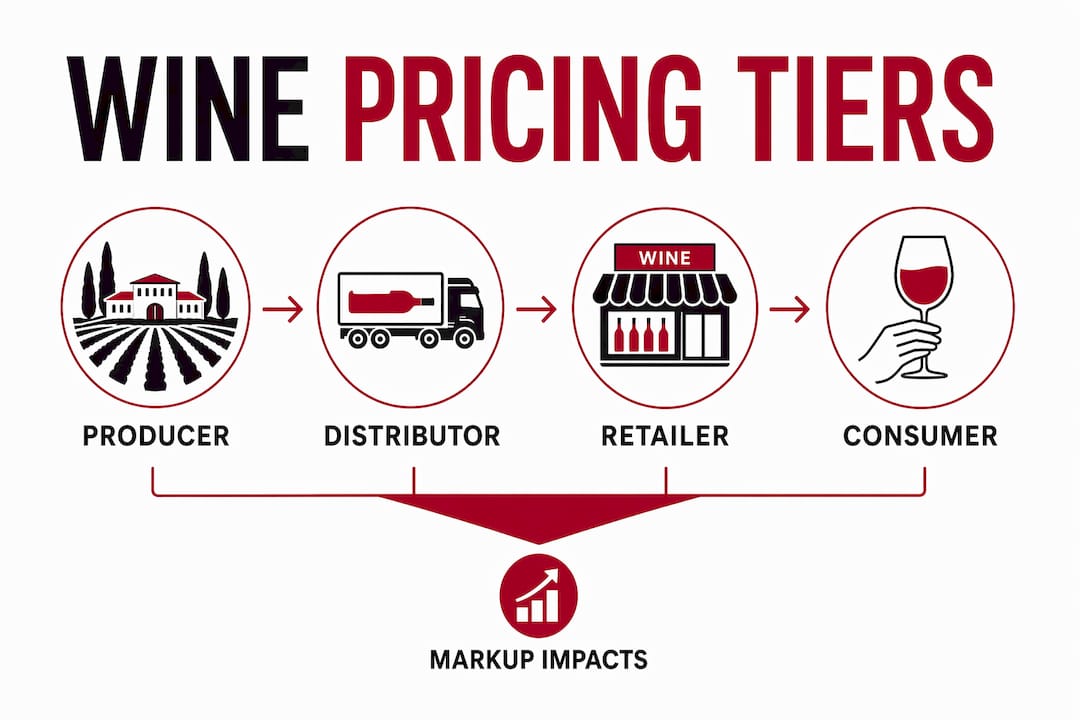
Before you can spot a real deal, you need to understand why wine is priced the way it is. The answer sits inside a structure called the three-tier distribution system, the legally mandated framework governing how wine moves from producer to your glass in most markets. Every tier adds cost. Every tier adds margin. And understanding where those costs compound is how you find the cracks.
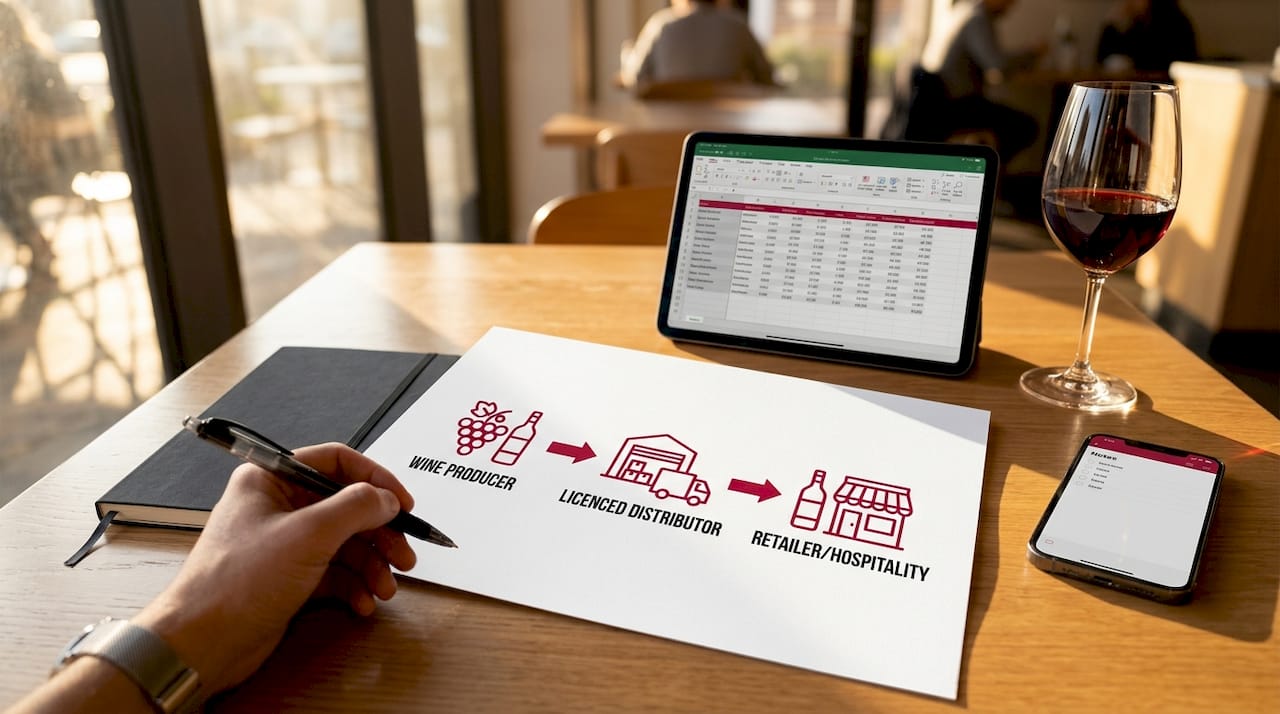
The three tiers work like this. The first tier is the producer or importer. The second is the distributor or wholesaler. The third is the retailer or restaurant. Each party buys from the one above and sells to the one below. None of them can skip steps. And each one needs to cover costs and make a profit.
Here’s where it gets interesting. Distributors mark up 30 to 50% over what they pay, and retailers add another 30 to 50% on top of that. So a wine that costs $10 at wholesale might land on a retail shelf at $20 to $25. Pop it on a restaurant list and that same bottle could hit $50 or $60. The markup isn’t greed. It’s just the maths of the system.
What this means for you is that significant room exists between what wine actually costs and what you typically pay. And each tier manages its own inventory and cash flow independently, which creates constant economic pressure to move product. That pressure is where deals are born.
Smaller producers face a steeper climb. Without the volume or brand recognition to command preferred shelf placement, boutique wineries often offer incentives to distributors that can create unexpected pricing advantages further down the chain. Learning how to navigate wine distribution as a collector means recognising these asymmetries and using them.
Where wine deals actually come from
Understanding wine deal models goes beyond just watching for a sale sticker. Deals have specific economic origins, and knowing those origins lets you anticipate them rather than just stumble across them.
The biggest trigger is excess inventory. Between 2015 and 2023, the number of wine producers in the US grew from roughly 8,000 to 12,000 while total production volume fell to around 700 million gallons. More brands fighting for the same shelf space creates a surplus problem. When wines don’t sell through fast enough, distributors and retailers face a cash flow crunch.
How they solve that crunch is through discounting. But not the slow, gradual kind. Discount promotions in three-tier markets typically appear as sudden, deep flash deals triggered by inventory pressure rather than planned markdown cycles. A $3 discount on a $15 wholesale price can wipe out margins entirely, so these offers don’t last. They’re urgent, and they disappear.
Here’s the sequence that drives them:
- A producer or importer over-allocates stock to a distributor.
- The distributor struggles to move volume before the next shipment arrives.
- Cash flow pressure mounts as warehouse costs and financing kick in.
- Deep discounts are offered to retailers to clear stock fast.
- Retailers pass some of that discount on, especially for clearance or end-of-season buys.
Seasonal patterns play into this too. Post-holiday periods and end-of-financial-year windows often coincide with inventory clearances. Direct-to-consumer sales tell part of the story too. DTC sales dropped from 8.7 million cases at an average of $38 per bottle to 5.3 million cases at $57, showing that premiumisation strategies have their limits. When producers can’t sell at inflated prices, they often pivot to deal channels.
Pro Tip: Set a calendar reminder for the weeks following major holidays and end-of-quarter periods. This is when distressed wine inventory hits the market most reliably.
Reading the market: signals that predict deals
You don’t need a hedge fund to track wine market signals. You need a bit of patience, the right sources, and an understanding of what the data is actually telling you.
Modern wine businesses now use AI and forecasting tools incorporating weather, events, and social sentiment to predict demand shifts and identify when inventory will back up. As a collector, you can use similar signals from the outside looking in.
Watch for these market tells:
- Category shifts in retail assortment. Retailers have been advised to reduce under-$13 California wines by 15 to 25% and move upmarket. When that shift happens, the wines being delisted create a short-term closeout window of around 18 months.
- Distributor brand programming changes. When a distributor drops a brand from its priority list or loses a major account, the resulting inventory pressure flows quickly to deal channels.
- Producer news and restructuring. Winery closures, ownership changes, and vintage write-offs all signal that excess stock could hit the market at deal prices.
- Flash deal frequency. If you’re seeing unusually high volumes of deals across multiple retailers for a particular region or varietal, that’s a sign of broader inventory pressure, not just a one-off sale.
Deal timing and customer demand can be predicted using behavioural and environmental factors that most collectors never think to track. Monitoring wine industry news, subscribing to distributor newsletters, and staying close to bottle shop staff who know what’s moving are all simple, free ways to build your market intelligence.
Practical strategies to capitalise on wine deals
Now for the part you actually came for. Explaining value-driven wine models is one thing. Turning that knowledge into bottles on your rack at 40% off is another.
The collectors who consistently win at this game share a few habits. They build relationships before they need them. They play the mid-tier. They move fast when they see the signal. And they never confuse a discount with a bargain.
Start with your retailers, not the apps. Bottle shop managers and floor staff know what’s sitting in the back room. A standing relationship means you hear about clearance stock before it hits the shelf. Ask directly what’s overstocked. Ask what the next delivery means they need to move.
Focus on the $15 to $30 tier. Buying from mid-tier wineries directly or via semi-direct arrangements offers the best conditions for deal negotiation, especially during restructuring periods. This is where quality-to-price ratio peaks, and where discounting cycles are most active.
Here’s a quick comparison to frame your buying strategy:
| Category | Typical retail price | Deal discount potential | Risk level |
|---|---|---|---|
| Entry-level wines | Under $15 | Low (thin margins) | Low |
| Mid-tier wines | $15 to $30 | High (30 to 50%) | Low to medium |
| Premium boutique | $30 to $80 | Moderate (20 to 40%) | Medium |
| Ultra-premium / collectible | $80+ | Occasional (10 to 30%) | Higher (provenance) |
Don’t hoard for the sake of hoarding. Wine investment strategies based purely on deal-chasing without quality criteria end badly. Buy what you’d genuinely drink or sell. A cellar full of discounted wine that ages poorly is a cautionary tale, not a portfolio.
Pro Tip: Ask retailers specifically about wines that have had their labels changed or are being sold under a second label. These are often premium bottles that producers have offloaded through discount brokers to protect their main brand.
Risks and nuances worth knowing
Understanding wine valuation means accepting that not every deal is what it looks like. The discount wine world has its own version of fine print.
Wineries offload excess inventory through discount brokers who relabel or obscure wines to avoid damaging their premium brand. The wine inside might be genuinely good. Or it might be surplus stock from an underwhelming vintage. The relabelling makes it hard to tell without asking pointed questions.
Here’s what to watch for before buying discounted premium stock:
- Provenance questions. Where has the wine been stored? How long has it been in the warehouse? Temperature-sensitive wines degrade fast in poor conditions.
- Vintage obscuring. Some discounted bottles have dates removed or obscured. If a retailer can’t tell you the vintage, that’s a red flag.
- Secondary market impact. If you’re buying as a wine investment strategy, recognise that heavily discounted bottles from relabelled stock rarely hold their value on the secondary market.
- Quality verification. For wines above $40, it’s worth cross-referencing scores and critical reception before buying on discount alone.
Dealmaking in the wine industry has a shadow side. Not everything at 50% off deserves a place in your cellar.
My honest take on chasing wine deals
I’ve spent years watching collectors get burned by chasing price over provenance. The ones who do it well have a discipline the others lack. They don’t get excited about a discount. They get excited about a specific bottle at a discount.
The economic principles behind value-driven wine models are genuinely fascinating and legitimately useful. But I’ve seen too many people confuse “this was expensive” with “this is good.” A 70% discount on a wine that was overpriced to begin with is not a win. It’s a marketing trick wearing a clearance tag.
What I’ve learned, the hard way, is that the best deals come to collectors who are already paying attention before the sale happens. You can’t react fast enough if you’re starting from zero. But if you understand the three-tier system, you track distributor behaviour, and you have one or two retailer relationships that actually mean something, you’ll find yourself in the right place at the right time far more often than feels like coincidence.
My advice: learn the structure, know your target bottles, and be ready to move when the signal arrives. That’s not luck. That’s preparation meeting opportunity.
— Damien
Get ahead of the next great deal with FU Wine
FU Wine was built for exactly this. Not the pretentious, mark-up-everything approach that makes premium wine feel like a privilege for the few. The opposite of that.
At FU Wine, we’ve done the hard work of understanding the distribution system, tracking the market, and building the relationships that put premium bottles in your hands at prices that make sense. Whether you’re after a rare boutique release or a high-scoring vintage at a fraction of retail, we source it with purpose, not as an afterthought. Explore our deals on premium wines and see what’s available right now. If you want to go deeper on the mechanics, our guide to discounted wine breaks down exactly how to find premium bottles for less.
FAQ
What is a deal-driven wine model?
A deal-driven wine model is a buying and sourcing approach that capitalises on inventory pressures, discounting cycles, and market timing within the wine distribution system to access premium wines at below-standard retail prices.
Why do premium wine deals appear so suddenly?
Deals appear suddenly because distributors and retailers use flash discounting to clear excess inventory fast, rather than applying gradual markdowns that would destroy their margins over time.
What tier offers the best deal opportunities for collectors?
The mid-tier price range of $15 to $30 offers the strongest combination of quality, discount depth, and negotiation potential, especially during periods of market restructuring.
How do I know if a discounted wine is genuinely good quality?
Check provenance and storage history, verify the vintage if possible, and cross-reference critical scores before buying. Relabelled surplus stock can be excellent or ordinary, so asking direct questions matters.
Is wine a good investment strategy when bought through deal channels?
Wine purchased through deal channels can hold or grow in value, but only when provenance is clear, the wine has genuine collectibility, and secondary market demand exists for that specific bottle.