

10 Underrated Wine Regions Buyers and Travelers Should Visit for Value
Here’s the deal: the world’s most exciting wine right now isn’t coming out of the regions everyone name-drops at dinner parties. This is a curated list of underrated wine regions worth tasting and visiting, from a fragmented Croatian hillside to a bobal comeback in Spain. Each one comes with a note on what to pour, what makes it a sleeper, and how to actually go looking for it.
TL;DR:
- These underrated regions produce high-quality wines with less competition, offering better value and unique profiles compared to famous, over-marketed regions.
- Limited export infrastructure, fragmented land ownership, and overshadowing by neighboring famous regions keep their wines under the radar, creating buying opportunities.
- Visiting these regions requires targeted planning, such as contacting small wineries directly and traveling in shoulder seasons to access family-run producers.
- Bottles from these areas often feature small-batch, estate-specific labels with limited production runs, making provenance and careful sourcing crucial for quality.
- Climate change and regional growth highlight the need for strategic focus, as these underdog areas now present promising prospects for both drinkers and collectors.
Table of Contents
- What makes a wine region “underrated” anyway?
- Why these regions stay under the radar
- How to actually taste and visit these regions
- What a wine buyer might look for when hunting these regions
- How these regions got here
- The obstacles these regions still face, and where the opportunity sits
- How they stack up against the household names
- Why chasing the unfamiliar bottle is worth it
- Sources
- FAQ
What makes a wine region “underrated” anyway?
Before we get into the list, here’s the standard industry term worth knowing: sommeliers and wine buyers call this category “emerging” or “value” regions, but “underrated wine regions” and “hidden wine destinations” describe the same thing from a drinker’s seat. These are areas producing genuinely serious wine that hasn’t caught up with the marketing budgets of Bordeaux or Barossa. That gap is exactly where the good bottles hide.
Here’s the shortlist. Consider it a starting map, not gospel.
-
Dão, Portugal. Tucked into granite hills in central Portugal, Dão has been quietly making structured, mineral reds from Touriga Nacional for generations while Douro hogs the international spotlight. Expect firm tannins, dark fruit and a savoury edge that ages beautifully. Visit in autumn for harvest and stay near Viseu to hit several producers in a single day.
-
Priorat (DOQ Priorat), Spain. Steep terraces of black slate soil called llicorella give Priorat’s Garnacha and Cariñena an intensity that genuinely rivals Rioja, according to The Spectator. It’s remote, low on tourist infrastructure and high on drama, both in the glass and the landscape.
-
Eastern Slovenia (Štajerska/Podravje). This cool, continental pocket of Central Europe is producing crisp, ageworthy Sauvignon Blanc, Riesling and Furmint, along with a growing run of quality sparkling wine, per Decanter. It upends the assumption that Slovenian wine means Mediterranean warmth, and the whites reward a few years in the cellar.
-
Utiel-Requena, Spain. On a high plateau outside Valencia, winemakers are pulling structured, expressive reds out of Bobal, a grape once destined for bulk blending. BKWine Magazine calls it one of Spain’s most misunderstood regions, and the whites made from Merseguera are just as worth chasing.
-
Zagorje, Croatia. Rolling green hills near Zagreb, sometimes nicknamed “little Tuscany,” host around 15 professional vineyards producing a modest production volume between them, according to National Geographic. This is family-run wine at its most intimate, with tastings often happening in someone’s actual kitchen.
-
Languedoc, France. Over 50 cultivated grape varieties spread across a patchwork of appellations make Languedoc one of the most diverse wine regions on earth, and one of the least appreciated, notes Forbes. You’ll find everything from crisp Picpoul to bold Syrah blends at prices that would embarrass Burgundy.
-
Mendoza, Argentina. Malbec’s spiritual home still gets treated as a one-trick region, but high-altitude sites above 1,000 metres are turning out increasingly refined, floral expressions alongside old-vine Semillon whites.
-
Douro, Portugal. Better known for Port, the Douro Valley’s dry table reds are some of the best value structured wine in Europe, grown on vertigo-inducing terraced slopes above the river.
-
Canary Islands, Spain. Volcanic soil and centuries-old vines untouched by phylloxera give Canary wines, especially those made from Listán Negro, a saline, smoky character unlike anywhere else.
-
Central Otago, New Zealand. The world’s southernmost wine region produces Pinot Noir with a purity and perfume that punches well above its small production numbers.
Several outlets, including VinePair, highlight overlapping picks like Sierra Foothills and Mendoza as consistently overlooked despite serious quality, which tells you this isn’t one writer’s pet theory. It’s a pattern.
Why these regions stay under the radar
The reasons are structural, not a reflection of what’s in the bottle.
- Fragmented land ownership. Zagorje’s tiny output comes from roughly 15 professional vineyards working plots split by generations of inheritance, which caps volume and keeps wine largely local.
- Limited export reach and zero marketing spend. Smaller producers in Zagorje and similar regions simply don’t have the budget to chase overseas distribution, which is precisely where the value sits for buyers willing to look.
- Overshadowed by a famous neighbour. Dão sits in Douro’s shadow, Priorat in Rioja’s, Languedoc in Bordeaux’s.
- Grapes rebuilding their reputation. Bobal spent decades as a bulk-blending grape in Utiel-Requena before winemakers started treating it as a variety worth bottling on its own.
Each of these translates directly into buyer opportunity: less competition for the same quality, and often, wine built to age rather than move fast off a shelf.
How to actually taste and visit these regions
Finding the wine is the easy part. Getting it right takes a bit of planning.
- Start with specialist importers and wine clubs. General retail rarely stocks bottles from Zagorje or Eastern Slovenia. Availability into Australia varies a lot by vintage and producer, so a specialist importer or a curated online merchant is usually the fastest route.
- Match the tasting notes to the food. Priorat’s slate-driven Garnacha wants slow-cooked lamb; Dão’s Touriga Nacional loves roasted game; Eastern Slovenia’s whites sing with fresh seafood and soft cheese.
- Decant the structured reds. Priorat and Utiel-Requena’s Bobal both benefit from an hour of air before pouring, especially younger vintages still carrying firm tannin.
- Plan your travel around a hub, not a single winery. Basing yourself in a small town within Tarragona province, for instance, gives you access to Priorat, Montsant and Tarragona DOs without paying tourist-town prices, a strategy worth applying anywhere producers cluster.
- Go in shoulder season. Autumn harvest and spring budburst both offer better access to small producers than the peak summer crush.
Pro Tip: Email small, family-run wineries directly before you land, rather than booking through a general tour platform. Many don’t run formal tasting rooms, and a two-line message in advance is often the difference between a locked gate and a two-hour cellar visit. If you’d rather have someone else handle logistics, operators running organised food and wine tours can build multi-region itineraries around exactly this kind of hub-and-spoke travel.
What a wine buyer might look for when hunting these regions
This is a common hunting ground for wine buyers seeking rare, cellar-aged and boutique-producer stock at prices below traditional retail, with underrated regions often where such stock exists. Big-name regions get bid up by reputation. Fragmented, low-volume regions like Zagorje or under-marketed ones like Utiel-Requena get overlooked by the market, not by quality.
A few things worth checking on the label before you buy from a lesser-known region:
- Single-estate bottling, rather than a generic regional blend, usually signals a smaller, more careful producer.
- Vintage-specific labelling and vineyard names point to traceable, small-batch fruit.
- Limited-run language (“lote,” “cuvée limitée,” numbered bottles) often means genuinely scarce stock, not marketing flourish.
Provenance and storage condition matter more with older, rarer bottles, so buy from a source that can speak to both. Our rare wine varieties guide digs deeper into spotting these signals if you want to go further down this rabbit hole.
How these regions got here
Dão has been making wine since Roman times, but it spent much of the 20th century locked into cooperative-driven bulk production under Portuguese wine law, only breaking free to focus on quality in the 1990s. Priorat nearly disappeared entirely by the 1980s, down to a handful of ageing growers, before a small group of winemakers rediscovered the slate soils and rebuilt the region’s reputation from almost nothing.
Eastern Slovenia’s winemaking traces back to Roman and Habsburg-era vineyards, interrupted by decades of collectivised agriculture under Yugoslavia, before quality-focused producers re-emerged after independence. Utiel-Requena has grown Bobal for centuries, but the grape spent most of the 20th century as anonymous bulk wine sold off in bulk tankers rather than bottled under its own name.
Zagorje’s story is less about reinvention and more about persistence. Land fragmented by inheritance law generations ago has never consolidated, so today’s family wineries are working plots their great-grandparents worked, just with better equipment. Languedoc’s history runs even deeper, as one of the oldest wine-growing areas in France, but it spent generations known for volume, not distinction, until a wave of producers started planting for quality over quantity from the 1980s onward. Mendoza’s high-altitude Malbec boom is comparatively recent, taking off only once growers realised elevation, not just latitude, was the key to freshness.
The obstacles these regions still face, and where the opportunity sits
Export infrastructure is the biggest hurdle across nearly all of these areas. Small producers in Zagorje or Utiel-Requena simply don’t have the volume or capital to build international distribution networks the way a Napa or Bordeaux estate can.
Climate change is reshaping some of these regions faster than the famous ones, for better and worse. Eastern Slovenia’s cooler continental climate is actually becoming an asset as warmer regions struggle with heat stress, while some lower-altitude Mediterranean sites are having to rethink harvest timing entirely. Labour and succession are real pressures too. Fragmented ownership in places like Zagorje means an ageing generation of growers with no guarantee the next generation will keep working tiny, low-yield plots instead of selling up.
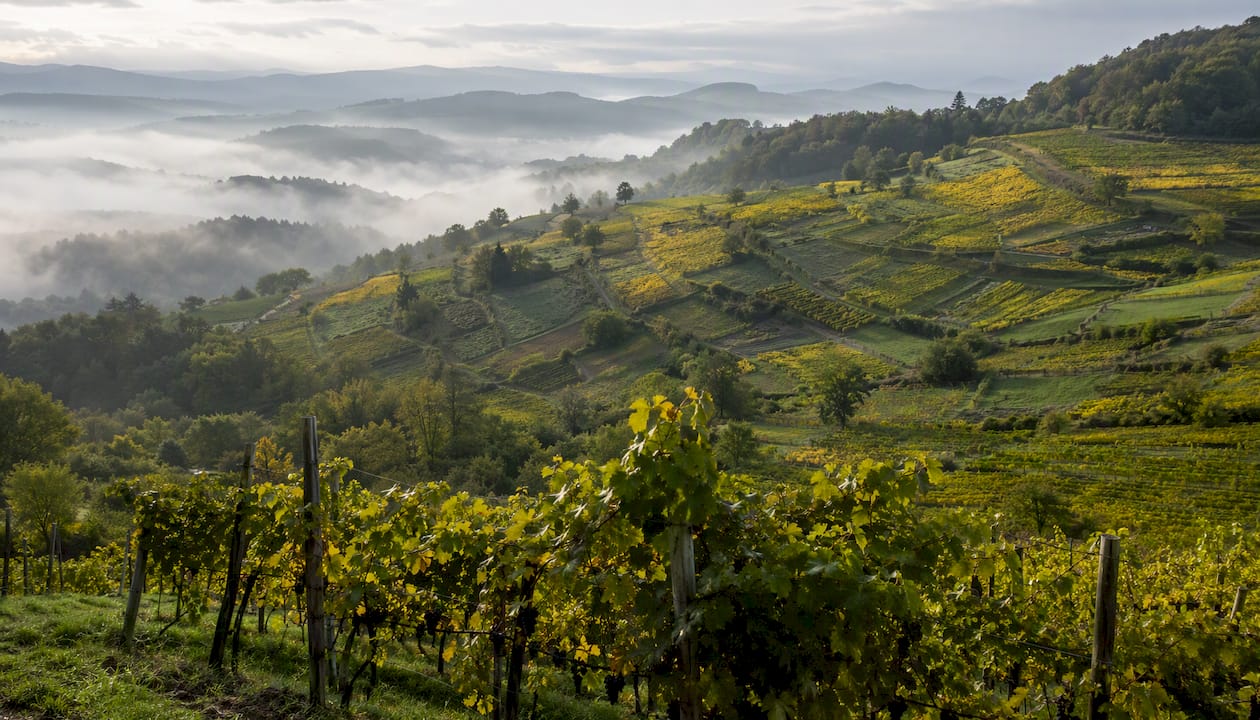
The opportunity side is just as real. Fragmentation and low output that make these regions hard to export from also make them nearly impossible to fake at scale, since there’s no factory-style volume to imitate. Bobal’s rise in Utiel-Requena and Garnacha’s revival in Priorat both show that reputation can be rebuilt within a generation once a handful of committed producers decide to bottle for quality instead of bulk. Regions willing to lean into their own identity, rather than mimicking Bordeaux or Napa, tend to be the ones that eventually get discovered.
How they stack up against the household names
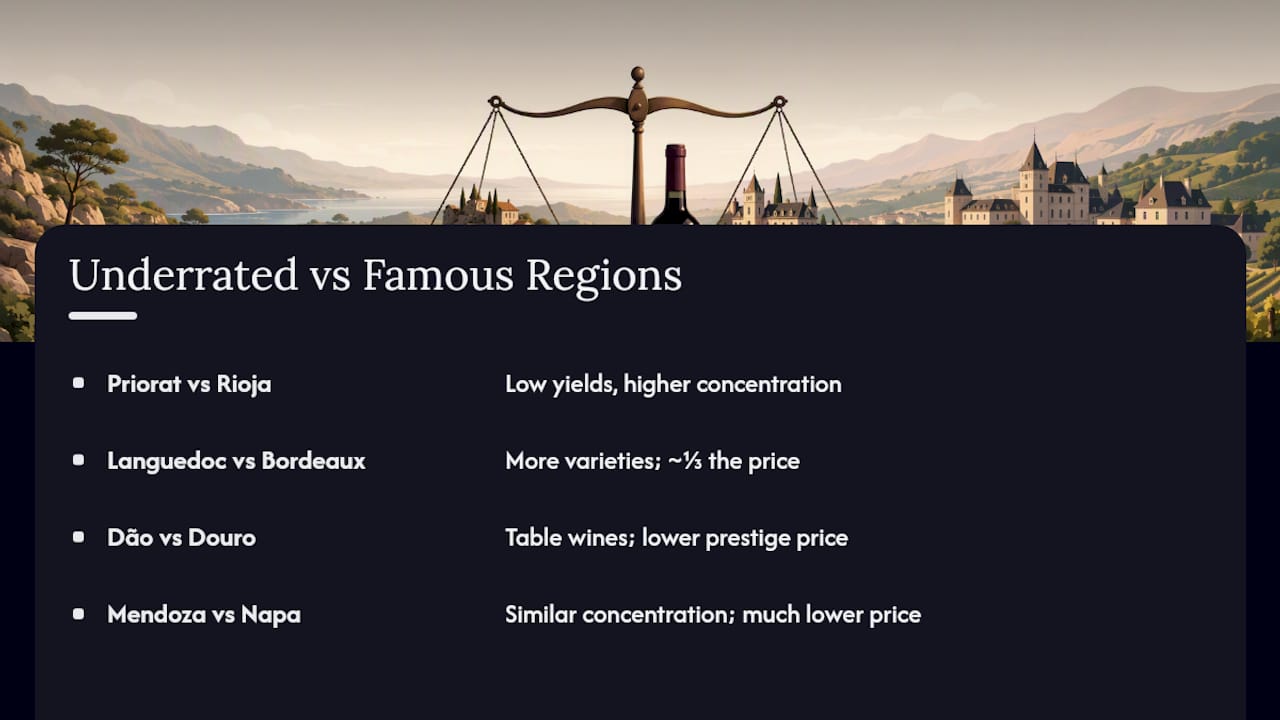
Compare Priorat’s per-hectare yields against Rioja’s and the difference is stark. Priorat’s steep, hand-worked slate terraces simply can’t produce at Rioja’s scale, which is exactly why the wine carries more concentration per bottle.
Languedoc grows more grape varieties across its patchwork of appellations than most of Bordeaux’s entire portfolio combined, yet a bottle from a well-regarded Languedoc producer often costs a third of a comparable Bordeaux label.
Dão and Douro sit right next to each other geographically, but where Douro built a global brand on fortified Port, Dão stayed a quiet table-wine region, meaning you’re paying for the wine itself, not a two-century marketing legacy. Mendoza and Napa both specialise in a single signature red, Malbec against Cabernet Sauvignon, yet Mendoza’s high-altitude sites deliver comparable concentration and freshness at a fraction of the price per bottle.
The pattern holds across nearly every pairing: famous regions are often selling history and prestige as much as they’re selling what’s in the glass, while their underrated counterparts are selling almost entirely on what’s actually in the bottle. That’s not a knock on the classics. It’s just where the value math tends to land.
Why chasing the unfamiliar bottle is worth it
There’s a particular kind of thrill in pulling a cork on something you can’t pronounce and having no idea what to expect. That’s the whole appeal of hunting these regions: no script, no inflated reputation to live up to, just the wine deciding for itself whether it’s any good.
If you’re serious about drinking well without drinking the same six regions everyone else is buying, start putting money toward bottles from places still building their reputation. The value is real, and so is the story behind every glass.
— Damien
Sources
- Meet the family winemakers of Croatia’s ‘little Tuscany’ in Zagorje | National Geographic
- Why Eastern Slovenia is one of Central Europe’s great unsung wine regions | Decanter
- Utiel-Requena: one of Spain’s most misunderstood regions? | BKWine Magazine
- 6 of California’s most underrated wine regions MAP | VinePair
- France’s most underrated wine region may also be its most diverse | Forbes
FAQ
What is a ghost winery?
A ghost winery is a property that once operated as a working winery, often decades or a century ago, but no longer produces wine commercially, though the name or site sometimes gets revived by new owners. The term comes up often in places like Napa, where old winery buildings and abandoned licences dot the valley.
What is the best wine region in the world?
There’s no single, universally agreed answer, since “best” depends heavily on the style you’re chasing, from Burgundy’s Pinot Noir to Priorat’s slate-driven Garnacha. That’s exactly why exploring underrated wine regions matters: quality doesn’t only live in the handful of names that dominate wine lists.
What is the 20 minute wine rule?
It refers to letting a bottle, particularly a young or tightly wound red, sit open for around 20 minutes before pouring to let it breathe and soften. Structured reds from regions like Priorat and Utiel-Requena often benefit from this, or from a proper decant if the vintage is especially young.