

Top wine trends for hospitality: Insights to delight in 2026
TL;DR:
- Guests now seek curated and purposeful wine lists with storytelling and sustainability transparency.
- Format innovations like by-the-glass, discovery flights, and digital tools enhance guest experience and operational efficiency.
- Human expertise remains crucial, with sommeliers providing storytelling and trust alongside technological advancements.
Your wine list is either working hard for you or quietly costing you covers. In 2026, hospitality wine programmes are under a new kind of scrutiny. Guests arrive informed, opinionated, and ready to walk if your list feels stale. The old playbook of stacking varietals by region and calling it a day? Gone. What sets leading venues apart now is a combination of intentional curation, format innovation, sustainability transparency, and human expertise that no algorithm can fully replicate. This guide breaks down the exact criteria, format shifts, and global benchmarks shaping the best wine programmes in 2026, and shows you how to apply them with confidence.
Table of Contents
- How wine curation is changing: Criteria for 2026 success
- Top format trends: By-the-glass, discovery flights, and technology
- Beyond the bottle: Sustainability and transparency take centre stage
- Global benchmarks and the rise of advanced wine list curation
- Why authentic hospitality still trumps the digital wine experience
- Enhance your wine list: Connect with industry-leading partners
- Frequently asked questions
Key Takeaways
| Point | Details |
|---|---|
| Curated by-the-glass focus | Short, intentional by-the-glass lists and discovery flights boost engagement and sales. |
| Measurable sustainability | Sustainability now means clear standards and reporting, shaping sourcing and guest trust. |
| Tech with a human touch | Technology helps structure wine lists but sommelier storytelling and service remain essential. |
| Global benchmarks | On-trade benchmarks and advanced search tools elevate list quality and guest experience. |
How wine curation is changing: Criteria for 2026 success
With the challenges defined, let’s look at the key criteria that set leading wine programmes apart in 2026.
The era of the encyclopaedic wine list is over. Guests no longer want to flip through 40 pages of options they don’t recognise. They want curated, interesting, and purposeful choices that tell a story. That shift is reshaping how smart venues build their wine selection process from the ground up.
Restaurants are expanding wine-by-the-glass and discovery formats with intentional, curated lists, and technology-driven approaches. That means fewer options, better selected, with a clear reason for being on the list. Quality over quantity. Intention over volume.
Here’s what the 2026 curation criteria actually look like in practice:
- Flexibility: Programmes that adapt seasonally or monthly keep guests curious and returning.
- Storytelling: Every bottle on your list should have a brief, compelling reason to exist there.
- Technology integration: Digital menus with pairing suggestions and QR-linked tasting notes raise the guest experience without adding labour.
- Sommelier presence: A knowledgeable team member who can narrate the list converts hesitant guests into engaged ones.
- Sustainability credentials: Transparent sourcing is now a baseline expectation, not a bonus.
“A wine list without a story is just a price sheet.” The venues winning in 2026 treat every pour as a conversation starter.
Pro Tip: Audit your by-the-glass list quarterly. If any bottle isn’t moving or sparking conversation, replace it with something that fits your current seasonal story.
For a broader look at where premium wine trends are heading, these principles of intentional curation apply across every price point, not just the top shelf.
Top format trends: By-the-glass, discovery flights, and technology
Now, let’s break down the key format innovations changing guest experience and operational outcomes.
Format is the new differentiator. It’s not just what wine you pour. It’s how you present the opportunity to try it. Shorter, curated by-the-glass lists invite guests to take a small, low-risk punt on something unfamiliar. That trial experience builds trust and spend over time.
Restaurants are shifting toward interactive, guest preference-driven wine lists and away from static varietal-region catalogues. Discovery flights are a brilliant example of this. A three-glass flight around a theme, say, natural producers from South Australia or bold reds under 14% alcohol, gives guests a guided adventure without needing a sommelier at every table.
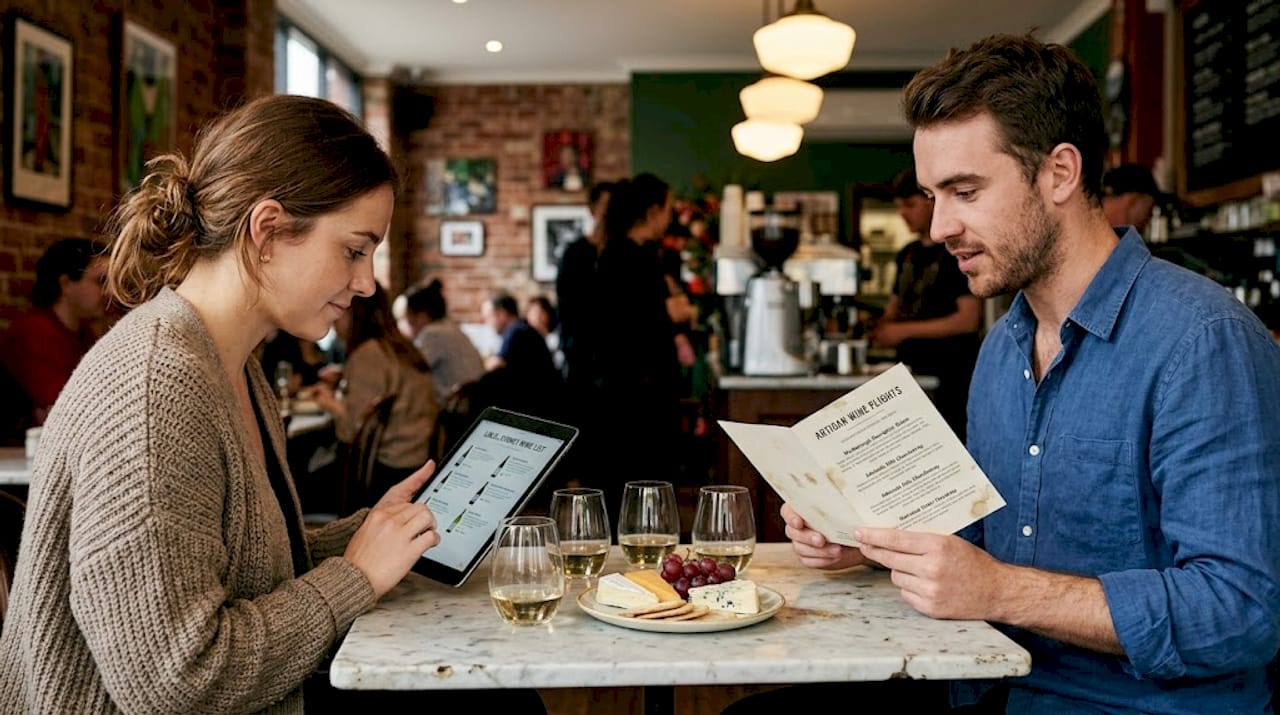
Here’s a quick comparison of the key format options and what each delivers:
| Format | Guest benefit | Operational benefit |
|---|---|---|
| Curated by-the-glass list | Low commitment trial | Higher turnover per bottle |
| Discovery flight | Education and engagement | Upsell to full bottle |
| Interactive digital menu | Personalised recommendations | Reduced staff load |
| QR tasting notes | Deeper story without staff | Cost-effective storytelling |
The real win with flights is the upsell path. A guest who loves a 90ml pour will often order a full glass or a bottle. You’ve reduced their risk and increased their confidence.
For venues considering choosing wines for entertaining your most discerning guests, flights built around premium boutique producers create an experience that no static list can match.
Pro Tip: Pair your discovery flight with a brief card explaining the theme and the producer’s story. It takes 30 seconds to read and dramatically increases how memorable the experience feels.
Technology is playing a supporting role too. Tablet menus and app-based recommendation engines that ask three quick preference questions before suggesting wines are already in use at leading venues. They’re not replacing the sommelier. They’re freeing the sommelier to focus on the guests who want a deeper conversation. Understanding the role of wine curators in accessing rare bottles without bloated markups is increasingly relevant as venues push to differentiate their lists.
Beyond the bottle: Sustainability and transparency take centre stage
Format innovation is only one part of the story. Modern guests and partners also expect clear sustainability credentials.
Sustainability used to be a marketing word. In 2026, it’s an operational requirement. Guests at upscale venues are asking harder questions. Where is this wine from? How was it farmed? What does this producer’s certifications actually mean? Vague answers erode trust fast.
Sustainability in 2026 focuses on measurable standards, influencing restaurant sourcing and supplier choices. This isn’t about slapping a “organic” sticker on your list. It’s about being able to point to third-party certifications, producer commitments, and verified practices.
“Sustainability must be grounded in real action, not just words on a label.” — Banfi CEO on the 2026 portfolio direction.
Here’s how to add measurable sustainability to your wine programme in a practical, step-by-step way:
- Audit your current suppliers. Ask each supplier for their certification documentation. Certified producers should be able to provide third-party verification.
- Prioritise suppliers with verifiable credentials. Look for recognised certifications like organic, biodynamic, or low-intervention labels with independent backing.
- Train your team to communicate it. Your floor staff need to be able to explain why a wine is on the list and what its credentials mean in plain language.
- Build it into your menu storytelling. A one-line note next to a producer’s name explaining their farming practice adds depth without overwhelming the guest.
- Review annually. Sustainability standards are evolving quickly. What counts as best practice today may be the minimum expectation next year.
Transparency is also a powerful differentiator when it comes to your hospitality wine selection process. Venues that can clearly articulate why each bottle is on the list, from quality to provenance to ethics, attract guests who come back specifically because they trust your judgement.
Global benchmarks and the rise of advanced wine list curation
With a sustainability lens established, global trends in curation and benchmarking are also reshaping what qualifies as an industry-leading wine list.
The bar for what counts as a great wine list is being redefined by global benchmarks that most Australian venues haven’t caught up to yet. That’s both a challenge and an opportunity.
New on-trade benchmarks use advanced search by terroir, seasonality, and food pairing, affecting wine list curation at the highest level. The World’s Best Sommeliers’ Selection is a prime example. It’s not just a ranking. It’s a framework for how lists should be structured, filtered, and communicated to guests.
| Traditional wine list | Modern curated list |
|---|---|
| Organised by region and varietal | Organised by style, season, and pairing |
| Static, annual updates | Rotating, responsive to trends |
| Staff knowledge varies widely | Digital tools support consistent communication |
| Focus on volume and breadth | Focus on intention and depth |
Here’s what leading venues are doing with global benchmarks:
- Using terroir-based filtering to group wines by character, not just geography.
- Building seasonal list rotations that align with menu changes.
- Training staff to reference food-pairing logic as a selling tool.
- Tracking which benchmarked wines generate repeat orders and storytelling moments.
For venues actively building an edge, affordable luxury wine trends are showing that guests increasingly want premium quality without the premium price tag. That’s where smart sourcing meets smart curation. The aspirational wine movement and a genuine wine desirability guide mindset help you understand that benchmarked quality doesn’t have to mean benchmarked pricing.
Why authentic hospitality still trumps the digital wine experience
Trend adoption is necessary. We’ll be direct about that. If your venue isn’t keeping pace with format innovation, sustainability expectations, and global curation benchmarks, you’re already behind. But here’s the uncomfortable truth that the tech evangelists won’t tell you: no app, digital menu, or AI recommendation engine has ever made a guest feel genuinely looked after.
The human layer, meaning sommelier personality, service, and storytelling, remains a key premium differentiator even as technology advances in wine list curation. Top venues don’t choose between digital tools and human expertise. They use technology to handle the logistics and free their sommeliers to do what algorithms genuinely cannot: read the table, tell the story, and make the guest feel like an insider.
That moment when a sommelier recommends something slightly unexpected, explains why with genuine passion, and turns out to be exactly right? That’s what people tell their friends about. That’s what mastering the wine tasting process really means in a hospitality context. It’s not a technical skill. It’s the art of making someone feel brilliant for trying something new.
Invest in your people as much as your tools. The venues that will dominate in 2026 are the ones where technology and human expertise work together, not in competition.
Enhance your wine list: Connect with industry-leading partners
If you’re ready to put these trends into practice and future-proof your wine programme, curated guidance is just a click away.
At FU Wine, we’re doing things differently. We source rare, high-quality bottles direct, cutting out the middlemen and passing the savings straight to you. That means premium wine for your list without the premium price tag that usually comes with it. Bold producers, boutique runs, high-scoring vintages. All available at prices that make financial sense for your venue and experiential sense for your guests.
If the 2026 wine trends you’ve just read about excite you, we’re the partner you want backing your programme. Explore premium wine trends with us and discover how to build a wine list that’s genuinely worth talking about. No gatekeeping. No nonsense. Just great wine.
Frequently asked questions
What is the biggest wine list shift in hospitality for 2026?
Intentional, curated by-the-glass lists and interactive selection experiences are replacing long static regional wine lists. Restaurants now emphasise discovery formats and guest-driven approaches over traditional varietal catalogues.
How is sustainability changing wine selection for restaurants?
Sustainability now requires measurable standards and transparency, directly impacting sourcing choices and how venues communicate with guests. Real, measurable action and verifiable certifications are the new baseline, not vague green claims.
What role do global benchmarks play in wine lists now?
New global benchmarks and advanced search tools help structure lists by seasonality, terroir, and pairings to raise standards and meet guest expectations. On-trade benchmarks like the World’s Best Sommeliers’ Selection are now actively influencing how top venues build and communicate their lists.
Is tech replacing the sommelier in premium hospitality?
Technology makes wine programmes smarter, but service, storytelling, and expert trust from sommeliers remain vital differentiators at premium venues. The human layer is more important for premium differentiation than ever, despite advances in wine tech.