

Top rare wine varieties that impress without the price tag
TL;DR:
- True rare wines are defined by small vineyard areas, survival history, and micro-regional origin.
- Rare varieties like Gringet and Melonera offer unique flavors and exceptional scarcity at affordable prices.
- Collectors should prioritize provenance, production volume, and passion-driven revival over marketing hype.
You’ve been burnt before. You’ve paid through the nose for a bottle with a famous label, only to realise the real magic was never in the name. The truth is, the most extraordinary wines on the planet aren’t sitting behind velvet ropes at auction houses. They’re growing in tiny plots across the French Alps, southern Spain, and the hills of Italy, produced in such small quantities that most collectors haven’t even heard of them yet. This guide cuts through the noise and gives you a practical, no-nonsense look at rare wine varieties that deliver genuine exclusivity, serious character, and a price tag that won’t make you wince.
Table of Contents
- What makes a wine variety truly rare?
- Gringet: Alpine exclusivity and future-facing appeal
- Melonera: Rediscovered depth from Spain’s hidden plots
- Nascetta and Lacrima: Italy’s aromatic treasures still under the radar
- How rare wines stack up: Value and accessibility compared
- The uncomfortable truth about rare wine collecting
- Explore curated rare wines for your collection
- Frequently asked questions
Key Takeaways
| Point | Details |
|---|---|
| True wine rarity defined | Scarcity is measured by hectares and producer numbers, not high price tags. |
| Affordable exclusive choices | Varieties like Gringet, Melonera, Nascetta, and Lacrima offer collectibility and unique taste at modest prices. |
| Revival drives value | Wines revived from near-extinction bring both story and investment potential to collections. |
| Collector enjoyment first | The greatest value comes from exploration and sharing, not just auctions or hype bottles. |
What makes a wine variety truly rare?
Now that you’re clear on the promise of genuine exclusivity, let’s define what makes a wine rare and why it matters for your collection.
Rarity in wine isn’t a marketing buzzword. It’s a measurable reality. And once you know what to look for, you’ll never be fooled by an inflated price tag again.
The clearest indicator is vineyard area. If a grape variety is planted across fewer than 100 hectares globally, you’re in genuinely rare territory. Most mainstream varieties cover tens of thousands of hectares. Rare ones are counted in the dozens. Limited hectares and post-phylloxera revival are the key criteria separating truly scarce varieties from simply expensive ones.
Beyond size, look for these markers:
- Near-extinction history: Varieties that almost disappeared due to phylloxera, disease, or neglect carry a genuine story of survival.
- Unique climate adaptability: Grapes that thrive only in very specific microclimates cannot simply be replicated elsewhere.
- Micro-regional origin: If a grape grows in one valley, one appellation, or one country estate, that’s real scarcity.
- Revival momentum: Varieties being rediscovered by passionate producers often represent the best collector value right now.
Here’s the uncomfortable part. High price does not equal rarity. Some of the world’s most expensive bottles are produced in vast quantities and backed by enormous marketing budgets. Meanwhile, a bottle of Gringet from Haute-Savoie, one of the rarest grapes on earth according to Decanter’s coverage of Gringet’s rarity, might cost you under AU$50.
“True rarity is about provenance, production volume, and survival. Not about the size of the marketing budget behind the label.”
Pro Tip: Before you buy, check cellar and auction records for actual production figures. A variety with fewer than 10 producers worldwide and no presence at major auctions is the real deal. Your rare wine selection strategy should always start with data, not hype. Understanding fair pricing for rare wine is equally important so you know when you’re genuinely getting a deal.
Gringet: Alpine exclusivity and future-facing appeal
With criteria in mind, let’s see how these play out in one of the world’s rarest varieties, Gringet.
Gringet is the kind of grape that makes serious collectors lean forward. It’s indigenous to Haute-Savoie in the French Alps, a region better known for ski resorts than serious viticulture. And that obscurity is exactly what makes it so compelling.
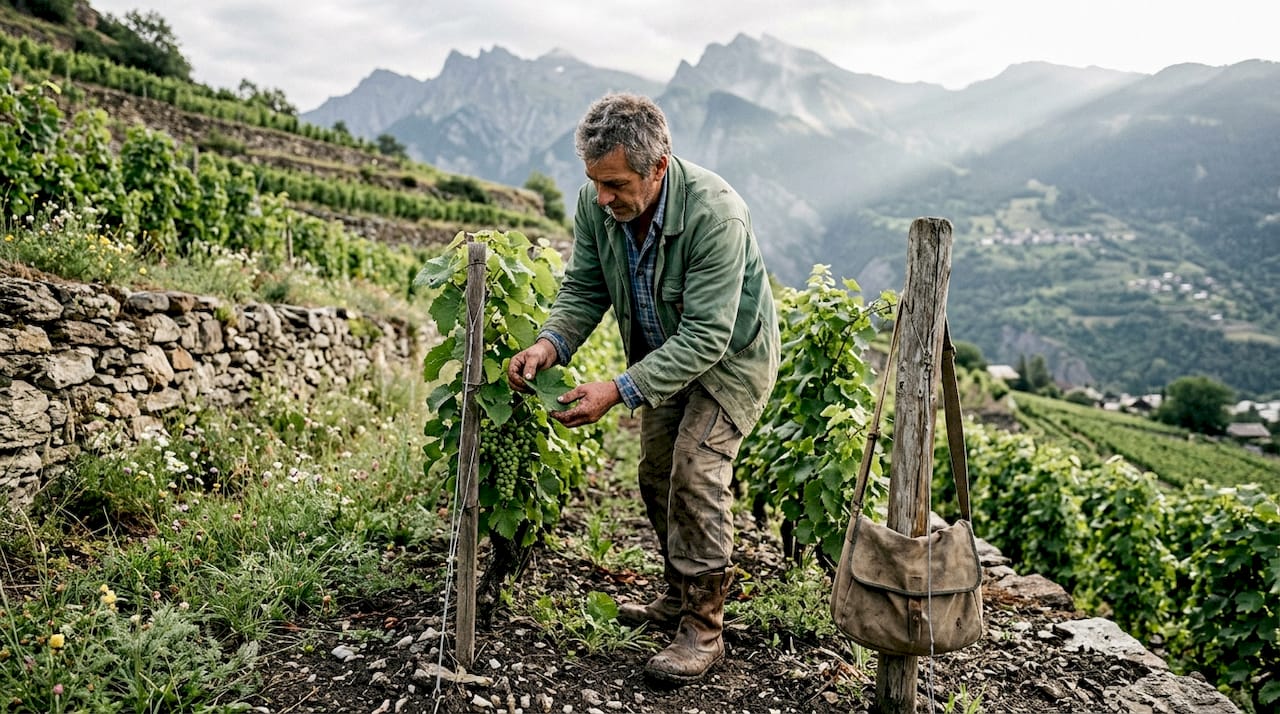
Just 25 hectares planted worldwide and fewer than 10 producers means every bottle is a genuine rarity. You’re not buying a brand. You’re buying a piece of alpine wine history that most people in your circle have never encountered.
What does it taste like?
- High natural acidity with a clean, mouthwatering finish
- Citrus notes: think lemon zest, green apple, and grapefruit
- Herbal complexity: fresh mountain herbs and a flinty, mineral edge
- Cool climate character that’s precise and focused, not flabby or overworked
Why collectors are paying attention in 2026:
Gringet is heat tolerant and naturally resistant to powdery mildew, which makes it remarkably well suited to a warming climate. While other varieties are struggling with consistency, Gringet is quietly becoming more reliable. That’s future-proof appeal in a bottle.
Statistic to remember: Only 25 hectares of Gringet exist globally. By comparison, Chardonnay covers over 200,000 hectares. You do the maths.
The affordable luxury wine trends of 2026 are pointing squarely at varieties like this. Collectors who understand the wine scarcity guide principles are already moving on Gringet before the broader market catches up.
Pro Tip: Seek out bottles from key Savoie domaines like Domaine Belluard. These are the benchmark producers, and their bottles remain accessible at sub-AU$50 price points for now. That window won’t stay open forever.
Melonera: Rediscovered depth from Spain’s hidden plots
From the French Alps to southern Spain, next up is a red variety whose scarcity and recent revival are changing collectors’ lists.
Melonera is barely on the radar. And that’s precisely why it should be on yours.
This Spanish red variety has only 2 to 3 hectares planted worldwide, mostly at Bodega La Melonera in the Ronda region of Andalusia. It was effectively lost to phylloxera and only legally permitted as a recognised variety in 2024. That’s not a typo. This grape just became official.
What’s in the glass?
- Ripe black and red fruits: blackberry, plum, and dried cherry
- Mediterranean herbs and a warm spice backbone
- Surprising freshness for a southern Spanish red
- Medium body with genuine personality, not a fruit bomb
“Melonera is the kind of bottle you open at a dinner party and watch people’s faces change when you tell them there are fewer than 3 hectares of it on the planet.”
For collectors, the numbers are extraordinary. With such micro-plot production at La Melonera, each bottle is an instant talking point. And because the variety is so new to the market, pricing hasn’t caught up with its rarity. You can find examples under AU$60, well below what you’d pay for a comparable luxury label with a fraction of the scarcity.
Understanding how wine curators access rare bottles without the usual markups is the key to getting your hands on something like Melonera before it disappears. The wine investment benefits of securing micro-production bottles early are real, but the enjoyment factor is just as strong.
Nascetta and Lacrima: Italy’s aromatic treasures still under the radar
Rounding out our shortlist, these two Italians offer contrasting stories and options for the curious palate.
Italy is a goldmine for rare indigenous varieties. Two of the most exciting right now are Nascetta and Lacrima, and they couldn’t be more different from each other.
Nascetta is a white grape from Piedmont, the same region that gave the world Barolo and Barbaresco. It survived near-extinction and is now appreciated for its aromatic green apple and almond notes, along with a waxy, textural quality that sets it apart from other Italian whites. By the 1990s it had almost vanished. A handful of passionate producers in Novello brought it back, and now it’s quietly building a devoted following.
Lacrima is a red from the Marche region on Italy’s Adriatic coast. It’s highly floral and juicy, confined to a tiny DOC, and available for roughly €12 to €35 a bottle. The aroma is almost violet-like, with layers of rose petal, dark cherry, and a savoury finish that keeps you coming back.
| Feature | Nascetta | Lacrima |
|---|---|---|
| Origin | Piedmont, Italy | Marche, Italy |
| Style | White, aromatic, textural | Red, floral, juicy |
| Key flavours | Green apple, almond, waxy | Violet, dark cherry, savoury |
| Typical price | Under AU$40 | Under AU$40 |
| Collectibility | High, limited revival | High, micro-regional DOC |
- Start with Lacrima if you prefer reds and want immediate drinkability.
- Choose Nascetta if you’re building a white wine collection with genuine rarity credentials.
- Buy both for vertical tastings. At under AU$40 a bottle, you can afford to explore multiple vintages.
Both are ideal for cellar-aged wine examples that reward patience without demanding a luxury budget.
Pro Tip: Both Nascetta and Lacrima offer excellent vintage diversity for vertical tastings under AU$40 a bottle. Tracking several vintages side by side is one of the most rewarding things a collector can do, and with these two, it’s genuinely affordable.
How rare wines stack up: Value and accessibility compared
To help you decide, here’s how these rare varieties stack up side by side.
| Variety | Origin | Planted area | Typical price (AUD) | Style | Collectibility |
|---|---|---|---|---|---|
| Gringet | Haute-Savoie, France | ~25ha | Under $50 | White, citrus, mineral | Very high |
| Melonera | Ronda, Spain | ~2 to 3ha | Under $60 | Red, fruit-forward, fresh | Exceptional |
| Nascetta | Piedmont, Italy | Very limited | Under $40 | White, aromatic, textural | High |
| Lacrima | Marche, Italy | Micro-regional | Under $40 | Red, floral, juicy | High |
Benchmarks show that 25 hectares of Gringet and 2 to 3 hectares of Melonera represent extraordinary scarcity compared to top-label luxury wines produced across thousands of hectares. Yet the prices sit at a fraction of what those labels command.
Here’s how to choose based on your priorities:
- Drink now: Lacrima. Open it tonight. It’s vibrant, expressive, and built for pleasure.
- Hold and watch: Gringet and Nascetta. Both reward cellaring and have genuine upside as awareness grows.
- Conversation piece: Melonera. Nothing at the table will have a more extraordinary backstory.
Smart collectors use resources like snagging premium bottles guides to time their purchases well. Understanding wine vintages explained adds another layer of confidence when you’re choosing between years.
The uncomfortable truth about rare wine collecting
Here’s a perspective most collectors won’t hear at a luxury tasting.
Most collectors are chasing the wrong thing. They’re bidding on bottles they’ve seen in magazines, buying into hype cycles, and paying premiums for names that carry more marketing weight than genuine rarity. The real finds are almost never at the big auctions.
Experts favour indigenous, obscure varieties for value and diversity over overpriced luxury wines, and it’s not even close. The joy of collecting isn’t in owning what everyone else wants. It’s in finding what nobody else has found yet.
Every bottle of Melonera or Gringet you open is a small rebellion. It says you did the research, you followed curiosity instead of convention, and you got something genuinely extraordinary for a genuinely fair price. That’s real connoisseurship.
The best collections we’ve seen aren’t built on famous labels. They’re built on relationships with passionate producers, a willingness to explore the overlooked, and the confidence to share discoveries that make people’s jaws drop. Your expert guide to rare wine journey starts the moment you stop chasing prestige and start chasing provenance.
Explore curated rare wines for your collection
Ready to put this knowledge into practice?
At FU Wine, we source exactly the kind of bottles this article is about. Rare, authentic, micro-production wines from producers who care more about the grape than the label. No inflated markups. No gatekeeping. Just genuinely hard-to-find bottles at prices that make sense.
Our curated selection rotates constantly, so there’s always something new to discover. Whether you’re after a Gringet to anchor your whites or a Melonera to spark conversation at your next dinner, we’ve done the sourcing legwork so you don’t have to. Check out our rare wine guide for deeper insights, then browse what’s available now. Life’s too short for ordinary wine.
Frequently asked questions
Which rare wine variety is the best for beginners?
Lacrima is the ideal starting point, with its floral, juicy profile and accessible pricing between €12 and €35, making it easy to enjoy without needing deep technical knowledge.
Are rare wine varieties a good investment?
Varieties with genuinely tiny plantings like Gringet and Melonera offer real upside, but collectibility driven by scarcity and post-phylloxera revival history means the greatest reward is often in the glass, not just the cellar.
Where can I buy rare wine varieties in Australia?
Specialist curated retailers like FU Wine offer imported rare varieties with transparent, fair pricing and no unnecessary middleman markups.
How do I know a wine is genuinely rare and not just expensive?
Check vineyard size, total production figures, and grape revival history. Small hectares and authentic revivals are the real markers of rarity. Price alone tells you very little.