

Ship Wine Interstate in Australia Without Customs: Pack, ID, Courier
Shipping wine interstate in Australia is legal, straightforward, and done every day by wine lovers, gift-givers, and collectors, as long as you nail three things. Check the responsible service rules (age checks, no delivery to intoxicated people), pack every bottle like it’s fragile cargo heading into a heatwave, and book a courier that actually accepts alcohol. Get those three right and consider specialist freight plus insurance for anything worth crying over if it breaks.
TL;DR:
- Use purpose-built wine cartons with dividers and thermal liners for summer shipments to prevent impact and heat damage.
- Confirm with the courier in writing that they accept alcohol, and specify ID and signature requirements to avoid failed deliveries.
- Shipments within Australia are not subject to customs duties or excise, as these are settled at the production or import point before distribution.
- For high-value or temperature-sensitive bottles, choose specialist wine freight providers that offer better handling and insulation options.
- Always photograph damage and inform the courier immediately to facilitate claims, especially for valuable or fragile shipments.
Table of Contents
- Legal Rules for Sending Wine Across State Lines
- How Do You Pack Wine So It Survives the Trip?
- Which Courier Should You Use for Wine?
- What Does It Cost and How Long Does It Take?
- Do You Pay Customs or Excise Duty on Interstate Wine?
- How Do You Verify a Recipient’s Age at Delivery?
- What FU Wine Sees Go Wrong (and How to Avoid It)
- Let FU Wine Handle the Logistics for You
- Sources
- FAQ
Legal Rules for Sending Wine Across State Lines
Every state and territory runs its own liquor laws, but the core rules don’t change much no matter where the bottle is headed. You cannot supply or deliver alcohol to anyone under 18. You cannot hand a parcel of wine to someone who’s visibly intoxicated. And most carriers steer clear of late-night drop-offs, because nobody wants a driver standing on a dark porch arguing about ID.
NSW Liquor & Gaming’s guidance on same-day alcohol delivery lays out exactly what licensees are on the hook for, and it’s a useful benchmark even if your destination is Victoria, Queensland, or Tasmania. Rules can shift slightly by jurisdiction, so if you’re sending a case to a mate in a different state, a quick check of that state’s liquor authority saves you a headache later.
Before you book anything, sort out the practical side of delivery:
- Confirm the recipient will be home (or has someone over 18 who can sign) during the delivery window.
- Add clear instructions to the courier about ID checks at the door.
- Note an authorised alternative collection point if the recipient might not be available.
- Ask the courier what happens if the parcel can’t be delivered on the first attempt.
Pro Tip: Write “Signature and ID required, 18+ only” directly on the booking notes, not just the label. Drivers read the digital manifest far more often than the sticker on the box.
Getting this right matters even for gifts. If you’re sending a bottle to a friend interstate for a birthday, our guide on sending wine as a gift in Australia walks through the paperwork so the courier doesn’t bounce your parcel back to a depot.
How Do You Pack Wine So It Survives the Trip?
Glass, liquid, and a truck bouncing over 1,500 kilometres of highway is a rough combination unless you pack properly. The two enemies are impact and heat, and most damaged-wine claims come down to one or the other.
Use a proper wine shipping carton, not a repurposed cardboard box. Purpose-built cartons have moulded inserts or foam dividers that stop bottles clinking against each other, and they’re rated for courier handling in a way an old fruit box simply isn’t. PACK & SEND’s wine courier service builds its packaging specifically around this problem, because loose bottles are the single biggest cause of transit breakage.
Here’s the packing sequence worth following every time:
- Wrap each bottle individually in bubble wrap or a foam sleeve, securing the wrap so it can’t slide during transit.
- Place bottles upright in a divided wine carton, never loose in a generic box.
- Fill any gaps with packing paper or air pillows so nothing shifts when the box tips.
- Seal with proper packing tape across every seam, not just the top flap.
- Label the outside clearly as fragile and glass, with “This Way Up” arrows if the carton isn’t fully rigid.
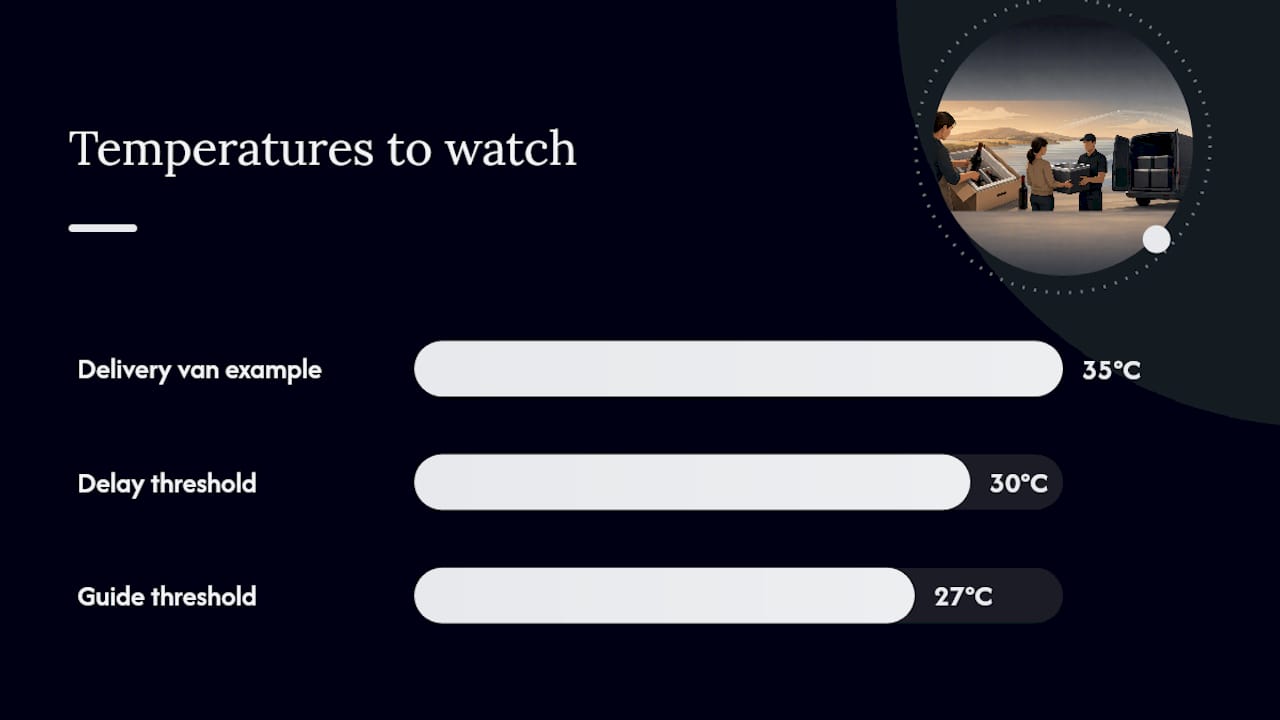
Temperature is the part people forget. A bottle sitting in the back of a delivery van at 35°C for six hours can cook, and heat damage doesn’t always show on the outside. For anything ageworthy, single-bottle, or shipped mid-summer, an insulated liner or thermal box adds real protection, and some specialist carriers will hold shipments during extreme heat rather than send them out to bake. Get Freighted’s interstate wine freight service is built around this kind of temperature control for exactly that reason.
Pro Tip: If the forecast for your dispatch city or the destination city is above 30°C, delay the send by a day or two if you can. It costs you patience, not money, and it beats a ruined bottle. Our detailed breakdown on stopping wine cooking in transit at 27°C covers the science if you want the full picture.
Which Courier Should You Use for Wine?
Not every courier wants your wine, and not every courier that accepts it handles it well. Broadly, you’re choosing between specialist wine freight, aggregator booking platforms, and general couriers who happen to allow alcohol.
Specialist wine freight providers exist specifically for this cargo. They know how to stack a pallet of mixed cases, they often run insulated vehicles, and they’ve dealt with the “the recipient wasn’t home” problem a thousand times over. Providers like WineWorks and Get Freighted run regular interstate routes built around wineries and retailers, which means your case is travelling alongside cargo that’s used to being handled properly, not squeezed in between parcels and pallets it was never designed to share space with.
Aggregator platforms sit in the middle. Services like Transdirect’s alcohol shipping let you compare rates across vetted courier partners in one booking flow, which is handy if you want speed and price transparency without ringing five companies. The trade-off is less hands-on temperature control than a dedicated wine specialist.
General couriers are the cheapest option, but many simply don’t accept alcohol at all, and the ones that do rarely offer insulation or specialised handling.
Before you book with anyone, run through this checklist:
- Confirm in writing that the carrier accepts alcohol shipments (not all do, and getting caught out mid-transit is a genuine problem).
- Ask exactly how ID checks work at the door.
- Check delivery windows and whether you can specify a time slot.
- Understand the “futile collection” policy, because Transdirect and others charge a fee if a booked pickup can’t go ahead as arranged.
- Confirm what insurance options exist and what they actually cover.
For a low-value gift bottle, a general courier that accepts alcohol is often fine. For a high-value collectible, go specialist every time. For a pallet or full cellar move, specialist freight isn’t optional, it’s the only sensible choice.
What Does It Cost and How Long Does It Take?
Domestic wine shipping in Australia typically falls into three speed tiers, and the pricing follows the same shape as any freight: distance, weight, and speed all push the number around.
PACK & SEND publishes indicative domestic timeframes of roughly 5 to 10 business days for standard service, 2 to 5 business days for expedited, and 1 to 2 business days for express. Interstate runs between capital cities usually sit at the faster end; regional and remote deliveries stretch out and often carry a surcharge.
What actually drives the price:
- Distance and route: capital-to-capital is cheaper than capital-to-regional.
- Speed tier: express costs meaningfully more than standard.
- Parcel size and weight: a six-bottle case costs more than a single bottle, obviously, but not proportionally, since handling fees don’t scale linearly.
- Special handling: insulation, thermal liners, or a refrigerated leg all add to the base rate.
- Rural surcharges: remote postcodes attract extra fees from almost every carrier.
Insurance is worth buying whenever the contents are worth more than you’d shrug off losing. If a parcel arrives damaged, refused, or simply goes missing, photograph everything immediately, including the outer packaging before you open it, keep every scrap of box and wrap until the claim is settled, and notify the courier the same day rather than waiting to see if it “sorts itself out.” Claims move faster with photo evidence than without it, every time.
Do You Pay Customs or Excise Duty on Interstate Wine?
No, you don’t. Customs duty and import processes apply to wine crossing Australia’s international border, not to bottles moving between Australian states. Once wine has cleared into the domestic market, whether it was made here or imported and released for sale, it’s already had any relevant excise or customs duty accounted for at that point of entry or production.
Sending a case from a Barossa cellar door to a buyer in Perth, or from a Margaret River producer to a customer in Brisbane, doesn’t trigger a second round of duty just because a state border gets crossed. Domestic wine equalisation tax (WET) and GST are dealt with at the point of sale, not at the point of transport, so as a buyer or gift-sender arranging interstate delivery, you’re not filling out any customs paperwork or paying a border-related charge.
Where this can get more complicated is with international orders shipped into Australia, or wine leaving Australia for another country. Those genuinely do involve customs declarations and duty calculations, and the rules are considerably more involved. But for the domestic case, sending or receiving wine within Australia’s own borders, the excise and duty question has already been settled long before the courier picks up the box. The only costs you’re weighing are the shipping fees themselves, plus optional insurance.
How Do You Verify a Recipient’s Age at Delivery?
Age verification at the door is where a lot of interstate wine deliveries actually fall over, so it pays to set expectations before the courier ever leaves the depot.
Tell the recipient in advance that they’ll need to show photo ID on delivery, and be specific about which forms count: a driver’s licence, passport, or proof-of-age card are the standard accepted documents across Australian states. If the recipient won’t be home, nominate an alternative person over 18 who can accept delivery and show their own ID, rather than leaving it vague.
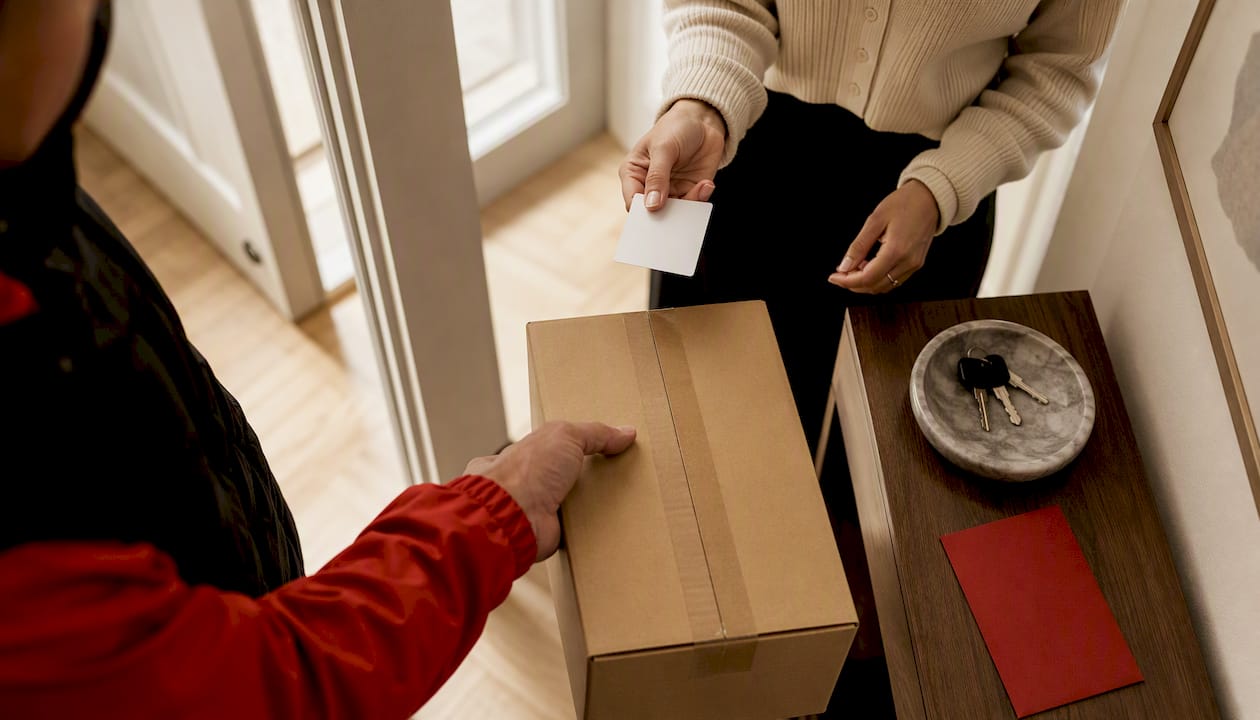
Most couriers carrying alcohol will refuse to leave a parcel unattended or in a mailbox, precisely because there’s no way to check age on an empty porch. If nobody eligible is available, expect the driver to take the parcel back to a depot for collection, where you’ll show ID in person instead.
A few things worth locking down when you book:
- Add the recipient’s mobile number to the booking so the driver can call ahead if there’s any doubt.
- Specify “authority to leave: no” explicitly, since some booking forms default to allowing unattended drop-off.
- If the parcel is a gift and the recipient doesn’t know it’s coming, a heads-up text avoids a confused refusal at the door.
Getting this step wrong doesn’t just risk a returned parcel, it can trigger a futile collection fee if the courier already attempted the run.
What FU Wine Sees Go Wrong (and How to Avoid It)
Across enough interstate bottle runs, the same mistakes show up on repeat. Summer shipments packed like it’s April, not January. Labels that say “fragile” but nothing about ID requirements, so the courier has no idea what’s actually inside. Recipients who never got a heads-up and refuse the parcel outright, which can land you a futile collection fee for a delivery that never had a chance.
The fix is a short checklist, followed every single time:
- Confirm the recipient’s ID plan before booking.
- Pack with insulation whenever the weather could push 27°C or higher.
- Verify in writing that your chosen carrier accepts alcohol.
- Insure anything you’d genuinely mind losing.
- Photograph the packed carton and keep every receipt until delivery is confirmed.
None of it is complicated. It just has to happen before you tape the box shut, not after something goes wrong.
— Damien
Let FU Wine Handle the Logistics for You
If all this packing, carrier-checking, and ID-verification detail sounds like a lot to manage on a single bottle, that’s because it is, and it’s exactly the kind of thing that gets easier when someone else has already sorted it out. Some wine sellers build their fulfilment around actually understanding Australian shipping and compliance, not just slapping a label on a box and hoping.

That matters most when the stakes are higher than a casual six-pack. A complex cold-chain shipment in the middle of a Queensland summer, a genuinely valuable collectible bottle you don’t want gambled on a general courier, or a corporate gifting run where forty clients all need bottles to arrive intact on the same day, that’s where seller-managed fulfilment earns its keep. If bulk or corporate orders are on your radar, our corporate wine buying guide covers house-account options worth knowing about. For everything else, browse the current run of rare and discounted bottles on the FU Wine wines page and let us worry about getting it there in one piece.
Sources
- NSW Government — Liquor & Gaming: Licence responsibilities (same-day alcohol)
- Transdirect — Alcohol shipping
- PACK & SEND — Wine courier
- Get Freighted — Interstate freight courier (wine specialists)
FAQ
Is it legal to ship wine interstate in Australia?
Yes. Shipping wine between Australian states is legal, provided you follow responsible service rules such as not delivering to under 18s or intoxicated recipients. Check the NSW Liquor & Gaming guidance as a baseline, since specific rules can vary slightly by destination state.
How long does interstate wine delivery take?
Standard domestic wine delivery typically takes 5 to 10 business days, with expedited services around 2 to 5 days and express options at 1 to 2 days, according to PACK & SEND. Capital-to-capital routes usually move faster than regional or remote deliveries.
Do I need special packaging to ship wine?
Yes, use a purpose-built wine carton with dividers and padding rather than a standard box. In summer, add an insulated liner or thermal protection, since heat damage from a hot delivery van is one of the most common causes of ruined bottles.
Which courier should I use to send wine?
It depends on value and season. A general courier that accepts alcohol suits a low-value gift bottle, while high-value or ageworthy wine is safer with a specialist wine freight provider like those found through Get Freighted, which offers better temperature control.
What happens if my wine shipment arrives damaged?
Photograph the damage and the packaging immediately, keep everything until your claim is resolved, and notify the courier the same day. Most carriers, including those booked through Transdirect, require prompt reporting to process an insurance claim.
Do I pay customs duty shipping wine between Australian states?
No. Customs and excise duty apply to wine crossing Australia’s international border, not to shipments moving between states. Any relevant duty on domestic wine is settled at the point of production or sale, not during interstate transport.