

Selling wine from personal cellar: maximise your returns
TL;DR:
- Selling wine from a personal cellar requires timing, proper documentation, and a licensed sales channel to maximize value. It is advisable to use licensed intermediaries like auction houses or wine merchants to handle compliance and logistics. Regular reviews and understanding market signals help collectors sell at the right time and avoid common pitfalls.
Selling wine from a personal cellar is defined as the process of converting privately stored bottles into cash through auction, merchant consignment, or private sale, with returns determined by timing, provenance, and the channel you choose. In Australia, the industry term for this activity is “cellar liquidation” or “private collection disposal,” and it sits at the intersection of passion and portfolio management. Get the timing wrong, skip the paperwork, or pick the wrong buyer, and you leave serious money on the table. Get it right, and a well-stored collection can return multiples of its original cost.
When is the best time to sell wines from your cellar?
Timing is the single biggest lever in any personal wine collection sale. Selling too early means you miss peak value. Selling too late means you’re flogging a wine that’s past its drinking window to buyers who know it.
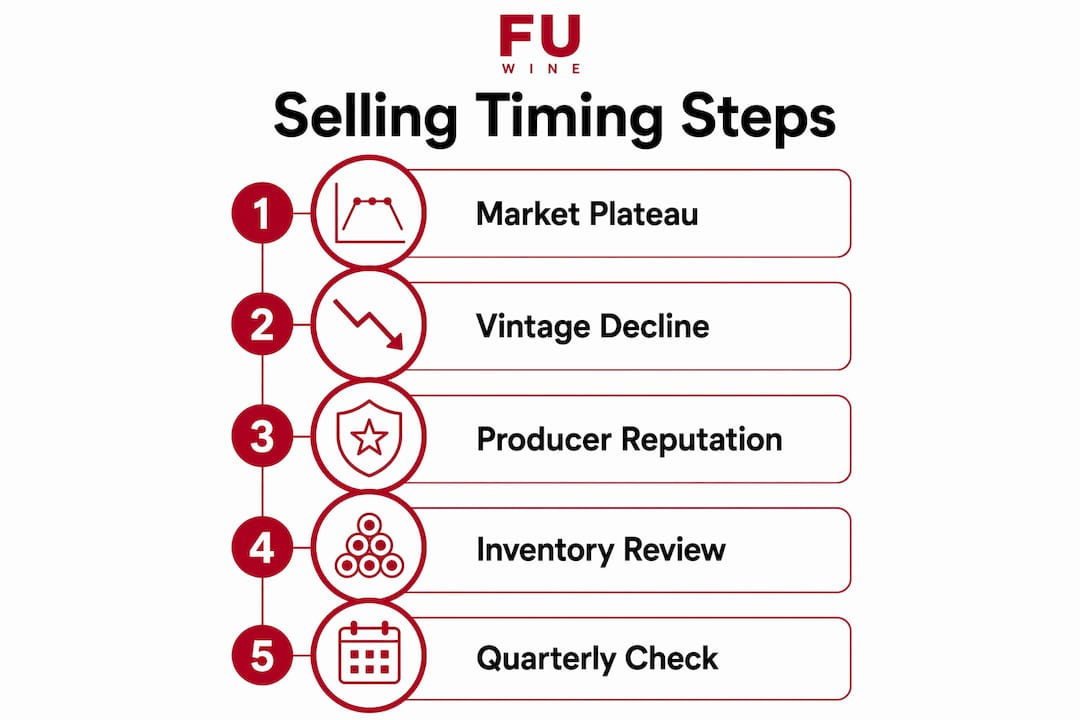
The Cellar IQ framework recommends monthly reviews and quarterly selling decisions built around four specific signals. Those signals are: market value plateau, vintage quality issues, producer softening, and position sizing. Each one tells you something different about whether a bottle is worth holding or moving now.
Here’s what each signal looks like in practice:
- Market value plateau: The wine has hit its peak secondary market price and reviews are no longer climbing. Holding further adds risk without reward.
- Vintage issues: A lemon vintage that scored well on release but is now showing early decline. Buyers will figure this out before you do if you’re not watching.
- Producer softening: A winemaker changes hands, style, or reputation. The brand story weakens, and so does buyer appetite.
- Position sizing: You hold too much of one wine relative to your overall cellar. Over-concentration is a risk, and trimming protects your portfolio balance.
Collectors who manage position sizes and trim over-allocated wines consistently outperform those who hold everything until they need cash. That discipline separates a collector from a hoarder.
Pro Tip: Set a calendar reminder every quarter to pull your cellar inventory and run it against current secondary market prices. Tools like wine market trackers and auction house price archives make this a 30-minute job, not a research project.
Understanding factors affecting wine prices helps you read these signals faster and with more confidence.
What legal and compliance factors apply when selling wine in Australia?
Selling alcohol in Australia without the right licence is illegal. Full stop. The rules differ by state and territory, but the core principle is consistent: regular or commercial sales of wine require a liquor licence, and selling without one exposes you to significant fines.
The practical distinction collectors need to understand is between a genuine one-off private sale and a pattern of selling. A single sale to a friend or colleague sits in a grey area that regulators rarely pursue. A pattern of sales, even informal ones, starts to look like an unlicensed retail operation. The Australian Competition and Consumer Commission and state liquor authorities take this seriously.
Selling alcohol by retail requires both a personal licence and a premises licence in most jurisdictions. Private occasional sales to acquaintances are rarely enforced if they are truly one-off, but licensed intermediaries act as the legal seller of record, removing compliance risk entirely for the collector.
The safest path for most collectors is to use a licensed intermediary. Auction houses, wine merchants, and specialist brokers hold the required licences and handle compliance on your behalf. They also manage:
- Age verification for buyers
- Compliant alcohol shipping through approved carriers
- Provenance certification and chain of custody documentation
- Insurance during transit
Private sales via informal platforms carry real risks: couriers may refuse alcohol shipments, age verification failures create liability, and disputes with buyers are your problem to resolve alone. The commission you save on a private deal often disappears in headaches.
What are the main channels to sell wine from a personal cellar?
The best ways to sell wine depend on what you’re selling, how fast you need the money, and how much effort you want to invest. Each channel has a different profile.

| Channel | Best for | Speed | Commission | Buyer trust |
|---|---|---|---|---|
| Auction houses | High-value, well-documented bottles | Slow (weeks to months) | 15%–25% | Very high |
| Wine merchants | Mid to high-value bottles, faster turnaround | Medium (days to weeks) | 10%–20% | High |
| Specialist brokers | Rare or niche bottles needing expert placement | Medium | Negotiable | High |
| Consignment services | Collectors wanting hands-off selling | Medium to slow | 15%–25% | High |
| Private peer-to-peer | Low-value lots or trusted networks | Fast | Nil | Variable |
Auction houses like Sotheby’s are the gold standard for collections reflecting true connoisseurship. They attract serious buyers who pay premiums for provenance and story. The trade-off is time and commission. If you have a cellar full of well-stored Penfolds Grange or Giaconda Chardonnay with original cases, an auction house is your best channel.
Wine merchants offer faster turnaround and less paperwork. They buy outright or sell on consignment, and they already have a buyer network. The price achieved is usually slightly below auction peak, but the speed and simplicity often justify the difference.
Consignment arrangements work like this: the merchant or auction house lists your wine, sells it on your behalf, and takes a commission from the final sale price. You retain ownership until the bottle sells. This suits collectors who want professional handling without a forced sale at a discounted price.
Private peer-to-peer selling suits small lots or bottles you know a specific buyer wants. It is fast and commission-free, but it carries the compliance risks outlined above and offers no price discovery mechanism. You are guessing at value without market data to back you up.
For a deeper look at auction bidding and selling dynamics, understanding how buyers think helps you price and present your bottles more effectively.
How to prepare your wine collection for sale to maximise value
Preparation is where most collectors either win or lose money. A bottle with full documentation and professional storage history commands a premium. The same bottle with no paperwork and a dusty label commands suspicion.
Follow these steps before listing anything:
- Gather provenance documentation. Original receipts, cellar records, and storage facility invoices tell the buyer exactly where the wine has been. Original wooden cases and professional storage records can add thousands of dollars to auction estimates compared to loose bottles with no history.
- Inspect every bottle. Check fill levels, label condition, capsule integrity, and cork condition. Note any issues honestly. Buyers and auction specialists will check anyway, and surprises at inspection damage your credibility.
- Photograph professionally. Clear, well-lit images of the label, back label, capsule, and case increase buyer confidence in online listings. Blurry phone photos signal carelessness.
- Decide on lots versus single bottles. High-value bottles sell better individually. Common wines sell faster and more efficiently as mixed lots. Splitting a case of twelve into individual bottles can increase total return, but it also increases your workload.
- Arrange compliant shipping. Use carriers with specific alcohol shipping approvals. Pack bottles in purpose-built wine shippers, not repurposed cardboard. Insure every shipment for full replacement value.
Pro Tip: Professional storage evidence is your single most powerful selling tool. If your wine has lived in a temperature-controlled facility, get a letter from the facility confirming storage conditions and dates. Auction houses love this and buyers pay for it.
Reviewing common cellar storage mistakes before you sell helps you identify any condition issues that might affect your asking price.
What common pitfalls should collectors avoid when selling wine?
Most collectors make the same mistakes. Knowing them in advance saves you money and frustration.
- Selling too early or too late. Emotional decisions drive most bad timing. Selling a wine because you need cash, or holding it because you love it, ignores market signals entirely. Let the data drive the decision.
- Provenance gaps. A bottle with no documentation is worth less than the same bottle with a full paper trail. Gaps in storage history raise authenticity questions that buyers price into their bids.
- Unlicensed or informal sales. Selling regularly through social media groups or informal networks without a licence is illegal in Australia and exposes you to penalties. Use a licensed channel.
- Over-concentration. Holding too much of one producer, region, or vintage amplifies risk. If that producer’s reputation drops or a vintage underperforms, your entire cellar value takes a hit.
- Skipping cellar reviews. Reactive selling, triggered by a financial need or a friend’s tip, almost always produces worse outcomes than a disciplined quarterly review process. Market-timing gambles consistently underperform a signal-based approach.
A step-by-step cellar clearance guide helps you avoid these traps and move through the process with confidence.
Key takeaways
Selling wine from a personal cellar achieves the best returns when collectors combine disciplined timing, full provenance documentation, and a licensed sales channel suited to the bottle’s value and profile.
| Point | Details |
|---|---|
| Time your sale with signals | Use the four-signal framework: market plateau, vintage issues, producer softening, and position sizing. |
| Use licensed intermediaries | Auction houses and merchants handle compliance, logistics, and buyer trust on your behalf. |
| Document everything | Original cases and professional storage records add thousands to auction estimates. |
| Match channel to bottle value | High-value bottles suit auction houses; mid-range bottles move faster through merchants or brokers. |
| Review your cellar quarterly | Disciplined quarterly reviews outperform reactive or emotion-driven selling decisions. |
Damien’s take: treat your cellar like a portfolio, not a shrine
Most collectors I’ve spoken with make the same error. They fall in love with their cellar and treat every bottle like a trophy. That emotional attachment is the enemy of good selling decisions.
The collectors who get the best returns treat their home wine stash the way a fund manager treats a portfolio. They review it regularly, trim positions that have peaked, and move bottles before the market moves against them. They don’t wait until a wine is past its window to start thinking about selling.
The other thing I’ve learned is that provenance documentation is not optional. I’ve seen identical bottles sell for wildly different prices at auction based purely on paperwork. A bottle with original cases, a storage facility letter, and a clean purchase history is a completely different product to the same wine with none of that. The story matters as much as the liquid.
My honest advice: if your cellar has grown beyond what you’ll realistically drink, start a quarterly review now. Pick the bottles that have peaked or that you’re over-allocated in, and move them through a licensed channel. Treat the proceeds as capital to reinvest in wines you actually want to drink or hold. That’s not selling out. That’s smart collecting.
— Damien
FU Wine: your no-BS partner for cellar sales
You’ve built something worth selling properly. FU Wine works with collectors across Australia to get fair, transparent value for personal collections, without the pretension or the runaround.

FU Wine offers no-obligation collection valuations, professional condition and provenance inspections, and secure logistics handling from your cellar to the buyer. No guessing at prices. No dodgy informal deals. Just straight-talking expertise from people who know what your bottles are actually worth. Whether you have three cases or three hundred, the team at FU Wine makes the process straightforward and profitable. Get in touch through the website and find out what your collection is worth today.
FAQ
Do I need a licence to sell wine from my cellar in Australia?
Regular or commercial sales of wine require a liquor licence in Australia. Genuine one-off private sales sit in a grey area, but using a licensed intermediary removes all compliance risk.
What is the best channel for selling high-value bottles?
Auction houses are the best channel for high-value, well-documented bottles. They attract serious buyers and achieve premium prices, particularly when provenance and storage history are strong.
How does provenance affect the sale price of wine?
Full provenance documentation, including original cases and professional storage records, can add thousands of dollars to auction estimates. Buyers pay a premium for bottles with a clear, verified history.
When should I sell wine from my personal cellar?
Sell when a bottle shows one or more of these signals: market value plateau, vintage quality decline, producer reputation softening, or over-concentration in your cellar. Quarterly reviews help you catch these signals early.
What are the risks of selling wine privately without a licensed intermediary?
Private sales carry risks including age verification failures, courier refusals for alcohol shipments, buyer disputes, and potential legal penalties for unlicensed selling. A licensed merchant or auction house eliminates these risks.