

Rare Australian wines guide for collectors: what to buy
If you’re serious about collecting Australian wine, these are the names you need to know: Penfolds Grange, Henschke Hill of Grace, Grosset Polish Hill Riesling, Leeuwin Estate Art Series Chardonnay, Cullen Diana Madeline, Rockford Basket Press Shiraz, Wynns Coonawarra Estate John Riddoch Cabernet, Clonakilla Shiraz Viognier, Tyrrell’s Vat 1 Semillon, and Moss Wood Cabernet Sauvignon. These bottles appear repeatedly on Australia’s most collected wine lists, command strong auction records, and age in ways that reward patience. What makes them collectible? A combination of scarcity, consistent critic scores, documented provenance, and the kind of cultural demand that keeps bidders coming back decade after decade.
Here’s where to start right now:
- Join the mailing lists and allocation queues for at least three producers on this shortlist — most allocated releases never reach public retail.
- Set up auction alerts on Langton’s and other specialist platforms for the vintages and labels you’re targeting.
- Contact FU Wine directly to check current stock of rare and cellar-aged bottles, including flash deals on allocated releases that don’t last long.
Every bottle on this list is a small rebellion against the idea that great Australian wine is only for the lucky few who know the right people. Let’s fix that.
Key takeaways
Australia’s most collectible wines combine scarcity, proven auction liquidity, and long ageing potential — and securing them requires proactive sourcing through allocation lists, specialist merchants, and secondary market auctions rather than waiting for public retail.
| Point | Details |
|---|---|
| Canonical shortlist | Penfolds Grange, Henschke Hill of Grace, Grosset Polish Hill, Leeuwin Art Series, Cullen Diana Madeline, Rockford Basket Press, Wynns John Riddoch, Clonakilla, Tyrrell’s Vat 1, Moss Wood. |
| Langton’s Classification | Use Langton’s auction records and classification tiers as your primary market signal for collectibility and liquidity. |
| Sourcing strategy | Join winery mailing lists early, set auction alerts, and build relationships with specialist merchants — most allocated bottles never reach public retail. |
| Storage non-negotiables | Maintain 12–14°C, 60–80% humidity, dark conditions, and horizontal bottle storage; use professional bonded storage for investible stock. |
| FU Wine access | FU Wine sources allocated and cellar-aged bottles at 30–70% below traditional retail — set up alerts to catch flash deals before they sell out. |
Table of Contents
- What makes an Australian wine genuinely collectible?
- Australia’s canonical collectible wines: the shortlist you need
- How do you actually find rare Australian wines to buy?
- How do prices form for collectible Australian wines?
- How to cellar rare Australian wines properly
- How to verify provenance and spot fakes
- What collecting strategy actually suits you?
- FU Wine’s insider tactics for finding rare bottles
- Legal and tax considerations for Australian wine collectors
- Why the “just buy Grange” advice is lazier than it sounds
- FU Wine: rare bottles at prices that don’t play by the rules
- Sources
What makes an Australian wine genuinely collectible?
“Collectible” gets thrown around loosely in wine circles, so let’s be direct: a wine earns that label when scarcity, track record, ageing potential, critic scores, and cultural demand all point in the same direction. One factor alone rarely does it. A wine with a 99-point score but unlimited production is not collectible in any meaningful sense. A tiny-production cult label with no auction history is a gamble, not an investment.
In the Australian market, the clearest signal is Langton’s Classification. Langton’s ranks Australian wines by their secondary market performance — auction frequency, price trajectory, and collector demand over time. A wine that holds or grows its hammer price across multiple vintages, across multiple auction houses, is demonstrating real market depth. That’s the signal serious collectors use to separate genuine collectibles from well-marketed bottles.
Auction records tell you more than a single price. Look at the volume sold (thin markets can spike prices artificially), the price trajectory across vintages, and whether the wine appears consistently or only occasionally. A wine that sells every auction cycle, across multiple houses, has liquidity. Liquidity matters when you eventually want to exit.
Score versus scarcity is a genuine trade-off. High critic scores from James Halliday or Robert Parker attract attention and push prices up, but they also attract more buyers, which can erode the scarcity premium. The most durable collector value tends to sit with wines that score consistently well AND are produced in genuinely small volumes. That’s a short list, and it’s mostly the same names that appear on it year after year.
Vintage-specific scarcity can create durable collector demand even when the producer isn’t an established cult label. A celebrated year with very low yields — think a frost event or a drought-stressed vintage — can make an otherwise mid-tier wine suddenly worth chasing; pairing this experience with a Wineglass Bay & Freycinet National Park Day Tour - Aussie Loop can enhance your appreciation of Tasmanian terroirs. The Halliday Wine Companion’s coverage of rare red varieties makes this point well: surprising, high-quality rarities from lesser-known producers can outperform expectations precisely because fewer collectors are watching.
Pro Tip: Watch for producers who are about to receive their first Langton’s Classification listing or a significant score upgrade. The window between critical recognition and public awareness is where the best value sits. By the time a wine is widely discussed as collectible, the price has usually already moved.
Australia’s canonical collectible wines: the shortlist you need
These are the bottles that serious collectors in Australia return to again and again. Each one has earned its place through a combination of regional identity, production scarcity, ageing track record, and auction performance. Wine Australia’s aged wine guidance identifies the varieties and styles that genuinely reward long cellaring — and most of the wines below sit squarely in that category.
-
Penfolds Grange (Barossa Valley/multi-region Shiraz): Australia’s most recognised collectible wine, full stop. Grange is a Langton’s Exceptional classification stalwart with a documented auction history stretching back decades. Older vintages from the 1950s through 1970s are museum pieces; the 1971 is considered one of the greatest Australian wines ever made. For practical collecting, focus on the 1990s and early 2000s vintages, which offer proven ageing and are still occasionally available at auction. Grange is produced in larger volumes than most cult labels, so its collectibility rests on reputation and track record rather than pure scarcity.
-
Henschke Hill of Grace (Eden Valley Shiraz): Single-vineyard Shiraz from vines planted in the 1860s. Production is tiny — typically under 2,000 cases — and the wine is allocated almost entirely through the winery’s mailing list. Langton’s Exceptional classification. Vintages from the 1990s onward have shown extraordinary ageing capacity, and the wine’s pre-Phylloxera vine age is a provenance story that resonates deeply with collectors. If you’re not on the mailing list, your realistic entry point is auction.
-
Grosset Polish Hill Riesling (Clare Valley): The benchmark for Australian Riesling collectibility. Polish Hill is produced in small quantities and ages magnificently over 10–20 years, developing the classic Clare Valley petrol and lime complexity that collectors prize. It’s one of the few white wines in Australia with a genuine secondary market. Vintages from exceptional Clare Valley years — look for low-rainfall seasons that concentrate flavour — are the ones to chase.
-
Leeuwin Estate Art Series Chardonnay (Margaret River): The wine that put Australian Chardonnay on the international map. Art Series is produced in limited quantities and has a strong Langton’s track record. The 1980 vintage, famously served at a concert featuring the London Philharmonic Orchestra, is a piece of Australian wine history. More recent vintages from the 2000s onward are the practical collecting target, with 10–20 year cellaring windows.
-
Cullen Diana Madeline (Margaret River Cabernet Sauvignon/Merlot blend): Biodynamically farmed, estate-grown, and produced in small quantities. Diana Madeline sits at the top of the Cullen range and has a devoted collector following. Its Langton’s classification and consistent Halliday scores above 97 points make it one of Margaret River’s most sought-after reds. The wine rewards 15+ years in the cellar.
-
Rockford Basket Press Shiraz (Barossa Valley): Old-vine Barossa Shiraz made using traditional basket-press techniques from dry-grown vines. Production is deliberately small and the wine is sold primarily through the winery’s mailing list and cellar door. It rarely appears at auction, which makes secondary market examples genuinely scarce. The 1990s vintages are considered benchmark releases.
-
Wynns Coonawarra Estate John Riddoch Cabernet Sauvignon (Coonawarra): The flagship of Wynns, made only in exceptional vintages from the estate’s oldest terra rossa vines. Not produced every year, which creates natural vintage scarcity. Langton’s Outstanding classification. It’s one of the more accessible collectibles on this list in terms of price entry point, making it a smart choice for collectors building a portfolio without top-end budgets.
-
Clonakilla Shiraz Viognier (Canberra District): The wine that defined the Canberra District as a serious fine wine region. Tim Kirk’s co-fermented Shiraz Viognier is produced in small quantities and has a passionate collector following. Halliday has awarded it 98+ points across multiple vintages. It’s a cult label in the truest sense: tiny production, fierce demand, and a waiting list for allocations.
-
Tyrrell’s Vat 1 Semillon (Hunter Valley): The definitive argument for Hunter Valley Semillon as a world-class aged white wine. Vat 1 is released young and cheap, then transforms over 10–20 years into something extraordinary. The 1976 vintage is legendary. For collectors, the strategy is simple: buy young, cellar long, and resist the urge to open early. It’s one of the best-value collectibles in Australia when bought on release.
-
Moss Wood Cabernet Sauvignon (Margaret River): A founding estate of Margaret River with a track record stretching back to the 1970s. Moss Wood Cabernet is produced in limited quantities and has a loyal collector base. Older vintages from the 1980s and 1990s appear at auction and demonstrate the variety’s ageing capacity in the region.
Beyond the classics, don’t overlook the pre-Phylloxera vine category. The Hewitson Old Garden Mourvèdre, sourced from vines planted in 1853 in the Barossa, produces a tiny annual allocation that collectors prize for its rarity and provenance story. Similarly, Tahbilk’s Very Rare Muscat represents decades of barrel ageing in small pools — a style of collectible fortified that is genuinely irreplaceable once the stock is gone.
How do you actually find rare Australian wines to buy?
This is where most collectors get stuck. The wines above are not sitting on bottle shop shelves. Securing them requires a proactive, relationship-based approach — and the earlier you build those relationships, the better your access becomes.
Halliday’s coverage of cult Australian releases makes the point plainly: many of Australia’s most sought-after wines are produced in volumes under 10,000 cases and require direct contact or allocation queue membership to access. Public retail is often the last resort, not the first stop.
Direct winery allocations and mailing lists
Most top producers distribute their limited wines through a tiered allocation system. Mailing list members get first access, often at release price. Allocation quantities are small and demand is high, so joining early matters. Contact the winery directly, express genuine interest, and be prepared to wait. Some lists (Henschke, Rockford, Clonakilla) have multi-year waiting periods.
Specialist retailers and merchants
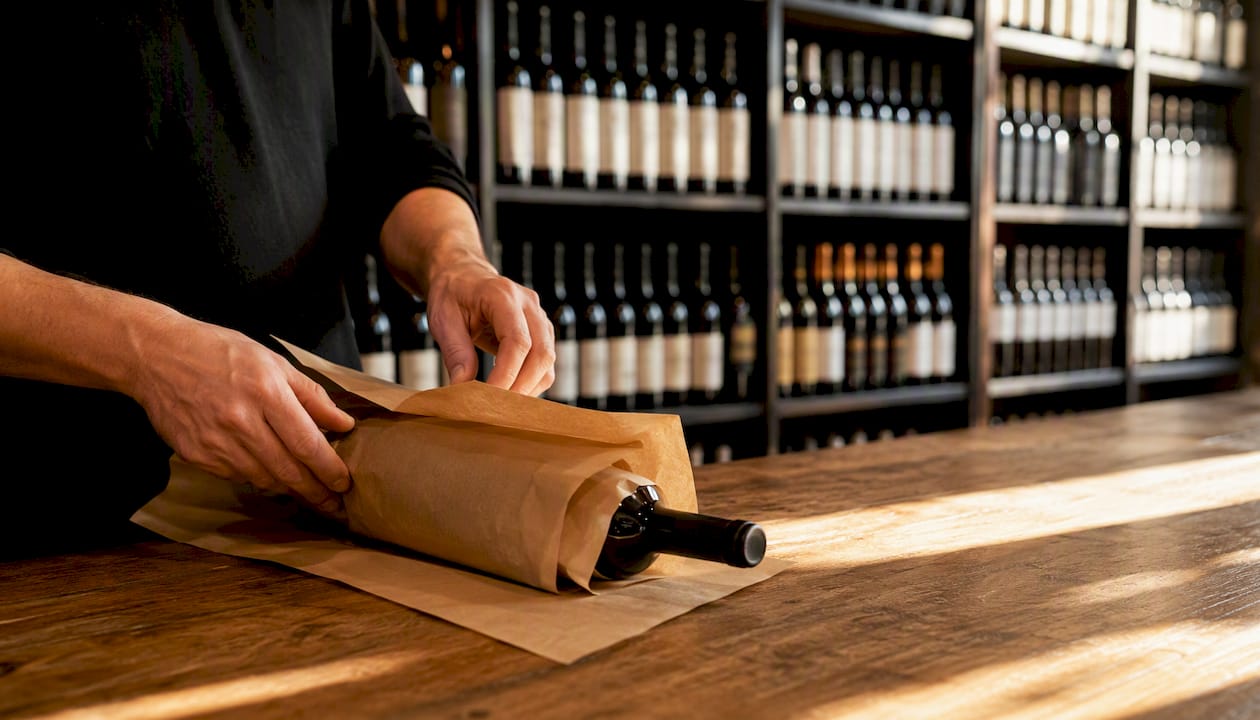
A handful of specialist wine merchants in Australia maintain relationships with allocated producers and receive small parcel allocations. These merchants often have waiting lists of their own. Building a relationship with a specialist merchant — buying regularly, communicating your collecting interests — puts you in line for bottles that never reach the general public. FU Wine operates in this space, sourcing allocated and cellar-aged stock through direct producer relationships and opportunistic buying.
Auction houses and secondary markets
Langton’s, Mossgreen, and other specialist wine auction platforms are the primary secondary market for rare Australian bottles. Auction is often the only realistic way to access older vintages and wines from producers with closed allocation lists. Key tactics:
- Set up saved searches and alerts for specific labels and vintages.
- Review condition reports carefully before bidding — fill level, label condition, and storage history all affect value.
- Factor in buyer’s premium (typically 15–22% on top of hammer price) when calculating your true cost.
- Check price history for the specific vintage before setting your maximum bid.
Private brokers and collector networks
Some of the best bottles never reach public auction. Private brokers and collector networks facilitate direct sales between collectors, often at prices that reflect genuine market value without the auction house premium. These networks are relationship-gated, but specialist merchants and auction house staff can often make introductions.
Pro Tip: Before bidding at auction, request the full condition report and, for high-value bottles, ask whether the auction house has provenance documentation. A bottle with a clean paper trail from original release through to the current sale is worth more than one with a gap in its history — and it’s also easier to resell.
For a detailed breakdown of how to secure limited wine releases in the current market, including timing and preparation tactics, FU Wine’s sourcing guide covers the mechanics in practical detail.
How do prices form for collectible Australian wines?
Price in the rare wine market is not set by a single authority. It emerges from the intersection of scarcity, critic scores, vintage quality, provenance, and auction activity. Understanding how these factors interact is what separates a collector who builds value from one who overpays.
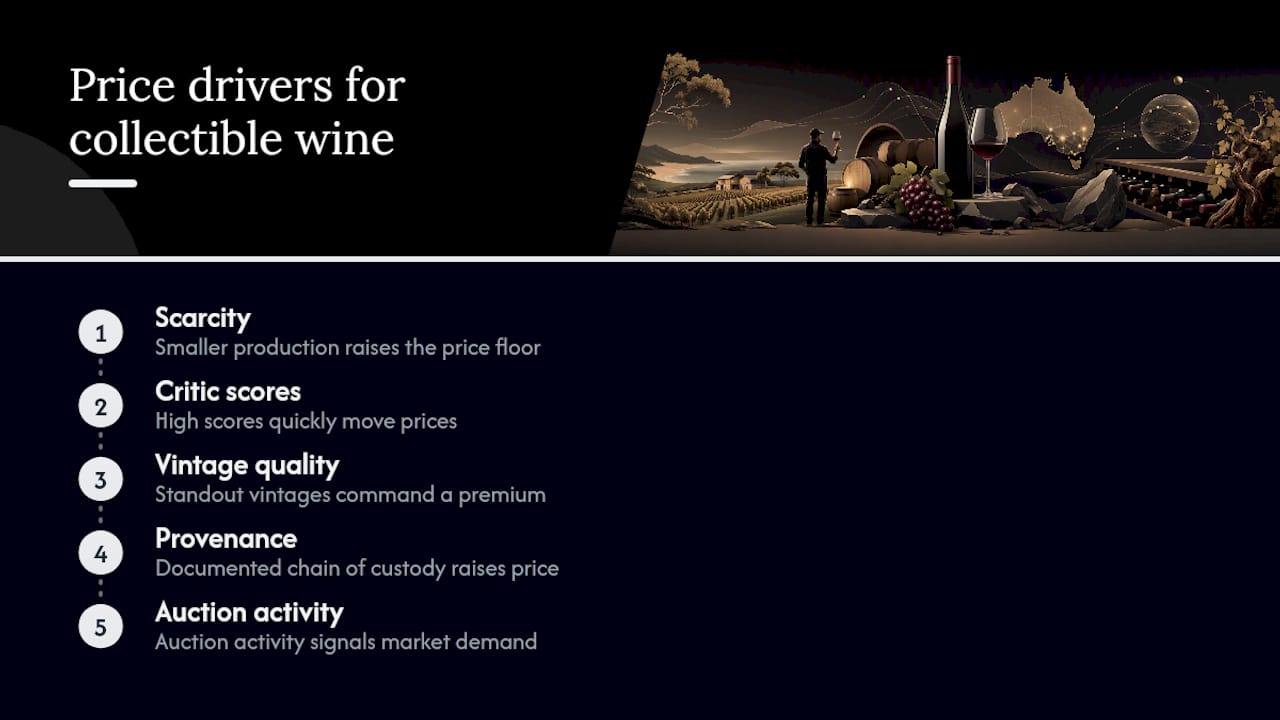
Scarcity is the floor. A wine produced in 500 cases has a structural price advantage over one produced in 50,000 cases, all else being equal. But scarcity alone doesn’t sustain price — it needs to be paired with demand. Demand comes from reputation, scores, and cultural cachet.
Critic scores act as a price catalyst. A 99-point Halliday score on a new vintage will move prices within days of publication. The effect is strongest for wines that don’t already have a well-established secondary market price — for those, a landmark score can permanently reset the price floor.
Vintage quality creates within-label variation. A producer like Henschke or Grosset will have standout vintages that command a significant premium over adjacent years. Learning which vintages are considered exceptional for each region — and why — is one of the most valuable skills a collector can develop.
Provenance affects both price and liquidity. A bottle with a documented chain of custody from winery release through to the current sale will always command a premium over one with an uncertain history. At the top end of the market, Wine-Searcher’s rankings of the world’s most expensive wines illustrate how provenance and scarcity combine to create price ceilings that can seem extraordinary to outsiders.
Reading auction records
When you look at an auction result, the hammer price is not your cost.
Price trajectory matters more than any single result. A wine whose hammer price has risen steadily across five auction cycles is demonstrating genuine collector demand. A wine that spiked once and then retreated is showing you a one-off event, not a trend.
The table below shows illustrative auction price ranges by wine and vintage window, based on general market knowledge. These figures are indicative only and will vary with condition, provenance, and market conditions at the time of sale.
These ranges are illustrative. Always verify current auction results before making purchasing decisions.
Investment risk factors to monitor:
- Storage failures (temperature excursions, cork damage) can destroy value instantly.
- Liquidity is thin for lesser-known labels — you may not be able to sell quickly at your target price.
- Tax and transaction costs (buyer’s premium, seller’s commission, GST implications) erode returns.
- Market sentiment shifts — a producer’s reputation can change with ownership or winemaker changes.
For a broader view of wine investment benefits and risks in the Australian context, FU Wine’s investment guide covers the key considerations for collectors thinking about returns alongside enjoyment.
How to cellar rare Australian wines properly
Poor storage destroys value faster than almost anything else. A bottle of 1996 Grange stored at 28°C for a summer is not the same wine as one that spent those months at a stable 14°C. The difference shows up in the glass and at auction.
Wine Australia’s aged wine guidance sets out best-practice cellaring conditions for Australian wines. The core parameters are consistent across the industry:
- Temperature: 12–14°C is the target range. Stability matters as much as the number — fluctuations cause expansion and contraction that can push wine past the cork. Never store above 18°C for extended periods.
- Humidity: 60–80% relative humidity prevents corks from drying out. Too dry and the cork shrinks; too wet and labels deteriorate (which affects resale value).
- Light: UV light degrades wine. Dark storage is non-negotiable for long-term holds. Even indirect sunlight through a cellar window is a risk over years.
- Vibration: Constant vibration disturbs sediment and can accelerate ageing in ways that are difficult to predict. Keep bottles away from appliances, traffic vibration, and anything that moves regularly.
- Bottle position: Store bottles horizontally to keep the cork moist. Upright storage is only appropriate for fortifieds with wax capsules or screwcap closures.
Documenting provenance as you go
Every bottle in a serious collection should have a paper trail. Keep the original purchase invoice, auction lot listing, or allocation confirmation. Photograph the bottle on arrival — fill level, label condition, capsule. Store these records digitally and back them up. When you eventually sell, this documentation is what justifies your asking price and gives buyers confidence.
Condition checks before purchase:
- Fill level: the wine should sit at or above the base of the neck for young wines; slight ullage is acceptable for older bottles but should be noted.
- Label condition: staining, tears, or mould affect resale value even when the wine is perfect.
- Capsule: look for signs of seepage (sticky residue, staining under the capsule) which can indicate cork failure.
- Cork: for bottles with visible corks, any significant push or suck indicates pressure issues.
Pro Tip: For any collection worth more than $10,000, professional bonded storage is worth the cost. Facilities like those offered by specialist wine storage providers maintain controlled conditions, carry insurance, and provide the kind of third-party provenance documentation that auction houses and private buyers trust. Home cellars are fine for everyday drinking stock, but investible bottles deserve professional care.
How to verify provenance and spot fakes
The Australian rare wine market is not immune to counterfeiting. While the problem is less acute here than in some international markets, the risk is real enough to warrant systematic checks — especially for high-value bottles sourced outside established auction channels.
The paper trail is your first line of defence. A legitimate bottle should have at least one of the following: the original purchase invoice from the winery or a licensed retailer, an auction lot listing with condition notes, or an importer certificate for wines that have changed hands internationally. Gaps in the chain of custody are a red flag, not a minor administrative issue.
Physical checks to run on every bottle:
- Label printing: Authentic labels from established producers have consistent font weight, colour registration, and paper quality. Photocopied or digitally printed labels often show pixelation at the edges of text under magnification.
- Capsule condition: Original capsules should sit flush and show no signs of removal and replacement. Look for tool marks around the lip of the bottle.
- Fill level: Cross-reference the fill level against what’s appropriate for the stated vintage. A 30-year-old wine with a fill level at the base of the neck is suspicious; significant ullage in a young wine is equally concerning.
- Shoulder staining: Some age-related staining inside the bottle is normal; heavy staining in a supposedly young wine is not.
- Packaging consistency: Older vintages should have age-appropriate packaging — the right label design for the year, the correct capsule style, the right bottle shape for the producer’s history.
Advanced authenticity methods are increasingly relevant for high-value bottles. Wax seals incorporating unique identifiers and forensic techniques including DNA tagging are being trialled internationally as anti-counterfeiting measures. The Times investigation into wine fakes documents how these approaches are being deployed for top-end bottles. In the Australian market, these methods are not yet standard practice, but they are available for high-value transactions through specialist authentication services.
Red flags checklist:
- Provenance gaps the seller cannot explain with documentation.
- Pricing significantly below established auction records for the same vintage.
- Seller reluctance to provide condition reports or allow inspection.
- Bottles offered in quantities that exceed known production volumes.
- Labels that look “too perfect” on very old bottles — genuine age shows.
What collecting strategy actually suits you?
Before you spend a dollar, get clear on what you’re actually trying to do. Buy-to-drink and buy-to-hold are fundamentally different activities with different timelines, budgets, and exit considerations.
Buy-to-drink means you’re cellaring wine for your own consumption at peak drinking. The financial return is irrelevant — the return is the experience. This strategy suits collectors who want to drink exceptional wine at its best without paying restaurant premiums. Tyrrell’s Vat 1 Semillon is a perfect buy-to-drink collectible: buy young at release price, cellar 10–15 years, open at peak.
Buy-to-hold means you’re treating wine as an asset. You’re buying with the intention of selling at a profit, either at auction or through a private sale. This requires a longer time horizon, disciplined storage, and a clear exit strategy. The wines that perform best as hold assets are those with proven auction liquidity — Grange, Hill of Grace, Art Series — not boutique cult labels with thin secondary markets.
Most serious collectors do both, maintaining a drinking cellar alongside a smaller portfolio of investible bottles.
Budget brackets and holding timelines
Figures are illustrative ranges based on general market knowledge. Individual results will vary.
Exit pathways in Australia:
- Auction houses: Langton’s and specialist platforms offer the broadest buyer pool and transparent price discovery. Seller’s commission typically runs 10–15%.
- Specialist merchants: Some merchants buy collections outright or on consignment. Faster than auction, but often at a lower net return.
- Private sale: Direct sale to another collector avoids commissions but requires your own buyer network and carries more risk around payment and documentation.
- FU Wine’s rare wine selection and savings guide covers how to think about exit timing and value realisation for collectors at different stages.
FU Wine’s insider tactics for finding rare bottles
Here’s the honest truth about how the best bottles get sourced: it’s not luck, and it’s not just money. It’s relationships, timing, and knowing where to look before everyone else does.
FU Wine sources allocated and cellar-aged stock through direct producer relationships, opportunistic buying from distressed inventory and cellar clearances, and a network built over years of working outside the traditional retail model. When a producer has excess allocation, or a private cellar comes to market, FU Wine moves fast. That’s how collectors get access to bottles at prices that don’t reflect the usual retail markup.
The rotating deal model works like this: stock arrives, it goes live, and it sells. There’s no warehouse of perpetually available bottles. When a flash deal on a Langton’s-classified wine appears, the window is short. Collectors who are prepared — funding ready, delivery address confirmed, documentation preferences noted — are the ones who secure bottles. Those who hesitate miss out.
Checklist for buying from limited releases or flash deals:
- Have payment ready before the deal goes live — credit card saved, account verified.
- Confirm your delivery address and any temperature-controlled delivery preferences in advance.
- Know your target labels and vintages before you browse — decision time is short.
- Check the condition notes and provenance information provided with each listing.
- Set up FU Wine alerts so you’re notified the moment relevant stock becomes available.
Insider tactics for building access over time:
- Visit cellar doors in person at least once per producer you’re serious about. Staff remember faces, and personal relationships translate into allocation priority.
- Respond promptly to winery newsletters and allocation offers — producers track engagement and reward it.
- Be a reliable buyer: pay on time, don’t return bottles without genuine cause, and communicate professionally.
- Follow producers on social media for early signals about upcoming releases and vintage news.
Pro Tip: The best time to join a winery mailing list is immediately after a vintage that received mixed reviews. Demand drops, waiting lists shorten, and you get established as a customer before the next exceptional vintage drives everyone back to the queue.
For a deeper look at unlocking access to allocated wines and the mechanics of how allocations are distributed in Australia, FU Wine’s guide covers the process from first contact through to securing your bottles.
Legal and tax considerations for Australian wine collectors
Owning, selling, and investing in rare wine in Australia carries real legal and tax implications. These are not afterthoughts — they affect your net return and your obligations as a collector or investor.
When you buy wine at retail or auction, these taxes are already embedded in the price. When you sell wine privately or through auction, GST obligations depend on whether you are registered for GST and whether the sale is characterised as a business activity. Occasional private sales between collectors are generally not subject to GST, but a pattern of buying and selling for profit may attract ATO scrutiny.
Capital Gains Tax (CGT): Wine held as a personal use asset — bottles you intend to drink — is generally exempt from CGT under Australian tax law when the cost of the asset is $10,000 or less per item. Wine held as an investment asset (bought with the intention of resale for profit) is subject to CGT on any gain. For collections of significant value, the distinction between personal use and investment asset is a question for a qualified tax adviser, not a general guide.
Estate and insurance considerations: High-value wine collections should be specifically listed on your home and contents insurance or covered by a specialist fine wine insurance policy. Standard home contents policies often exclude or undervalue wine. For estate planning, wine collections held as assets need to be valued and documented — auction house appraisals or specialist valuer reports are the standard approach.
Buying and selling through auction: Auction houses in Australia are regulated and provide receipts that serve as provenance documentation. Buyer’s premiums and seller’s commissions are clearly disclosed. Keep all auction documentation for tax records.
This is general information, not tax or legal advice. Confirm your specific obligations with a qualified Australian tax adviser or accountant, particularly if your collecting activity is significant in scale or value.
Why the “just buy Grange” advice is lazier than it sounds
Most articles about rare Australian wine tell you to buy Grange and call it a day. It’s not wrong advice — Grange is liquid, documented, and has a 70-year track record. But it’s also the most obvious play in the market, which means you’re competing with every other collector who read the same article.
The real opportunity in Australian collectibles sits one tier below the household names. Clonakilla Shiraz Viognier has a collector following that rivals Grange in passion, at a fraction of the price. Tyrrell’s Vat 1 Semillon is arguably the best-value aged white wine in the world at release price, and most collectors still underestimate it. Grosset Polish Hill Riesling ages for 20 years and costs less than a decent restaurant dinner when bought young.
The collectors who build genuinely interesting cellars — and genuinely interesting returns — are the ones who look beyond the obvious. They’re on the mailing lists for producers most people haven’t heard of. They’re buying Hewitson Old Garden Mourvèdre from pre-Phylloxera vines because they understand what vine age means for scarcity and flavour. They’re picking up Tahbilk Very Rare Muscat because they know that once those old barrel pools are gone, they’re gone.
FU Wine’s approach is built on exactly this thinking. We’re not interested in selling you the same bottles every other retailer has. We’re interested in finding the bottles that are genuinely hard to get — the allocated releases, the cellar clearances, the flash deals on wines that collectors actually want — and getting them to you at prices that don’t insult your intelligence.
FU Wine: rare bottles at prices that don’t play by the rules
You’ve done the research. You know which wines to chase, how to verify provenance, and what a fair auction price looks like. Now you need a source that actually has the bottles — and doesn’t charge you a premium for the privilege of knowing about them.
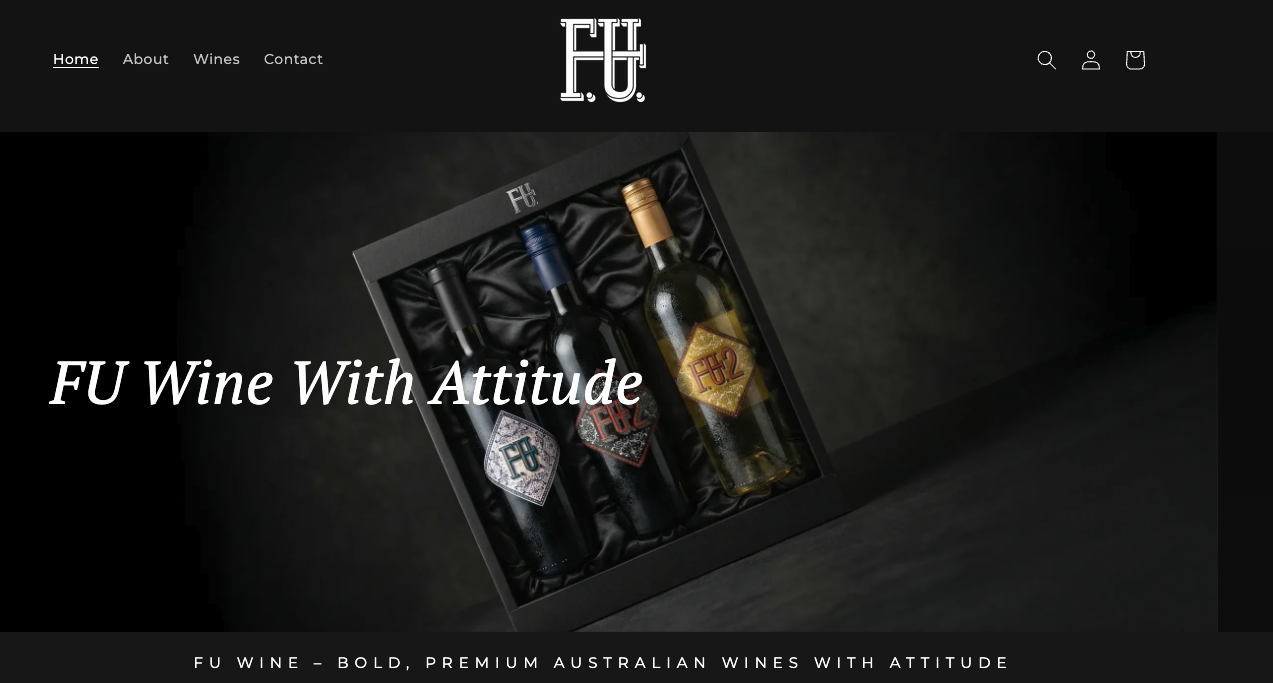
Not clearance stock. Not bulk surplus. The real thing, sourced through direct producer relationships and opportunistic buying that most retailers can’t or won’t do. The rotating deal model means stock moves fast — but when it’s there, it’s genuinely worth your attention.
What you get when you work with FU Wine:
- Access to rare and allocated Australian wines that rarely reach public retail.
- Provenance documentation and condition notes on every bottle.
- Flash deals on high-scoring vintages and Langton’s-classified labels.
- Alerts so you’re first to know when relevant stock arrives.
- Pricing that reflects what the wine is actually worth, not what the market has been trained to accept.
Check what’s currently available at FU Wine and set up your alerts today. The next flash deal won’t wait.
Sources
These are the primary sources used and referenced throughout this guide. Each one is worth bookmarking if you’re serious about building a rare Australian wine collection.
- AGED AUSTRALIAN WINE
- Australia’s Most Collected Wines
- Tahbilk NV Very Rare Muscat (500ml) | Tahbilk Winery
- The World’s Top 50 Most Expensive Wines - Wine-Searcher