

Premium vs. everyday wine explained: a no-BS guide
TL;DR:
- Premium wine is characterized by lower yields, skilled winemaking, and greater terroir expression, offering complexity and aging potential.
- Everyday wines focus on freshness, balance, and immediate drinkability at accessible prices, suitable for casual occasions.
Premium wine is defined by greater craftsmanship, ageing potential, and terroir expression. Everyday wine prioritises freshness, balance, and easy drinkability at accessible prices. The difference between wine types is real, but it is not always where you think. Price is not a reliable proxy for pleasure. Blind tasting studies consistently show cheaper wines rating as highly as expensive ones, which means the premium vs. everyday wine explained debate is as much about psychology as it is about what is in the glass. Knowing the actual distinctions helps you spend smarter and drink better every single time.
What defines a premium wine versus an everyday wine?
Premium wine is built on lower yields, skilled winemaking, and a strong sense of place. Everyday wines prioritise freshness, balance, and immediate drinkability. These are not value judgements. They are production choices that reflect different goals.
Production: where the real difference lives
Premium wines come from grapes grown at lower yields per vine. Fewer grapes per vine concentrates flavour and builds complexity. The winemaker typically has more control over fermentation, barrel selection, and ageing time. The result is a wine with structure, depth, and the potential to improve in the bottle over years or even decades.

Everyday wines are made for now. They are designed to be approachable, consistent, and versatile. Think a crisp Marlborough Sauvignon Blanc at $18 or a reliable McLaren Vale Shiraz at $22. These wines are not lesser. They are just built for a different job.
Flavour profiles and ageing potential
Premium wines deliver complexity. You get layers: fruit, earth, spice, and texture that shift as the wine opens up in the glass. Expert consensus confirms that premium wines offer greater nuance and terroir expression, meaning the wine tastes distinctly of where it came from.
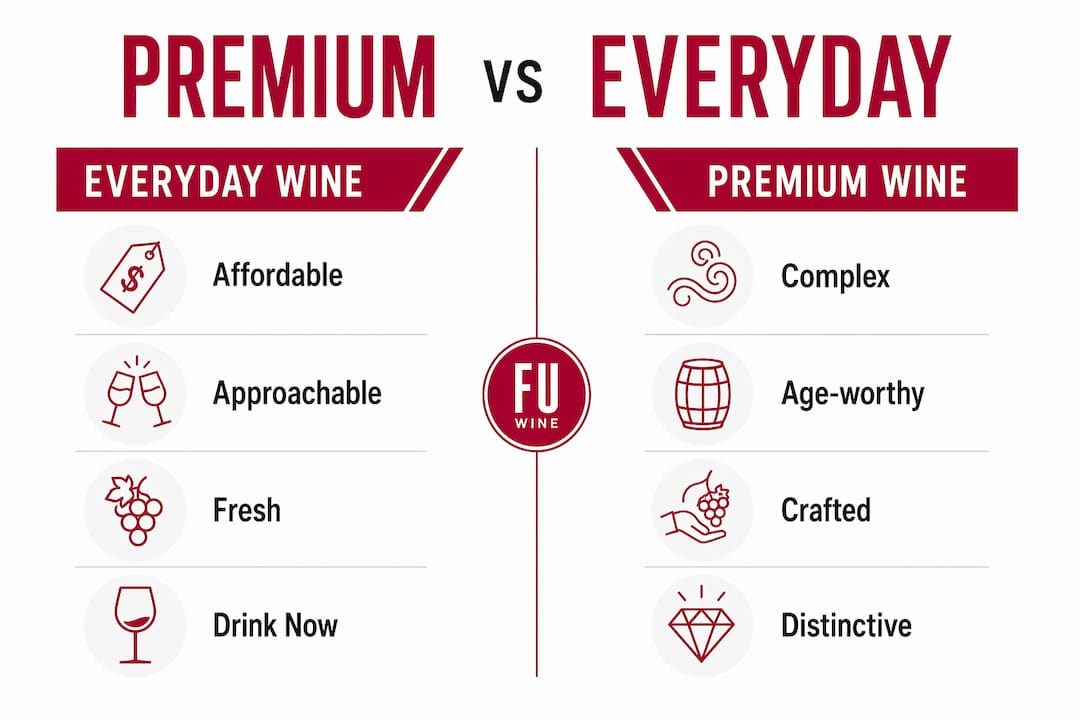
Everyday wines are smooth and direct. They do not demand your full attention. That is a feature, not a flaw. A Tuesday night pasta does not need a 2018 Barossa Valley Grenache with 10 years of cellaring behind it.
Pro Tip: Check the back label for specific vineyard or region mentions. Single vineyard or single block wines almost always signal premium production, regardless of price.
Quick comparison at a glance
| Attribute | Everyday wine | Premium wine |
|---|---|---|
| Price range | $10–$25 per bottle | $25–$60 and above |
| Production focus | Freshness, consistency, volume | Low yields, skilled craft, terroir |
| Flavour profile | Clean, approachable, easy drinking | Complex, layered, structured |
| Ageing potential | Drink within 1–3 years | Often improves over 5–20 years |
| Best occasion | Casual meals, weeknights, parties | Special dinners, gifting, cellaring |
Does a higher price always mean a better wine?
No. Price and quality are related, but the relationship is messier than the wine industry wants you to believe. Psychological studies reveal that the brain’s pleasure centres respond more strongly when a drinker believes a wine is expensive, not necessarily when the wine is objectively better. That is expectation bias at work, and it is powerful.
This does not mean premium wines are a con. It means you need to understand what you are actually paying for.
What drives the price up beyond the liquid
Several factors add cost to a bottle without adding flavour. Knowing these helps you spot genuine value and avoid paying for prestige alone.
- Region reputation. Wines from famous appellations like Burgundy or Napa Valley carry a premium simply because of the postcode.
- Packaging. A heavier bottle, embossed label, or luxury gift box can add dollars without changing what is inside.
- Critic scores. A 95-point rating from a major publication pushes prices up fast, even when the score reflects a single tasting moment.
- Branding and marketing. Packaging design and marketing frequently raise wine prices independent of liquid quality.
- Scarcity. Limited releases and allocation wines command premiums because supply is tight, not always because quality is exceptional.
- Social signalling. Premium wine consumption is often rooted in label trust and social confidence, not just flavour.
The honest truth is that a $30 bottle from a boutique Clare Valley producer can outperform a $90 bottle from a famous Bordeaux château in a blind tasting. It happens more often than the industry admits.
Pro Tip: Buy wines from lesser-known regions within famous wine countries. A Côtes du Rhône delivers similar grape varieties to a Châteauneuf-du-Pape at a fraction of the price. The same logic applies to Australian regions: Heathcote Shiraz often rivals Barossa at a lower price point.
How to choose between premium and everyday wines
Choosing the right bottle is about matching the wine to the moment, not chasing a number on a label. Expert advice recommends filtering wine choices by meal and spending range to avoid overpaying or poor matches. That is genuinely the most useful framework you can use.
Here is a practical decision process that works whether you are a casual drinker or a seasoned enthusiast.
- Set your budget first. Decide what you are comfortable spending before you look at the shelf. Most everyday drinking occasions fall into the $10–$25 price range, and that bracket delivers excellent quality when you know what to look for.
- Match the occasion. A weeknight dinner with friends calls for something easy and versatile. A milestone birthday or a long lunch with your best mate deserves something with a bit more story behind it.
- Consider the food. Delicate dishes like seafood or light salads pair better with fresh, lower-tannin wines. Rich red meat and aged cheeses can handle the structure of a premium red.
- Know your taste preferences. If you love bold, fruit-forward reds, a well-made everyday Shiraz from South Australia will satisfy you more than a restrained, earthy Pinot Noir at three times the price.
- Explore regional reliability. Certain Australian regions consistently overdeliver at everyday price points. The Clare and Eden Valleys for Riesling, the Yarra Valley for Pinot Noir, and Margaret River for Cabernet Sauvignon all offer genuine quality without the premium markup.
- Use tastings to build confidence. Wine clubs and cellar door tastings let you try before you commit. They are the fastest way to learn what you actually enjoy rather than what you think you should enjoy.
Knowing your taste preferences and setting a budget is more valuable than any technical wine knowledge when making a purchase decision. That is not a simplification. It is the truth.
Common pitfalls when buying premium or everyday wine
The wine aisle is full of traps. Some are obvious. Others are dressed up in beautiful labels and impressive scores.
Vintage creep and critic score inflation
Vintage creep is one of the most common ways buyers get stung. It happens when a producer uses high scores from a legendary vintage to justify premium prices for subsequent, less remarkable years. The label looks the same. The price stays high. The wine inside does not deliver the same experience. Smart buyers verify the specific vintage quality rather than relying on overall brand prestige.
Critic scores have a similar problem. A 95-point score is a snapshot from a single tasting, often of a barrel sample or a wine in an unusual state. It does not guarantee your bottle will taste the same way on your table.
Supermarket pricing traps
Supermarket wine pricing often lacks rationality. Some regions overdeliver at budget levels while others fail to provide value at the same price point. A $15 bottle from a reliable New World producer can be genuinely excellent. A $25 bottle from a famous region can be genuinely disappointing. The shelf position and the fancy label are not quality signals.
Mass-market wines are also frequently produced at enormous scale, which means consistency rather than character. They are fine. But if you are spending $20 and expecting complexity, you are better off seeking out smaller producers or specialist retailers.
Pro Tip: Ask a specialist wine retailer for their best value pick under your budget. A good retailer knows their stock and will point you toward wines that punch above their price. This beats scanning shelves for 20 minutes every time.
Check out how to spot a genuine value buy before your next shop. It will change how you read a shelf.
Key takeaways
Premium wine differs from everyday wine in production, complexity, and ageing potential, but price alone does not determine which bottle will give you the most pleasure.
| Point | Details |
|---|---|
| Price is not quality | Blind tastings consistently show cheaper wines rating as highly as expensive ones. |
| Production drives the gap | Lower yields, skilled winemaking, and terroir expression define premium wines. |
| Know your occasion | Everyday wines suit casual drinking; premium wines reward special meals and cellaring. |
| Avoid vintage creep | Always verify the specific vintage quality rather than trusting brand prestige alone. |
| Budget and taste first | Setting a firm budget and knowing your palate beats chasing labels or critic scores. |
Damien’s take: stop letting the label drink for you
I have tasted wines at every price point, and the single biggest mistake I see people make is letting the bottle do the talking before they have even poured a glass. There is a real psychological pull to a beautiful label, a heavy bottle, and a famous region. The wine industry knows this. It is not accidental.
The wines that have genuinely surprised me over the years have rarely been the ones I expected. A $22 Grenache from McLaren Vale that tasted like it had no business being that good. A Clare Valley Riesling at $18 that I would put against bottles costing three times as much. These moments taught me something the industry does not advertise: the gap between everyday and premium is narrower than the price gap suggests.
What I would tell anyone navigating this is simple. Drink what you enjoy. Set a budget that feels comfortable. Then spend a little time exploring regions and producers that consistently overdeliver. You do not need to spend $60 to drink well. You need to spend $60 wisely when the occasion genuinely calls for it. The rest of the time, a well-chosen everyday bottle is not a compromise. It is a smart call.
— Damien
What FU Wine does differently for your cellar
FU Wine was built on one idea: you should not have to pay inflated prices to drink something genuinely good. Every bottle in the range has been chosen because it earns its place, not because it carries a famous name or a collector’s price tag.
Whether you are after a reliable weeknight pour or a premium bottle that would normally sit behind a velvet rope, FU Wine sources both without the usual markups. The model is direct, deal-driven, and unapologetically focused on quality over prestige. Browse the full wines collection and find something worth opening tonight. Life is genuinely too short for ordinary wine at extraordinary prices.
FAQ
What is the main difference between premium and everyday wine?
Premium wines are defined by lower yields, skilled winemaking, ageing potential, and distinctive terroir expression. Everyday wines prioritise freshness, balance, and easy drinkability at accessible price points.
Does a more expensive wine always taste better?
No. Blind tasting studies show that cheaper wines frequently rate as highly as expensive ones. Higher prices often reflect branding, region reputation, and packaging rather than superior flavour.
What price range counts as everyday wine?
Most everyday drinking occasions fall into the $10–$25 per bottle range, which represents the market sweet spot for well-made, approachable wine.
How do I avoid overpaying for wine?
Set a firm budget before you shop, verify the specific vintage quality rather than relying on brand prestige, and seek recommendations from specialist retailers rather than relying on shelf position or label design.
When should I choose a premium wine over an everyday bottle?
Choose a premium wine for special occasions, long meals with rich food, gifting, or when you want to cellar a bottle for future enjoyment. For casual weeknight drinking, a well-chosen everyday wine delivers better value.