

Buy Pre-Arrival Wine Safely: 5 Checks Buyers Use to Vet Retailers
Pre-arrival wine is a bottle you buy now and receive later because the stock is already made but hasn’t reached the retailer’s warehouse yet. It’s different from en primeur, where you’re buying wine that’s still sitting in barrel. The upshot: you’re locking in a price and a bottle today, and trusting that the wait, the shipping, and the fine print all land the way you expect.
TL;DR:
- Pre-arrival wine is already bottled and finished but can take between 4 to 8 months to arrive, depending on shipping and customs delays.
- Your purchase price is locked at checkout, exposing you to currency fluctuations and market risks if the wine’s reputation drops or demand changes.
- Not all pre-arrival terms are cancellable, and responsibility for shipping and customs may vary, so confirm policies and provenance before buying.
- This option suits patient buyers seeking scarce releases or building long-term cellars, but it is ill-suited for quick flips or flexible cash needs.
- Retailers with clear communication, reliable tracking, and upfront timing estimates reduce the risk of delays and unexpected issues.
Table of Contents
- What pre arrival wine actually means (and how it’s different from futures)
- How long does pre arrival wine actually take to arrive?
- What are the real pricing and market risks with pre arrival wine?
- What retailer policies should you check before buying pre arrival?
- Who should buy pre arrival wine, and who should skip it?
- How do you buy pre arrival wine without getting burned?
- How does FU Wine actually handle pre arrival stock?
- The gap between the fine print and what actually gets people burned
- Ready to buy pre arrival wine without the guesswork?
- Sources
- FAQ
What pre arrival wine actually means (and how it’s different from futures)
Pre-arrival wine is the finished product. It’s been fermented, blended, and bottled, but it’s sitting in a warehouse somewhere between the producer and your doorstep. You’re not speculating on how a wine will turn out. You’re buying a real, completed bottle that simply hasn’t finished its journey to the retailer’s shelf.
En primeur, sometimes called wine futures, is a different beast entirely. You’re buying while the wine is still ageing in barrel, often before it’s even been through malolactic fermentation, let alone bottled. According to The Wine Cellar Insider, futures buyers typically wait a prolonged period before the bottle shows up, because the whole point is buying before it exists in finished form.
That gap matters for three practical reasons:
- Risk window: futures carry more uncertainty because the final wine hasn’t been tasted in bottle yet.
- Storage planning: pre-arrival’s shorter wait means you need a cellar plan sooner.
- Cash commitment: futures tie up your money for longer with less to show for it in the interim.
If you’re weighing up the difference more broadly, our breakdown of wine futures for collectors digs into how that model plays out for people chasing scarce vintages.
How long does pre arrival wine actually take to arrive?
Nobody wants a vague “it’ll get there eventually” answer, so here’s what the timeline usually looks like.
- Order placed and confirmed. You’ll typically get an acknowledgement that flags the item as pre-arrival stock, not on-hand inventory.
- Shipping and customs. SaratogaWine’s guidance puts the typical window for long-term pre-arrival orders at 4 to 8 months, though international logistics and customs queues can stretch that further.
- Arrival and inspection. Once stock lands, retailers usually check it against the original listing before releasing it for delivery or pickup.
- Final notice. You’ll get an ETA update and then a shipping notice, giving you the chance to pick a delivery date or arrange collection.
The gap between “ordered” and “in your glass” is the whole trade-off of buying this way. You’re accepting a longer wait in exchange for access or pricing you wouldn’t get on wine that’s already sitting on the shelf.
What are the real pricing and market risks with pre arrival wine?
Here’s the part that trips people up: your price gets locked in at checkout, and it generally stays locked, no matter what happens to the wine’s reputation or the currency markets between now and delivery.
Statistic Callout: Wine Australia’s export risk guidance flags currency fluctuation and market volatility as the two biggest financial exposures in forward wine purchasing, and neither one gets renegotiated after you’ve paid.
That cuts both ways. A few things worth weighing before you commit:
- If a critic downgrades the vintage after you’ve bought it, your price doesn’t move, and the secondary market price might fall below what you paid.
- If the currency shifts against you on an internationally sourced bottle, the effective cost of that purchase changes even though your invoice doesn’t.
- If demand spikes after release, you’ve effectively bought below the future market rate, which is the upside scenario nobody complains about.
So is a pre-arrival purchase an investment or just a convenience buy? Ask yourself whether you’d be happy drinking the bottle if the market never moves. If yes, you’re buying for the wine itself, and the pricing risk barely matters. If you’re buying purely to flip it later, you’re taking on genuine market exposure, and that deserves the same caution as any speculative purchase.
What retailer policies should you check before buying pre arrival?
Not all pre-arrival terms are created equal, and the fine print is where most regret comes from. Before you pay, confirm:
- Whether the order is final sale or cancellable, since retailer support pages often note pre-arrival stock is treated as non-cancellable once confirmed.
- Who’s responsible for shipping, insurance, and customs clearance between the supplier and your door.
- Whether the listing includes a provenance or allocation statement confirming where the bottle actually comes from.
- What happens if the wine arrives late or differs from what was listed, including vintage or label discrepancies.
Pro Tip: Screenshot the product listing and the pre-arrival terms at the time you buy. If the bottle that arrives doesn’t match what you paid for, you want a dated record, not a memory.
Who should buy pre arrival wine, and who should skip it?
Pre-arrival suits patient buyers chasing something they genuinely couldn’t get otherwise. Wine Spectator puts it plainly: this is a strategy for people who don’t mind waiting, not people chasing a quick turnaround.
- Good fit: you want a scarce or allocated release and you’re happy to wait for it.
- Good fit: you’re building a cellar for wine you plan to drink years from now anyway.
- Poor fit: you need the cash flexible, since your money is committed the moment you pay.
- Poor fit: you’re buying purely to resell quickly, since short-term speculation carries real pricing risk.
How do you buy pre arrival wine without getting burned?
A bit of process turns pre-arrival from a gamble into a considered purchase.
- Check the retailer’s track record on past pre-arrival orders before you commit real money.
- Read the pre-arrival terms line by line, not just the product description.
- Confirm the arrival window in writing and sort your storage plan before the bottle lands, not after.
- Start small. A single test order on a lower-stakes bottle tells you a lot about how a retailer communicates before you commit to something expensive.
- Stagger bigger purchases across multiple orders rather than one large pre-arrival commitment, spreading both cost and risk.
Pro Tip: Treat a vague ETA, unclear provenance, or no mention of insurance and customs handling as red flags. A retailer that’s confident in its process will spell all three out without you having to ask.
Once your wine actually lands, give it time to settle before you open it, following our advice on private cellar tasting etiquette for villa guests to get the most from the experience. Our guide on letting wine rest after shipping covers why that matters more than most buyers assume.
How does FU Wine actually handle pre arrival stock?
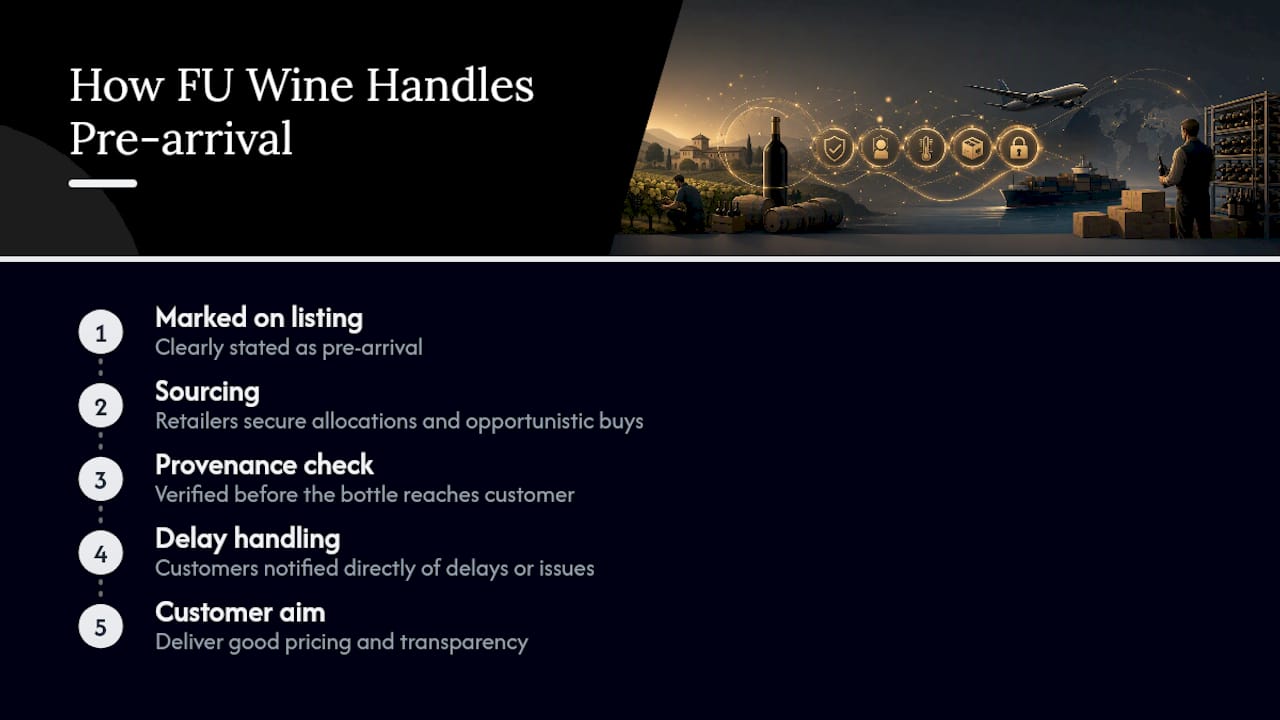
We don’t sit around waiting for wine to magically appear on a shelf. Retailers chase allocations, cellar clearances, and opportunistic buys, and sometimes that means the bottle you’re grabbing is still in transit when you hit checkout.
Here’s the deal: When something’s pre-arrival, it is clearly stated on the listing. Provenance is checked before the bottle reaches the customer, and if there is a delay or an issue in shipping, customers are notified directly rather than left without updates. The goal is to provide both good pricing and transparency.
The gap between the fine print and what actually gets people burned
Most guidance on pre-arrival wine focuses on definitions and timelines, and that’s fine as far as it goes. But the definitions aren’t where buyers actually get hurt. It’s the assumption that “pre-arrival” and “in stock” carry the same level of certainty, when they clearly don’t.
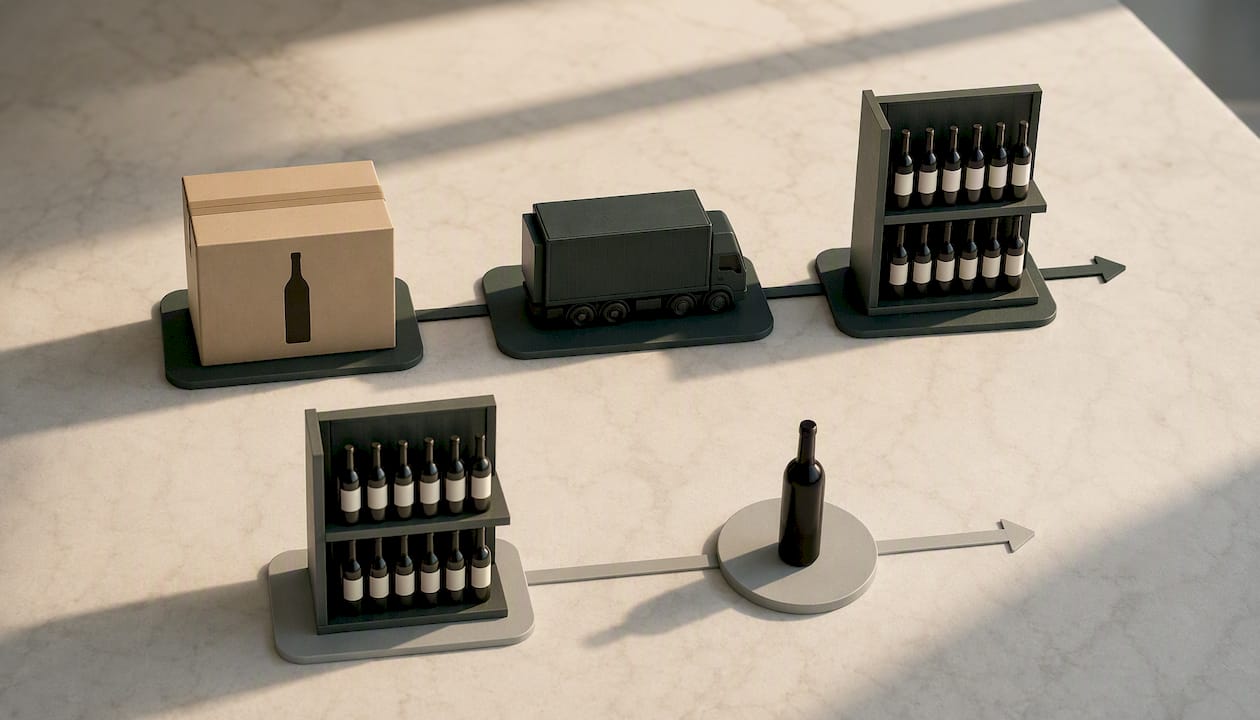
The conventional advice tells you to check the ETA and move on. That’s incomplete. The real question is whether the retailer treats a delay as a routine update or as radio silence. A four-month window that slips to six months is a minor inconvenience if you’re told about it early. It’s a genuine problem if you find out by chasing customer service.
If you take one thing from this: prioritise a retailer’s communication habits over the headline discount. A brilliant price on a bottle that vanishes into shipping limbo for eight months with no updates is a worse outcome than a slightly smaller discount from someone who tells you exactly where your wine is at every stage. The wine itself rarely disappoints. The silence around it does.
— Damien
Ready to buy pre arrival wine without the guesswork?
Some wine retailers prioritize clear pricing and communication rather than vague promises about delivery times. When a bottle is listed as pre-arrival, terms are provided up front, customers are informed about expected arrival times, and they receive notifications at important milestones rather than waiting without updates.
Check current listings, read the pre-arrival terms on each one before you commit, and sign up for alerts so you’re first in line when scarce stock drops. Head to FU Wine’s current listings and see what’s on offer right now.
Sources
FAQ
What is pre arrival wine, in simple terms?
It’s a finished, bottled wine that’s been sold to you before it physically arrives at the retailer’s warehouse, usually because it’s still in transit or clearing customs.
What’s the difference between pre arrival and en primeur?
Pre-arrival wine is already bottled and awaiting shipment, while en primeur (wine futures) is bought while the wine is still ageing in barrel, often 18 to 24 months before release, according to The Wine Cellar Insider.
Can I cancel a pre arrival wine order?
Often not. Many retailers treat pre-arrival purchases as final sale once confirmed, so it’s worth confirming the cancellation policy before you pay.
Is pre arrival wine a good investment?
It depends on your goal: it suits patient buyers securing scarce allocation, but it carries real market and currency risk if you’re buying purely to resell, since your price is locked at checkout regardless of what happens later.
How long does pre arrival wine typically take to arrive?
Long-term pre-arrival orders commonly quote a window of around 4 to 8 months, though international shipping and customs can extend that timeframe.