

Pairing wine with conference catering: a planner's playbook
Pour a crisp sparkling for the mingling, one clean white, one light red. That’s it. That’s the whole trick to pairing wine with conference catering, and it works because it covers almost every dish on a corporate menu without asking your guests to think twice.
Here’s why this compact mix wins over anything fancier:
- Broad appeal across a mixed crowd with different tastes and tolerance
- Low-to-moderate alcohol keeps people sharp for the 2pm session
- Enough intensity range to flex from canapés to a chicken main
- Simple to order, pour and restock without a wine list the size of a phone book
The best conference wine list isn’t the most impressive one. It’s the one nobody has to think about.
Key Takeaways
A tight two-to-three wine programme, chosen to match the menu rather than the other way round, is the single most reliable way to get conference wine right.
| Point | Details |
|---|---|
| Keep the list tight | Offer sparkling, one crisp white and one light-to-medium red for most conferences. |
| Let the menu lead | Choose wines to match dominant flavours, weight and texture, never the reverse. |
| Plan for daytime pacing | Favour low-alcohol, fruity styles for business lunches to keep delegates alert. |
| Order with real numbers | Budget roughly five to six glasses per bottle and confirm temperature and staffing needs early. |
| Source smarter, not pricier | FU Wine’s rotating discounted catalogue gives planners access to premium and anchor bottles without retail markups. |
Table of Contents
- Why food-first matters when pairing wine with conference catering
- What’s the ideal 2 to 3 wine programme for a conference?
- Serving logistics: quantities, pours and staffing
- Quick pairings for common conference dishes
- Pairing heuristics every planner should memorise
- What to ask your caterer before you order
- Daytime conferences need a different alcohol strategy to evening events
- A planner’s quick note from FU Wine
- How FU Wine makes conference wine sourcing easier
- Frequently asked questions
- Sources
Why food-first matters when pairing wine with conference catering
Sommeliers who work catering circuits all say the same thing: build the wine list around the menu, not the other way round. Pick your canapés, your mains, your dessert, then find wines that suit the dominant flavours, weight and texture on the plate.
Conferences add their own wrinkles on top of that basic rule:
- Daytime sobriety matters. Nobody wants a delegate nodding off during the afternoon keynote
- Service windows are tight, often 30 to 45 minutes between sessions
- Dietary needs multiply fast across a room of 100+ mixed guests
- Room acoustics and AV breaks dictate when pouring can happen without disrupting a speaker
- Venue corkage fees and “house pour only” clauses can quietly blow a wine budget
Pro Tip: Ask your venue upfront whether they’ll waive or reduce corkage if you commit to a minimum case order through them. Many will, especially for repeat conference bookings.
What’s the ideal 2 to 3 wine programme for a conference?
You don’t need six options. Catering specialists consistently recommend capping a whole-day event at two to three wine types, sequenced from lighter styles through to anything with more weight. Here’s how that plays out across three budget tiers.
Minimal (tight budget, smaller group):
- Sparkling or Prosecco for arrival
- One crisp white, such as Sauvignon Blanc or unoaked Chardonnay, to carry through lunch
Balanced (the standard conference play):
- Sparkling for reception
- A crisp white for seafood, salads and lighter starters
- A light-to-medium red, like Pinot Noir or Grenache, for chicken or vegetarian mains
Elevated (client-facing or executive-level conferences):
- Sparkling, plus one or two higher-value anchor bottles poured selectively for VIP tables or a closing dinner
- The same crisp white and light red, but from a more distinctive producer or vintage
That anchor-bottle approach isn’t just an upsell trick. Event planning specialists note that mixing in one or two standout bottles while keeping the rest of the list value-friendly lifts the whole experience without blowing the budget on every pour.
Swap in a dry rosé if you want one wine that spans white and red territory, particularly useful when the menu leans Mediterranean or the room skews toward guests who avoid tannin. For dry, sober-curious or non-drinking delegates, a quality non-alcoholic sparkling should sit on the table next to the real thing, not hidden behind the bar.
Pro Tip: Buy by the case wherever possible and pick labels versatile enough to pour again at your next event if numbers come in under estimate. A wine that only works for one menu is a wine sitting in your storeroom next month.
Serving logistics: quantities, pours and staffing
A standard 750ml bottle pours roughly five to six glasses at the usual event serving size. Event wine calculators use this as the baseline for estimating bottles and cost per guest, and it’s a solid starting point for any conference order.
Sample calculation: 100 guests, reception plus seated lunch, budget two glasses per person. That’s 200 glasses, or roughly 35 to 40 bottles split across your two to three wine types.
By the numbers: Bottle calculators built for events typically suggest splitting stock by season, weighted more heavily toward white and sparkling in warmer months and shifting toward red as the weather cools.
Serving temperature isn’t optional detail, it’s the difference between a wine tasting flat and one tasting alive. Whites and rosés should land in glasses at 8 to 10°C, sparkling a touch cooler, and reds at 16 to 18°C, noticeably cooler than “room temperature” in most Australian venues. Standard stemware for whites and reds is fine; save the specialty flutes for sparkling.
For staffing, budget one server per 40 to 50 guests for a mingling reception, tightening to one per 30 for a seated service where timing with courses matters more.
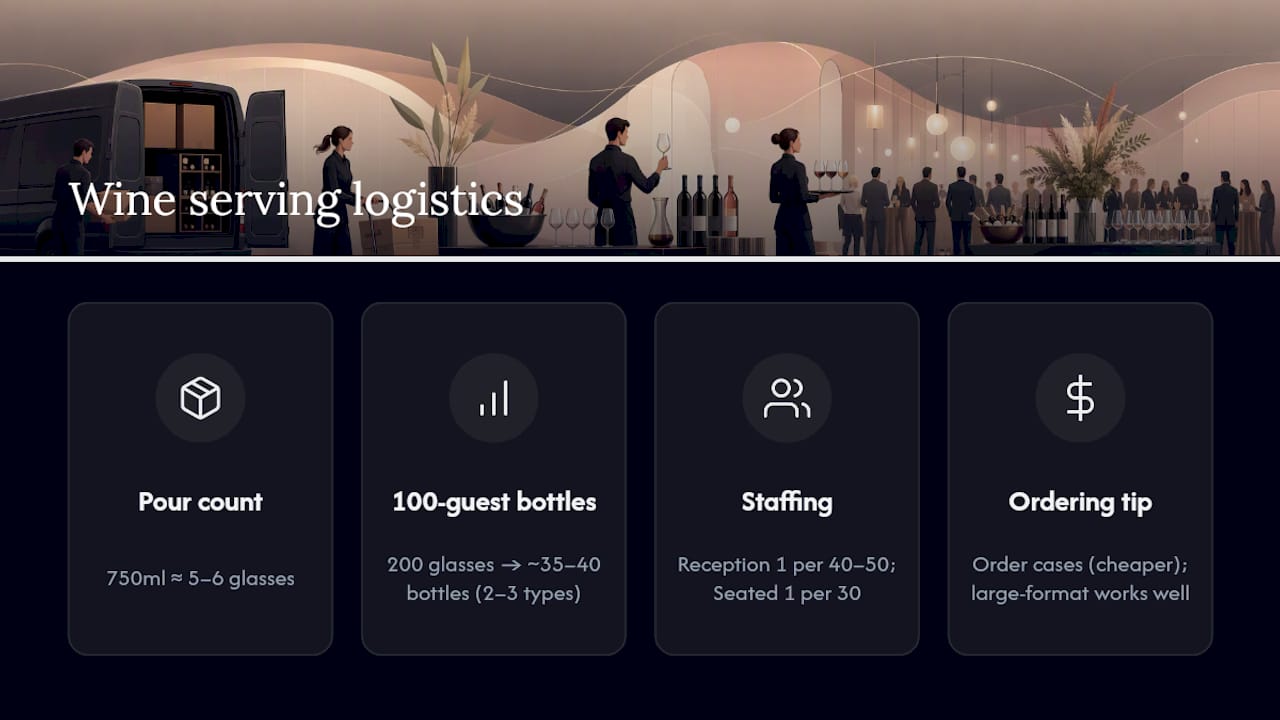
Pro Tip: Order in cases, not loose bottles. Case pricing usually beats singles by a meaningful margin, and large-format bottles work well for shared plated dinners where presentation matters as much as pour count.
Quick pairings for common conference dishes
Here’s a fast-reference sheet for menu-to-wine matching when you’re drafting a proposal at speed.
| Dish | Wine match |
|---|---|
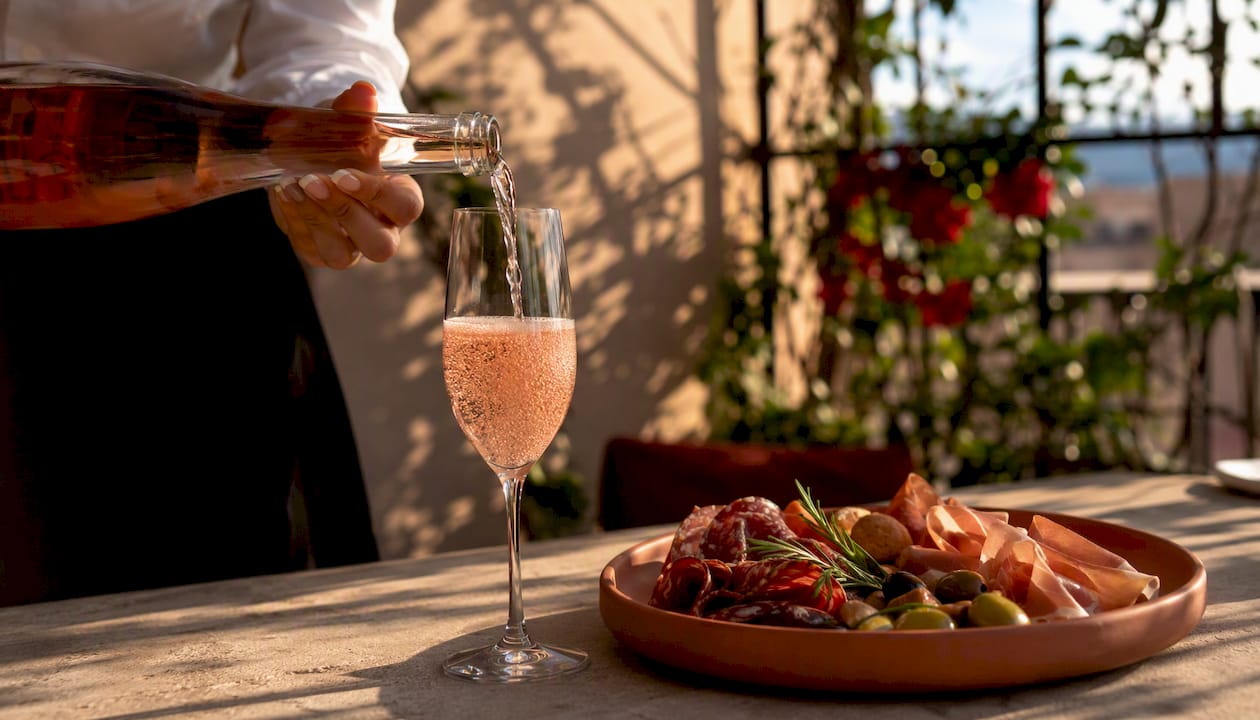
| Canapés and charcuterie | Sparkling or dry rosé |
| Seafood and sushi | Sauvignon Blanc or unoaked Chardonnay |
| Green salads | Sauvignon Blanc or Pinot Grigio |
| Chicken and pasta | Light Pinot Noir or a fuller white |
| Red-meat mains | Grenache, Shiraz or medium-bodied Merlot |
| Vegetarian mains | Rosé or a light red, depending on sauce weight |
| Simple desserts | Off-dry sparkling or a late-harvest style |
Sparkling, Sauvignon Blanc and dry rosé are consistently the safest starters for canapé-style service, so lean on that trio when you’re unsure what the room will order.
Dietary needs deserve a direct check, not an assumption. Most wine is naturally gluten-free, but cross-contamination can occur in shared pouring stations, so keep vegan-friendly labels (unfined with animal products) separate and clearly marked, and flag sulfite-sensitive guests toward lower-sulfite options where your supplier can confirm levels.
Pairing heuristics every planner should memorise
You don’t need a sommelier certificate to get this right most of the time. Catering pairing guides boil it down to four rules worth pinning above your desk:
- Match intensity: delicate dishes need delicate wines, bold dishes need bold wines
- Cut richness with acidity, not more richness
- Pair salty food with something acidic or sparkling
- Fatty dishes need either acid or tannin to cleanse the palate
Sometimes contrast beats matching entirely, a crisp sparkling against something creamy works better than another creamy note stacked on top.
What to ask your caterer before you order
- Can they source your chosen labels, or does the venue restrict you to a house list and corkage fee?
- Who supplies glassware and pouring staff, and is temperature control part of their service?
- What’s the contingency stock plan if numbers rise on the day?
- When’s the tasting date, and when do you need to lock final guest numbers?
- What’s the delivery window, and has the service team been briefed on pour timing?
Get every answer written into the event order and the client contract, not just agreed verbally over email.
Daytime conferences need a different alcohol strategy to evening events
Daytime business lunches call for low-alcohol, fruity, easy-drinking wines poured in moderation, saving anything heavier or higher in tannin for an evening gala where the pace naturally slows. Stick to two to three wine types across the whole day, no more.
- Reception-style pouring tends to see lighter, more casual consumption than a seated dinner
- Sequencing lighter styles first, sparkling to white to light red, keeps the pace controlled through the day
A planner’s quick note from FU Wine
Taste with the actual menu before you commit to a case order. Every pairing rule in this article is a starting point, not a guarantee, and the only real test is a bite of the dish followed by a sip of the wine. Guest experience beats rigid rules every time.
FU Wine exists because premium bottles shouldn’t come at inflated prices. We run a rotating, deal-driven catalogue with access to limited-release and cellar-aged bottles most planners never see on a standard supplier list, at prices well below traditional retail. If you’re building a recurring corporate wine program, reach out. We’ll help you source it properly.
How FU Wine makes conference wine sourcing easier
Sourcing decent wine for a 200-person conference at short notice is usually a headache of minimum orders, inflated markups and suppliers who don’t understand event timelines. FU Wine skips the middleman markup entirely: our rotating catalogue of premium, rare and limited-release bottles comes at prices typically 30 to 70% below traditional retail, so your anchor bottles and your everyday pours can both come from the same list without wrecking the budget.
We support case-quantity ordering, help you lock in event-specific stock before it disappears from the rotation, and can talk through which labels suit your menu before you commit. Whether you need a full corporate wine program built for repeat conferences or a one-off order for next month’s summit, get in touch through FU Wine to request a quote or arrange a tasting before you finalise numbers.
Frequently asked questions
How many wine types should I offer at a conference? Two to three is the sweet spot. It’s enough range to cover most dishes without overwhelming your bar setup or your budget.
What’s the safest wine for a business lunch? A crisp Sauvignon Blanc or unoaked Chardonnay handles salads, seafood and chicken without stepping on any single dish.
Should I serve red wine at a daytime conference? Yes, but keep it light. A Pinot Noir or Grenache works for mains without the heaviness of a full-bodied red slowing the room down.
How much wine do I need per guest? Plan on roughly a few glasses per person for a reception-plus-lunch event, working from five to six glasses per bottle.
What temperature should conference wine be served at? Whites and rosés at 8 to 10°C, sparkling slightly cooler, and reds at 16 to 18°C, cooler than most people assume.
Sources
- Wine Bottle Calculator — Free Online Tool | Calculover
- Union Hotel 5 tips: “How to choose wine for catering” - KONGRES – Europe Events and Meetings Industry Magazine
- Easy Wine Pairing Tips to Impress Your Catering Clients — MetroBi
- Party Planning 101: How to Choose Wine for Events – St. Supéry Estate Vineyards & Winery
- Private Event Wine Calculator | SommGeo
- Guide to Pairing Drinks with Your Catering Menu — Cafe 80