

Pairing white wine with food: your 2026 guide
TL;DR:
- Pairing white wine involves matching its acidity, sweetness, and body to a dish’s flavor profile for better taste harmony. Understanding varietal traits and focusing on sauce, preparation, and weight helps achieve confident pairings beyond simple color rules. White wines like Riesling, Gewürztraminer, and Chardonnay are versatile options for a wide range of foods and cheeses when paired thoughtfully.
Pairing white wine is the practice of matching a wine’s acidity, sweetness, body, and aromatics to the flavour profile of a dish, so both taste better together than they would alone. Get it right and a crisp Sauvignon Blanc makes your goat cheese sing. Get it wrong and a heavy, oaked Chardonnay bulldozes a delicate piece of flathead. The good news? The rules are simpler than the wine world wants you to believe. Varietals like Chardonnay, Riesling, and Gewürztraminer each have distinct structural traits that make them natural fits for specific foods, and once you understand those traits, confident pairing becomes second nature.
How does pairing white wine with food actually work?
The science behind food and wine pairing is about interacting components, not forced harmony. According to the New Zealand Wine Authority, great pairing enhances both wine and food by matching acidity, sweetness, and body with a dish’s fat, salt, protein, and acid. That means the same glass of Riesling can taste completely different next to a green papaya salad versus a creamy chicken pie.
Here are the key interactions to keep in mind:
- Acidity cuts fat. A high-acid white like Sauvignon Blanc slices through creamy sauces and rich cheeses, refreshing your palate between bites.
- Sweetness tames spice. Residual sugar in off-dry whites softens the burn of chilli without killing the dish’s complexity.
- Body matches richness. A full-bodied Chardonnay holds its own against a butter-poached lobster. A light Pinot Grigio would disappear.
- Salt and umami shift the balance. Soy sauce salinity can clash with fish fat and white wine, which is exactly why the old “white with fish” rule falls apart the moment you add a teriyaki glaze.
The biggest myth in white wine pairing is that white wine goes with fish and red wine goes with meat. Body matching is the real structural principle, and sommeliers endorse it over categorical colour rules every time.
Pro Tip: Before you choose a wine, ask yourself one question: is this dish light and delicate, or rich and heavy? That single answer narrows your choice faster than any pairing chart.
Which white wine varieties pair best with popular foods?
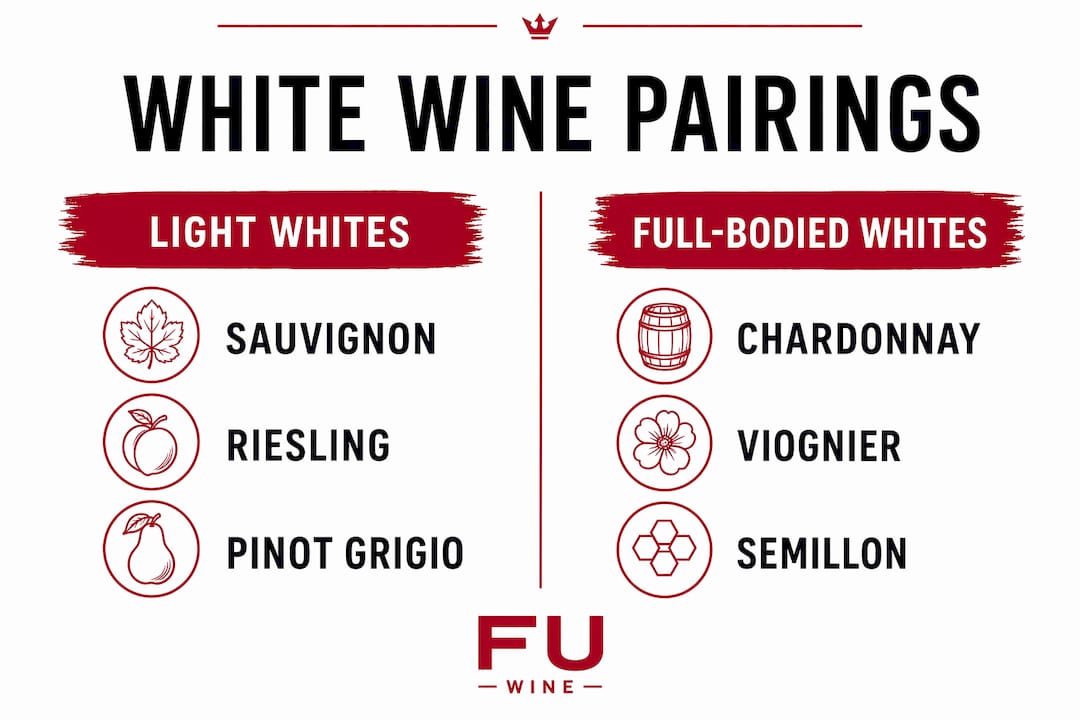
Different white varietals have genuinely different personalities. The GAYOT 2026 pairing guide maps specific whites to specific dishes, and the matches are grounded in flavour logic, not tradition. Use this table as your starting point.

| Varietal | Best Food Matches | Why It Works |
|---|---|---|
| Chardonnay (oaked) | Shellfish, lobster, roast chicken, creamy pasta | Full body and buttery texture mirrors rich, fatty dishes |
| Chardonnay (unoaked) | Grilled fish, soft cheeses, light poultry | Leaner profile suits delicate proteins without overpowering |
| Riesling (off-dry) | Thai curry, Korean BBQ, spicy Mexican, pork | Residual sweetness softens capsaicin heat |
| Riesling (dry) | Sashimi, trout, charcuterie | High acidity and minerality complement clean, fresh flavours |
| Sauvignon Blanc | Goat cheese, green salads, oysters, fresh seafood | Herbaceous notes and sharp acidity echo green, tangy ingredients |
| Chenin Blanc | Quiche, Brie, spicy Thai, roast chicken | Versatile acidity and fruit weight bridge savoury and spicy |
| Gewürztraminer | Smoked salmon, pâté, foie gras, spicy Indian | Aromatic intensity and slight sweetness match bold, fatty, smoky flavours |
| Pinot Grigio | Antipasto, light pasta, grilled vegetables | Neutral profile lets simple, fresh ingredients shine |
Chardonnay with shellfish and Chenin Blanc with spicy Mexican are two of the most reliable matches in this list. Both work because the wine’s weight and flavour intensity sit at the same level as the dish. That balance is the whole game.
For seafood specifically, a practical guide on pairing wine with seafood confirms that delicate white fish like flathead or sole call for crisp, dry whites such as Verdejo or unoaked Chardonnay, while richer preparations demand fuller-bodied options.
How do sauces and cooking methods change your pairing?
The protein on your plate is only half the story. The sauce, the spice level, and the cooking method often matter more. Wine-Searcher advises basing your wine choice on sauce and preparation rather than protein category alone. That advice resolves more pairing puzzles than any rule about fish or chicken.
Here is how cooking style shifts the ideal match:
- Grilled or steamed fish calls for a crisp, dry white like Verdejo, Albariño, or unoaked Chardonnay. The wine’s acidity mirrors the clean, fresh flavour of the dish.
- Cream or butter sauces need a fuller-bodied white. Oaked Chardonnay or white Burgundy can stand up to the richness without being swallowed by it.
- Spicy dishes demand off-dry wines. Off-dry Riesling’s sweetness softens capsaicin heat without masking the dish’s complexity. Dry whites amplify the burn.
- Tomato-based or acidic sauces work well with high-acid whites like Sauvignon Blanc or Vermentino. Matching acidity levels stops the wine from tasting flat.
- Smoked or charred preparations suit aromatic whites like Gewürztraminer or Viognier, which have enough intensity to hold their own against bold, smoky flavours.
The trickiest scenario is soy-based sauces. Soy’s salinity and umami create tension with both fish fat and white wine tannins. In that situation, a higher-acid white like dry Riesling or a lightly sparkling option tends to cut through the salt and restore balance.
Pro Tip: Taste a small amount of the sauce on its own before selecting your wine. The sauce’s dominant flavour, whether creamy, acidic, spicy, or smoky, should guide your varietal choice more than the protein does.
Can white wine pair well with cheese and meat?
Yes, and white wine often outperforms red in these situations. White wine’s acidity cuts through creamy, fatty cheeses more cleanly than red tannins do. Tannins in red wine can clash with the proteins in soft cheese, creating a chalky, metallic sensation. White wine sidesteps that problem entirely.
Here are the pairings that consistently work:
| Food | Recommended White Wine | Pairing Logic |
|---|---|---|
| Fresh goat cheese (chèvre) | Sauvignon Blanc | Herbaceous notes echo the tangy, grassy character of the cheese |
| Brie or Camembert | Chenin Blanc or unoaked Chardonnay | Acidity cuts the fat; fruit weight complements the creamy rind |
| Aged Gruyère | Dry Riesling or white Burgundy | Nutty, savoury notes match the wine’s minerality |
| Roast chicken | Oaked Chardonnay | Body and richness align; buttery texture mirrors the roasted skin |
| Turkey breast | Viognier or Chenin Blanc | Floral aromatics lift the mild flavour of the meat |
| Prosciutto or mild charcuterie | Dry Riesling or Pinot Grigio | High acidity cuts the salt and fat of cured meats |
The one pairing to avoid is a delicate, low-acid white with a pungent, washed-rind cheese like Époisses or Limburger. The cheese will overwhelm the wine completely. When the cheese is bold, go aromatic. Gewürztraminer is the classic match for strong, funky cheeses because its intensity can actually compete.
For entertaining, choosing wines that impress guests often comes down to offering one crisp white and one fuller-bodied white, which covers most food scenarios on the table.
What are the most common white wine pairing mistakes?
Most pairing errors come from ignoring the dish’s full flavour profile and defaulting to simple rules. Here are the mistakes worth avoiding:
- Applying the “white with fish” rule too broadly. A teriyaki salmon with soy glaze is a completely different pairing challenge than a steamed barramundi with lemon butter. The sauce changes everything.
- Choosing a wine that is too light for a rich dish. A Pinot Grigio next to a lobster bisque will taste watery and thin. Match the weight of the wine to the weight of the dish.
- Pairing dry whites with very spicy food. Dry wine amplifies heat. Off-dry Riesling or Gewürztraminer are the correct choices when chilli is a dominant flavour.
- Ignoring high-umami ingredients. Mushrooms, aged parmesan, anchovies, and soy sauce all intensify the perception of bitterness in wine. Choose a fruit-forward or slightly off-dry white to counteract that effect.
- Treating all whites as interchangeable. Selecting white wine based on dish style rather than treating all whites the same is what builds real confidence and versatility in pairing.
If a pairing feels off, run through this quick troubleshoot: Is the wine tasting harsh or bitter? The dish likely has high umami or salt. Try a fruitier or slightly sweeter white. Is the wine disappearing? The dish is too rich. Go fuller-bodied. Does the wine taste flat? The dish is too acidic. Match the acidity level or go higher.
Key takeaways
Pairing white wine well requires matching the wine’s acidity, body, and sweetness to the dish’s fat, spice, and sauce, not simply following protein-based colour rules.
| Point | Details |
|---|---|
| Body matching is the core rule | Align wine weight with dish richness to stop either from overpowering the other. |
| Sauce matters more than protein | Base your varietal choice on the sauce’s dominant flavour, not just the meat or fish. |
| Off-dry whites handle spice best | Riesling and Gewürztraminer soften chilli heat without masking the dish’s complexity. |
| White wine suits cheese and meat | Acidity in whites cuts through fat more cleanly than red tannins, broadening pairing options. |
| Avoid the “white with fish” trap | Soy, cream, and spice sauces shift the ideal pairing away from simple categorical rules. |
Why i think most people overcomplicate this
I have spent years tasting wines alongside food, and the single biggest shift in my pairing confidence came when I stopped thinking about rules and started thinking about flavour weight. You do not need a sommelier certificate to get this right. You need to ask one honest question: how heavy is this dish?
The other thing I have noticed is that people underestimate white wine’s range. A well-chosen Chenin Blanc at a dinner party can handle a cheese board, a spicy Thai curry, and a roast chicken all in the same evening. That kind of versatility is genuinely exciting. If you want to host a wine tasting at home that actually impresses people, build it around white wine pairings. The variety surprises guests every time.
My honest advice: stop buying the same bottle out of habit. Grab a Gewürztraminer next time you order Indian takeaway. Try a dry Riesling with your next charcuterie board. The discovery is half the fun, and the best pairings you will ever find are the ones you stumble into yourself.
— Damien
Find premium white wines worth pairing at FU wine
You have got the knowledge. Now you need the bottles. FU Wine sources premium and hard-to-find whites, including limited releases, boutique producer runs, and high-scoring vintages, at prices that are 30–70% below traditional retail. No inflated markups. No pretentious gatekeeping. Just genuinely good wine at a price that does not make you wince.
Whether you are building a dinner party spread or hunting for the perfect Riesling to match your Friday night Thai, browse FU Wine’s selection and find bottles that actually deserve a place on your table. Every bottle is a small rebellion against overpaying, and life is too short for ordinary wine.
FAQ
What is the most important rule for pairing white wine?
Match the wine’s body and weight to the richness of the dish. A full-bodied Chardonnay suits rich, creamy preparations, while a crisp Sauvignon Blanc suits light, fresh dishes.
Does white wine go with red meat?
White wine can work with lighter meats like chicken, turkey, and pork, but it generally struggles with heavy red meats like beef or lamb, where a fuller red is a better structural match.
What white wine is best for spicy food?
Off-dry Riesling is the best choice for spicy dishes. Its residual sweetness softens capsaicin heat without eliminating the dish’s complexity, which dry whites cannot do.
Can you cook with the same white wine you drink?
Yes, and you should. Cooking with a wine you would actually drink improves the dish. Avoid wines labelled “cooking wine” as they contain added salt and produce flat, unpleasant results.
Which white wine pairs best with a cheese board?
Sauvignon Blanc suits fresh goat cheese, Chenin Blanc works with Brie, and Gewürztraminer handles bold, pungent cheeses. White wine’s acidity cuts through fat more cleanly than most reds.