

Ordering wine at fine dining: your confident guide
TL;DR:
- Ordering wine at fine dining restaurants requires understanding the list structure and clear communication.
- Engaging honestly with the sommelier about your preferences and budget helps you find enjoyable wines.
Ordering wine at fine dining restaurants is a refined process guided by etiquette, sommelier expertise, and informed choice. Get it right, and the wine becomes part of the meal, not a source of stress. You don’t need a wine degree or a bottomless wallet. You need to understand how the list works, how to talk to the sommelier, and what happens when that bottle arrives at your table. This guide covers all of it, plainly and without pretension, so you can sit down, pick something brilliant, and actually enjoy the evening.
How to read and understand fine dining wine lists
Fine dining wine lists are organised in one of three ways: by region (Burgundy, Barossa, Napa), by grape variety (Chardonnay, Pinot Noir, Riesling), or by style (sparkling, white, red, dessert). Most top restaurants use a regional structure, which mirrors how wine professionals think. If you know your way around a map, you’re already ahead.
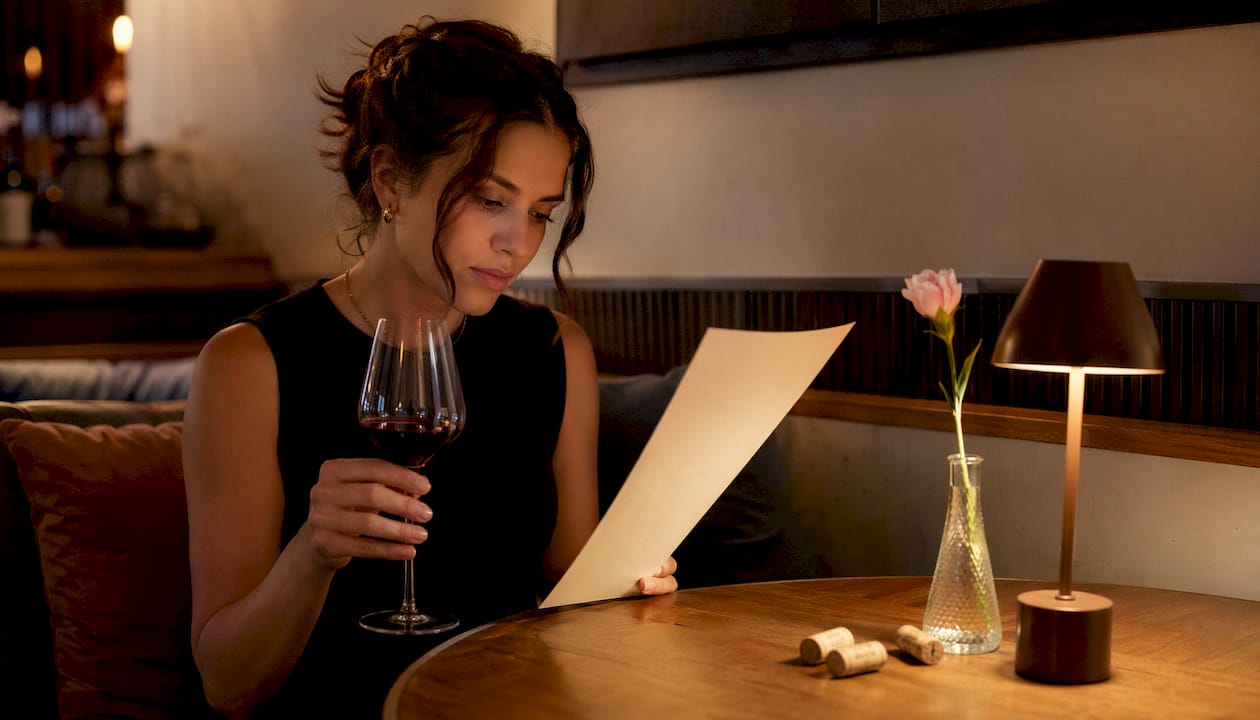
The scale of these lists can be genuinely surprising. Top-tier wine programmes can feature over 1,500 labels with cellar investments exceeding $1 million. That depth reflects years of buying, cellaring, and curation. You won’t read the whole list, and you’re not expected to.
Pricing is where most diners feel a jolt. Restaurants typically apply a markup of 2.5x to 3.5x over wholesale cost for wine bottles in fine dining venues. A bottle you’d find at retail for $20 can appear on the list at $50 to $65. That’s the reality of restaurant economics, covering storage, service, glassware, and the sommelier’s expertise. Knowing this upfront helps you set realistic expectations rather than reacting with shock.
Here’s how to navigate the list without feeling lost:
- Scan for familiar producers or regions first. A recognisable name gives you a reference point for quality and style.
- Look at the by-the-glass options. These show you what the restaurant is proud to open and serve in volume.
- Identify the mid-range bottles. The most interesting wines are rarely the cheapest or the most expensive.
- Ask about the cellar list. Some restaurants keep rare or aged bottles off the printed menu entirely.
- Note the vintage years. Older vintages on a list signal serious cellaring and usually carry a premium.
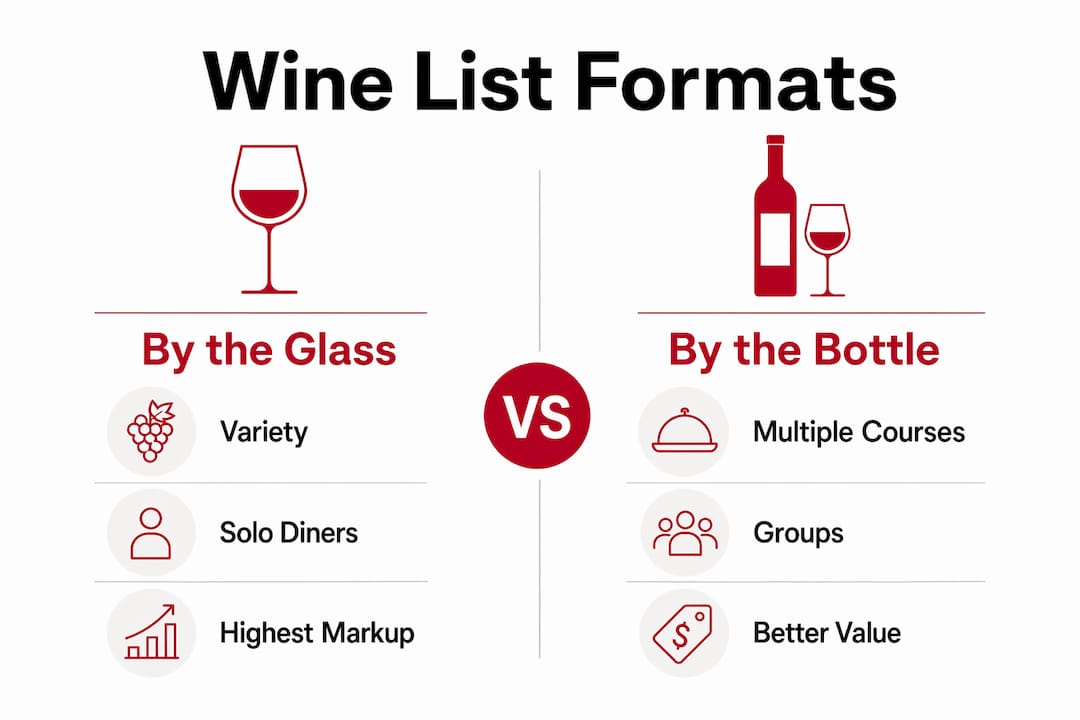
By-the-glass options deserve a specific mention. By-the-glass programmes often carry the highest effective markup, recovering the restaurant’s wholesale bottle cost in a single pour. A $12 glass can reflect a bottle that cost $15 to $18 wholesale. That’s not a rip-off so much as a structural reality. By-the-glass makes sense when you want variety across courses or when your dining companion prefers something different. For a single wine across a full meal, a bottle almost always delivers better value.
| Format | Best for | Markup level |
|---|---|---|
| By the glass | Variety across courses, solo diners | Highest |
| Half bottle | Two courses, lighter appetite | High |
| Full bottle | Shared meal, consistent pairing | Standard (2.5x–3.5x) |
| Cellar list | Special occasions, collectors | Variable, often lower per quality |
How do you talk to the sommelier about budget and taste?
The sommelier is a hospitality professional first. Their role is primarily hospitality-focused, built around understanding your preferences and budget before making any recommendation. They are certified through rigorous programmes like the Court of Master Sommeliers. They are not there to judge you or push the most expensive bottle on the list.
The most useful thing you can do is be direct. Tell the sommelier what you like, what you’re eating, and roughly what you want to spend. Communicating your price range clearly removes the awkwardness and helps them recommend wines that actually fit your evening. You don’t need to announce a number loudly. Point to a price on the list and say “something around here” and the message lands perfectly.
Effective communication sounds like this:
- “We’re having the duck and the beef. I prefer something with a bit of weight but not too tannic.”
- “I’m open to something from the Southern Rhône or similar, around the $90 to $120 mark.”
- “We’d love a white for the entrée and a red for the main. What would you suggest?”
Pro Tip: If you prefer to choose independently, simply say so. A good sommelier will step back graciously and remain available if you have questions. There’s no obligation to accept their guidance.
If you’re new to ordering wine confidently, the simplest approach is to describe a wine you’ve enjoyed before and ask for something in that direction. Sommeliers are trained to translate personal taste into specific bottles. Give them something to work with and they’ll do the rest.
What happens during tableside wine service?
The tableside wine ritual follows a consistent sequence in fine dining. Understanding each step removes any anxiety about what to do or say.
- Label presentation. The sommelier presents the bottle with the label facing you. Confirm it matches what you ordered, including the producer, vintage, and region. This is your chance to catch any error before the cork comes out.
- Cork removal. The cork is removed and may be placed on the table or presented to you. You can inspect it if you like, but smelling it is optional and not required.
- The taste pour. A small amount, roughly one ounce, is poured for the person who ordered. This is a quality check, not a preference test. The taste pour exists to detect TCA cork taint, a chemical fault that affects roughly 1 in 75 bottles and makes wine smell musty or like wet cardboard.
- Your response. Swirl, sniff, and taste. If the wine smells clean and tastes as expected, nod or say “lovely, thank you.” If something seems off, say so calmly: “I think this might be corked. Could you check it?”
- Pouring order. The sommelier pours for guests first, then the host last. Glasses are typically filled to about one third, allowing the wine to breathe and the aromas to develop.
- Top-ups. The sommelier or a floor staff member will return to top up glasses throughout the meal. You don’t need to pour for yourself unless no staff are nearby.
Pro Tip: Never feel embarrassed about flagging a faulty bottle. Returning a corked wine is expected and handled without fuss at any reputable fine dining venue. The sommelier will replace it without charge.
Proper glass handling matters too. Hold a wine glass by the stem, not the bowl. This keeps your body heat from warming the wine and keeps the glass free of fingerprints. It also signals that you’re comfortable with the ritual, which puts everyone at ease.
What are the basics of pairing wine with gourmet meals?
Wine and food pairing works through four sensory properties: acidity, tannin, sweetness, and body. Understanding these four elements gives you a framework that works across any menu.
The classic rules are a starting point, not a rulebook. “White with fish, red with meat” holds up often enough to be useful, but it breaks down quickly. A rich, oaked Chardonnay can overwhelm a delicate sole. A light Pinot Noir from Burgundy pairs beautifully with salmon. The dish’s weight and sauce matter more than the protein.
The four core pairing approaches are:
- Complement. Match the weight and intensity of the wine to the dish. A full-bodied Barossa Shiraz with a slow-braised lamb shoulder.
- Contrast. Use the wine to cut through richness. High-acid wines like Champagne or Chablis work brilliantly with fried or creamy dishes.
- Bridge. Find a shared flavour element. An earthy Pinot Noir with mushroom-based dishes, or a mineral Riesling with seafood.
- Cut. Use tannin or acidity to cleanse the palate. Cabernet Sauvignon’s tannins cut through the fat in a well-marbled steak.
Wine price doesn’t always correspond to pairing success. A mid-range wine chosen for its acidity or structure can outperform an expensive bottle that simply doesn’t suit the dish. This is where a good sommelier earns their keep, because they know the kitchen’s flavour profiles and can match accordingly.
Tasting menus present a specific challenge. Pre-designed wine pairing programmes at fine dining are priced between $85 and $250 per person, depending on restaurant tier and wine rarity. A wine flight paired to each course by the sommelier removes the guesswork entirely and often introduces you to wines you’d never have chosen independently. For a special occasion, it’s one of the best ways to build a pairing experience that genuinely surprises you.
Personal preference always has a place. If you love a particular style and the sommelier’s suggestion doesn’t appeal, say so. The goal is enjoyment, not compliance.
Common wine ordering mistakes and how to avoid them
Most wine ordering mistakes come from vagueness or misplaced anxiety. The fix is almost always the same: be specific and be honest.
- Avoid “just something good.” Without context, this forces the sommelier to guess. Give them a price point, a style preference, or a dish to work with.
- Don’t default to the second-cheapest bottle. This is a well-known habit that restaurants account for in their pricing. The second-cheapest wine is often marked up more aggressively than others on the list precisely because of this behaviour.
- Ask what excites the sommelier. Asking what bottles excite them is the single best question you can ask. Sommeliers typically recommend three to five interesting bottles enthusiastically, and these are rarely the priciest options. A sommelier’s enthusiasm signals a thoughtful, well-curated list.
- Understand the wine markup reality. Knowing that markups are structural, not arbitrary, helps you make peace with restaurant pricing and focus on value rather than cost.
- Return faulty wine without hesitation. Politely flagging a corked bottle is correct behaviour. Any good venue will replace it immediately.
“The best wine you can order is the one you’ll actually enjoy drinking. Price is a signal, not a guarantee. A confident, specific request will always get you a better result than a vague one.”
Key takeaways
Ordering wine at fine dining restaurants rewards preparation, clear communication, and a willingness to engage with the sommelier as a hospitality partner rather than a gatekeeper.
| Point | Details |
|---|---|
| Understand list structure | Fine dining lists are organised by region, variety, or style. Scan for familiar names first. |
| State your budget clearly | Telling the sommelier your price range leads to better recommendations and less awkwardness. |
| Know the taste pour’s purpose | The taste pour checks for cork taint, not personal preference. About 1 in 75 bottles are affected. |
| Pairing beats price | A well-chosen mid-range wine often outperforms an expensive bottle that doesn’t suit the dish. |
| Ask what excites the sommelier | This single question consistently surfaces interesting, well-priced bottles on any list. |
Damien’s take: the ritual is there to help you, not intimidate you
Fine dining wine service has a reputation for being stuffy. I think that reputation is mostly earned by people who’ve never actually engaged with a good sommelier. Every time I’ve been direct about what I want and what I’m spending, the experience has been genuinely enjoyable. The ritual, the label check, the taste pour, the pouring order, it all exists to make the wine better and the meal more memorable. It’s not a test.
The anxiety most people feel comes from not knowing the steps. Once you know them, the whole thing feels less like a performance and more like a conversation. The sommelier wants you to leave happy. That’s literally their job. Work with them, not around them.
My honest advice: pick one thing to try differently next time. Ask the sommelier what they’re excited about. Point to a price on the list instead of naming a number out loud. Try a wine flight on a tasting menu. Each small step builds genuine confidence, and the wines you discover along the way are worth every bit of it. Life really is too short for ordinary wine.
— Damien
Premium wines for your next fine dining occasion
You’ve done the hard work of understanding the ritual. Now you want the right bottle in your hand before you even walk through the door.
FU Wine sources rare, high-scoring, and boutique wines at prices that make the restaurant markup sting a little less. Whether you’re prepping for a special dinner, building a home cellar, or hunting for a gift that actually impresses, the FU Wine collection has something worth getting excited about. These aren’t clearance bottles or bulk stock. They’re the kind of wines sommeliers get enthusiastic about, at prices that don’t require a second mortgage. Browse the range, find your next favourite, and show up to the table already winning.
FAQ
What does the sommelier actually do at a fine dining restaurant?
The sommelier manages the wine programme, presents the list, and makes personalised recommendations based on your taste and budget. Their role is hospitality-focused, not sales-driven.
How do I tell the sommelier my budget without feeling awkward?
Point to a price on the wine list and say “something around here.” This communicates your range clearly without announcing a number to the table.
What should I do if the wine tastes off?
Say calmly that you think the wine may be corked and ask the sommelier to check it. Cork taint affects roughly 1 in 75 bottles and any reputable venue will replace a faulty bottle without charge.
Is a wine pairing programme worth the cost?
For tasting menus and special occasions, yes. Wine pairing programmes range from $85 to $250 per person and remove the guesswork while introducing you to wines matched specifically to each course.
Should I always follow the sommelier’s recommendation?
No. A good sommelier welcomes honest feedback. If their suggestion doesn’t appeal, say so and redirect. The goal is a wine you’ll genuinely enjoy, not one you’ve been talked into.