

Negociant Wine: 3 Buying Paths and How Curated Sellers Source Bottles
A négociant is a wine merchant who buys grapes, must, or finished wine from growers and sells the result under their own house label. That single fact changes how you should read a bottle. It means the name on the front might tell you who bottled the wine, not who grew it.
TL;DR:
- Négociant wines can involve sourcing from multiple vineyards, with involvement ranging from buying grapes to blending finished wine, affecting provenance and production scale.
- The label’s mention of estate bottling indicates a single vineyard and producer, but it does not guarantee higher quality than blended négociant wines, which can be just as reliable.
- Many négociant bottles offer regional authenticity and value, especially when sourced through trusted merchants who can verify provenance and sourcing transparency.
- Rare négociant wines often come from direct grower relationships, allocations, or cellar clearances, allowing access to high-quality bottles at below-market prices.
- Prioritize the producer’s track record and transparency over label terminology, as both estate and négociant wines can excel or underperform depending on craftsmanship.
Table of Contents
- What is a negociant, exactly? Procurement and winemaking choices
- A short history of the negociant wine model
- Negociant vs estate wine: what the label actually promises
- The market role negociants play today
- How to spot and buy negociant wine with confidence
- How curated sellers actually find rare and negociant bottles
- Why the “estate is always better” myth needs to die
- Where to shop curated negociant and rare bottles
- Sources
- FAQ
What is a negociant, exactly? Procurement and winemaking choices
The négociant wine model runs on three different buying paths, and each one carries a different story about who actually shaped what’s in your glass. Some négociants buy grapes straight off the vine and make every winemaking decision from crush to cork. Others buy must, the pressed juice before fermentation finishes, and take over from there. And plenty buy finished wine “en-vrac”, meaning in bulk, then blend it, age it further, or simply bottle and sell it as-is.
That range matters because a négociant’s fingerprints on a bottle can mean everything or almost nothing.
- Grape buyers: control the entire winemaking process from harvest onward.
- Must buyers: shape fermentation, ageing, and blending decisions.
- En-vrac buyers: may only blend and bottle wine someone else already finished.
You’ll spot négociant involvement through terms like “négoce” (the trade itself) or bottling phrases on the label. A négociant, by definition, assembles produce from multiple growers and sells it under one name, so a single bottle can represent fruit from a dozen different vineyards. That’s not a flaw. It’s the whole point of the model.
A short history of the negociant wine model
The négociant role wasn’t invented for convenience. It grew out of necessity, and the reasons still shape the wine you buy today.
- Small growers lacked scale. Most vineyard owners across France historically farmed tiny parcels, too small to justify their own winemaking equipment, cellar, or export relationships. Négociants filled that gap by aggregating fruit and turning it into something sellable on a commercial scale.
- Inheritance splintered land. French inheritance law divides estates among heirs, which fragmented vineyards over generations. A négociant buying across dozens of small plots could produce consistent volume where no single grower could.
- Regions built their reputations around the trade. Burgundy, Bordeaux, Champagne, and the Rhône all leaned heavily on négociant houses for centuries, using merchant networks to get regional wine onto tables far beyond the vineyard gate.
Grower-branding and direct-to-consumer sales have chipped away at the négociant’s old dominance. Small producers now bottle and market their own wine more easily than they could a century ago, thanks to better transport, refrigeration, and online retail. But the négociant model hasn’t disappeared. It’s evolved into something more selective, and often more interesting for buyers hunting value.
Negociant vs estate wine: what the label actually promises
“Estate” and “estate-bottled” mean something specific: the same producer grew the grapes, made the wine, and bottled it, all on one piece of land. That’s a tighter chain of control than most négociant wine, where fruit can arrive from several vineyards and pass through several hands before it hits the bottle.
Here’s what that difference actually implies for your glass:
- Provenance: estate wine traces to one vineyard; négociant wine often blends several.
- Viticultural control: estates manage every vine; négociants inherit someone else’s farming decisions.
- Volume: estates are usually capped by their own acreage; négociants can scale production by buying more fruit.
None of this settles the quality question. Wine Enthusiast points out that plenty of exceptional wine comes from blended, multi-vineyard sourcing, while some single-estate wine is genuinely mediocre. The label tells you about the business model, not the standard in the bottle. Judge the wine on tasting notes, reviews, and the producer’s track record, not the word printed above the vintage.
The market role negociants play today
Négociants function as curators as much as merchants. By blending fruit from many small growers into one consistent house style, they can put wines from prestigious or hard-to-reach appellations within financial reach of everyday drinkers instead of only auction-house regulars. VinePair notes that the model still does exactly this today, decades after it first dominated European wine trade.
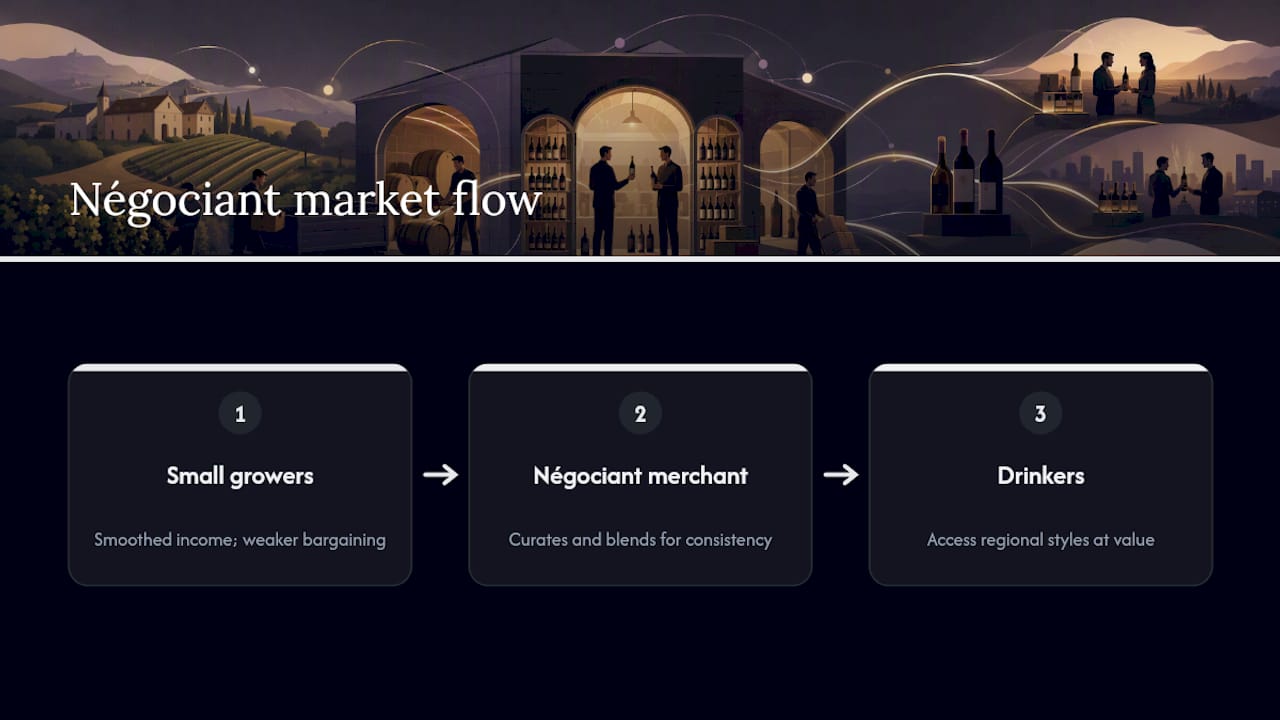
For growers, that relationship cuts both ways. A négociant contract can smooth out income for a small vineyard that would otherwise depend on a single harvest’s fortunes. It can also tilt bargaining power toward the buyer, especially when a grower has few other outlets for their fruit.
For you, the upside is straightforward: access to regional styles you’d otherwise have to hunt down bottle by bottle, sometimes at genuinely good value.
Pro Tip: If you love a specific appellation’s style but can’t justify single-estate prices, a well-made négociant wine from that region is often the smartest entry point.
How to spot and buy negociant wine with confidence
Reading a négociant wine label takes about ten seconds once you know what to look for. Bottling phrases are your biggest clue: “mis en bouteille au château” means the estate itself bottled the wine, while other phrasing around “mise en bouteille” without a château or domaine name often signals négociant involvement.
Ask your retailer directly. A good merchant should be able to tell you where the fruit came from, even on a négociant-labelled bottle.
- Check for bottling location phrases printed on the label.
- Ask whether the wine is single-vineyard, blended, or purchased en-vrac.
- Look for the négociant house’s reputation, not just the appellation name.
- Treat vague or evasive sourcing answers as a caution flag, not a dealbreaker.
A négociant bottle is a smart buy when it gives you regional character at a fair price with a transparent supply chain behind it. It’s worth more caution when nobody can tell you where the grapes actually grew. Collins Dictionary defines the négociant simply as a merchant who buys and resells grapes, juice, or wine under their own name, which is exactly why sourcing transparency matters more than the label term itself. You’ll find the best négociant wine through specialist merchants, allocation lists, and the occasional cellar clearance, where limited runs move fast and rarely repeat.
How curated sellers actually find rare and negociant bottles
Rare bottles rarely sit waiting on a shelf. They surface through direct relationships with growers and négociant houses, allocation releases that only reach a handful of buyers, and cellar clearances where estates or collectors offload stock they no longer need. A rotating catalogue built on flash deals reflects exactly that kind of opportunistic buying, not a static, always-available list.
These sourcing routes, allocation access, direct grower relationships, and distressed or clearance stock, are how négociant-labelled and other rare bottles end up priced well below what you’d expect to pay for that same quality and scarcity elsewhere.
None of that replaces your own homework. A curated seller can verify where a deal came from and vouch for the bottle’s condition, but you should still ask about vintage, provenance, and storage before you buy anything described as rare. For a deeper look at how sourcing like this actually works, see how sommeliers source top bottles without the markup.
Why the “estate is always better” myth needs to die
Wine culture has spent decades treating “estate-bottled” as a synonym for quality and “négociant” as a polite word for filler. That’s lazy thinking, and the research doesn’t back it up. Some of the most reliable, consistently excellent wine in the world comes from négociant houses that have spent generations perfecting a house blend across dozens of vineyard sources.
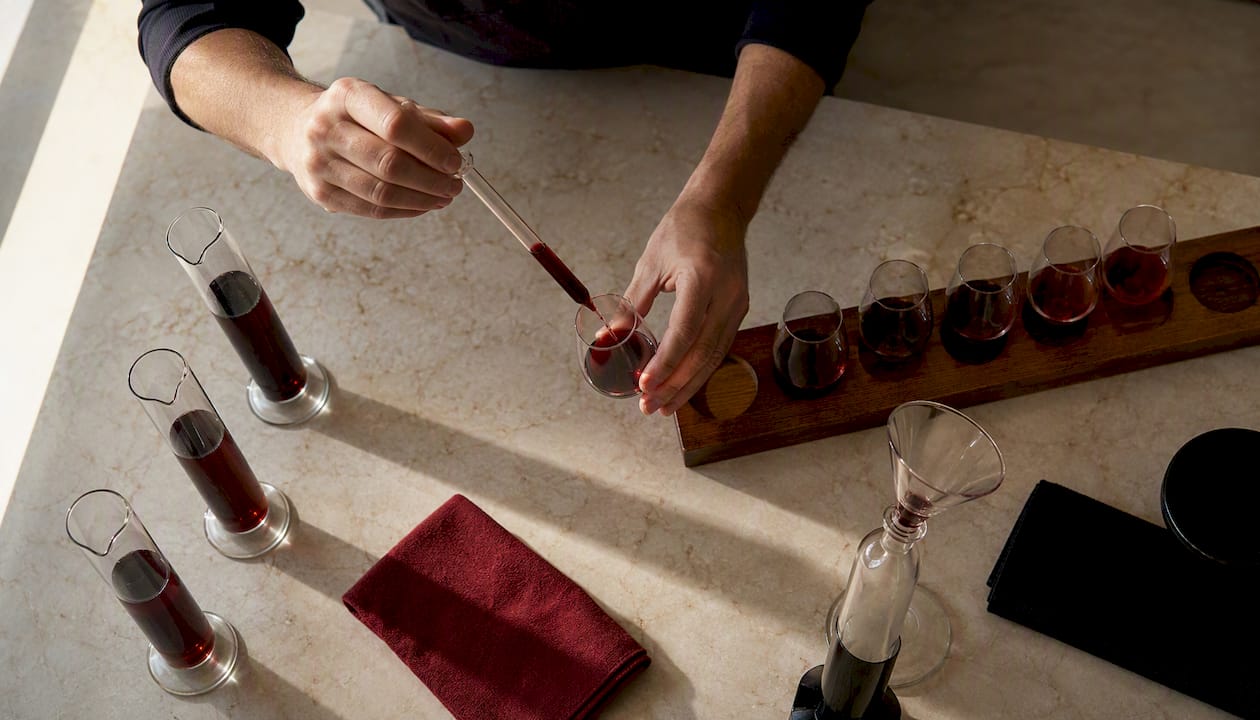
The real failure in conventional advice is treating the label as a shortcut for judgement. It isn’t. A single-estate bottle from a mediocre vintage and a lazy winemaker will lose to a well-blended négociant wine from a house that knows exactly what it’s doing, every time. What you should prioritise first isn’t the term on the label at all. It’s who made the wine, what they did with the fruit, and whether the retailer selling it can actually answer your questions about where it came from.
Provenance matters. But provenance is a question you ask, not a word you read.
— Damien
Where to shop curated negociant and rare bottles
Here’s the thing about hunting down great négociant wine: you shouldn’t have to do it the hard way, chasing allocation lists and hoping a merchant returns your calls. FU Wine cuts out the layers of markup and gatekeeping that usually stand between you and a genuinely rare bottle, sourcing directly through grower relationships, allocation releases, and cellar clearances.
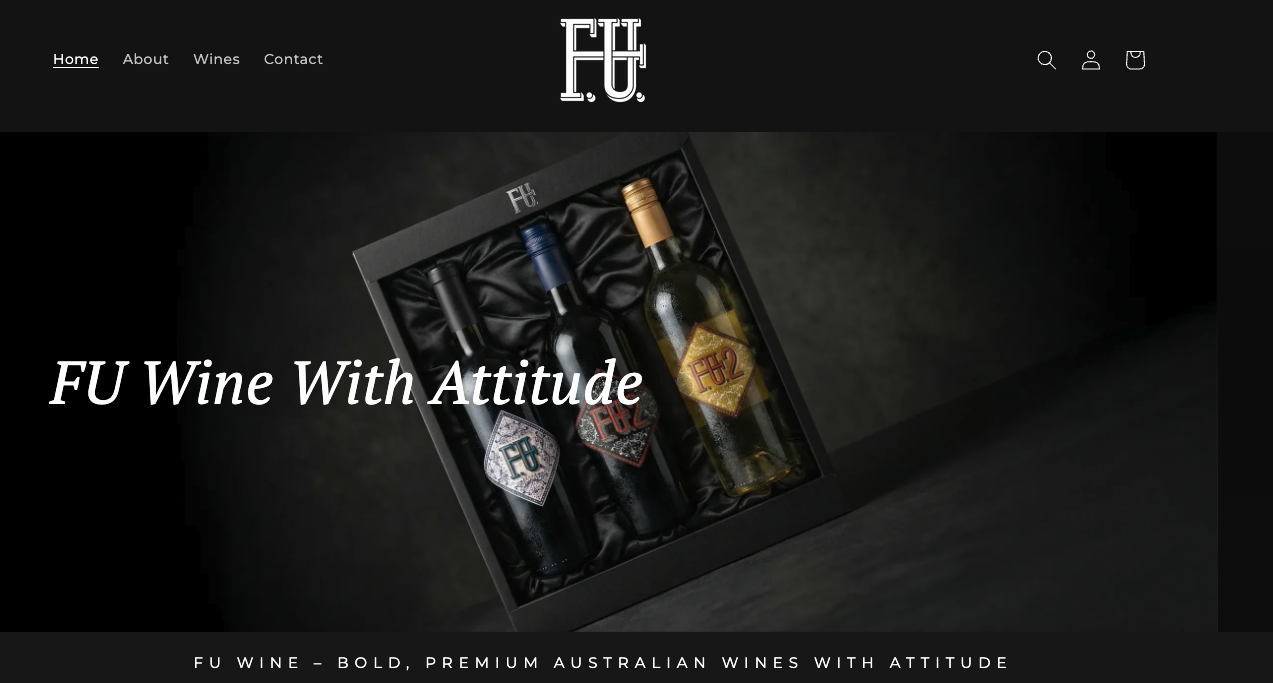
Expect a rotating catalogue, not a static list. Stock moves through flash deals and limited runs, so a bottle you love today might not be there next week. If you want the kind of access that used to be reserved for industry insiders, without the price tag that usually comes attached, browse the current wines on offer before the good ones disappear. New drops land regularly, and the best négociant finds rarely last long.
Sources
For readers who want to verify the definitions and claims covered here: the Négociant entry on Wikipedia gives encyclopaedic background on the model’s operation and history. Collins English Dictionary and Cambridge Dictionary both offer precise, concise definitions of the term. VinePair’s wine terms explainer covers the négociant’s ongoing industry role in accessible language.
- Négociant — Wikipedia
- Negociant definition — Collins English Dictionary
- Wine 101: Terms: Négociant — VinePair
FAQ
What does the term “wine merchant” mean?
A wine merchant buys and sells wine commercially, which can include négociants who purchase grapes, must, or finished wine and sell it under their own name. The term covers everyone from small independent bottle shops to large-scale négociant houses that source across entire regions, as Collins Dictionary confirms in its definition of négociant specifically.
What is the best-selling wine in Australia?
Australia’s biggest-selling wine styles remain dominated by mainstream reds like Shiraz and Cabernet Sauvignon, alongside crowd-pleasing whites such as Chardonnay and Sauvignon Blanc. Négociant-style blending also plays a role in Australian wine, particularly among larger producers who source fruit across multiple vineyard regions to build a consistent style.
Is Australia facing a wine oversupply?
Australia’s wine industry has dealt with an oversupply of grapes in recent years, driven by shifting export demand and changing consumer habits. That oversupply has pushed bulk and surplus wine prices down, which is exactly the kind of market condition that makes opportunistic, deal-driven sourcing worthwhile for buyers chasing quality without inflated pricing.
Can I buy South African wine in Australia?
Yes, South African wine is available in Australia through specialist importers, online retailers, and select wine merchants. Availability of specific négociant-sourced or rare South African bottles depends on allocation and import volumes, so stock can be limited and rotates regularly rather than staying consistently on shelves.