

Managing leftover wine after your corporate event
Secure it, count it, tag it. That’s the verdict. The single biggest risk to unopened premium wine after a corporate event isn’t spoilage, it’s someone treating it like petty cash and pouring it into the wrong hands before you’ve got a record of what’s there.
Do this before anything else:
- Secure storage: move unopened bottles somewhere locked, cool, and separate from open service stock.
- Photographic inventory: photograph every case, label, and vintage before it leaves the venue.
- Chain-of-custody tagging: note who packed it, who’s holding the keys, and when it moved.
Redistributing, gifting, or selling that wine without checking your liquor licence conditions can expose you to real legal risk. If you’re unsure, your licence holder or your state liquor regulator is the first call, not the last.
Key Takeaways
Managing leftover wine after a corporate event comes down to securing it fast, documenting it properly, and choosing a redistribution path that respects your liquor licence conditions.
| Point | Details |
|---|---|
| Act within 72 hours | Secure, photograph, and count unopened bottles before deciding what happens next. |
| Check licence conditions first | Redistributing, gifting, or reselling wine without checking your licence can be a criminal offence. |
| Update your LPoM | Add a specific leftover-alcohol procedure and review it whenever your event model changes. |
| Negotiate returns upfront | Ask suppliers for return, credit, or consignment terms before signing, not after the event. |
| Keep audit-ready records | Log SKU, vintage, bottle count, condition, and supplier reference for every case held. |
Where to check licensing rules and LPoM requirements
- Check if you need a liquor licence — Victoria Government
- Liquor plan of management — NSW Government
- Event guidelines 2022 — WA Health
Contact your local regulator or legal counsel before any action that could count as “supply” or “sale” without a licence.
Table of Contents
- Your 24 to 72 hour plan for managing leftover wine after a corporate event
- What does Australian liquor law say about leftover event wine?
- What can you actually do with unopened bottles?
- How should you store and document leftover wine?
- Which supplier terms actually reduce leftover risk?
- Frequently asked questions
- Sources
Your 24 to 72 hour plan for managing leftover wine after a corporate event
The window right after an event is when premium bottles are most likely to get misplaced, mishandled, or handed out without a second thought. A tight sequence in the first three days protects both the stock and your compliance position.
- Hour 0 to 4: Pull all unopened bottles from the bar or service area and separate them from anything that’s been opened or chilled for service.
- Hour 4 to 12: Photograph every label, count cases against your original order, and log lot or serial numbers where the producer includes them.
- Day 1: Notify your licence holder, risk manager, and procurement lead that surplus stock exists and needs a decision.
- Day 1 to 2: Contact your supplier if a return, credit, or consignment arrangement was part of your original terms.
- Day 2 to 3: Confirm storage conditions (cool, dark, stable temperature, away from vibration) and settle on short-term costs for holding versus moving the stock.
- Day 3: Decide the next step: return, internal redistribution, donation, resale, or hold for a future event.
Pro Tip: Check the fill level and capsule condition on each unopened bottle before you box it. A capsule that’s shifted or a fill level that’s dropped noticeably below the shoulder can signal a seal issue, and it’s far easier to flag that now than after three months in storage.
What does Australian liquor law say about leftover event wine?
Supplying or selling alcohol without the right licence or permit is a criminal offence in Australian jurisdictions, and that rule doesn’t pause just because the wine is already paid for and sitting unopened in a storeroom. Handing bottles to staff, donating them, or reselling them can all count as “supply” under liquor law, and getting it wrong risks fines, licence disqualification, or prosecution, as Victoria’s liquor licensing guidance makes clear.
Some limited exemptions exist. Complimentary supply in defined circumstances is sometimes lawful, but the limits are strict. Western Australia’s exemption framework, for instance, caps complimentary on-premises consumption at no more than two standard drinks, or up to one litre for take-away under certain conditions. That’s not a loophole for clearing six cases of Shiraz.
This is exactly why your Liquor Plan of Management needs to say something about leftover stock, not just service hours and RSA rosters. NSW’s LPoM guidance treats the LPoM as a living document, one that should be reviewed and updated whenever your event model changes, including how you handle unopened stock afterwards.
Practical steps that cut your legal exposure:
- Hold the stock and document everything before deciding on distribution.
- Confirm licence conditions with your regulator before gifting or reselling.
- Update your LPoM to name a specific leftover-alcohol procedure.
- Keep RSA and manager nomination records current, since event licence checklists frequently flag these as compliance gaps.
If there’s genuine doubt about whether an action counts as “supply” under your state’s liquor act, the answer is to check with the regulator before you act, not after.
What can you actually do with unopened bottles?
Once the stock is secured and documented, you’ve got five realistic pathways. Each comes with its own upside and its own catch.
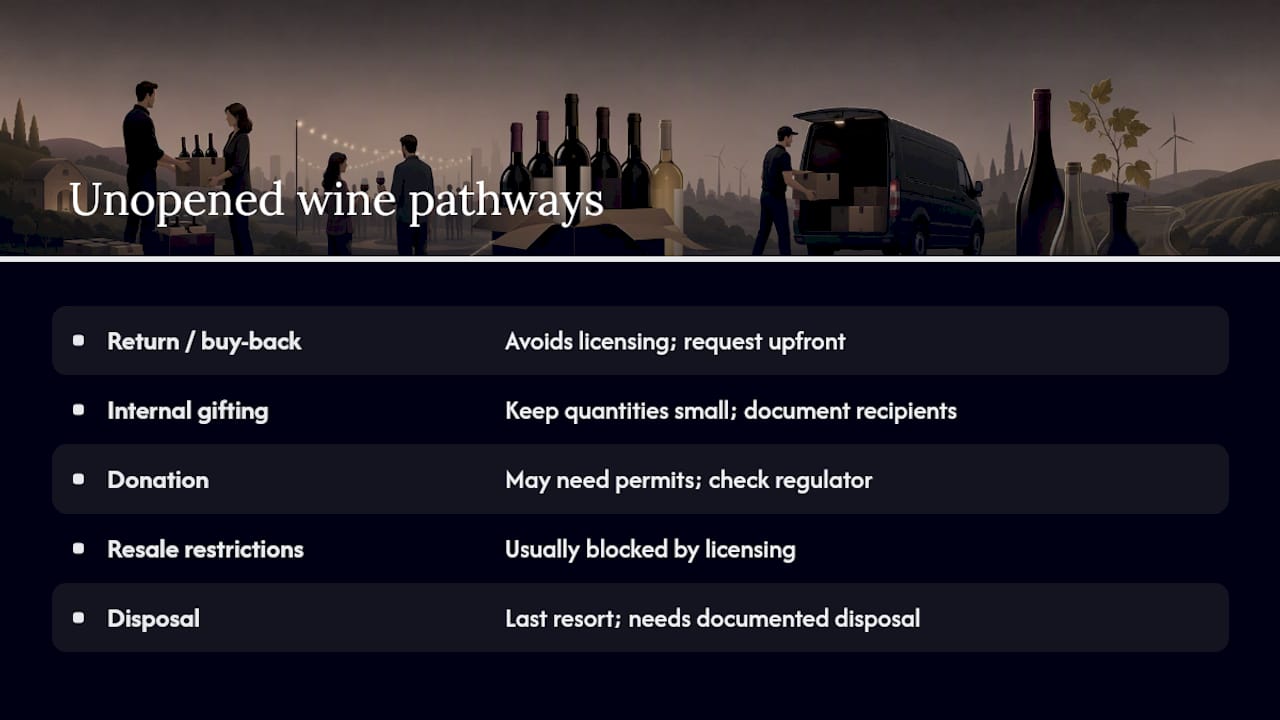
Return or buy-back. The cleanest option, if you negotiated for it. Supplier credit, consignment arrangements, or a contracted return window all avoid the licensing headaches of redistribution entirely. The catch: most standard purchase orders don’t include this clause, so it has to be asked for upfront on your next order, not requested after the fact.
Internal redistribution and gifting. Handing bottles to staff or vendors as recognition gifts is common practice, but it still sits inside complimentary-supply rules. Keep quantities modest, document who received what, and make sure whoever approves it understands the RSA obligations still apply.
Donation. Sometimes permissible, but not automatically legal. A charity auction or fundraiser may need its own permit, and simply handing cases to a community group without checking local rules can breach the same supply provisions covering sale. Confirm with the regulator before you commit.
Resale to the public. Generally the most restricted route. Reselling wine you bought as a private or corporate customer, rather than as a licensed retailer, tends to run straight into licensing barriers, which is part of why assessing whether to sell wine from a personal or corporate collection is worth doing properly before you list anything.
Disposal. The last resort, reserved for stock that’s compromised or genuinely unusable. It requires documentation showing lawful, compliant disposal, and it typically costs more in admin time than the wine is worth.
The safest default when a pathway isn’t obviously compliant is to hold the stock and ask, not to distribute it and hope nobody notices.
How should you store and document leftover wine?
Storage and paperwork do two different jobs. Storage protects the wine’s condition. Documentation protects you if a regulator, insurer, or auditor ever asks what happened to it.
For short-term storage: keep bottles in a secure, temperature-stable space, segregated from open service stock, capsules and seals intact, and clearly labelled by event and date. Wine held at a stable cool temperature between events tends to hold its condition far better than stock left in a hot storeroom or a delivery van overnight.
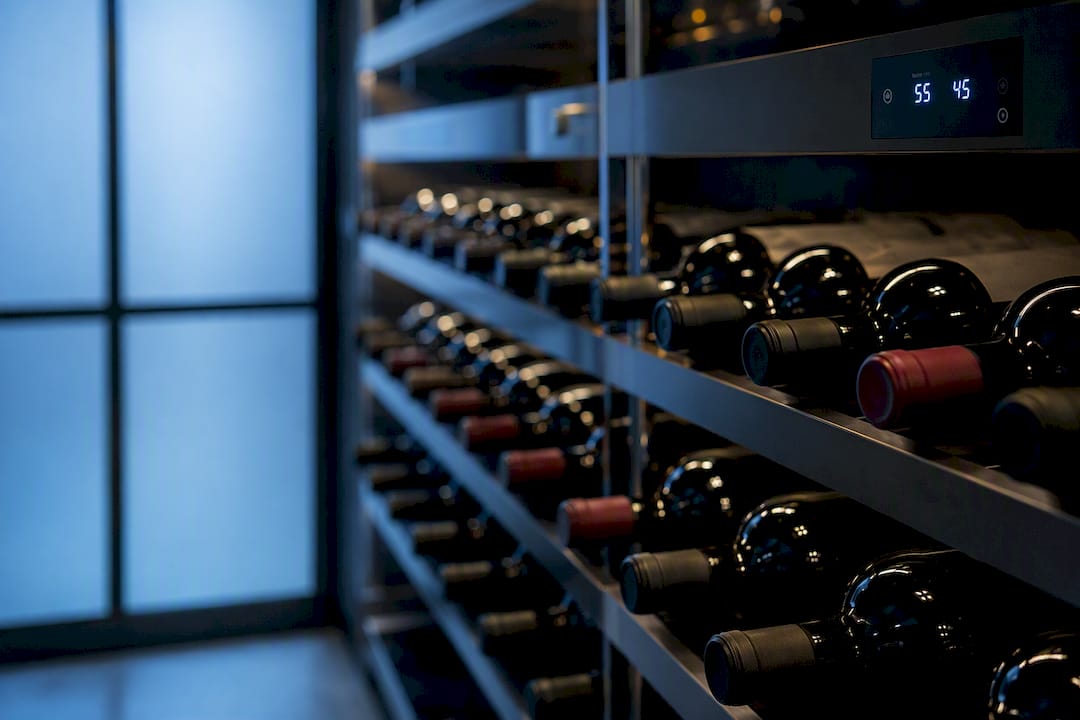
Chain-of-custody matters just as much as the storage itself. Note who signed the stock in, when it was moved, who has access, and photograph the boxes at each handover point. That record is what protects you in an insurance claim or a licensing audit, not the wine itself.
A basic inventory log should capture:
| Field | What to record |
|---|---|
| SKU / product name | Producer, wine name, vintage |
| Bottle count | Cases and individual bottles |
| Lot or serial number | From label or capsule where available |
| Storage location | Site, room, or facility name |
| Condition notes | Fill level, capsule, label condition |
| Supplier / invoice reference | Original purchase order number |
Keep these records for at least as long as your standard business retention period, and escalate to legal or your licensing team the moment a discrepancy shows up between what was ordered and what’s on hand.
- Store away from light, heat sources, and vibration.
- Never mix leftover stock with new deliveries until it’s reconciled.
- Photograph every handover, not just the initial intake.
Which supplier terms actually reduce leftover risk?
The best fix for leftover wine is buying in a way that produces less of it. That starts at the contract stage, well before the event.
Ask suppliers for a return or credit window on unopened stock, ideally 14 to 30 days post-event, plus consignment terms for large orders where you’re not certain of final guest numbers. Pickup logistics matter too: a supplier who collects unsold stock is worth more than one who quotes a slightly lower price and leaves you to freight it back yourself.
Format choices also cut waste at the source. Bag-in-box and keg formats reduce both breakage and the awkward surplus of half-used cases that bottled formats create, and they’re increasingly common for large corporate activations where volume matters more than the label on show.
- Negotiate a return or credit window before you sign, not after the event.
- Ask about consignment for orders over a set case threshold.
- Trial a supplier’s post-event reconciliation process with a smaller event first.
- Build leftover-handling expectations directly into your statement of work and SLA.
Pro Tip: Put the leftover-wine clause in writing at the RFP stage. A supplier who won’t commit to a return window in the contract usually won’t offer one informally later either.
If you’re structuring a longer-term arrangement, it’s worth reviewing what a premium corporate wine program looks like when it’s built around predictable volumes and clear reconciliation terms from the outset. Some sustainability-minded event bartending practices, like the ones covered in Cocktail Crew’s guide to eco-friendly event bartending, pair well with a low-waste wine buying strategy too.
A wine buyer’s take on consignment versus outright purchase
I once watched a corporate client buy six cases of a boutique Barossa red outright for a launch that ended up half the expected headcount. The wine sat in storage for four months before anyone decided what to do with it. The lesson: if there’s any uncertainty about numbers, push for consignment or a return window before the order is confirmed, not after the bottles are already sitting in a cupboard.
Frequently asked questions
Can we legally gift leftover corporate event wine to staff? Sometimes, but only within complimentary-supply limits set by your state, and it still needs to align with your RSA obligations and LPoM. Check your specific jurisdiction’s exemption rules before handing out bottles.
How long can unopened premium wine sit in storage before quality suffers? Properly sealed bottles stored cool and away from light and vibration can hold their condition for months to years, depending on the wine. Check capsule and fill level before assuming a bottle is still sound, and see how drinking windows affect specific vintages.
Does our event insurance cover leftover wine in storage? It depends on your policy and how the stock is documented. Chain-of-custody records and a clear inventory log are usually what an insurer asks for first if a claim ever arises.
Should we ever resell leftover wine to the public? Generally no, unless you hold the appropriate retail licence. Reselling privately purchased or corporately purchased wine to the public tends to run into the same supply restrictions covering unlicensed sale.
Whichever path you choose, the wine you’re holding onto still has value, and Com sources exactly the kind of rare, high-scoring bottles worth protecting properly. If your next event needs premium stock without the retail markup, browse FU Wine’s current catalogue before you place your next order.
This article is general information, not a substitute for advice from a qualified lawyer. Consult a qualified legal professional about your own circumstances before acting on anything here.
Sources
- Check if you need a liquor licence — Victoria Government
- Liquor plan of management — NSW Government
- Liquor licence requirements for events in Australia — Reguladar blog
- Event guidelines 2022 — WA Health (section 8)
- Exemptions — Liquor Control Act 1988 (WA)