

Liquormart.com.au alternatives for Australian trade buyers
If you’re sourcing liquor for a hospitality venue, retail outlet, or corporate programme and Liquormart isn’t cutting it, here are the best alternatives in Australia right now: FU Wine (premium and rare wine), Paramount Liquor (broadest wholesale catalogue), Australian Liquor Marketers or ALM (B2B wholesale network), eBev (online trade ordering), Dan Murphy’s Trade (scale and convenience), Vinomofo (boutique wine), and Liquorland (retail chain with trade options).
Quick buyer fit at a glance:
- FU Wine — collectors, corporate gifting, hospitality buyers who want premium or rare bottles at 30–70% below traditional retail
- Paramount Liquor — high-volume hospitality and retail needing breadth across wine, spirits, and beer
- ALM — licensed venues and retailers wanting a structured B2B wholesale account
- eBev — buyers who want a digital-first trade ordering platform
- Dan Murphy’s Trade — businesses that value convenience, brand recognition, and wide SKU availability
- Vinomofo — wine-focused buyers after boutique and deal-driven selections
- Liquorland — retail buyers wanting a familiar chain with trade pricing options
Compare trade terms, delivery coverage, and pricing models in the next section.
Table of Contents
- How do these Liquormart alternatives compare on trade dimensions?
- Short profiles: what each alternative actually offers
- How do you pick the right Liquormart alternative for your business?
- Why FU Wine is the recommended pick for premium and rare wines
- Key takeaways
- The sourcing game has changed
- Premium wine sourcing without the usual runaround
- Useful sources for verifying terms and coverage
How do these Liquormart alternatives compare on trade dimensions?
Choosing between online liquor store alternatives comes down to a handful of criteria: what you’re buying, how much, how fast you need it, and what your account terms look like. The SellWisely market profile for Liquormart shows a competitive pricing environment where several players are actively undercutting on volume deals and case pricing.
| Supplier | Best for | Product range | Pricing model | Delivery areas & lead times | Account / minimums | Platform ease |
|---|---|---|---|---|---|---|
| FU Wine | Premium/rare wine, collectors, corporate gifting | Premium, rare, cellar-aged, allocation wines | 30–70% below retail; rotating flash deals | Australia-wide; lead times vary by deal | No stated minimum; direct online ordering | Clean, deal-driven e-commerce |
| Paramount Liquor | High-volume hospitality and retail | A very large product catalogue sourced from hundreds of suppliers; wine, spirits, beer, RTD | Trade account pricing; volume discounts | Broad national coverage; next-day metro available | Trade account required; minimums apply | Online portal with account management |
| ALM | Licensed venues and retailers | Full-range wholesale: wine, spirits, beer, cider | B2B wholesale pricing; membership tiers | National; delivery SLAs vary by state | Licensed trade account; order minimums | B2B online ordering platform |
| eBev | Digital-first trade buyers | Wine, spirits, beer across major brands | Trade pricing; case deals | National; varies by location | Trade account; minimum order applies | Purpose-built trade ordering platform |
| Dan Murphy’s Trade | Convenience-focused buyers, broad SKU needs | Extensive range; wine, spirits, beer, mixers | Competitive retail-adjacent pricing; loyalty | National; next-day metro in major cities | Business account; low minimums | App and web; familiar UX |
| Vinomofo | Boutique wine buyers, deal seekers | Wine-focused; boutique, premium, and everyday | Deal-driven; member pricing | Australia-wide; standard 3–7 business days | No trade minimum publicly listed | Consumer-grade e-commerce; easy |
| Liquorland | Retail buyers wanting chain reliability | Wine, spirits, beer, RTD | Retail pricing; loyalty card discounts | Store network plus delivery in metro areas | No formal trade account publicly listed | In-store and basic online |
A few trust signals worth noting: Paramount’s catalogue of 18,000+ products from more than 600 suppliers is the largest independently owned wholesale range in Australia. ALM operates a structured B2B channel purpose-built for licensed venues. Dan Murphy’s Trade account leverages the parent group’s buying power for consistent availability. For discount liquor websites that go beyond standard retail pricing, FU Wine’s flash-deal model and direct sourcing relationships put rare bottles in reach at prices most trade accounts can’t match.
Delivery rules add another layer of complexity. As Business Insider’s alcohol delivery guide notes, each Australian state has its own delivery and shipping rules, so coverage that works in Victoria may not apply the same way in Queensland or Western Australia. Always confirm your state’s requirements before committing to a supplier.
Short profiles: what each alternative actually offers
FU Wine
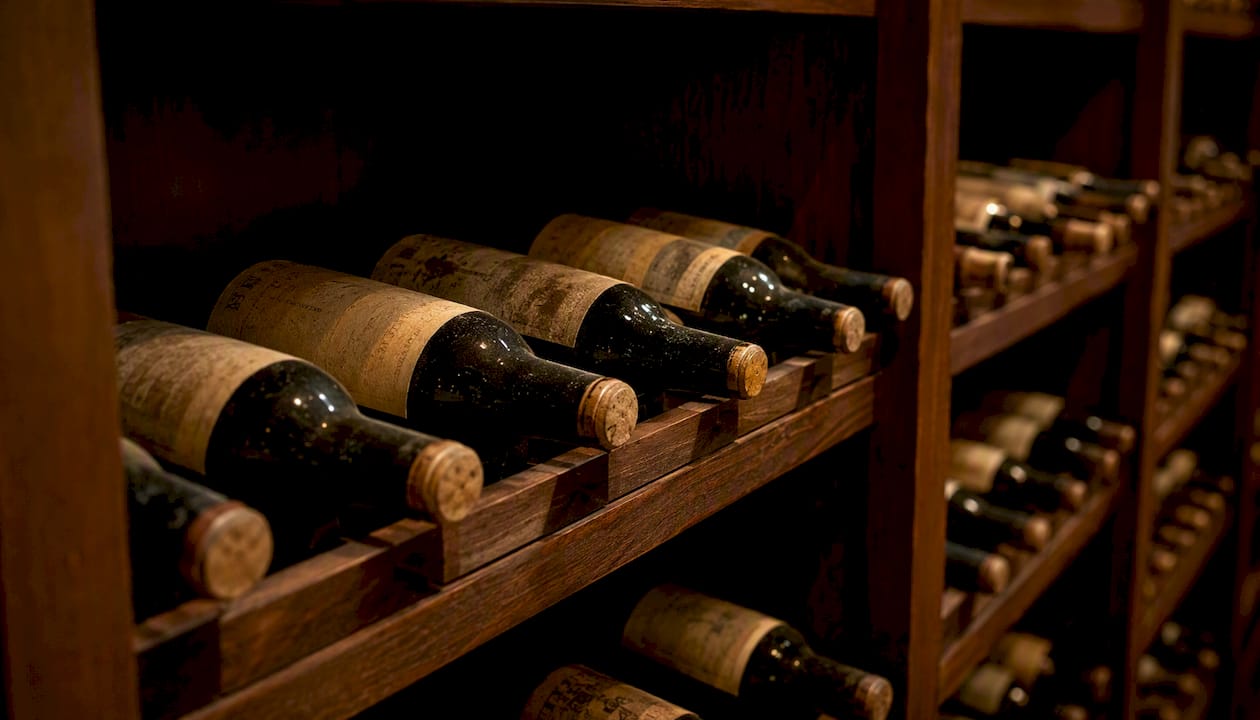
FU Wine is the pick for buyers who need premium, rare, or cellar-aged bottles at prices that don’t make you wince. The model is direct sourcing plus opportunistic buying — allocation releases, boutique producer runs, distressed inventory — which means the catalogue rotates and deals disappear fast. Discounts of 30–70% below traditional retail are the headline claim, and the focus is firmly on quality and scarcity, not bulk filler stock. Best for corporate gifting, serious collectors, and hospitality buyers building a prestige wine list.
Paramount Liquor
Australia’s largest independently owned liquor wholesaler by catalogue size, with 18,000+ products across wine, spirits, beer, and RTD from more than 600 suppliers. If breadth is your priority, Paramount is hard to beat. Trade accounts unlock volume pricing, and next-day metro delivery is available in key cities. The scale means you’ll find mainstream brands alongside premium lines, making it a practical one-stop shop for high-volume venues.
Australian Liquor Marketers (ALM)
ALM runs a structured B2B wholesale channel aimed squarely at licensed venues and retailers. The focus is on reliable supply across the full range of categories rather than curated speciality. Membership tiers and trade account pricing make it a sensible fit for pubs, clubs, and bottle shops that need consistent stock and predictable invoicing. Delivery SLAs vary by state, so confirm coverage for your location before signing up.
eBev
eBev is built for trade buyers who want a digital-first ordering experience without the friction of a traditional rep relationship. The platform covers wine, spirits, and beer across major brands, with trade pricing and case deals available on account. It suits procurement managers who want to compare and reorder online rather than through phone or email. Minimum orders apply, so it’s better suited to regular volume buyers than one-off purchasers.
Dan Murphy’s Trade
The trade arm of Australia’s best-known liquor retailer brings scale, brand recognition, and a wide SKU list to business buyers. Pricing sits at the retail-adjacent end of the spectrum rather than deep wholesale, but the convenience factor is real: next-day metro delivery in major cities, a familiar app and web interface, and low account minimums. Best for businesses that need reliable access to mainstream brands without the complexity of a wholesale account.
Vinomofo
Vinomofo is a wine-only play with a deal-driven membership model that suits buyers after boutique and premium selections at below-retail prices. The catalogue skews toward interesting, often lesser-known producers rather than blue-chip labels. Standard delivery runs 3–7 business days Australia-wide. No formal trade minimum is publicly listed, which makes it accessible for smaller hospitality buyers or corporate gifting programmes that don’t need full wholesale terms. For buyers comparing specialist wine retailers, it’s a solid starting point.
Liquorland
Liquorland’s strength is its physical store network backed by a loyalty programme and occasional trade pricing options. It’s not a dedicated wholesaler, so formal trade accounts and deep discount tiers aren’t its core offer. For retail buyers who want the convenience of a familiar chain, click-and-collect, and metro delivery, it works. For serious volume or premium sourcing, the other options on this list go further.
Pro Tip: When comparing profiles, check whether a supplier offers allocation releases or flash deals on limited stock. These one-off opportunities can deliver significantly better value than standing trade discounts, particularly for collectors and corporate gifting buyers who need something genuinely memorable rather than just competitively priced.
How do you pick the right Liquormart alternative for your business?
Start with your primary need. Price-sensitive volume buyers should look at Paramount or ALM first. Buyers who need rare or premium wines should go straight to FU Wine. Speed-first buyers in metro areas will find Dan Murphy’s Trade the most frictionless. Catalogue breadth across all categories points back to Paramount.
Once you’ve shortlisted two or three options, run through these questions before committing:
- What are the published trade discount tiers? Ask for a written schedule, not a verbal promise.
- What are the minimum order quantities and values? Confirm whether minimums apply per order or per month.
- What are the payment and invoicing terms? Net 30, prepayment, or credit account? Get it in writing.
- Is the supplier licensed to supply your business type in your state? Licensing requirements vary across Australian states and territories.
- What is the delivery SLA for your postcode? Next-day metro is not the same as next-day regional.
- How are returns and damaged stock handled? A clear returns policy is a basic trade expectation.
- Does the supplier carry product liability insurance? Relevant for hospitality buyers serving the public.
- Are there exclusivity or allocation restrictions on premium lines? Some suppliers limit quantities on high-demand releases.
Watch for these red flags when evaluating any new supplier:
- No written trade terms available before account approval
- Delivery fees that only appear at checkout, not in the published rate card
- Vague provenance documentation for rare or allocated wines
- Slow response times during the account application process (a sign of how fulfilment queries will be handled)
- Pricing that looks great online but changes significantly on the trade invoice
Switching timeline and costs. Moving from Liquormart to a new supplier is rarely instant. Budget roughly one to two weeks for trade account setup and approval, depending on the supplier’s onboarding process. Your first order typically ships within the supplier’s standard lead time once the account is active. A sensible transition runs a parallel period of two to four weeks where you maintain a buffer stock from your existing supplier while the new relationship beds in. The main hidden cost is time: staff hours spent on account paperwork, product catalogue mapping, and updating your ordering systems. On-demand delivery models, as Minibar Delivery demonstrates with its address-based availability check, can fill gaps during the transition for urgent orders, though pricing and availability vary by location. Saucey’s model similarly shows how delivery pricing shifts by address, a useful reminder to test your specific postcode with any new supplier before committing.
Why FU Wine is the recommended pick for premium and rare wines
For buyers who need bottles that actually mean something, FU Wine is the answer. Not the cheapest bulk option, and not trying to be. The whole model is built around sourcing premium, rare, and collectible wines — cellar-aged bottles, boutique producer runs, high-scoring vintages, allocation releases — and getting them to buyers at prices that cut through the usual retail markup.
The FU Wine difference: discounts of 30–70% below traditional retail on premium and rare wines, sourced through direct relationships, allocation access, and opportunistic buying. Every bottle earns its place on quality and scarcity, not because it’s leftover stock.
The rotating, deal-driven catalogue means you’re not browsing a static price list. Flash deals on standout wines create genuine urgency, and the access to allocation releases puts bottles in reach that most trade accounts simply can’t offer. For corporate gifting programmes, that’s the difference between a memorable gift and another generic case of something forgettable. For hospitality buyers building a prestige list, it’s a sourcing edge.
The direct-to-consumer model also strips out the middlemen that inflate traditional wholesale pricing. You’re buying closer to the source, which is how the discounts hold up on genuinely premium stock rather than clearance lines.
Pro Tip: If you’re sourcing for corporate gifting or cellar building, set up deal alerts or check the FU Wine site regularly. Allocation releases and flash deals move fast, and the best bottles don’t wait around. Treat it like a buying opportunity, not a standing order.
Key takeaways
The best Liquormart alternative depends on what you’re buying: FU Wine leads for premium and rare wine, Paramount Liquor for catalogue breadth, and ALM for structured B2B wholesale across all categories.
| Point | Details |
|---|---|
| FU Wine for premium/rare | Discounts of 30–70% below retail on cellar-aged, allocation, and boutique wines. |
| Paramount for volume breadth | 18,000+ products from 600+ suppliers; best for high-volume hospitality and retail. |
| ALM for B2B structure | Purpose-built licensed trade accounts suit venues and bottle shops needing consistent supply. |
| Switching takes 2–4 weeks | Budget one to two weeks for account setup, then a parallel transition period before going fully live. |
| Always get trade terms in writing | Verbal discount promises and undisclosed delivery fees are the two most common switching pitfalls. |
The sourcing game has changed
The conventional wisdom in Australian trade buying is that you pick one big wholesaler and stay loyal for the volume discount. That logic made sense when catalogues were printed and reps drove the relationship. It makes less sense now.
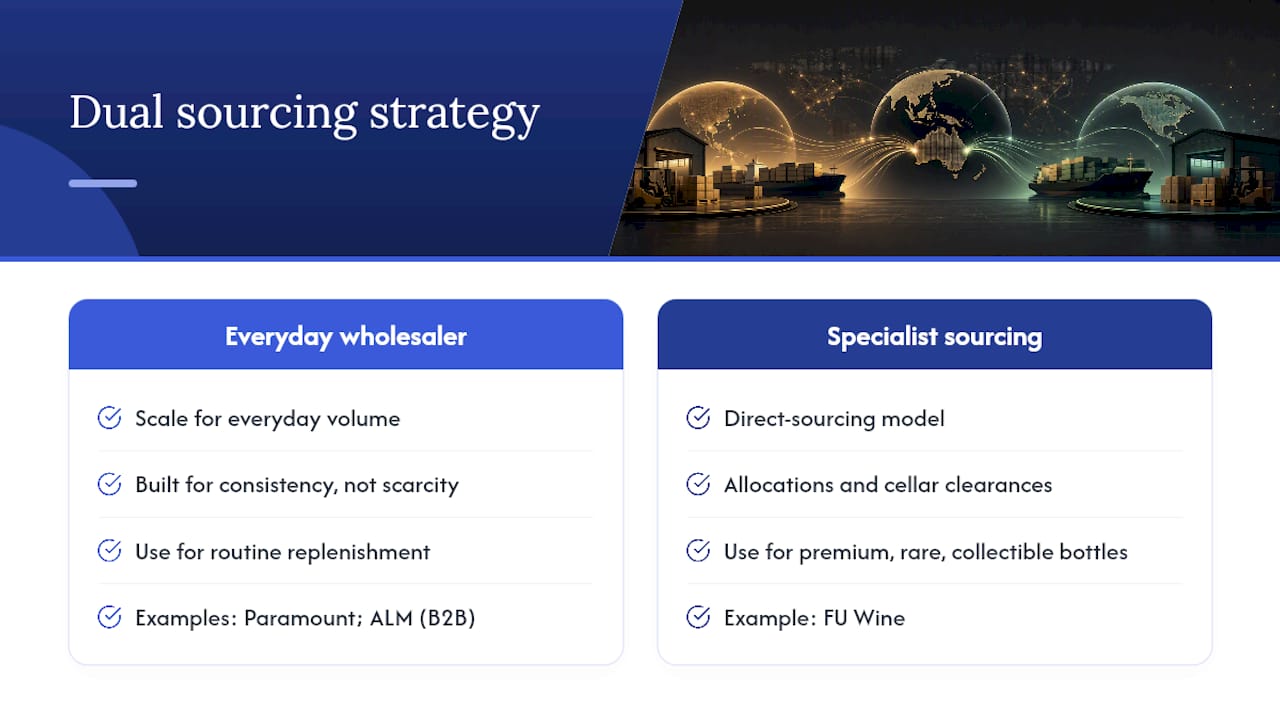
The suppliers worth watching in 2026 are the ones that have built genuine sourcing advantages, not just bigger warehouses. Paramount’s scale is real and useful for everyday volume. ALM’s B2B structure suits licensed venues that need predictable supply. But for the category that actually differentiates a wine list or a corporate gift, which is premium, rare, and collectible bottles, the traditional wholesale model has a structural problem: it’s built for consistency, not scarcity.
That’s where a direct-sourcing model like FU Wine’s changes the equation. Allocation releases and cellar clearances don’t flow through standard wholesale channels at meaningful discounts. They require direct relationships, opportunistic buying, and a willingness to move fast when stock appears. Most trade buyers don’t have that access. FU Wine does, and it prices accordingly.
The buyers who get the most out of this market are the ones who use a volume wholesaler for their everyday needs and a specialist sourcing partner for the bottles that actually matter. That’s not a complicated strategy. It’s just knowing which tool to pick up for which job.
Premium wine sourcing without the usual runaround
Most of the suppliers on this list are built for volume, consistency, and mainstream brand availability. That’s genuinely useful for a lot of buying needs. But if you’re sourcing for a prestige wine list, a corporate gifting programme, or a personal cellar, the bottles that make an impression are rarely sitting in a standard wholesale catalogue.
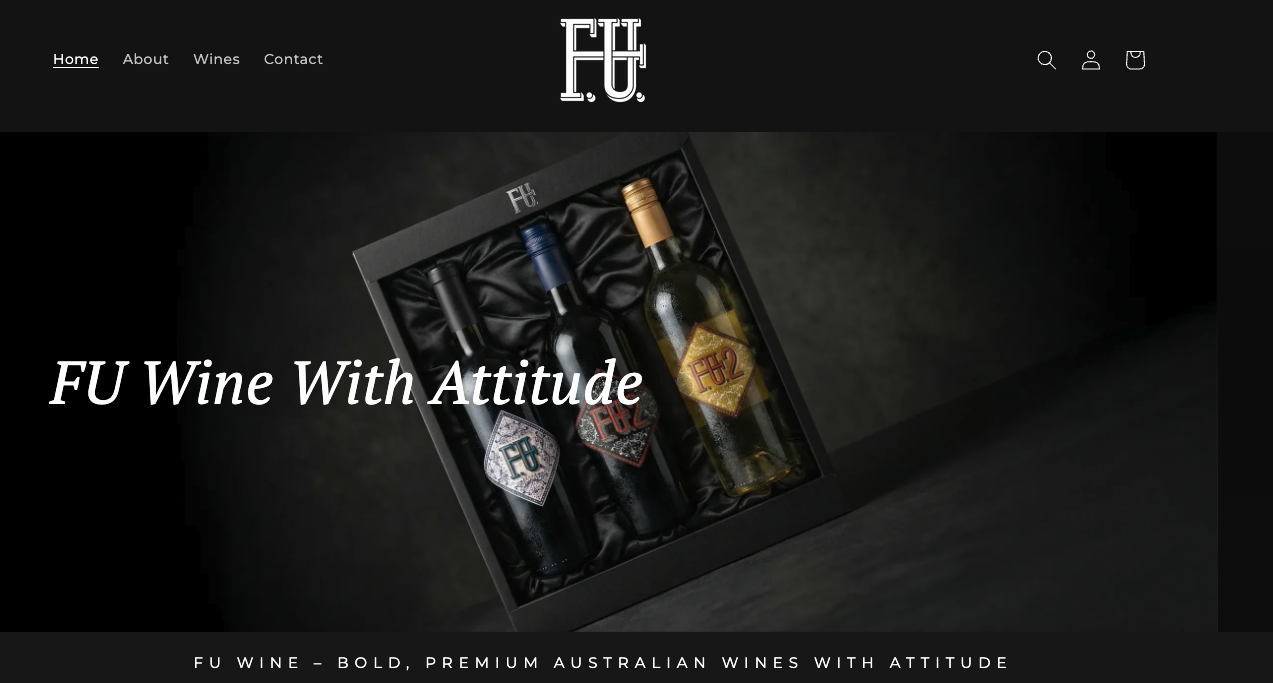
FU Wine sources premium, rare, and cellar-aged wines directly, including allocation releases and boutique producer runs, and makes them available at 30–70% below traditional retail. No middlemen inflating the price, no pretence about what the wine is. Just quality bottles at prices that make sense. The catalogue rotates, deals move fast, and the focus is always on scarcity and desirability rather than bulk filler.
To place a large corporate order or enquire about trade sourcing, visit fuwine.com.au directly. Lead times vary by deal and stock availability, so the earlier you get in touch, the better your options. Check the site regularly for flash deals and allocation releases — the best bottles don’t stay listed for long.
Useful sources for verifying terms and coverage
| Source | What it covers | Why it’s useful |
|---|---|---|
| FU Wine | Premium and rare wine sourcing, flash deals, allocation releases | Primary source for FU Wine trade enquiries and current deals |
| SellWisely — Liquormart competitor profile | Competitor pricing and market position data for Liquormart | Useful for benchmarking Liquormart’s pricing against alternatives |
| Business Insider alcohol delivery guide | Overview of delivery services; notes on state-by-state delivery rules in Australia | Helps buyers understand delivery variability and legal requirements by state |
| Minibar Delivery | On-demand alcohol delivery; address-based availability | Shows how on-demand fulfilment works and how coverage varies by location |
| Saucey | Alcohol delivery with location-variable pricing and availability | Illustrates how delivery pricing and stock availability shift by postcode |
| Bob’s Discount Liquor | Case deals, volume pricing structures, staff picks | Useful context for understanding how discount and volume pricing models are structured |
| FU Wine — Dan Murphy’s alternatives guide | Broader comparison of online liquor retailers and trade alternatives | Helpful background for buyers comparing multiple online liquor store alternatives |