

Let wine rest after shipping: how long and why it matters
Short answer: let most shipped wine rest for several days before you crack it open for a casual pour. If you’re evaluating a serious bottle, planning to resell it, or it’s spent weeks on a boat, give it a rest period reflective of its age and travel method. Plane shipments generally need the least recovery time. Ground freight calls for more rest time, and sea or container shipments require the longest rest.
When your wine delivery arrives, take these important steps:
- Stand every bottle upright to allow sediment to settle.
- Transfer the bottles promptly to a steady, cool storage area rather than leaving them in unregulated spaces like a garage or car trunk.
- Avoid shaking or quickly chilling the bottles, as these actions can disturb the sediment and delay recovery.
Key Takeaways
Resting wine after shipping works because vibration and temperature swings disturb sediment and aroma compounds, and only stillness and time let them settle back into balance.
| Point | Details |
|---|---|
| Match rest time to the wine | Young wines need 2 to 7 days; aged or prestige bottles need weeks to months. |
| Transport mode changes the timeline | Air freight needs the shortest rest, sea freight needs the longest, up to a month. |
| Stand bottles upright first | Keep bottles vertical for 24 to 72 hours before laying them down for storage. |
| Watch for red flags | Cloudiness, a warm bottle, or a pushed cork all signal you should wait longer. |
| Document collector bottles | Photograph fill level and cork condition on arrival for resale or auction bottles. |
Table of Contents
- Why bottles need to rest after shipping
- How long should you let wine rest by type and transport?
- What to do with wine the moment it arrives
- When should you wait even longer?
- What FU Wine does differently with rare bottles
- Why the standard advice undersells collector bottles
- Sources
Why bottles need to rest after shipping
Wine people call it bottle shock, sometimes travel shock. It’s the industry term for that flat, muted, slightly off character a wine shows right after a rough trip. The aromas seem switched off. The fruit tastes tighter than it should. Nothing is technically wrong with the wine, but it’s not showing its best either.
Here’s what’s actually happening inside the bottle. Vibration during transit kicks up any sediment that’s settled over the years, clouding the wine and throwing acidity and tannin out of their usual balance on the palate. Temperature swings and pressure changes during air freight or a hot delivery van can also disturb dissolved gases and free sulphur dioxide, the compound that protects wine from oxidation. That disruption is temporary, but the wine needs time to settle back into itself.
- Sediment needs still air and gravity, not movement, to drop back to the bottom
- Dissolved CO2 and SO2 levels need time to re-stabilise after temperature or pressure shifts
- Aromatics that seem muted often reopen once the wine has sat undisturbed
It’s worth being upfront: there’s more sommelier consensus than hard laboratory proof here. Wine Spectator’s reporting notes that experienced tasters give genuinely varied advice, from a few days to a month, but nearly all of them agree that resting is smart practice regardless. Think of it as insurance, not superstition.
How long should you let wine rest by type and transport?
Rest time depends on two things: how fragile the wine is, and how far it’s travelled. A young Pinot Grigio that flew interstate needs almost nothing. A forty-year-old Bordeaux that crossed an ocean needs patience.
| Wine type or shipment | Recommended rest |
|---|---|
| Young table wine (red or white) | several days |
| Aged red or white (several years) | a few weeks |
| Sparkling wine or Champagne | roughly one to a few weeks |
| Prestige or museum-release bottles | extended rest recommended |
| Large formats (magnum and up) | longer than regular bottles |
A few clarifications worth noting:
- Plane shipments usually need the shortest recovery window since flight times are short and cargo holds are climate-controlled, though pressure changes at altitude still count.
- Ground transport across a few states can mean a few weeks of rest, particularly through summer heat, since Wine Enthusiast points out that industry advice commonly recommends a full week minimum even for shorter domestic trips.
- Sea and container shipments carry the longest recovery times, sometimes touching a month, because VinePair’s sommelier interviews confirm that boat freight involves the most sustained vibration and temperature variation of any transport mode.
These ranges roughly match category guidance from wine storage specialists like UOVO, which pegs young wines at 2 to 7 days and aged Burgundies or Bordeaux at several weeks to months.
What to do with wine the moment it arrives
Handling matters as much as waiting. Here’s the sequence:
- Unbox it fast. Get bottles out of the shipping carton and off the porch or loading dock within a few hours, especially in hot or cold weather. Cardboard is not insulation.
- Stand it upright. Keep bottles vertical for 24 to 72 hours, longer for anything over a decade old, so any disturbed sediment can settle back to the base. Redman’s guidance on sediment backs this exact window.
- Stabilise the temperature. Give the wine time in a cool, dark spot before it goes anywhere near a fridge, an ice bucket, or a warm kitchen bench.
- Lay it down for storage. Once it’s rested upright, transition older bottles to horizontal cellar storage to keep the cork moist.
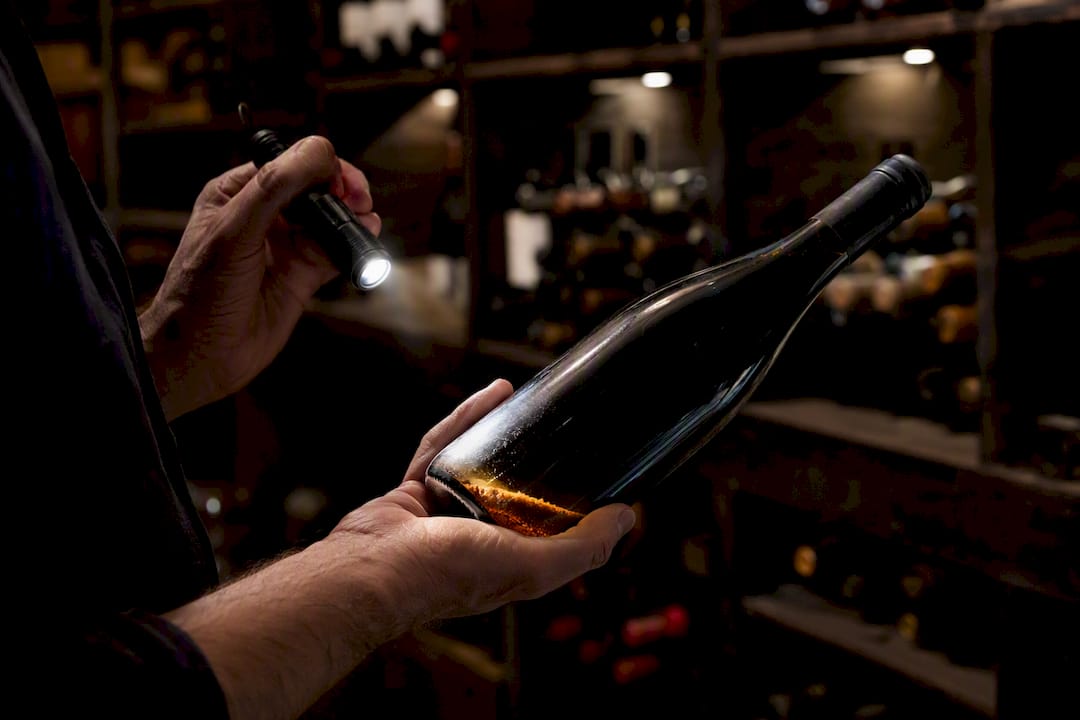
- Decant with a light source behind the bottle, pouring slowly and stopping the second you see sediment reach the neck. If sediment is heavy, strain through a fine mesh rather than force it through.
Aeration can soften a shocked wine’s aromatics faster than plain rest, but it doesn’t fix cloudiness or suspended sediment. That still needs stillness and gravity.
Pro Tip: Keep a cheap torch or your phone light in the same drawer as your corkscrew. Shining it through the shoulder of the bottle while you pour is the fastest way to spot sediment before it hits the glass.
When should you wait even longer?
Some bottles send clear signals that they need more time, not less. Watch for these before you pull the cork:
- Visible sediment still swirling rather than settled at the bottom
- Cloudiness that doesn’t clear after a few days upright
- A cork that looks pushed up, crusted, or shows any sign of leakage
- A bottle that still feels warm to the touch on arrival
- Delivery during a heatwave or a cold snap, where the box sat outside for hours
If the bottle is headed for auction, resale, or a tasting event, treat it with extra caution. Photograph the fill level, label condition, and cork on arrival, since that documentation protects you if a dispute comes up later. For anything genuinely old or fragile, lean conservative. A few extra weeks of rest costs you nothing; opening too early on a rare bottle can cost you the wine’s entire story. Our guide to vintage wine and provenance goes deeper on why age changes the handling equation.
What FU Wine does differently with rare bottles
Every rare or cellar-aged bottle we ship has already lived a life before it reaches your door, sometimes decades in a proper cellar, sometimes a long haul from an estate sale or allocation release. That history is exactly why we’re strict about what happens after delivery.
Our approach:
- Move bottles into stable, climate-controlled storage the moment they arrive, never a garage or car boot
- Stand everything upright first, laying bottles down only once they’ve had time to settle
- Give older or more fragile bottles noticeably longer than the standard week, sometimes a full month
The value in a rare bottle isn’t just what’s in the glass. It’s the provenance behind it, and rushing the recovery window is the fastest way to undercut that provenance right when it matters most.
If you’re buying collector-grade wine online, our piece on distressed inventory and provenance covers what to check on arrival in more depth. Article by Damien.
Why the standard advice undersells collector bottles
Most general advice treats wine rest as one-size-fits-all: wait a week, you’re fine. That’s a reasonable floor for a $25 shiraz you’re drinking on Friday night. It’s genuinely bad advice for anything old, rare, or bound for resale.
The gap in conventional guidance is that it rarely distinguishes transport mode from wine age, when both matter independently. A young wine that flew interstate and a 20-year-old Barolo that crossed an ocean are not the same problem, yet plenty of general wine sites give them the same “just wait a week” answer.
What actually matters, based on everything sommeliers and shippers report, is treating rest as proportional risk management. Cheap, young, air-freighted wine barely needs your attention. Anything old, fragile, or expensive deserves the conservative end of every range in this guide, plus a proper visual inspection before it ever meets a decanter. If you take one thing from this: match your patience to the bottle’s value, not the calendar.
— Damien
Sources
- Ask a Somm: Does Wine Really Need to Rest After Traveling? | VinePair
- What Is Bottle Shock (and How Do You Fix It)? | Wine Enthusiast
- What is sediment in wine? | Redman
- How long does a wine need to rest after it’s been shipped? | Wine Spectator