

Is my wine corked? How to tell and what to do
If your wine smells like a damp cardboard box or a musty old cellar, it’s almost certainly corked. That single sensory cue, a wet, mouldy mustiness where fresh fruit should be, is the most reliable sign of cork taint, technically caused by a compound called 2,4,6-trichloroanisole, or TCA. Corked wine is a quality fault, not a health hazard. You won’t get sick from it. But you will miss out on the wine you actually paid for.
What makes TCA so insidious is the concentration at which humans detect it: just a few parts per trillion. Your nose is extraordinarily sensitive to this compound, which is why even a lightly corked bottle feels unmistakably wrong, even if you can’t immediately name what’s off. Wine Enthusiast confirms that sensory diagnosis is the primary method for identifying cork taint, and that it registers as a quality fault rather than a safety concern.
Key takeaways
Cork taint is a sensory quality fault caused by TCA, detectable by your nose at parts-per-trillion concentrations, and the correct response is always to return or replace the bottle rather than attempt a home fix.
| Point | Details |
|---|---|
| Primary sign of cork taint | Damp cardboard or musty smell where fresh fruit should be, often with muted or absent varietal aromas. |
| Safe to drink | Corked wine is not harmful; TCA causes no known health effects at concentrations found in wine. |
| No reliable home fix | Aeration worsens cork taint; the plastic-wrap trick rarely restores stripped fruit. Return the bottle. |
| At a restaurant or shop | Calmly describe the fault to staff; Australian Consumer Law supports your right to a remedy for a genuine quality fault. |
| FU Wine quality policy | FU Wine arranges replacements or refunds for genuine faults; contact the team with a description and, for older bottles, photos. |
Table of Contents
- Is my wine corked? Run this check in 60 seconds
- What corked wine actually smells and tastes like
- Why cork taint happens: the chemistry behind TCA
- Is corked wine safe to drink?
- Can corked wine be fixed or rescued?
- What to do at a restaurant or bottle shop in Australia
- How to reduce the chance of buying a corked bottle
- If it’s not corked: checking for other common faults
- How FU Wine handles quality and corked bottles
- Why cork taint still matters more than people admit
- Premium wine without the guesswork: FU Wine’s sourcing promise
- Sources
Is my wine corked? Run this check in 60 seconds
You don’t need a sommelier’s palate. You need a nose and two honest questions.
- Pour a small amount into a clean glass, a small amount. Avoid a glass that’s been rinsed with chlorinated tap water, which can introduce its own faint mustiness.
- Swirl gently to release the aromas, then set the glass down for 10 seconds.
- Sniff the glass before you taste anything. This is your primary diagnostic moment. A firm sniff for damp-cardboard or musty notes is the first thing a sommelier does.
- Ask yourself two questions: Is there fresh fruit? Is there any mustiness, wet newspaper, or mouldy smell?
- If fruit is absent and mustiness is present, the bottle is almost certainly corked. Taste a small sip to confirm: a corked wine tastes flat, stripped, and oddly bitter at the finish.
- If the wine is very cold, the aromas are suppressed. Warm the glass in your hands for two minutes and re-check. A faint taint often becomes obvious once the wine opens slightly.
At a restaurant, you’re entitled to smell the cork when it’s presented. A musty or damp cork strongly supports the diagnosis. If the wine smells wrong, say calmly to your server: “I think this bottle may be corked, could you have a smell?” Reputable venues expect this. The tasting ritual exists precisely so you can catch faults before the glass is poured for the table.
Pro Tip: If you’re unsure, pour a second glass and let both sit for five minutes. A corked wine often smells worse as it warms and opens, while a clean wine improves. That divergence is your confirmation.
What corked wine actually smells and tastes like
The classic descriptors are consistent across wine educators and professionals: damp cardboard, wet newspaper, mouldy books, musty cellar, wet dog, and damp hessian. These aren’t subtle. Once you’ve smelled a heavily corked bottle, you won’t forget it.

The tricky part is mild cork taint, and this is where novices get confused. A lightly corked wine doesn’t necessarily smell obviously bad. Instead, it smells like nothing much at all. The fruit is muted, the florals are gone, the spice is flat. This is the subtraction effect: TCA doesn’t just add a bad smell, it erases the good ones. A Riesling that should sing with lime and green apple just smells vaguely damp and hollow. A Pinot Noir that should offer cherry and earth offers almost nothing.
| Intensity | Aroma | Taste |
|---|---|---|
| Clean wine | Fresh fruit, florals, varietal character | Balanced, expressive, lingering finish |
| Lightly corked | Muted fruit, faint mustiness, flat | Stripped, short finish, oddly dry |
| Heavily corked | Wet cardboard, mouldy, damp dog | Bitter, astringent, unpleasant |
Sparkling wines can be harder to assess because the bubbles mask some aromas. With whites, the loss of fruit is often the first clue. With reds, the tannins can seem harsher than expected because the fruit that would balance them has been stripped away. Identifying quality wine requires knowing what a clean example should smell like first, which is why building your sensory reference points matters.
Why cork taint happens: the chemistry behind TCA
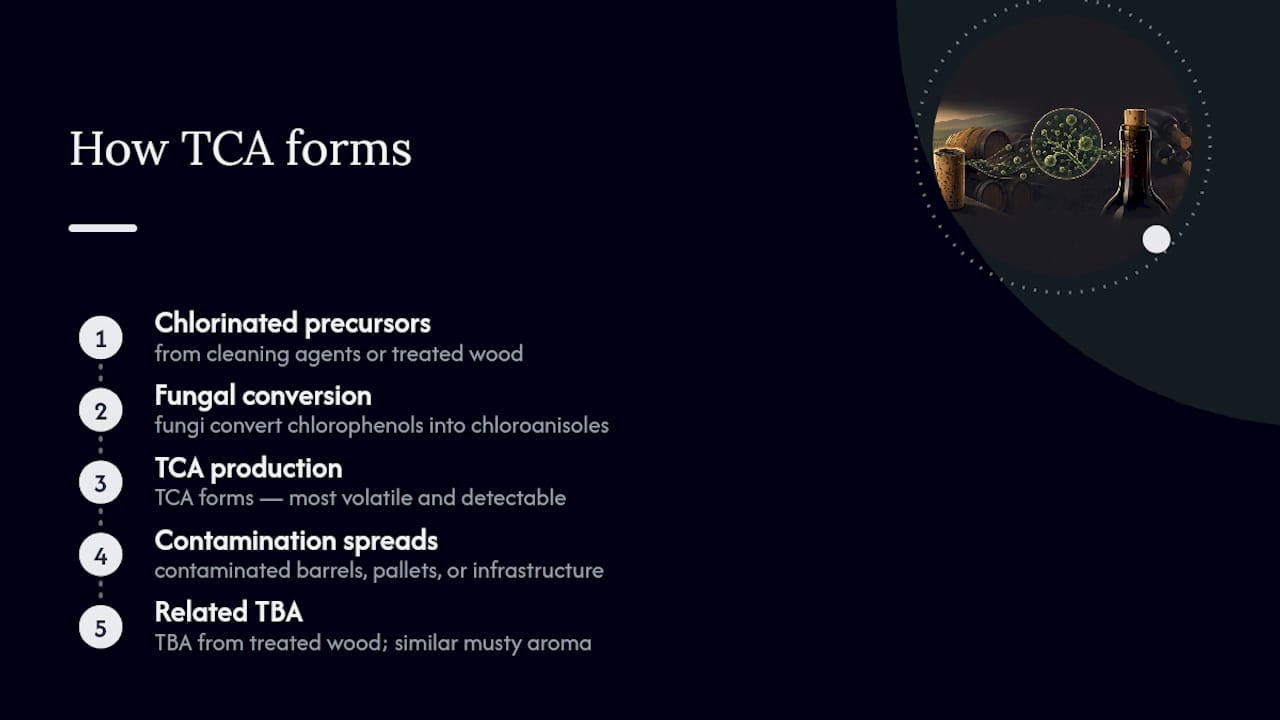
TCA forms when naturally occurring fungi in cork interact with chlorinated compounds, often from cleaning agents or treated wood. The fungi convert chlorophenols into chloroanisoles, and TCA is the most volatile and detectable of these. It can also originate from contaminated barrels, wooden pallets, or winery infrastructure, which is why occasionally a whole batch from a single producer is affected rather than just one bottle.
A rarer relative, 2,4,6-tribromoanisole (TBA), produces similar musty aromas and can come from treated wood in storage facilities. Most consumers will never encounter it, but it’s worth knowing that not every musty bottle traces back to the cork itself.
Food & Wine reports that modern estimates for cork taint incidence sit near low single digits for natural cork, with some trade reporting citing around 2–3%. CNET’s expert sources note that prevalence estimates vary across outlets but consistently fall within single-digit percentages. The Iowa State University Extension technical note on wine faults outlines the chemistry and testing methods the industry uses to detect and mitigate TCA at the production level.
Industry response has been real. Cork producers now use steam-cleaning and TCA-screening protocols. Some wineries switched entirely to screw caps or synthetic closures for wines not intended for long cellaring. The problem hasn’t been eliminated, but it’s less common than it was two decades ago.
Stat worth knowing: Humans can detect TCA at concentrations of just a few parts per trillion, making your nose a more sensitive instrument than most laboratory equipment for this specific compound.
Is corked wine safe to drink?
Yes, completely. TCA at the concentrations found in corked wine causes no known health effects. Wine Enthusiast is clear on this: cork taint is a sensory quality fault, not a toxicological one. You might find a corked wine unpleasant or even undrinkable, but it won’t make you ill.
Some people are more sensitive to TCA than others. A bottle one person finds mildly off might be genuinely undrinkable to someone else at the same table. That’s not imagination; it’s genuine variation in individual detection thresholds.
As for cooking with a corked bottle: the TCA doesn’t cook off. The mustiness carries through into sauces and reductions, so using a corked wine in a dish you care about isn’t worth the risk. If the fault is very mild and the dish is robust, some cooks proceed anyway, but the result is unpredictable.
Can corked wine be fixed or rescued?
Short answer: no. Coravin’s guide to cork taint is direct about this: true TCA taint is effectively irreversible at home, and aeration or common folk remedies rarely restore a tainted bottle. Replacement or return is the recommended response.
The plastic-wrap trick circulates online, based on the idea that polyethylene absorbs TCA. In controlled settings, it can reduce TCA concentration slightly, but it won’t restore a wine’s stripped fruit character. You might end up with a less musty wine that still tastes flat and hollow.
Aeration actually makes things worse for corked bottles. Unlike oxidation faults, which can sometimes improve with air, TCA taint tends to become more apparent as the wine opens because the remaining fruit is further masked. Don’t decant a corked bottle hoping it’ll come good. It won’t.
The right move is to return it.
What to do at a restaurant or bottle shop in Australia
At a restaurant
- When the wine is presented, smell the cork if it’s offered.
- Taste the small pour the server gives you before the table is served.
- If it smells or tastes corked, say: “I think this might be corked, could you have a smell?” Keep it calm and factual.
- A trained server or sommelier will smell the bottle and, if they agree, replace it without charge.
- If they’re unsure, ask them to bring a second glass and compare. Hospitality staff expect occasional corked bottles. The tasting ritual exists for this exact reason.
At a bottle shop or online
- Keep the bottle and as much of the wine as possible (at least half).
- Bring it back to the retailer with your receipt and explain the fault clearly: “This bottle is corked, it smells of damp cardboard and the fruit is completely muted.”
- Reputable Australian retailers will exchange or refund a faulty bottle. Under Australian Consumer Law, a wine that is not of acceptable quality due to a genuine fault entitles you to a remedy.
- For online purchases, photograph the bottle, cork, and fill level, then contact the retailer’s customer service with a description of the fault. Most reputable online wine sellers process returns for genuine quality faults without requiring you to ship the bottle back.
How to reduce the chance of buying a corked bottle
The most reliable way to avoid cork taint is to buy wines sealed with screw caps for everyday drinking. Screw caps largely eliminate the TCA risk path associated with natural cork, which is why many Australian producers use them for whites and lighter reds. For premium aged bottles, natural cork remains common, and some risk remains.
Beyond closure type, a few practical habits help:
- Buy from retailers who store bottles correctly: on their sides, in stable cool temperatures, away from strong odours or chlorine-heavy cleaning products.
- Be cautious with bottles that have been stored upright for extended periods; a dried-out cork is more vulnerable to contamination.
- For cellar-aged wines, check the fill level and cork condition before committing to a glass.
- Keep your own storage away from cleaning chemicals, paint, or anything chlorinated. TCA can migrate through the cork from external sources.
Wineries have responded with steam-cleaning of cork batches, TCA screening, and tighter quality control on barrels and pallets. Alternative closures, like glass stoppers and DIAM technical corks (which use supercritical CO2 extraction to remove TCA precursors), have also gained ground among quality-focused producers.
If it’s not corked: checking for other common faults
Not every off-bottle is a corked bottle. Here’s how to tell the difference quickly.
Oxidation smells flat, brown, and sherry-like in whites, or stewed and vinegary in reds. The wine may have turned an orange-brown colour. Unlike cork taint, oxidised wine often smells like something rather than nothing. It can result from a faulty seal, a compromised cork that let air in, or a bottle that was open too long.
Reduction (sulfur faults) presents as rotten egg, struck match, or rubber. These aromas can be alarming but often blow off with vigorous aeration. Swirl aggressively or pour between two glasses. If the smell dissipates within a few minutes, it’s likely a reductive fault that will resolve. Cork taint does not blow off.
Heat damage produces cooked, jammy, or stewed fruit aromas, a loss of freshness, and sometimes a pushed cork or sticky residue around the capsule. Check the bottle’s fill level and whether the cork has been forced upward by heat expansion. This is a storage or transport fault, not a cork fault.
A useful guide: if the wine smells of something unpleasant but specific (vinegar, sulfur, cooked jam), it’s probably not cork taint. If the wine smells of almost nothing where fruit should be, with a faint mustiness underneath, cork taint is the likely culprit. Blind tasting protocols that isolate individual aromas are genuinely useful for training your nose to distinguish these faults.
How FU Wine handles quality and corked bottles
FU Wine sources premium, rare, and cellar-aged bottles through direct relationships with producers, allocation releases, and curated cellar clearances. Every bottle in the catalogue is selected for quality, scarcity, and desirability, not just price.
- All bottles are stored correctly: on their sides, at stable cool temperatures, away from odour sources.
- FU Wine’s sourcing model prioritises reputable provenance, which reduces (though cannot eliminate) the risk of cork taint in natural-cork bottles.
- If you receive a bottle from FU Wine that you believe is corked, contact the team directly. Describe the fault clearly (the aroma, the missing fruit, the taste), and FU Wine will arrange a replacement or refund for genuine quality faults.
- For older or rare bottles, photograph the cork and fill level before opening; this helps the team assess the fault quickly.
No wine retailer can guarantee zero cork taint in natural-cork bottles. What FU Wine can guarantee is that a genuine fault won’t leave you out of pocket.
Why cork taint still matters more than people admit
There’s a tendency in wine circles to treat cork taint as a minor inconvenience, something that happens occasionally and isn’t worth making a fuss about. That attitude does wine drinkers a disservice.
Cork taint doesn’t just ruin a glass. It ruins an occasion. When you’ve opened a bottle you’ve been saving, or ordered something special at a restaurant, the subtraction effect is genuinely gutting. The wine you anticipated simply isn’t there. What you get instead is a hollow, musty ghost of it.
The skill of recognising cork taint matters because it gives you agency. You’re not stuck wondering whether the wine is supposed to taste like this, or whether your palate is off. You know what’s wrong, you know it’s not your fault, and you know what to do about it. That confidence is worth building.
There’s also a broader point about value. Even an expensive bottle can be corked, and price doesn’t guarantee quality or fault-free wine. The tasting ritual at a restaurant isn’t pretentious theatre. It’s a practical consumer protection mechanism, and using it calmly and correctly is one of the most useful things a wine enthusiast can do.
Premium wine without the guesswork: FU Wine’s sourcing promise
Life’s too short for a corked bottle to ruin your night, especially when you’ve paid serious money for something special. FU Wine exists to cut through the noise: premium, rare, and cellar-aged wines sourced directly, priced aggressively, and backed by a no-BS quality policy.
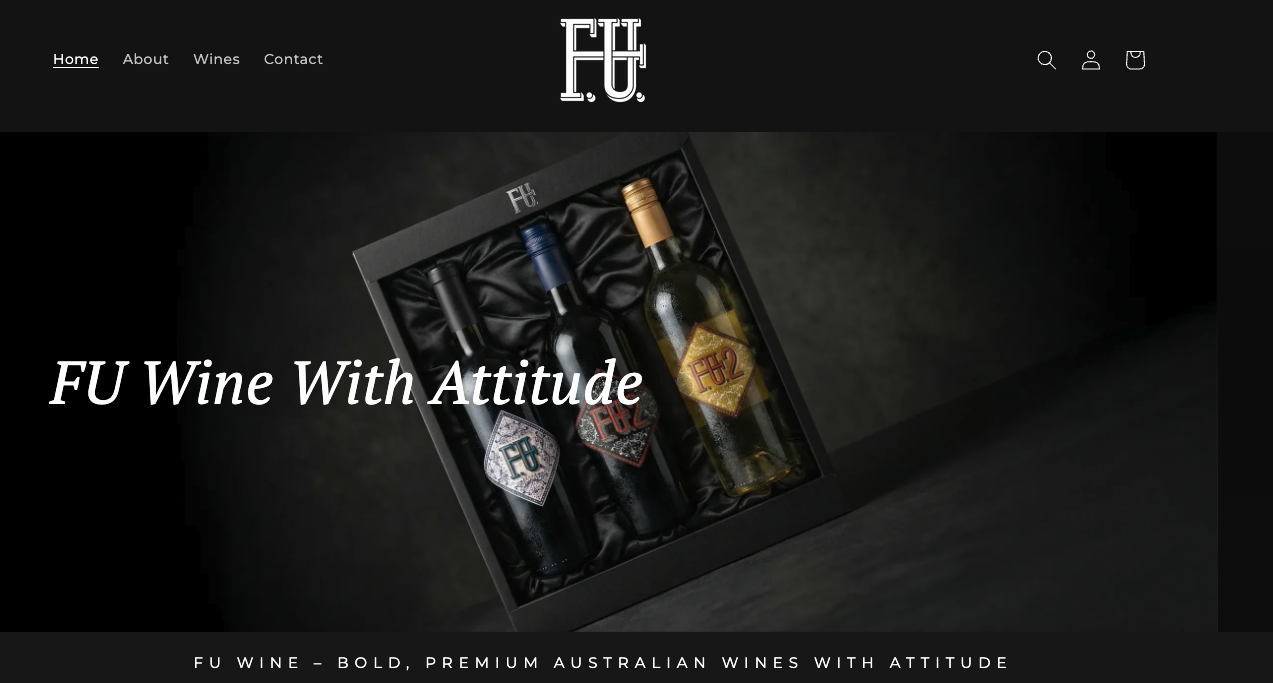
Every bottle in the FU Wine catalogue is curated for quality and provenance, not just a deal. And if something arrives that isn’t right, the team sorts it. No runaround, no “that’s just how old wine tastes.” A genuine fault gets a genuine fix. Browse the current FU Wine collection and find something worth opening tonight, at a price that won’t make you wince before you’ve even poured.
Sources
These are the most directly useful references for going deeper on cork taint, whether you want the chemistry, the practical detection method, or the industry context.
- Everything you ever wanted to know about cork taint – Wine Enthusiast
- What Is a Corked Wine and Why Does It Happen? – Food & Wine
- Corked wine explained: what it is and how to detect it – Coravin
- How to tell if your wine is corked with just a simple whiff – The Takeout
- FS40.pdf – Iowa State University Extension (wine faults technical note)