

Do you need to insure your wine collection in Australia?
Yes. If your cellar holds rare, cellar-aged or investment-grade bottles, you need specialist wine insurance, not a line item on your home contents policy. Standard cover was built for TVs and lounge suites, not a 1996 Grange or a case of allocation-only Barolo. Specialist policies exist precisely because collections like yours don’t fit generic underwriting.
Here’s why that distinction matters practically:
- Agreed value: you and the insurer settle a value upfront, so a claim isn’t fought over depreciation.
- Worldwide and transit cover: protection extends to bottles moving for tastings, sales, or storage overseas.
- Climate-control failure: cover kicks in if your cellar’s cooling system dies and cooks your collection.
Before you ring anyone, do two things: build a proper inventory with photos and receipts, and line up a specialist broker for an agreed-value quote.
Key Takeaways
Specialist wine insurance with agreed value cover protects collectors against depreciation, climate failure and transit loss in ways standard home policies simply don’t.
| Point | Details |
|---|---|
| Specialist cover beats home insurance | Home policy sub-limits and exclusions routinely leave valuable collections underinsured. |
| Insist on agreed value | This wording locks in a claim value upfront and removes depreciation arguments later. |
| Document everything first | Inventory, photos, receipts and temperature logs make quotes accurate and claims fast. |
| Review cover annually | Update your policy after new acquisitions or any cellar cooling upgrades. |
| Buy documented bottles | FU Wine’s provenance details on cellar-aged and limited stock make future valuation and claims simpler. |
Table of Contents
- How to insure a wine collection in Australia: what specialist cover actually includes
- Why home insurance rarely covers a serious collection
- Valuing and documenting your collection before you call a broker
- Finding a specialist broker and the questions worth asking
- Claims, common pitfalls, and cutting your risk
- Legal and regulatory considerations for wine insurance in Australia
- Comparing specialist wine insurers operating in Australia
- What actually matters when you insure a wine collection
- Where FU Wine fits into protecting what you buy
- Frequently asked questions
- Sources
How to insure a wine collection in Australia: what specialist cover actually includes
Specialist private-collections insurance treats your cellar the way a fine-art policy treats a painting: as a unique asset with a value that needs protecting, not just replacing. Chubb’s Masterpiece wine cover is built around this idea, offering protection for accidental damage, breakage, fire, theft, and climate-control failure, the kind of scenario where a compressor dies overnight and takes out forty bottles before you notice.
Cover typically extends beyond the four walls of your home too. Bottles moved for a tasting, sold at auction, or shipped to overseas storage can be covered under transit and worldwide extensions, which matters more than most new collectors expect. A lot of collection value moves around more than owners admit.
Structurally, you’ll be offered one of two approaches:
- Blanket cover: a single sum insured across the whole collection, simpler to arrange but less precise.
- Itemised scheduling: each significant bottle or case listed individually, usually paired with agreed value.
The wording matters as much as the limit. Chubb’s own policy document for fine art, jewellery and collections sets out exactly how collectibles, transit terms, and liability limits are defined, and it’s worth reading before you sign anything.
Pro Tip: Ask specifically for “agreed value” in writing on your schedule, not just “market value” or “replacement value”. Those three phrases behave very differently when a claim lands on someone’s desk.
Why home insurance rarely covers a serious collection
Most home and contents policies cap valuables at a fixed sub-limit, often a fraction of what a genuine collection is worth, and wine frequently sits in an exclusion category anyway. HDL Insurance Brokers points out that these sub-limits regularly leave collectors underinsured precisely when they need cover most, at claim time.
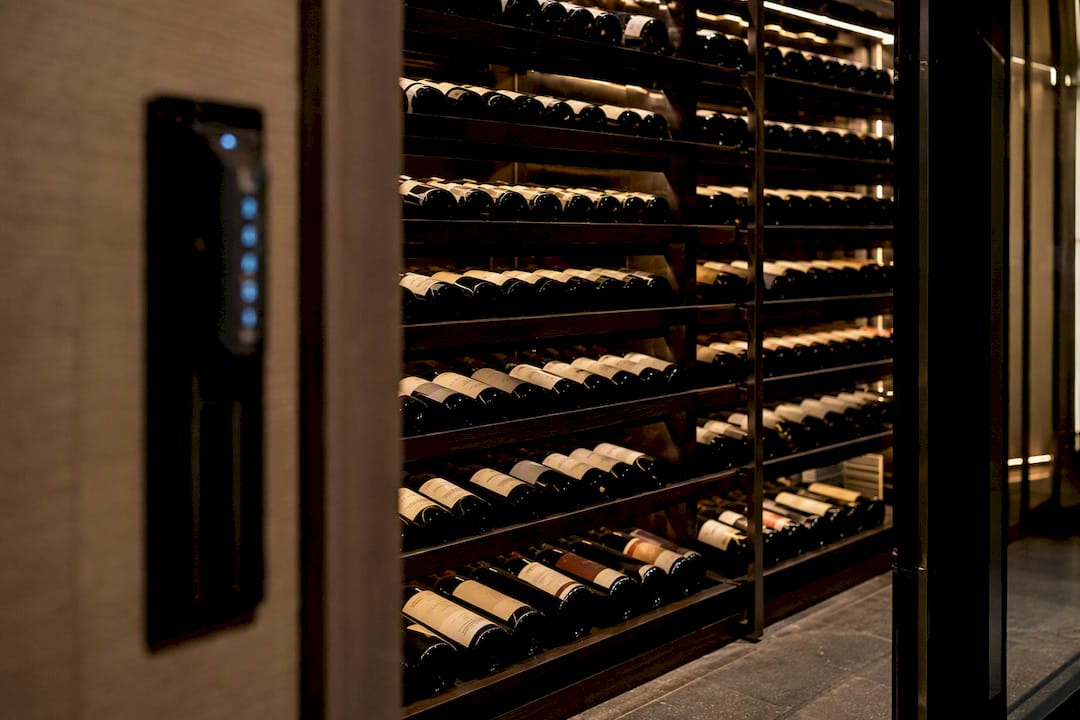
There’s also a valuation problem baked into standard policies. Home insurance tends to apply depreciation logic designed for furniture and electronics, not for a bottle appreciating in value as it ages. Specialist agreed-value cover sidesteps this entirely.
A rough rule of thumb:
- A handful of everyday drinking bottles worth a few hundred dollars total can probably sit inside ordinary contents cover.
- Anything rare, allocation-only, investment-grade, or collectively worth several thousand dollars needs its own specialist policy.
If you’re unsure which side of that line you’re on, that uncertainty is itself the signal to call a broker.
Valuing and documenting your collection before you call a broker
Insurers price risk on information, and a vague guess at “a few thousand dollars of nice reds” gets you a vague, unhelpful quote. Do this first:
- Build an itemised inventory. List every significant bottle: vintage, producer, quantity, purchase price, and date.
- Photograph everything. Labels, capsules, and any distinguishing features, especially for older or rare bottles.
- Keep provenance records. Purchase receipts, auction records, or original allocation confirmations.
- Get a professional appraisal for anything genuinely rare or high value. This underpins the agreed value your insurer will offer.
- Log your storage conditions. Cellar temperature records, alarm and security systems, racking type, and any third-party storage contracts.
Bott Group frames agreed value as protection against depreciation eating into a payout, which only works if the value was properly documented in the first place.
Pro Tip: Set a calendar reminder every 12 months to update your inventory. A collection that grows by even ten bottles a year drifts out of sync with your policy faster than you’d think.
Finding a specialist broker and the questions worth asking
A generalist insurance agent selling car and home policies is rarely the right person to insure a $40,000 cellar. Specialist brokers work in the same market as fine-art and specie insurers, understand agreed-value wording, and can place cover with underwriters who actually price wine risk properly. Chubb itself points prospective policyholders toward broker referrals rather than direct retail sales for exactly this reason.
Walk into that conversation with a clear list of questions:
- Is this policy agreed value, and how is that value reviewed over time?
- Blanket or itemised, and what’s the threshold for scheduling individual bottles?
- Does cover include transit and worldwide protection, and are there geographic exclusions?
- Is wine stored at a third-party facility covered, or does that need a separate endorsement?
- What’s the excess, and what specific exclusions apply?
- Can they walk through a real claims example, ideally a climate-failure or transit claim?
Insurers will price your policy based on several factors:
- The appraised value of the collection.
- Storage security: alarms, access control, cellar location.
- Claims history, yours and sometimes the property’s.
- Whether storage is on-site, off-site, or a mix.
Keystone Underwriting offers a similar structure, covering collections held at home, in dedicated storage, or split across both, with worldwide options available. Walking in with a tight inventory and security details already documented puts you in a stronger position to negotiate premium, not just accept the first number quoted.
Claims, common pitfalls, and cutting your risk
A claim lives or dies on paperwork. Insurers generally want receipts, photographs, provenance records, and, for anything climate-related, temperature logs showing exactly when and how a failure occurred. For transit claims, packing records matter too.
The most common reasons claims get knocked back or reduced aren’t dramatic. They’re administrative:
- Missing or incomplete purchase receipts.
- Inadequate packing for bottles shipped or transported.
- Delayed reporting of a fridge or cooling failure, sometimes by weeks.
- Valuation documentation that doesn’t match the schedule on file.
Packing quality specifically shows up again and again in transit disputes. Chubb’s own guidance notes that insurers expect professional-grade packing for high-value international shipments, and inadequate packing is a recurring reason transit claims get reduced or rejected outright. If you’re shipping anything valuable, this isn’t the place to cut corners with bubble wrap from the garage.
Temperature evidence tells a similar story. Hancock Insurance notes that automated, time-stamped, off-site-stored temperature logs are a real differentiator in climate-failure claims, far more persuasive than a collector’s memory of “it felt warm in there.”
Practical steps that cut risk before a claim ever happens:
- Install alarmed, monitored storage.
- Use certified temperature monitors with automatic off-site logging.
- Use professional packers for any transit involving valuable bottles.
- Review your policy annually, especially after acquisitions.
If you ever suspect a claim was underpaid or handled poorly, a service like Vector Claim Solutions offers policy reviews and second opinions specifically for disputes like this.
FU Wine’s take: provenance, valuation, and knowing when to update cover
Provenance is the backbone of agreed-value insurance, which is exactly why we care about it as much as we do at FU Wine. A bottle with clean documentation values, insures, and resells better than one without.
Update your cover:
- After any significant purchase or rare allocation.
- Once bottles hit meaningful cellar-ageing milestones.
- Whenever your cellar’s cooling infrastructure changes.
Our guide to wine provenance walks through exactly what documentation to keep from day one.
Legal and regulatory considerations for wine insurance in Australia
Wine insurance in Australia sits under the same general insurance framework that governs home and contents cover, meaning insurers must comply with the Insurance Contracts Act 1984 and provide a Product Disclosure Statement (PDS) detailing exactly what’s covered, excluded, and how claims are assessed. That PDS is a legal document, not marketing copy, and it’s the first thing worth reading properly, not skimming.
Australian Consumer Law also applies to how insurers market and sell policies, meaning cover descriptions can’t misrepresent what’s actually protected. If a policy advertises “agreed value” cover, that term needs to match what’s actually written into the schedule. Chubb’s own PDS for fine art, jewellery and collections is a useful example of how these definitions get spelled out in practice, including limits, deductibles, and what qualifies as a “collectible.”
There’s no dedicated wine-specific insurance regulation in Australia separate from general insurance law, but collectors should be aware that state-based regulations around alcohol storage, particularly for very large collections that might brush up against liquor licensing thresholds in some circumstances, can occasionally intersect with insurance requirements. This is rare for personal collectors but worth a quick check with your broker if your cellar has grown into genuinely commercial territory.
Finally, if a claim is disputed, the Australian Financial Complaints Authority (AFCA) provides a free, independent dispute resolution service for consumers who feel an insurer has treated them unfairly, a useful backstop most collectors never need but should know exists.
Comparing specialist wine insurers operating in Australia
The Australian market for wine and collections insurance is smaller and more specialised than general home insurance, which actually works in collectors’ favour. Fewer players means each one has built genuine expertise rather than treating wine as an afterthought line item.
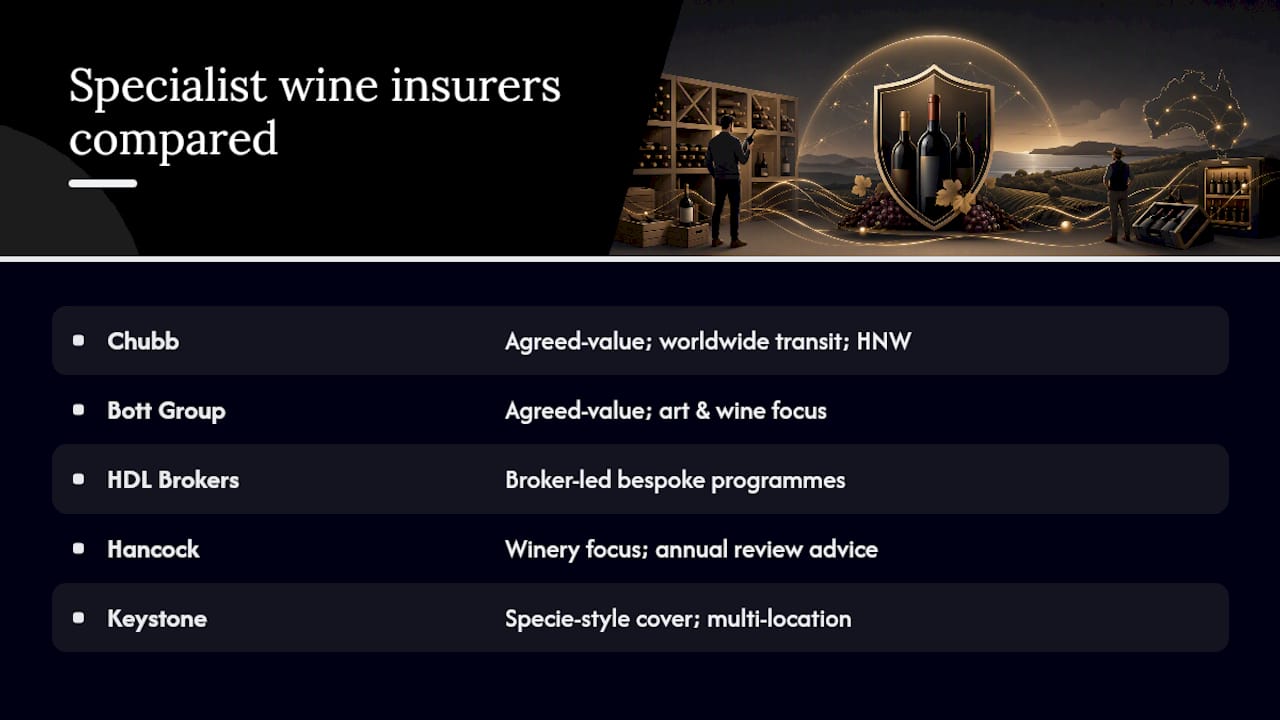
Chubb offers Masterpiece wine cover as part of a broader private-collections and high-net-worth insurance suite, with agreed-value options, worldwide transit cover, and detailed PDS wording that spells out exactly what counts as a covered collectible. It’s a strong fit for collectors who want a single insurer handling wine alongside art, jewellery, and other valuables.
Bott Group works specifically in fine art, wine, and collectables, with a strong emphasis on agreed-value structuring designed to protect the investment side of a collection, not just its physical replacement cost. Collectors focused on long-term appreciation tend to gravitate here.
HDL Insurance Brokers takes a broker-led approach, building bespoke private-collections programmes rather than selling off-the-shelf policies, which suits collectors whose cellar doesn’t fit a standard template.
Hancock Insurance leans more toward the production and winery side of the industry but offers useful guidance on annual review practices that apply just as well to a private collector’s cellar as to a commercial vineyard.
For genuinely large or complex holdings, specialist underwriters like Keystone Underwriting offer specie-style cover more commonly associated with fine art, extending the same rigour to wine held across multiple storage locations.
What actually matters when you insure a wine collection
Most advice on this topic treats insurance as a box-ticking exercise: get a number, buy a policy, forget about it. That’s backwards. The real work happens before you ever call a broker, in the inventory, the photos, the receipts, and the provenance trail that turns a vague claim into a straightforward one.
The conventional wisdom undersells documentation and oversells the policy itself. A brilliant agreed-value policy backed by sloppy records still produces a fight at claim time. A modest policy backed by meticulous provenance and temperature logs settles fast. If you take one thing from this article, prioritise the paperwork first and treat the insurer conversation as the second step, not the first.
Annual reviews get dismissed as admin, but they’re the cheapest insurance you’ll ever buy. A collection that’s grown by twenty bottles since your last review isn’t fully covered, no matter what your policy schedule says.
Where FU Wine fits into protecting what you buy
Buying well-documented bottles makes insuring them a lot less painful. At FU Wine, every listing, whether it’s a cellar-aged classic or a limited producer run, comes with the kind of detail that supports proper valuation down the track: vintage, provenance notes, and purchase records you can hand straight to a broker or an appraiser.
If you buy through us, hang onto your order confirmation and any provenance paperwork we provide. It’s exactly what an insurer or appraiser will ask for when you’re setting agreed value or lodging a claim, and having it ready from day one saves you scrambling later. Our guide on wine investment benefits is worth a read if you’re building a cellar with resale value in mind, not just drinking pleasure.
Ready to add something worth insuring properly? Browse current stock at FU Wine and see what’s available this week, allocations move fast, and the good stuff doesn’t sit around.
Frequently asked questions
Do I really need separate insurance for wine, or will home insurance cover it? If your collection is worth more than a few hundred dollars or includes rare and cellar-aged bottles, standard home insurance almost certainly won’t cover you properly. Sub-limits and exclusions common in contents policies leave serious collectors underinsured, according to HDL Insurance Brokers.
What does “agreed value” mean in a wine insurance policy? It means you and the insurer settle on a value for your collection before anything goes wrong, so a claim doesn’t turn into an argument about depreciation. Bott Group notes this structure specifically protects the investment value of a collection.
How much does it cost to insure a wine collection in Australia? Cost depends on appraised value, storage security, location, and claims history, so there’s no flat figure. A well-documented, securely stored collection with alarmed access typically prices more favourably than one with minimal records or security.
Can I insure wine stored at a third-party facility rather than at home? Yes. Many specialist policies, including options through Keystone Underwriting, extend cover to bottles held in dedicated storage facilities, sometimes with worldwide scope.
What happens if my cellar’s cooling system fails and damages my wine? Climate-control failure is a standard peril under specialist policies like Chubb’s wine cover. Automated, time-stamped temperature logs significantly strengthen these claims, according to Hancock Insurance.
How often should I update my wine insurance policy? Review it annually, and immediately after any significant acquisition, rare allocation, or cellar infrastructure upgrade. Insurers recommend this because market valuations and risk profiles shift over time.
Sources
- Wine cover | Chubb Masterpiece
- Fine art, wine & collectables | Bott Group
- Fine art and private collections | HDL Insurance Brokers
- From harvest to cellar | Hancock Insurance