

How wine vintages are rated: a guide for collectors
You’ve probably seen vintage ratings on wine labels or critic charts and assumed they’re scientific formulas. They’re not. Vintage ratings are editorial judgements combining blind tastings, weather data, and expert opinion. Understanding how these ratings actually work saves you from paying inflated prices for hyped vintages while helping you identify genuine quality. This guide unpacks the methodologies critics use, reveals why ratings vary between publications, and shows you how to use vintage insights strategically when building your collection or choosing premium wines.
Table of Contents
- Key takeaways
- What are wine vintage ratings and why do they matter
- How experts rate vintages: methodology and scales
- Variations and controversies in vintage ratings
- Using vintage ratings wisely for collecting and buying
- Explore premium wines guided by vintage insights
- Frequently asked questions
Key Takeaways
| Point | Details |
|---|---|
| Rating is editorial judgement | Vintage ratings are not mathematical formulas but editorial judgements that combine blind tastings, weather data, and expert opinions. |
| Cross referencing charts | Cross referencing multiple charts helps you avoid paying inflated prices for hyped vintages. |
| Regional variation matters | Regions with significant year to year variation such as Burgundy, Bordeaux, or Barossa Valley show ratings that differ with conditions. |
| Preliminary versus final scores | Preliminary barrel ratings are often optimistic compared with final bottled scores, so wait for post release evaluations. |
What are wine vintage ratings and why do they matter
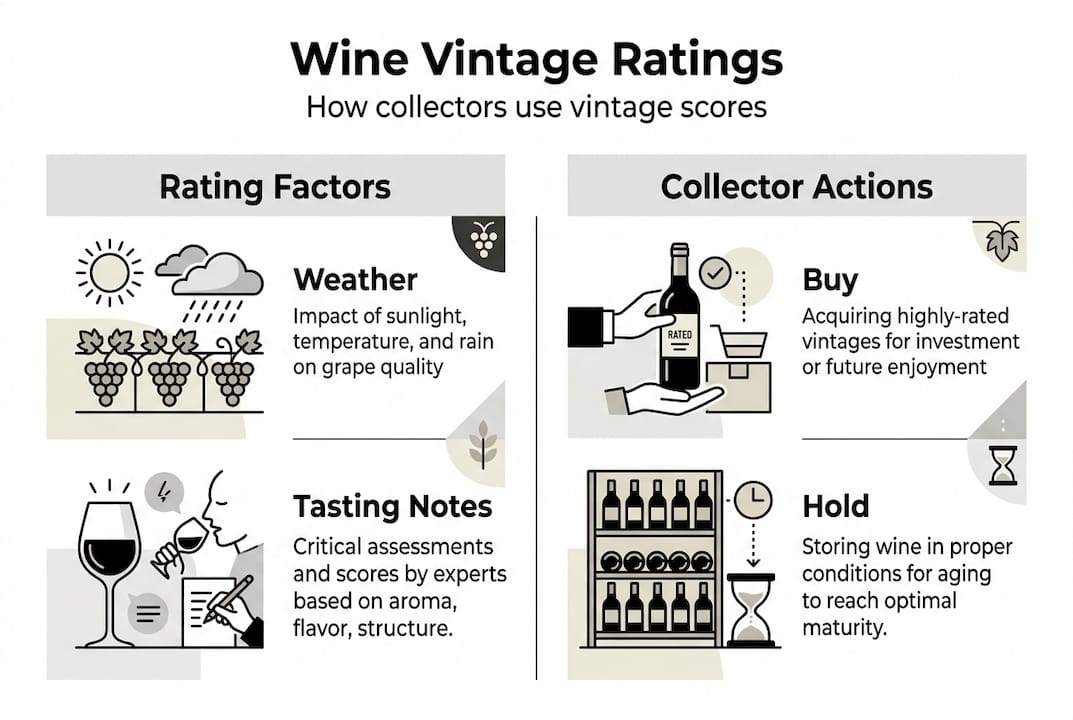
Vintage ratings aggregate quality assessments for wines from a specific harvest year in a particular region. Weather conditions during the growing season critically influence grape quality, ripeness, and flavour concentration. A hot, dry summer might produce concentrated reds in Bordeaux, while excessive rain could dilute flavours and encourage rot. These climatic variations create the vintage differences that ratings attempt to capture.
Ratings guide your expectations about consistency and ageing potential. A highly rated vintage from Burgundy suggests you’ll find exceptional Pinot Noir across multiple producers that year. Lower-rated vintages don’t mean bad wine, they signal more variability and the need to focus on top producers who succeed despite challenging conditions. For collectors, ratings identify vintages worth cellaring for long-term appreciation.
Here’s why vintage ratings matter practically:
- They help you spot value in overlooked vintages that critics initially underrated
- Ratings reveal which years produced wines built for ageing versus immediate drinking
- Understanding ratings prevents overpaying for hyped vintages with marginal quality differences
- They guide investment decisions for collectors building portfolios
Pro Tip: Focus vintage ratings on regions with significant year-to-year variation like Burgundy, Bordeaux, or Barossa Valley. Regions with consistent climates like parts of California or South Australia show less vintage impact, making producer reputation more important than the year.
When you’re exploring wine collection options, vintage ratings provide a starting framework. They’re not absolute truth, but they offer informed perspectives from critics who’ve tasted hundreds of wines from each harvest. Use them as guideposts, not gospel.
How experts rate vintages: methodology and scales
Major wine publications employ systematic approaches to vintage rating, though methods vary. Wine Spectator’s team conducts blind tastings of hundreds of wines from each vintage, recording individual scores. They then calculate what proportion achieved outstanding ratings (90-94 points) or classic status (95-100 points). These percentages, combined with weather reports and vintner feedback, inform the final vintage rating. No mathematical formula determines the outcome, it’s editorial judgement synthesising multiple data points.
The process unfolds in stages:
- Preliminary ratings emerge from barrel samples during the growing season
- Critics visit regions to taste developing wines and assess conditions
- Final scores come from bottled wine tastings after release
- Ratings may be revised as wines evolve over years or decades
- Weather data and historical comparisons provide additional context
Scoring scales differ between publications. Wine Spectator uses a 100-point scale where 95-100 indicates a classic vintage, 90-94 signals outstanding quality, 85-89 represents very good, and 80-84 means good. Wine Enthusiast employs similar numerical ranges but may weight factors differently. Some European critics prefer 20-point scales or star systems. These scale differences create confusion when comparing ratings across sources.
| Rating range | Quality designation | Practical meaning |
|---|---|---|
| 95-100 | Classic | Exceptional vintage, cellar-worthy across producers |
| 90-94 | Outstanding | High quality, focus on top estates |
| 85-89 | Very good | Solid vintage, drink sooner rather than later |
| 80-84 | Good | Variable quality, research producers carefully |
| Below 80 | Fair to poor | Challenging vintage, only top producers succeeded |
Pro Tip: Preliminary barrel ratings often prove optimistic compared to final bottled wine scores. Wait for post-release evaluations before making significant vintage-based purchases, especially for investment purposes.
Taste evolution dramatically affects ratings over time. A vintage initially rated 88 might climb to 92 after a decade as wines develop complexity. Critics revisit important vintages periodically, updating assessments based on how bottles have matured. This fluidity means vintage ratings aren’t static pronouncements but evolving evaluations. When you explore wine ratings, check the publication date and whether the rating reflects recent or historical tasting.

Variations and controversies in vintage ratings
Different critics produce varying vintage assessments for identical regions and years. Wine Spectator might rate a Bordeaux vintage 94 while Wine Enthusiast scores it 90. These discrepancies stem from different tasting panels, sample selections, and weighting of weather versus actual wine quality. One publication might emphasise ageing potential while another prioritises immediate drinkability. The subjectivity inherent in wine evaluation guarantees disagreement.
Score inflation represents a persistent controversy. Critics face accusations of rarely scoring wines below 90 points, compressing the meaningful range into a narrow 90-100 band. This grade inflation makes it harder to distinguish truly exceptional vintages from merely good ones. Some argue improved viticulture and winemaking genuinely produce better wines across the board. Sceptics counter that commercial pressures and advertiser relationships discourage harsh ratings. The truth likely sits somewhere between, better techniques have raised baseline quality, but critical generosity also plays a role.
Key points of variation and debate:
- Regional focus differs, some critics specialise in Burgundy while others emphasise Napa Valley
- Tasting conditions vary, affecting how wines present during evaluation
- Personal palate preferences influence scores despite blind tasting protocols
- Climate change creates more vintage variability, complicating historical comparisons
| Factor | Wine Spectator approach | Wine Enthusiast approach |
|---|---|---|
| Tasting frequency | Multiple sessions per vintage | Regional focus varies |
| Score publication | Vintage charts updated periodically | Annual vintage chart releases |
| Scale emphasis | Percentage of high scorers | Overall vintage quality assessment |
| Revision policy | Updates as wines mature | Less frequent revisions |
Small score differences often lack practical meaning. A 91-point vintage versus a 93-point vintage won’t necessarily translate to noticeable quality differences in your glass. Individual producer skill, terroir specifics, and personal taste preferences matter more than a two-point rating gap. Top producers create outstanding wines even in challenging vintages, while mediocre winemakers struggle in banner years. The vintage rating provides regional context, not a guarantee for every bottle.
Changing climate patterns introduce additional complexity. Regions once known for vintage consistency now experience greater year-to-year swings. Conversely, historically marginal regions produce riper fruit more reliably. These shifts make historical vintage rating patterns less predictive. A vintage rating comparison from 2000 might not apply the same way in 2026 due to evolving growing conditions. For deeper perspective on wine score controversies and insights, examining multiple viewpoints helps you develop informed scepticism.
Using vintage ratings wisely for collecting and buying
Smart collectors cross-reference multiple vintage charts rather than relying on a single source. Compare Wine Spectator, Wine Enthusiast, and regional specialist assessments. Where ratings converge, you’ve found consensus. Divergent ratings signal controversy or evolving opinions worth investigating further. This multi-source approach reveals which vintages offer genuine quality versus marketing hype.
Follow these practical steps:
- Identify your target region and check three or more vintage rating sources
- Focus on producers with consistent track records across multiple vintages
- Use ratings to find value in less popular but well-rated vintages
- Taste wines yourself whenever possible to confirm personal preferences
- Be mindful of marketing hype around certain “vintage of the century” claims
- Consider drinking windows, some highly rated vintages need decades to peak
Producer reputation often trumps vintage ratings. A skilled Burgundy producer might craft exceptional Pinot Noir in a challenging 2021 vintage while a mediocre producer disappoints in the celebrated 2019 vintage. Research individual estates, their vineyard holdings, winemaking philosophy, and historical performance. Vintage ratings provide the backdrop, but producer quality determines what ends up in your glass.
Pro Tip: Lesser-known vintages often deliver better value than hyped years. A well-rated but overlooked vintage costs significantly less than a heavily marketed “great” vintage with minimal actual quality difference. This is where understanding ratings saves you money.
Vintage ratings help identify value in overlooked years versus overpriced hyped vintages. The 2016 Bordeaux vintage received enormous hype and corresponding price increases. The 2014 vintage, rated nearly as high but with less fanfare, offered similar quality at lower prices. Savvy collectors recognised this discrepancy and bought 2014s while others chased 2016s. Markets eventually correct these imbalances, but patient buyers capitalise on temporary mispricings.
Personal tasting remains essential because scores reflect critic palates, not necessarily yours. You might prefer the elegance of a cooler vintage over the power of a hot year, even if critics rate the latter higher. Attend tastings, visit cellar doors, and develop your own preferences. Use vintage ratings as a starting point for exploration, not a substitute for personal experience.
When you buy premium wines, combine vintage knowledge with producer research and personal taste. This three-legged approach prevents costly mistakes and helps you build a collection aligned with your actual preferences rather than critic consensus. For additional perspective, this guide for wine lovers offers complementary insights on navigating wine selection.
Explore premium wines guided by vintage insights
Now that you understand how vintage ratings work and their limitations, you’re equipped to make smarter wine purchases. FU Wine offers a curated selection of premium wines from esteemed vintages without the inflated pricing that typically accompanies highly rated years. We source exceptional bottles from top producers, giving you access to quality that reflects genuine vintage excellence rather than marketing hype.

Our premium wine collection includes carefully selected vintages from renowned regions. Whether you’re seeking a cellar-worthy Barossa Valley Cabernet Sauvignon 2010 from an outstanding vintage or exploring the elegant Barossa Valley Pinot Noir 2024 from a promising recent harvest, you’ll find wines that demonstrate why vintage matters without paying the premium that hype creates. Explore our collection to discover how vintage knowledge translates into genuine value.
Frequently asked questions
How are vintage ratings determined?
Vintage ratings combine blind tastings with weather data and vintner reports into editorial scores. Critics taste hundreds of wines from a vintage, recording individual scores and noting the proportion achieving outstanding or classic ratings. They then synthesise this tasting data with growing season weather reports and feedback from winemakers to form an overall vintage assessment. No fixed formula exists, expert judgement integrates multiple data points into the final rating.
Can vintage ratings differ between critics?
Yes, critics use varying scales, tasting panels, and weighting factors. Wine Spectator might emphasise ageing potential while Wine Enthusiast focuses on immediate quality. Score inflation and personal palate preferences contribute to differences between publications. Tasting conditions, sample selection, and regional expertise also create divergent assessments. This variability is why cross-referencing multiple sources provides a more complete picture than relying on a single rating.
Should I rely solely on vintage ratings to buy wine?
No, combine vintage ratings with producer research and personal tastings. Ratings guide regional quality expectations but don’t guarantee individual bottle quality. Top producers succeed even in challenging vintages while mediocre winemakers disappoint in great years. Your personal taste preferences matter more than critic scores, what rates highly for one palate might not suit yours. Use ratings as a starting framework, then refine choices through research and tasting.
Do vintage ratings guarantee wine quality?
They indicate regional and vintage quality trends, not every bottle’s quality. A highly rated vintage suggests better conditions and higher proportions of excellent wines, but individual producers vary enormously. Top estates with exceptional terroir and skilled winemaking produce outstanding wines even in poor vintages. Conversely, lesser producers struggle in great years. Vintage ratings provide context and probability, not certainty about any specific bottle you purchase.