

How to spot a wine value buy: expert guide to genuine finds
TL;DR:
- True value wine offers quality that exceeds its price, not necessarily expensive labels.
- Using critic scores and price-per-point helps identify affordable wines with high quality.
- Emerging regions and overlooked producers hold the best potential for discovering underrated wines.
You’ve been there. Standing in a bottle shop, staring at two reds, wondering if the one that costs three times more is actually three times better. Spoiler: it’s usually not. The wine industry has spent decades convincing you that price equals quality, and it’s one of the most profitable myths ever told. Real wine value, the kind that makes your Friday night feel like a celebration without the hangover-inducing credit card bill, is absolutely out there. You just need to know how to find it. This guide breaks down exactly how experts identify genuine value buys, and how you can do the same.
Table of Contents
- What is a value wine? The true meaning
- Understanding wine scoring and the quality benchmark
- The price-quality ratio: using it to your advantage
- Spotting real value: beyond numbers and hype
- Practical tips for buying value wines in Australia
- A new way to find wine value: why it pays to challenge assumptions
- Explore curated value wines with us
- Frequently asked questions
Key Takeaways
| Point | Details |
|---|---|
| Quality outpaces price | A true value wine delivers quality that far exceeds what you pay. |
| Use scores wisely | Scores help benchmark quality, but comparing price-per-point reveals genuine bargains. |
| Look beyond big labels | Hidden gems often come from lesser-known regions or emerging producers. |
| Trust your palate | Personal preferences matter most—use expert frameworks, then trust your taste. |
What is a value wine? The true meaning
Let’s get one thing straight. A value wine is not a cheap wine. It’s not the dusty bottle at the back of the bargain bin. A value wine is one where the quality in your glass dramatically exceeds what you paid for it. That’s the whole game.
The myth that higher price always means higher quality is one the industry loves. But critics and serious collectors have long known better. Price per quality point is the metric that matters, and Robert Parker’s approach highlights wines under $25 with high scores from global regions as prime examples of real value. That’s a framework worth stealing.
So what does a value wine actually look like? Here are the markers worth paying attention to:
- A strong critic score relative to its retail price
- A producer with a track record, not just a flashy label
- A region known for quality but not yet inflated by hype
- Honest winemaking without excessive intervention
“The finest wines are not always the most expensive. They are the ones that deliver the most pleasure for the price paid.”
When you start reading high-scoring wines explained through this lens, the whole landscape shifts. You stop chasing prestige and start chasing pleasure per dollar. And that’s a much more satisfying pursuit. For a deeper look at how pricing actually works in the collector’s world, the collector’s guide to wine value is worth your time.
Understanding wine scoring and the quality benchmark
With the true meaning of value established, let’s explore how wine scoring shows what’s in the bottle.
Most critics use a 100-point scale. Wines scoring 90 and above are generally considered excellent, while anything 95-plus is outstanding. But here’s what most people miss: a score of 92 from one critic means something very different to a 92 from another. Scores are most useful when compared within one critic’s framework, not across different reviewers.
Here’s a quick reference for how scores typically break down:
| Score range | Quality level | What it means for value |
|---|---|---|
| 95 to 100 | Outstanding | Premium price often justified |
| 90 to 94 | Excellent | Strong value potential |
| 85 to 89 | Very good | Best hunting ground for bargains |
| 80 to 84 | Good | Situational value only |
The 85 to 89 range is where savvy buyers do their best work. These wines are genuinely good, often from excellent producers, but they fly under the radar because they didn’t crack the magic 90-point mark. That’s your opportunity.
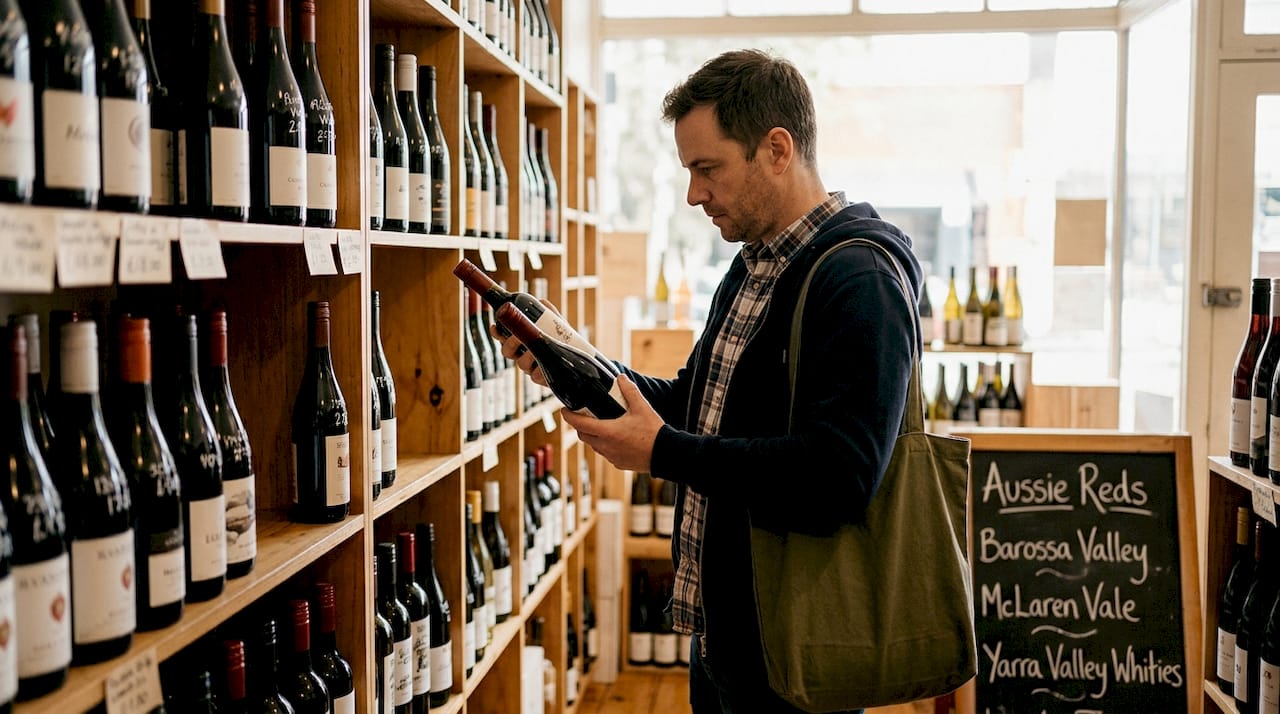
Pro Tip: Always check which critic scored a wine before using the number as a benchmark. Comparing scores across critics is like comparing apples and mangoes. Stick to one reviewer’s catalogue when hunting for understanding wine scoring patterns.
Price also influences perception in ways that have nothing to do with what’s actually in the bottle. Studies confirm that people consistently rate the same wine higher when told it costs more. That’s not a character flaw. It’s just how human brains work. Knowing this helps you override the bias and focus on the guide to quality and value metrics that actually matter.
The price-quality ratio: using it to your advantage
Knowing how scores and value align, you can now use price-per-point metrics practically.
The calculation is simple. Divide the price of the wine by its critic score. A $30 bottle scoring 90 points gives you a price-per-point ratio of $0.33. A $90 bottle scoring 93 points gives you $0.97 per point. The cheaper bottle delivers more value per quality unit, full stop.
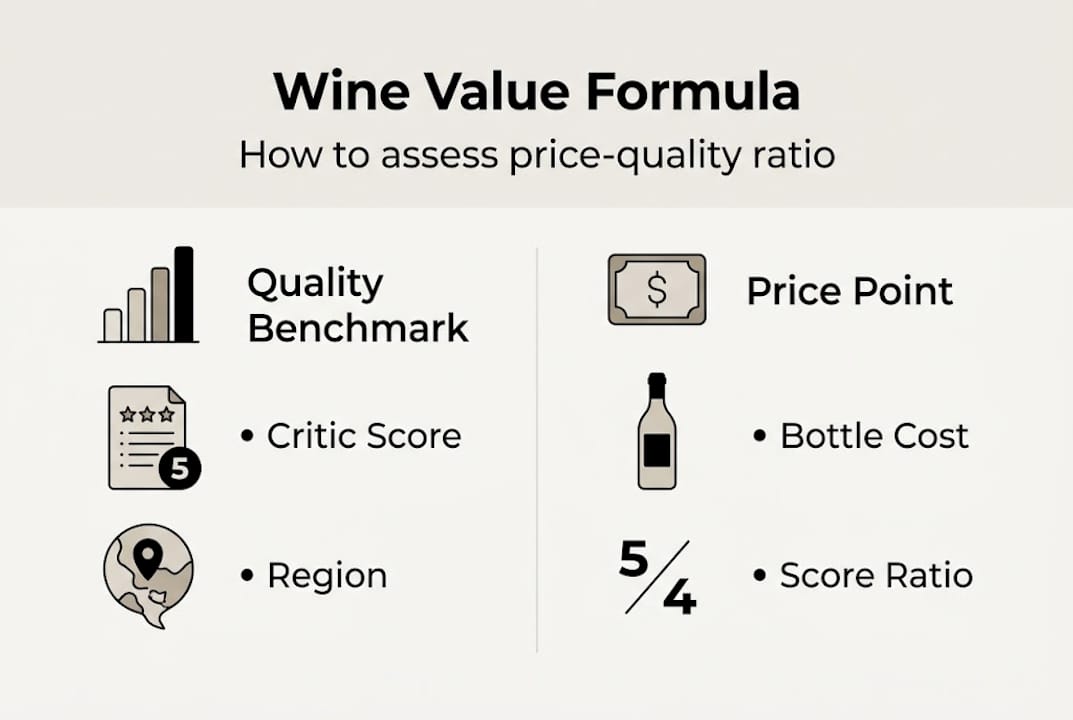
Price per quality point is the key metric serious buyers use, and once you start applying it, you’ll never look at a wine list the same way again.
Here’s how different categories typically compare:
| Wine type | Average price | Score range | Price per point |
|---|---|---|---|
| Entry-level premium | $20 to $35 | 87 to 91 | $0.22 to $0.38 |
| Mid-range collectible | $40 to $80 | 90 to 94 | $0.43 to $0.85 |
| High-end prestige | $100 to $250 | 93 to 97 | $1.03 to $2.58 |
The sweet spot for most buyers sits in that entry-level premium range. Here’s a practical approach to using this metric:
- Identify wines you’re considering in a similar style or region.
- Find critic scores from a single trusted reviewer.
- Calculate the price-per-point ratio for each.
- Shortlist wines under $0.50 per point with scores above 88.
- Cross-reference with producer reputation before buying.
Pro Tip: Use this method when snagging premium bottles during flash sales or clearance events. The ratio becomes even more powerful when prices drop. And when you’re building a collection, rare wine selection tips can help you apply the same logic to harder-to-find bottles.
Check score explanations to understand how different critics weight their assessments before you build your shortlist.
Spotting real value: beyond numbers and hype
But real value isn’t just about numbers. Let’s look at broader cues for finding a bargain bottle.
Critic scores are a starting point, not the finish line. Some of the best value wines in the world come from producers and regions that critics haven’t fully discovered yet. That’s the whole point. By the time a region becomes famous, the prices have already gone up.
Here’s what to look for beyond the numbers:
- Emerging regions: Think Riverland in South Australia, Grampians in Victoria, or lesser-known Spanish appellations like Bierzo and Calatayud. These areas produce serious wine without the prestige markup.
- Overlooked varietals: Grenache, Vermentino, and Assyrtiko are still flying under the radar compared to Shiraz or Chardonnay. That gap is your gain.
- Producer track record: A small producer with consistent quality over ten vintages is worth more than a flashy newcomer with one good year.
- Reading critic language: Words like “approachable,” “fresh,” and “honest” often signal genuine quality. Overcomplicated tasting notes can sometimes mask mediocrity.
As wine ratings and scores research confirms, price influences perception but not actual scoring. That means a wine from an unfashionable region can score just as well as one from a famous appellation, but cost you a fraction of the price.
Pro Tip: Follow wine writers who specialise in emerging regions. Their early coverage of up-and-coming producers is like getting a tip before the crowd arrives. For collectors thinking long term, understanding investment benefits can help you spot value that also appreciates over time. And if you’re building a broader selection, a versatile wine portfolio approach keeps your options open.
Practical tips for buying value wines in Australia
Armed with frameworks and cues, it’s time to take action in the Aussie wine market.
The Australian wine scene in 2026 is genuinely exciting for value hunters. Retail markups at major chains can be steep, but there are smarter ways to buy. Best value wines consistently come from lesser-known regions or overlooked producers, and Australia has plenty of both.
Here’s how to work the market:
- Shop independent retailers. Small wine merchants often carry boutique producers that the big chains ignore. They also tend to know their stock well and can point you toward genuine finds.
- Explore wine auctions. Cellar clearances and estate sales regularly surface premium bottles at well below retail. Online auction platforms have made this accessible to anyone.
- Go direct to producer. Many small Australian wineries sell direct, cutting out the middleman entirely. Cellar door prices are often significantly lower than retail.
- Use price comparison tools. Platforms that aggregate wine prices across retailers let you spot when a bottle is genuinely discounted versus artificially inflated before a “sale.”
- Watch for flash deals. Disruptive retailers who buy distressed inventory or allocation releases can offer 30 to 70 per cent below traditional retail on genuinely premium stock.
The key is building relationships. An indie merchant who knows you’re after value-driven, high-scoring bottles will start calling you when something good lands. That kind of insider access used to be reserved for collectors with deep pockets. Not anymore.
For occasions when you want to impress without overspending, wine gifting ideas that balance value and exclusivity are worth bookmarking.
A new way to find wine value: why it pays to challenge assumptions
Here’s the uncomfortable truth the traditional wine industry doesn’t want you to hear. The entire system, from the three-tier distribution model to the prestige pricing of famous appellations, is built to make you feel like you need to spend more to drink well. You don’t.
Conventional wisdom tells you to trust the big names, follow the famous critics, and pay a premium for recognised regions. But some of the most genuinely thrilling wines we’ve encountered came from producers nobody was talking about yet. Emerging regions in Australia, Portugal, Greece, and South America are producing bottles that punch well above their price point, precisely because the hype hasn’t caught up yet.
Trusting your own palate is the ultimate value move. Once you know what you actually enjoy, you stop paying for what you’re supposed to enjoy. The wine desirability guide puts it plainly: desirability is personal, and the best value wine is the one that genuinely excites you, not the one with the most impressive label. Every bottle is a small rebellion against the idea that quality must cost a fortune.
Explore curated value wines with us
You’ve got the knowledge. Now let’s put it to work.
At FU Wine, we do the hard yards so you don’t have to. We source rare, high-scoring, and genuinely exciting bottles through direct relationships, cellar clearances, and opportunistic buying, then pass the savings straight to you. We’re talking 30 to 70 per cent below traditional retail on wines that actually deserve your attention.
No pretension. No inflated markups. Just brilliant wine at prices that make sense. Whether you’re after a cellar-aged gem, a boutique producer release, or a flash deal on something exceptional, we’ve got you covered. Discover value wines with us and find out what drinking well without overpaying actually feels like. Life’s too short for ordinary wine at extraordinary prices.
Frequently asked questions
How do experts define a value wine?
A value wine offers quality that clearly exceeds its price, measured through price per quality point and by comparing critic scores against cost. Robert Parker’s framework, for instance, highlights wines under $25 with high scores as prime examples.
Do wine scores always reflect value for money?
Not always. Scores provide a quality floor but are most useful when compared within a single critic’s framework or combined with price-per-point calculations to reveal genuine value.
Where can Australians find the best wine values in 2026?
Top values regularly come from lesser-known regions or overlooked producers, found through independent retailers, direct-to-producer sales, wine auctions, and disruptive direct-to-consumer platforms.
Is paying more for wine always worth it?
Rarely. Price per quality point calculations consistently reveal that mid-range and even entry-level bottles from strong producers often outperform prestige bottles costing three to five times more.