

How to build a versatile wine portfolio for enjoyment
Building a wine portfolio that balances personal enjoyment with long-term investment potential can feel overwhelming without a clear roadmap. Many collectors aged 30 to 55 struggle to identify which premium bottles offer genuine value, how to organise a growing collection, and when to drink versus hold. This guide provides actionable steps to help you source hard-to-find wines at accessible prices, store them properly, track your inventory digitally, and avoid common pitfalls. You will learn how to define clear portfolio goals, discover emerging regions offering exceptional quality, and manage your collection with confidence.
Table of Contents
- Key takeaways
- Define your wine portfolio goals
- Source premium wines with accessible pricing
- Organise and store your wine collection effectively
- Track and review your portfolio digitally for maximum enjoyment and value
- Explore premium wines and build your portfolio with FU Wine
- Frequently asked questions
Key Takeaways
| Point | Details |
|---|---|
| Goals for enjoyment and investment | Define portfolio aims that balance drinking pleasure with long term value and review them regularly. |
| Source premium wines | Source premium wines from trusted merchants and explore emerging regions like Swartland and Dão for value. |
| Store properly and organise | Store your collection in stable conditions with correct temperature and humidity control. |
| Track inventory digitally | Track your inventory digitally to monitor drinking windows and portfolio performance. |
| Professional storage and provenance | Consider professional storage for valuable bottles and always verify provenance to protect your investment. |
Define your wine portfolio goals
Before purchasing your first bottle, you need to clarify what you want from your collection. Building intentional wine portfolios starts with understanding whether you are collecting primarily for personal enjoyment, long-term investment, or a strategic mix of both. Your goals will directly shape which regions you target, how much you allocate to each bottle, and how long you plan to age your wines before opening them.
Aging horizons matter enormously in portfolio construction. Some collectors prefer wines ready to drink within one to three years, allowing them to enjoy their purchases without lengthy waiting periods. Others focus on bottles that need decades to reach peak maturity, building a cellar that appreciates over time. Most successful portfolios blend both approaches, with some bottles designated for near-term consumption and others earmarked for extended aging. This balance ensures you can enjoy your collection while building long-term value.
Regional preferences also guide your acquisition strategy. Old World regions like Bordeaux, Burgundy, and Barolo offer traditional prestige and established aging potential. New World areas such as Napa Valley, Margaret River, and Barossa Valley provide bold fruit-forward styles with strong collector followings. Emerging regions like South Africa’s Swartland and Portugal’s Dão deliver exceptional quality at accessible price points, making them ideal for building depth without overextending your budget.
Starting small allows you to manage complexity and refine your palate before committing substantial capital. A dozen bottles provides enough variety to explore different styles while keeping your initial investment manageable. As you gain experience, you can expand systematically based on what you enjoy most and what performs best in your storage conditions.
Key questions to define your portfolio goals:
- What is my primary purpose: drinking pleasure, investment appreciation, or both?
- How much can I allocate monthly or annually without financial strain?
- Which regions and grape varieties align with my taste preferences?
- What aging horizons suit my patience and drinking timeline?
- How many bottles can I realistically store and track?
Pro Tip: Document your goals in writing and revisit them quarterly. Your preferences will evolve as you taste more wines and learn what truly excites you, so treat your initial plan as a living document rather than a rigid rulebook.
Source premium wines with accessible pricing
Finding high-quality, hard-to-find wines without paying inflated retail prices requires strategic sourcing. Trusted wine merchants, direct winery relationships, and exclusive mailing lists provide access to allocations that never reach general retail channels. Many premium producers reserve their best vintages for loyal customers who have established purchasing histories, making it worthwhile to join mailing lists and build relationships with key suppliers.
Buying en primeur offers another avenue to secure wines early at better value. This practice, common in Bordeaux and increasingly adopted elsewhere, allows you to purchase wine while still in barrel, often at 30 to 50 percent below eventual release prices. You commit capital upfront and wait for bottling and delivery, but the savings and guaranteed allocation make this strategy attractive for serious collectors targeting blue-chip producers.
Emerging regions provide exceptional opportunities for building a versatile portfolio without premium price tags. South Africa’s Swartland region produces powerful, age-worthy reds from old-vine Syrah and Grenache at prices well below comparable Rhône wines. Portugal’s Dão offers elegant, structured reds with impressive aging potential at accessible entry points. These regions attract serious winemakers who prioritise quality over hype, delivering bottles that punch well above their price class.
Australian regions like Barossa Valley continue to offer outstanding value in premium categories. The FU Barossa Valley Pinot Noir 2024 showcases how Australian producers deliver complexity and character without the markup associated with traditional European appellations. Similarly, aged releases like the FU Barossa Valley Cabernet Sauvignon 2010 provide immediate drinking pleasure or further cellaring potential at prices that make multiple-bottle purchases feasible.
Best practices for sourcing premium wines:
- Verify seller credentials and check reviews before committing to unfamiliar merchants
- Request detailed provenance documentation for any bottle over $100
- Prioritise allocations and mailing list access over open-market purchases
- Buy cases or multiples when you find wines that fit your portfolio goals
- Monitor value wine regions for emerging producers gaining critical recognition
Pro Tip: Allocate 5 to 10 percent of your portfolio to experimental purchases from emerging regions or lesser-known producers. This approach builds knowledge and occasionally uncovers exceptional value before wider market recognition drives prices higher.
Organise and store your wine collection effectively
Proper storage makes the difference between wines that develop beautifully and bottles that deteriorate prematurely. Temperature stability matters most, with 13°C and 70% humidity representing ideal conditions for long-term aging. Fluctuations cause corks to expand and contract, allowing oxygen ingress that accelerates spoilage. Even wines stored at slightly warmer temperatures will age gracefully if conditions remain constant, while temperature swings ruin bottles regardless of average conditions.
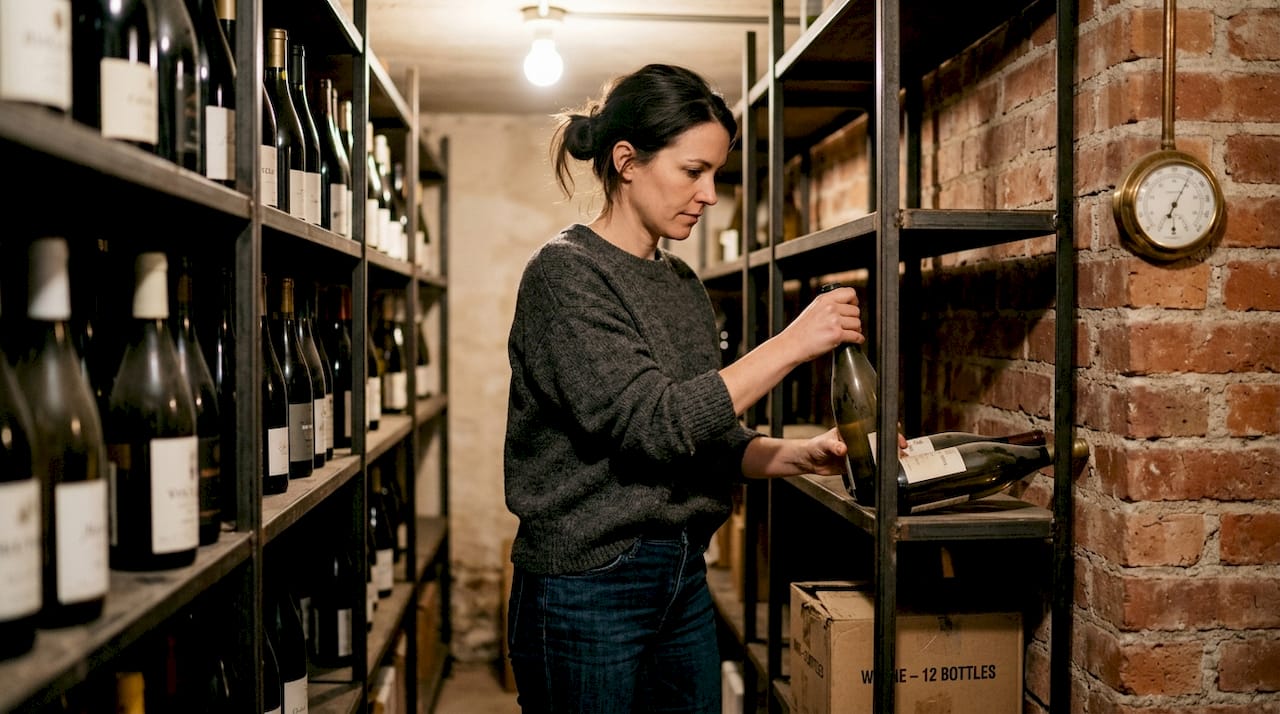
Darkness and vibration control complete the essential storage requirements. Ultraviolet light degrades wine compounds and causes premature aging, so your storage area should exclude natural light completely. Vibration from appliances, traffic, or mechanical systems disturbs sediment and disrupts the aging process, making quiet, stable locations preferable. Professional cellars address all these factors systematically, while home storage requires careful site selection and monitoring.
Home storage works well for casual collectors who consume bottles within a few years and can dedicate appropriate space. A temperature-controlled wine fridge suits apartments or homes without suitable cellars, providing stable conditions for 50 to 200 bottles depending on unit size. Larger collections benefit from converted closets or basement areas with dedicated cooling systems. However, only 1% of wines genuinely improve with extended aging, and storage damage often remains invisible until opening, making professional storage worth considering for valuable bottles.
Professional facilities offer insurance, security, and optimal conditions that home environments cannot match. Many provide individual lockers with precise climate control, regular monitoring, and easy access for retrievals. Costs typically range from $2 to $5 per bottle annually, a worthwhile investment when protecting wines worth hundreds or thousands of dollars. Professional storage also simplifies insurance claims and resale transactions, as buyers trust facility provenance more than home-stored bottles.
Organisation systems should reflect how you actually use your collection. Sorting by drinking readiness puts near-term bottles within easy reach while protecting long-term holdings from premature opening. Grouping by colour, grape variety, region, or price creates logical sections that simplify selection. Digital tracking complements physical organisation, allowing you to locate specific bottles quickly and plan drinking schedules around optimal maturity windows.
Storage do’s and don’ts:
- Do maintain consistent temperature within 2 degrees of your target
- Do store bottles horizontally to keep corks moist and sealed
- Do inspect conditions monthly and address any fluctuations immediately
- Don’t store wine near heat sources, windows, or vibrating appliances
- Don’t handle bottles unnecessarily or disturb sediment in aging wines
Pro Tip: Place a simple thermometer and hygrometer in your storage area and check readings weekly. Small deviations caught early prevent long-term damage, while unnoticed drift can ruin an entire collection before you realise conditions have deteriorated.
Track and review your portfolio digitally for maximum enjoyment and value
Digital tracking transforms wine collecting from guesswork into systematic portfolio management. Dedicated apps and spreadsheets let you record vintage, region, and drinking windows for every bottle, ensuring you open wines at optimal maturity rather than too early or too late. Provenance documentation becomes instantly accessible when you photograph labels and receipts during acquisition, protecting against authentication disputes and simplifying insurance claims.
Setting up your wine tracking system:
- Choose a platform that matches your technical comfort level and collection size
- Create fields for essential data: vintage, producer, region, grape variety, purchase date, price, storage location, and drinking window
- Photograph labels and receipts immediately upon acquisition, storing images with each entry
- Set calendar reminders for drinking windows and portfolio reviews
- Update tasting notes and condition assessments as you open bottles
A comprehensive tracking system captures the information you need for both enjoyment and investment decisions. Recording where you purchased each bottle helps you identify reliable sources and avoid problematic sellers. Noting drinking windows prevents premature consumption of wines that need more time, while flagging bottles approaching their peak ensures you enjoy them before decline. Price tracking reveals which regions and producers deliver the best value, informing future purchases.
| Field | Purpose | Example |
|---|---|---|
| Vintage | Track age and maturity | 2015 |
| Producer | Identify collection holdings | Penfolds |
| Region | Monitor geographic diversity | Barossa Valley |
| Purchase price | Calculate portfolio value | $85 |
| Drinking window | Optimise consumption timing | 2024-2032 |
| Storage location | Locate bottles quickly | Rack 3, Shelf 2 |
Regular portfolio reviews help you assess what’s working and adjust your strategy accordingly. Quarterly check-ins let you evaluate which wines are appreciating, which regions consistently deliver value, and whether your collection balance aligns with your goals. Buying multiples of wines you love enables you to taste evolution across vintages, deepening your understanding of how specific producers and regions develop over time.
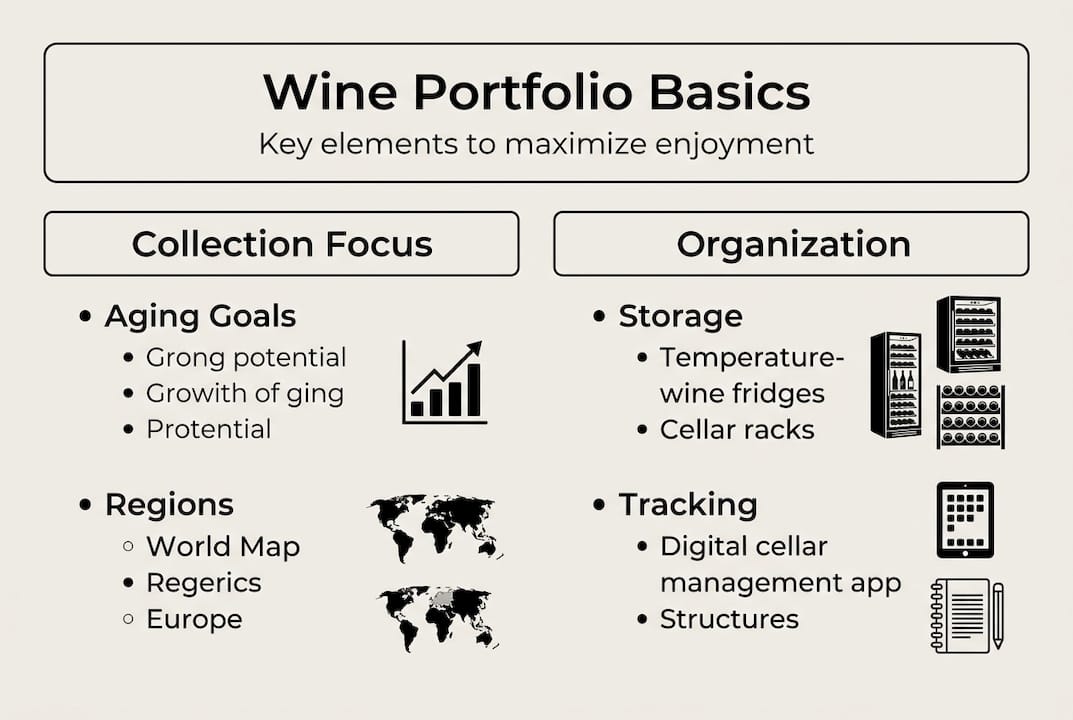
Investment-focused collectors should monitor Liv-ex indices for benchmark performance data. These indices track fine wine prices globally, revealing which regions and producers generate the strongest returns. Professional valuation services provide detailed assessments for insurance and resale purposes, though their fees make sense only for collections worth tens of thousands of dollars or more. Blockchain verification technologies are emerging as tools to counter provenance risks, offering tamper-proof authentication that increases buyer confidence.
Pro Tip: Review your tracking data before making new purchases. Patterns emerge over time showing which price points, regions, and styles you actually drink versus those that sit untouched. Align future acquisitions with your demonstrated preferences rather than aspirational goals that don’t match your actual consumption habits.
Explore premium wines and build your portfolio with FU Wine
Now that you understand how to construct and manage a versatile wine portfolio, finding the right bottles at accessible prices becomes your next priority. FU Wine specialises in sourcing premium, hard-to-find wines that fit serious collectors’ goals without the inflated pricing typical of traditional retail channels. Our premium wine collection includes carefully selected Barossa Valley releases spanning multiple vintages, giving you the depth needed to build a collection that balances immediate enjoyment with long-term aging potential.
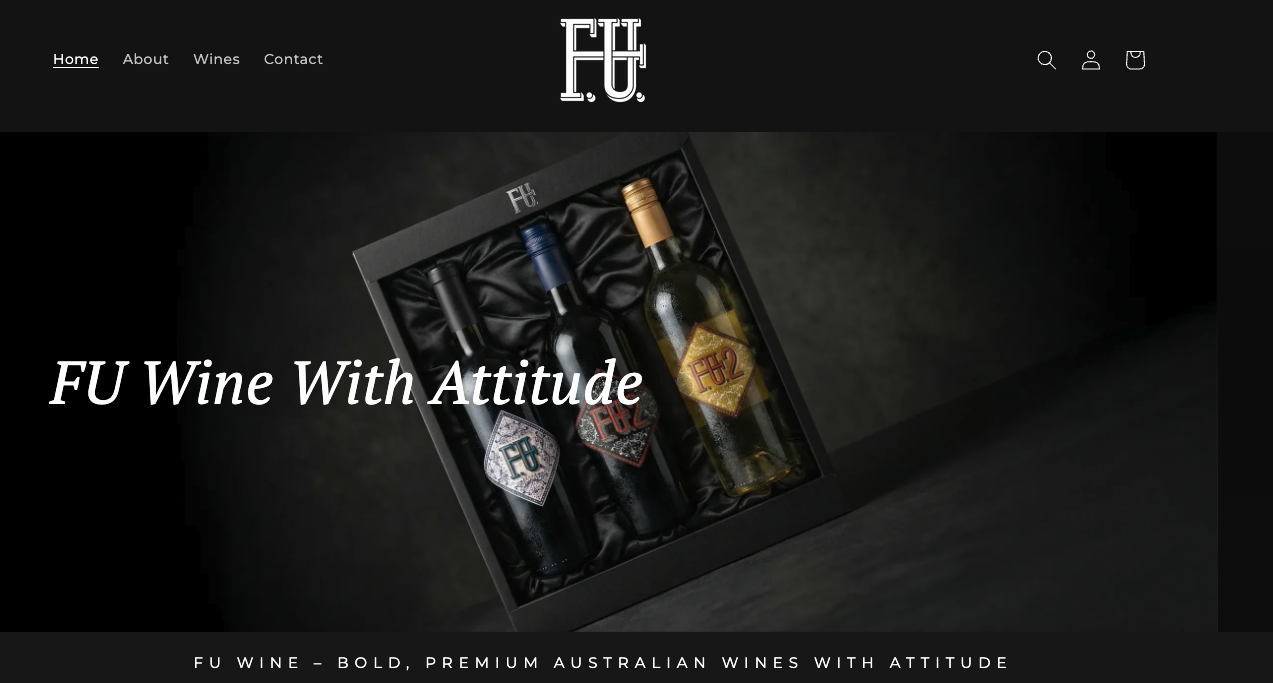
The Barossa Valley Cabernet Sauvignon 2010 exemplifies the aged, cellar-worthy wines that form a portfolio’s foundation, while the Barossa Valley Pinot Noir 2024 offers near-term drinking pleasure without sacrificing quality. Every bottle comes with verified provenance and has been stored in optimal conditions, protecting your investment from the storage damage and authenticity concerns that plague secondary markets. Explore our curated selection to discover premium Australian wines that deliver exceptional value and support your collecting journey with confidence.
Frequently asked questions
What wines should I start my portfolio with?
Begin with value-driven regions like Barossa Valley, Swartland, or Dão that offer premium quality without prestige pricing. Focus on accessible producers with strong critical scores and proven aging potential. Buy multiples of wines you enjoy so you can track their evolution over time.
How important is professional storage for my collection?
Professional storage becomes essential for valuable bottles worth over $100 each or collections exceeding 100 bottles. Facilities provide stable conditions, insurance coverage, and trusted provenance that home environments cannot match. Casual collectors with smaller holdings and shorter aging horizons can manage home storage successfully with proper monitoring.
Can wine be a reliable investment?
Wine offers diversification benefits and has shown strong cumulative growth historically, but involves significant risks including storage costs, provenance verification, and market volatility. Allocate only 5 to 10 percent of your investment portfolio to wine, treating it as an alternative asset rather than a core holding. Focus on blue-chip producers with established secondary markets if investment returns matter more than drinking pleasure.
How do I avoid counterfeit or damaged wines?
Purchase exclusively from trusted merchants with verifiable track records and detailed provenance documentation. Request photographs of labels, capsules, and fill levels before buying expensive bottles. Consider professional storage immediately upon acquisition to eliminate home storage risks. Emerging blockchain verification technologies provide additional authentication assurance for high-value purchases, though adoption remains limited in 2026.