

How luxury wine is really sourced, minus the markups
TL;DR:
- Luxury wine’s value is often exaggerated by myths, marketing, and controlled scarcity rather than intrinsic quality. Understanding vineyard sourcing, blending practices, and distribution channels enables buyers to access authentic, high-quality bottles at fair prices by bypassing traditional markups. Genuine transparency, relationships, and knowledge empower consumers to drink smarter and unlock rare wines without overpaying.
Most people think luxury wine is just about a famous name on a label and a staggering price tag. Pay more, get more. Simple, right? Actually, the real story is far messier, far more interesting, and full of opportunities that most drinkers never hear about. From soil and barrels through to allocation windows and auction floors, the journey from vineyard to glass is layered with decisions, relationships, and yes, inflated markups that have very little to do with what’s actually in the bottle. This guide pulls back the curtain, so you can drink smarter.
Table of Contents
- Why terroir and vineyard identity matter (but aren’t the full story)
- Inside the cellar: Assemblage and blending artistry
- Allocations, futures and access: How luxury wine is really distributed
- The secondary market: Auctions, brokers and reference prices
- Materials matter: Oak sourcing and coopering in luxury wine production
- Access without markups: Direct sourcing and bypassing the gatekeepers
- The uncomfortable truth: Scarcity, storytelling and what most drinkers miss
- Unlock your access to rare wines, minus the barriers
- Frequently asked questions
Key Takeaways
| Point | Details |
|---|---|
| Terroir and blending | Luxury wine sourcing is shaped by both vineyard identity and cellar blending for complexity and uniqueness. |
| Access, not just product | Allocations, relationships and futures have as much impact on sourcing as where the grapes grew. |
| Secondary market pricing | Auctions, brokers and post-release resale channels set benchmarks and influence what buyers actually pay. |
| Direct sourcing saves | By seeking direct importer offers or curated club access, you can bypass traditional markups and access premium bottles more affordably. |
Why terroir and vineyard identity matter (but aren’t the full story)
Let’s start where every wine story starts: the vineyard. Terroir is a French concept that covers everything from soil composition and slope angle to rainfall patterns, climate cycles, and the specific farming choices made by the people working the land. It is the idea that place shapes taste. And honestly, there is real science behind it.
As Tim Atkin MW writes, luxury fine wine is “sourced” primarily as vineyard fruit, where the key inputs are specific vineyards and sites, their soil and climate, and the viticulture practices that shape ripeness and quality. That is genuinely important context. Site does matter. A cool-climate Pinot Noir from a well-positioned hillside is going to express something a flatland fruit-bomb simply cannot replicate.
But here is where it gets interesting. Terroir narratives have become enormously powerful marketing tools. Estates lean into them because they justify scarcity and price. When a producer tells you their 1.5-hectare plot produces only 4,000 bottles and the soil is unlike anywhere else on earth, they are also telling you there is no substitute. That is a brilliant commercial strategy, not just a farming philosophy.
The smarter approach is to look at estates that share both site information and blend details. Transparency across both dimensions tells you that the winemaker respects you enough to explain the actual decisions behind the wine, not just sell you a romantic origin story. Explore how exclusive wine releases actually work to understand which producers back their terroir talk with genuine craft.
“Terroir is real, but it does not market itself. When the story gets louder than the wine, ask what they’re hiding behind the label.” — FU Wine
Pro Tip: When researching a producer, check whether they publish vineyard maps, soil profiles, and blending ratios. Estates that do this openly are usually more focused on quality than mystique.
Key things terroir can genuinely tell you:
- Why certain regions produce wines with specific textures and flavour profiles
- How farming methods such as organic or biodynamic practices affect fruit quality
- Why two bottles from the same appellation can taste wildly different
Inside the cellar: Assemblage and blending artistry
While terroir sets the stage, there is an equally intricate world inside the cellar that transforms fruit into finished luxury wines. Most people imagine a single barrel of perfect juice. The reality? Most of the world’s greatest wines are carefully assembled from multiple components.
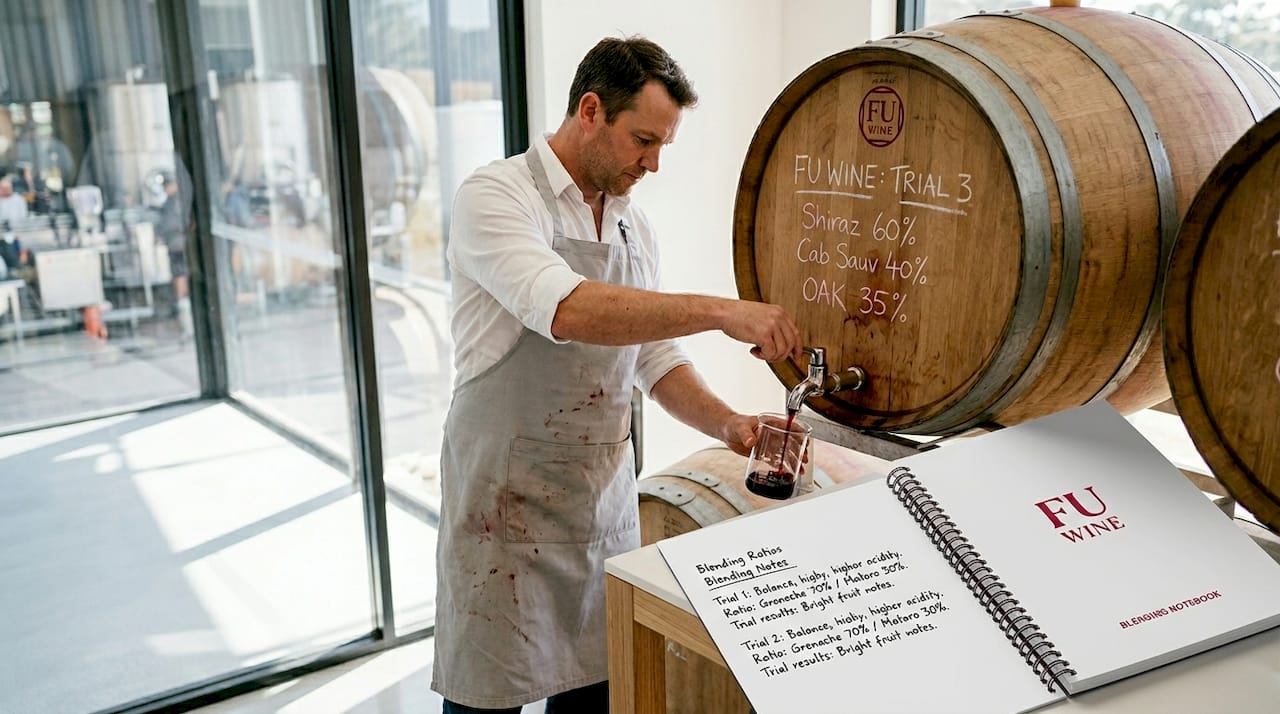
Assemblage, the art and science of blending, is how luxury wines are commonly built from multiple vineyard parcels, fermentation lots, or barrel lots. Winemakers taste through each lot repeatedly, trial different ratios, and then scale up to create the final blend. It is methodical, painstaking, and deeply skilled work.
Here is how the process typically unfolds in a serious cellar:
- Harvest fruit is sorted by parcel, often fermented in separate vessels to preserve distinct characteristics.
- Each lot is aged separately for months, allowing winemakers to monitor evolution.
- Tasting trials begin, where the winemaker and team evaluate ratios and component combinations.
- A preliminary blend is settled on, then rested further before final adjustments.
- The final assemblage is confirmed, and the wine proceeds to bottling.
This process dismantles the idea that single-vineyard automatically means superior. Sometimes blending raises quality dramatically by balancing a parcel that is rich in texture but lacks freshness with another that brings vivid aromatics. The result is more than the sum of its parts.
| Approach | Flavour profile | Typical risk | Common regions |
|---|---|---|---|
| Single-vineyard | Site-specific, focused | Vintage variation more pronounced | Burgundy, German Mosel |
| Multi-parcel blend | Layered, consistent | Complexity can obscure origin | Bordeaux, Champagne, Barossa |
| Single-barrel release | Intense, individual | Very limited volumes | Napa Valley, Rhône |
Pro Tip: Do not assume single-vineyard wines are automatically worth a premium. In challenging vintages, skilled blending often produces a more rewarding bottle than an uncompromised single-plot expression. Challenge the wine gatekeeping myths that surround prestige labels.
Allocations, futures and access: How luxury wine is really distributed
Understanding the physical blend is only half the journey. The next question is how luxury wine actually makes its way to collectors, and why some bottles seem so elusive.
This is where the system gets deliberately opaque. The two major access mechanisms for serious buyers are allocations and wine futures, also known as en primeur.
En primeur is particularly fascinating. For top luxury producers, especially in Bordeaux, buyers commit to purchase during the barrel-ageing phase, well before the wine is bottled. Négociants and merchants lock in inventory early. Buyers get first access, often at lower prices, but carry real risk: they are paying for a wine that does not yet exist in its final form.
Allocations work differently. Here, access is built through ongoing relationships with producers or distributors. Loyal customers, influential importers, and high-volume buyers get first call on limited releases. Miss the window and you are heading to the secondary market, typically paying 20 to 40 per cent more for the privilege.
Missing allocation windows pushes buyers toward secondary-market purchasing at significantly higher prices. That markup is not tied to quality. It is tied entirely to access. Which is exactly why understanding how to get wine allocation explained properly is so valuable.
Some clear points on how each access method works in practice:
- En primeur: Best for established regions with strong track records; buyer takes on vintage and market risk
- Direct allocation: Requires relationship building over time; rewards loyalty with first access
- Secondary market: Immediate availability but higher cost; provenance is a legitimate concern
If you are serious about accessing top wines at fair prices, learn the steps to access exclusive wines that insiders use. It changes the way you shop entirely.
Did you know? Buyers who miss allocation windows for top Bordeaux châteaux often face secondary-market premiums of 20 to 40 per cent above release price, even when the wine has not yet been delivered.
The secondary market: Auctions, brokers and reference prices
If you miss out on allocation or futures, chances are you will encounter luxury wine on the highly dynamic secondary market. This is the world of post-release trading, auction houses, brokers, and online exchanges.
Luxury wine supply on the secondary market flows through merchants, brokers, auction houses, and exchanges after initial release. Importantly, auction results become pricing reference signals for the entire market. When a case of aged Burgundy sells for a record price at a major London auction, that result sets a new benchmark that flows through every price list and negotiation for months.
“Auction prices set the new reference for luxury bottles every season. What sells on the block at Christie’s today becomes the floor price in a wine shop next quarter.” — FU Wine
The secondary market is genuinely useful. But it comes with real trade-offs worth knowing before you bid.
Pros and cons of buying luxury wine on the secondary market:
- Pro: Immediate access to bottles no longer available through normal channels
- Pro: Rare back-vintages and library releases that simply cannot be sourced elsewhere
- Con: Provenance risk is real, and poor storage kills great wine
- Con: Premiums are often steep, especially for high-profile bottles
- Con: Counterfeiting remains a concern at very high price points
To avoid common pitfalls, always request full provenance records and storage documentation. Buy from reputable auction houses with stated guarantees. And get across the wine auction secrets that smart bidders use to avoid overpaying. Understanding wine distribution at every level helps you recognise when a secondary-market price is genuinely fair and when someone is simply capitalising on hype.
Materials matter: Oak sourcing and coopering in luxury wine production
Beyond fruit and blend, luxury sourcing continues all the way up the supply chain into the cellar. Let’s explore how even the barrel can define a great wine.
Upstream sourcing for luxury wine extends to materials like oak for élevage (the French term for the ageing and maturation phase). Coopering, the craft of barrel making, depends on sourcing oak staves from carefully selected forests and includes extended seasoning of those staves before the barrels are ever assembled.
Here is how a premium oak barrel typically comes to exist:
- Oak is selected by cooperage agents from specific French forests, often Allier, Tronçais, or Vosges, each imparting different flavour characteristics.
- Logs are split by hand rather than sawn, preserving the wood grain and reducing harsh tannin extraction.
- Staves are air-dried outdoors for a minimum of 24 to 36 months, sometimes longer for the finest cooperages.
- Dried staves are shaped, bent using heat and steam, and assembled by hand into barrels.
- The barrel is toasted over an open fire, with the level of toast (light, medium, or heavy) calibrated to the winemaker’s specification.
The difference between a wine matured in a rushed, factory-processed barrel and one aged in a properly seasoned artisan barrel can be profound. Think harsh, drying tannins versus silky, integrated texture. The barrel is not a neutral vessel. It is an active ingredient.
Pro Tip: When assessing whether a luxury wine’s price is justified, ask about cooperage. Producers who invest in premium, long-seasoned barrels from renowned cooperages are making a genuine commitment to quality that shows up in the glass. Explore how wine deals work when producers cut corners on maturation.
Access without markups: Direct sourcing and bypassing the gatekeepers
Recognising the supply chain at every step empowers buyers to challenge traditional pricing and access restrictions. Now, let’s put this into practice.
The most powerful tool you have as a savvy buyer is understanding where value leaks out of the supply chain. Every intermediary between producer and your glass adds a margin. Some of those margins are justified. Many are not.
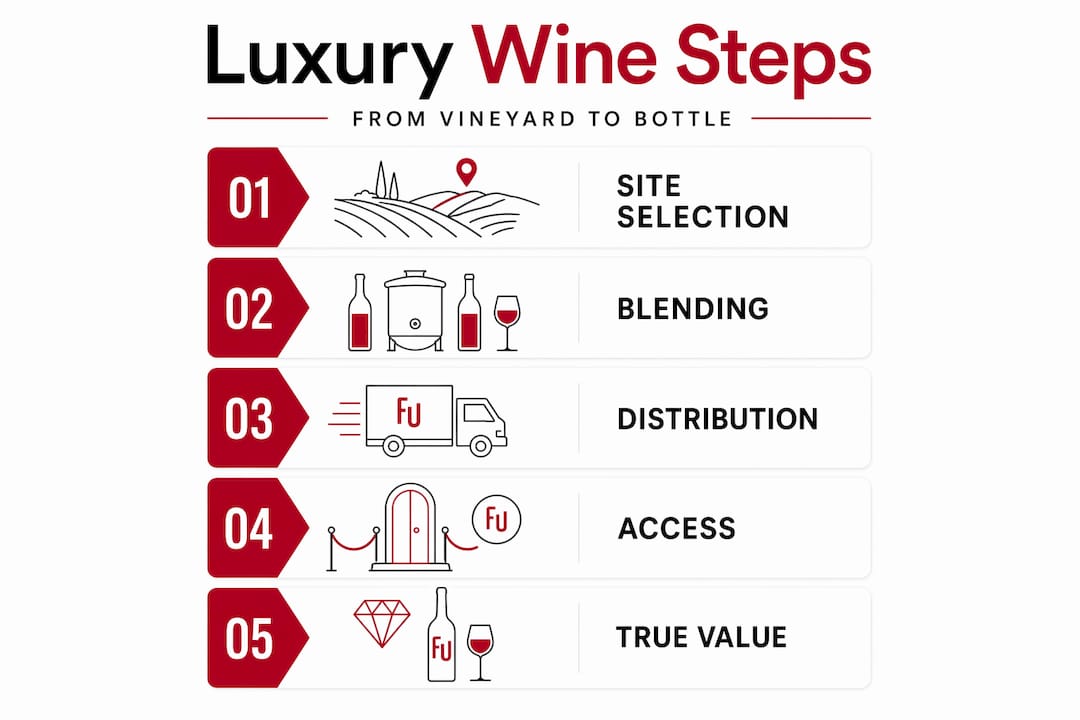
Direct importer sourcing represents one of the clearest routes for buyers seeking less pretentious access to luxury wine. Importers who travel to regions, build producer relationships, and negotiate directly are often able to offer bottles that simply do not appear in standard retail channels, and at prices that reflect actual value rather than brand inflation.
Practical steps for buyers ready to bypass the usual gatekeepers:
- Seek out specialist importers and regional experts who source directly from estates
- Join curated wine clubs that have established direct allocation relationships with producers
- Follow producers on social media for direct-sale announcements and cellar door releases
- Attend wine fairs and tastings where producers represent themselves without distributor layers
- Subscribe to newsletters from independent wine writers who track and recommend direct access opportunities
Pro Tip: Connect with regional specialists or curated wine clubs who have direct sourcing channels. They often carry bottles you will never see on a standard bottle shop shelf, at prices that unlock exclusive wine access you would normally pay a serious premium for. Understanding the role of wine curators and markups helps you distinguish who is genuinely adding value and who is simply adding layers.
The uncomfortable truth: Scarcity, storytelling and what most drinkers miss
Here is something the industry does not want you to think about too hard: a significant portion of luxury wine’s perceived value is manufactured. Not all of it. But enough to matter.
Scarcity is real in some cases. A single hectare of grand cru Burgundy genuinely does produce a finite number of bottles. But scarcity is also managed, amplified, and sometimes invented. Producers restrict releases, hold back inventory, or create tiered allocation structures not purely because supply is tight, but because controlled scarcity drives price and prestige. It is smart business. It is also worth calling out.
Terroir and blending storytelling can enlighten. It can also obscure. When a château tells you their blend is a closely guarded secret passed down through six generations, ask yourself: are they protecting quality or protecting margin? Often both are true at once. The narrative exists to justify the price as much as to describe the wine.
After looking at every layer of the sourcing chain from soil to barrel to auction floor, three lessons stand out clearly for buyers seeking real value:
- Choose transparency. Producers who publish detailed vineyard and blend information are more focused on the wine than the mythology around it.
- Probe sourcing claims. Ask importers and retailers direct questions about where wines come from and how they were acquired. Vague answers are a signal worth heeding.
- Value direct relationships. Whether it is a producer, importer, or trusted specialist, relationships cut through the noise and the markups simultaneously.
True luxury is control, knowing the why behind what is in your glass, rather than just the prestige of the label on the outside. The best bottles you will ever drink will often be the ones you found by understanding the system, not by deferring to it. Explore how wine investment benefits compound when you buy with knowledge rather than brand loyalty.
Unlock your access to rare wines, minus the barriers
You now know exactly how luxury wine is sourced, blended, distributed, and priced. That knowledge is genuinely powerful. It means you can stop paying for mystique and start paying for what is actually in the glass.
FU Wine was built precisely for this moment. We source premium, rare, and hard-to-find bottles through direct relationships, opportunistic buying, and allocation access that bypasses the traditional gatekeeping completely. Our deals are real, our wines are quality, and our prices are the kind that make traditional retailers deeply uncomfortable. If you are ready to stop overpaying for labels and start drinking extraordinarily well, visit FU Wine and see what is available right now. Limited stock. Real deals. No pretension.
Frequently asked questions
What is the most important factor in sourcing luxury wine?
The intersection of vineyard site and cellar blending decisions is key, since as Tim Atkin notes, terroir and viticulture practices shape ripeness and quality, while blending determines the final expression in the bottle.
How does en primeur or wine futures work for buyers?
Buyers commit to purchase before bottling, often securing top allocations at lower prices. En primeur involves buying during the barrel-ageing phase, typically two years before the wine is delivered.
Are all luxury wines bottled from a single vineyard?
No. Many prestigious wines are assembled from multiple lots, with winemakers trialling various parcel and barrel combinations before settling on the final blend.
Can I get luxury wine at better prices by avoiding traditional retailers?
Yes, connecting with direct importers and trusted curated sources allows many buyers to access premium wines well below standard retail markups, especially when allocation relationships are involved.