

Host engaging wine tastings at home: Fun, easy, affordable
TL;DR:
- Home wine tastings can be fun, affordable, and memorable with the right planning.
- Choosing a clear theme and limiting wines enhances engagement and conversation.
- Interactive elements like blind tastings and fun prizes make the experience enjoyable for all.
Wine tastings aren’t reserved for fancy restaurants or stuffy private clubs. That idea is rubbish, and it’s time to chuck it out. The truth is, some of the most memorable wine nights happen in someone’s lounge room, with the right group of mates, a handful of well-chosen bottles, and zero pretension in sight. If you’ve ever wanted to host something genuinely special without spending a fortune or memorising a wine encyclopaedia, you’re exactly where you need to be. This guide walks you through every step, from picking your theme to handing out silly prizes at the blind tasting reveal, so you can pull off a cracking event with complete confidence.
Table of Contents
- Choosing your wine tasting theme and lineup
- Setting up for success: Essentials and supplies
- Running the tasting: Order, pace, and keeping it engaging
- Making it memorable: Blind tastings, scoring and prizes
- Why approachable wine tastings matter more than perfection
- Find your next great wine experience
- Frequently asked questions
Key Takeaways
| Point | Details |
|---|---|
| Pick a central theme | Choosing a clear theme makes wine selection and discussion easier for everyone. |
| Prepare essential supplies | Simple glassware, tasting sheets, and palate cleansers set the stage for a relaxed event. |
| Limit number of wines | Serving up to eight wines helps avoid palate overload and keeps everyone engaged. |
| Make it interactive | Blind tastings, simple scoring, and small prizes can make your event truly memorable. |
Choosing your wine tasting theme and lineup
Now that you know a great wine tasting is within everyone’s reach, it’s time to decide how to make yours truly memorable.
The single biggest mistake first-time hosts make is buying a random mix of bottles with no connecting thread. It works out fine, sure, but it misses a massive opportunity. When you choose a clear theme for the tasting, whether that’s regional wines, single varietals, or a cheeky budget challenge under $15 to $20 per bottle, the whole night gets a sense of purpose and direction. Guests engage more. Conversations get sharper. And you look like you actually know what you’re doing, even if you Googled everything that morning.
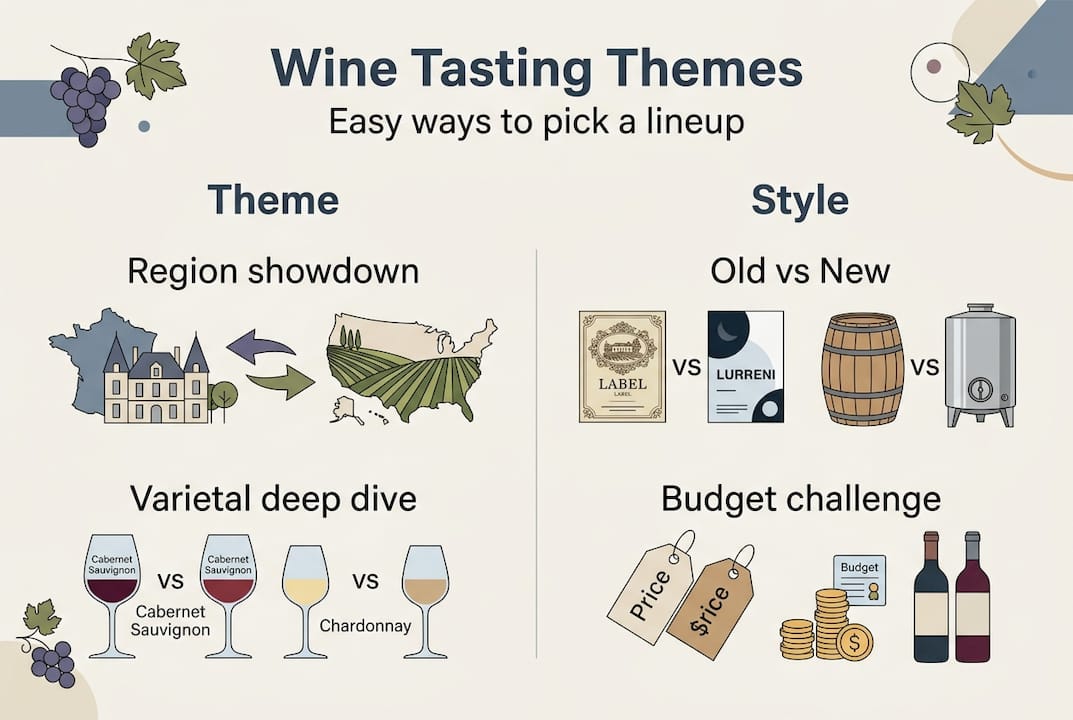
Some themes that consistently land well:
Region showdown. Pick one wine region and explore how different producers interpret the same terroir. Think Barossa Shiraz from three separate vineyards, or Clare Valley Rieslings side by side. The differences between bottles from the same postcode can be genuinely surprising.
Grape varietal deep dive. Take one grape, say Pinot Noir or Chardonnay, and source bottles from different countries or climate zones. An Australian Pinot Noir sitting next to a Burgundy is a masterclass in contrast without needing a single textbook.
Old World vs New World. Classic versus contemporary. European tradition versus bold, sun-soaked southern hemisphere character. This theme practically runs itself because your guests will already have opinions before the first pour.
Budget buster challenge. Mix one or two genuinely premium bottles with a couple of engaging wine tasting themes centred around value-driven finds. Get guests to guess which is which. The chaos and the laughter when someone picks the $14 bottle as their favourite is absolutely priceless.
Once your theme is locked in, think about your lineup structure. Research strongly supports limiting to 5-8 wines, poured in flights of pairs for comparison, with 30 to 50 ml pours per person to prevent palate fatigue and overconsumption, and one bottle yields anywhere from 12 to 25 pours depending on your measures. That’s a generous, responsible range that keeps the energy up without anyone needing to be carried home.
| Theme type | Difficulty | Approx. cost per bottle | Best for |
|---|---|---|---|
| Regional showdown | Easy | $15 to $35 | Local wine lovers |
| Varietal deep dive | Moderate | $20 to $50 | Curious explorers |
| Old World vs New World | Moderate | $25 to $60 | Opinionated crowds |
| Budget buster challenge | Easy | $12 to $40 | Any group, maximum laughs |
When thinking about choosing wines for entertaining, you don’t need to blow the budget on every bottle. A well-chosen value selection can absolutely steal the show from its pricier neighbour, and that’s half the fun.
Pro Tip: Ask each guest to bring one bottle that fits your theme. It shares the cost, introduces bottles you’d never have picked yourself, and instantly gives everyone a personal stake in the tasting. Suddenly, it’s collaborative rather than just a dinner party.
Setting up for success: Essentials and supplies
With your wines and theme selected, the next step is ensuring your environment supports a comfortable, enjoyable experience.
You don’t need a professional tasting room. You need a clean table, decent lighting, and a few key supplies that make the whole thing flow smoothly. Getting organised before guests arrive means you can actually relax and enjoy the night rather than scrambling for a corkscrew mid-pour.
Here’s what you genuinely need on the table:
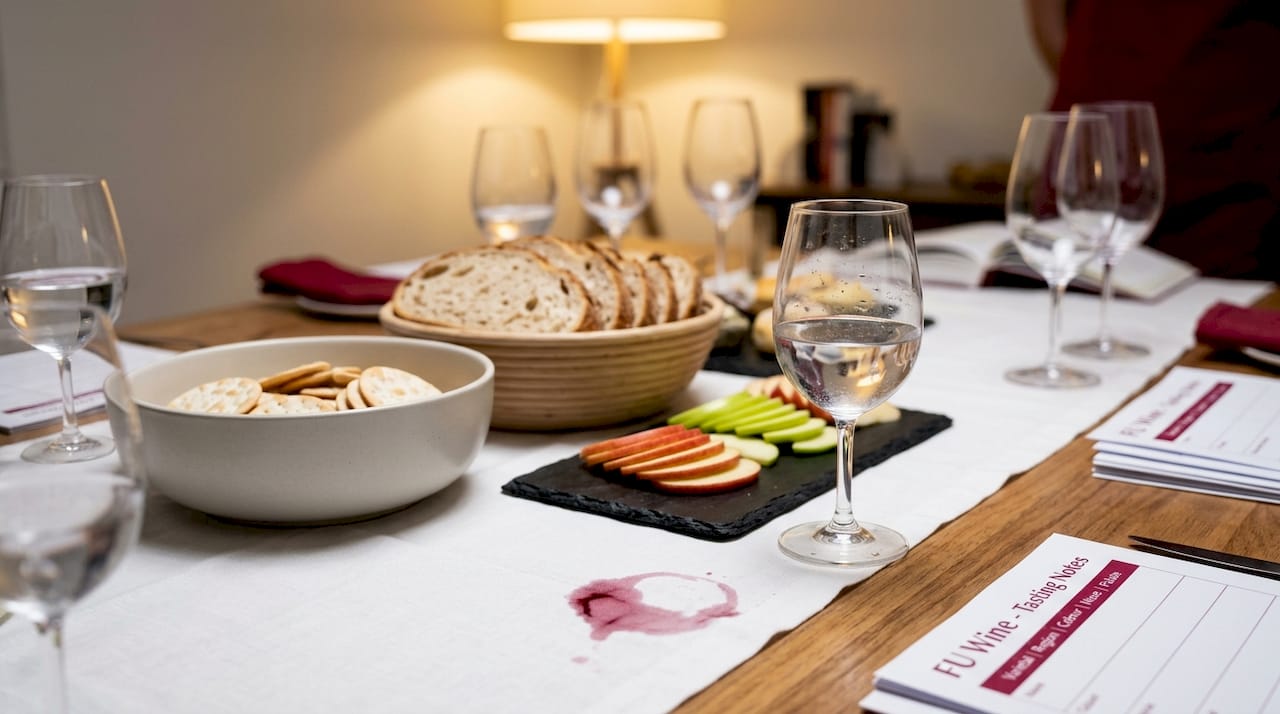
Glassware. One universal wine glass per person per wine is ideal. ISO-shaped glasses, the tulip style with a narrower rim, are excellent for concentrating aromas. If you only have standard wine glasses, that’s completely fine. Just avoid tiny tumblers or wide-rimmed water glasses.
Water and palate cleansers. Plain crackers, a neutral bread, or even thin slices of apple between wines reset the palate beautifully. Avoid strongly flavoured snacks until after the tasting is done.
Spit buckets and dump buckets. Not glamorous, but essential. Even if no one uses them seriously, having them present signals that this is a real tasting and not just an excuse to get tipsy. Although, honestly, both outcomes are fine.
Tasting sheets and pens. Simple score sheets with space for colour notes, aroma, taste, finish, and an overall score keep guests focused and give you something fun to look back on at the end.
A good wine opener. Sounds obvious. You’d be amazed how often this gets forgotten. Keep a backup.
The serving order for tastings matters more than most people realise. Research consistently backs starting with sparkling and light whites, then progressing through fuller whites, light reds, bold reds, and finishing with any sweet wines. Moving from delicate to intense keeps the palate sharp and ensures nothing gets overwhelmed early.
| Item | Quantity per guest | Budget tip |
|---|---|---|
| Universal wine glass | 1 per wine (or rinse between) | Hire from a local bottle shop |
| Water glass | 1 | Any glass works |
| Tasting sheet | 1 | Print free templates online |
| Pen or pencil | 1 | Don’t overthink it |
| Spit/dump bucket | 1 per 3 to 4 guests | A ceramic jug does the job |
| Plain crackers | Small plate per guest | Continental water crackers are ideal |
Lighting is worth a mention. Natural light or a warm, clear overhead lamp lets guests properly assess the colour and clarity of each wine, which is genuinely part of the experience and adds a layer of engagement that candlelit ambience, while lovely, actually undermines.
Seating should be relaxed and social. A long table works well, but a horseshoe or circle arrangement means everyone can see and respond to each other’s reactions, which is where a lot of the magic actually happens.
Pro Tip: Stick a numbered sticker on each bottle and corresponding glass before guests arrive. Hand out matching numbered score sheets and run one flight as a blind round. It adds instant theatre to the set-up and gets people invested from the very first pour.
Running the tasting: Order, pace, and keeping it engaging
Once your space is ready, it’s time for the main event: pouring, tasting, and enjoying.
Pace is everything. Rush the tasting and you lose the depth of conversation. Drag it out and you lose attention. Aim for roughly 10 to 15 minutes per flight, which allows enough time for proper sensory assessment without the session turning into a marathon. A total run time of one to two hours is the sweet spot for keeping energy and enthusiasm high throughout.
The 5 S’s technique is your best friend as a host: See, Swirl, Sniff, Sip, Savour. Walk guests through it for the first wine and then let it become a natural rhythm. It gives beginners a framework so they don’t feel lost, and it reminds experienced tasters to slow down and pay attention. You don’t need to turn it into a lecture. Just mention it casually and the room usually runs with it.
Here’s a practical order for running the session:
- Welcome guests and briefly explain the theme and format. Keep it to two minutes max.
- Pour the first flight and invite everyone to assess silently for one minute before discussing.
- Open the floor for impressions. Prompt with easy questions: “What do you smell first?” or “Is it dry or does it lean sweet?”
- Move to the second wine in the flight and encourage direct comparison with the first.
- Take a short break between flights for water, crackers, and general chat.
- Continue through remaining flights, adjusting pace based on the group’s energy.
- Finish with a group vote on the standout bottle of the night.
Research confirms that non-professional tasters handle 8 wines as a realistic maximum, with simplified descriptors like sweetness, acidity, body, and finish being the most accessible and useful evaluation tools for casual tasters. More than 8 wines and the palate genuinely starts to blur everything together, which means you’re getting less honest impressions and more guesswork.
“The goal of a home tasting isn’t perfection. It’s genuine connection with the wine and with each other. Fun beats expertise every single time.”
Keep your prompts conversational. Nobody wants to feel like they’re being tested. If someone describes a Shiraz as tasting “like a warm fireplace,” that’s a brilliant tasting note and deserves full credit. The wine tasting process is about discovery, not performance.
Making it memorable: Blind tastings, scoring and prizes
To truly transform your tasting into a communal experience, weave in interactive and playful elements.
The blind tasting is the single most powerful tool you have as a home host. Covering the bottles and numbering the glasses strips away all the label bias and price assumptions that normally colour people’s opinions. Suddenly, everyone is on equal footing. The corporate lawyer and the uni student are working from the exact same information: what’s actually in the glass.
Using blind tasting with covered bottles, numbered glasses, and score sheets for guessing the varietal, price point, or region makes for an engaging and genuinely educational format without any of the pretension, and the reveal at the end becomes a proper moment. Someone will inevitably be shocked. That shock is the whole point.
Here’s how to run the blind round smoothly:
- Wrap all bottles in foil or brown paper bags before guests arrive. Number each one clearly.
- Pour each wine into a correspondingly numbered glass for every guest.
- Hand out score sheets asking guests to rate sweetness, acidity, body, and finish on a simple scale of one to five.
- Add a fun guess column: grape variety, country of origin, and rough price bracket.
- Collect sheets before the reveal.
- Dramatically unwrap each bottle one at a time, reading out results and announcing who was closest.
Keeping scoring accessible matters enormously. Research backs 85% consensus among experts on using simplified descriptors like sweetness, acidity, astringency, and body as the most reliable attributes for everyday evaluation. Sticking to these four parameters on your score sheet means even total beginners can participate confidently and meaningfully.
Sourcing affordable wines for the blind round is where smart buying genuinely pays off. A wine that punches above its price bracket becomes a conversation piece and a small revelation. That’s exactly the kind of discovery a home tasting should deliver.
Prizes don’t need to be extravagant. A small block of good cheese, a novelty wine stopper, or even just the bragging rights of a handwritten “Best Palate” certificate can get surprisingly competitive energy flowing. The prize itself matters less than the ritual of awarding it.
Pro Tip: Make a small trophy out of a wine cork glued to a wooden coaster and label it “Most Discerning Palate.” It costs almost nothing and becomes a recurring fixture at future tastings.
Why approachable wine tastings matter more than perfection
Here’s the thing nobody in the wine world wants to admit: perfection is the enemy of a good wine night. The most technically correct tasting, with pristine ISO glasses and a sommelier-approved lineup, can be a complete bore if the host is too worried about doing it right to actually enjoy themselves.
Home tastings work because they remove the hierarchy. Nobody’s being marked. Nobody’s being judged. What you get instead is approachable hosting wisdom that puts shared discovery ahead of credentials. And that shift changes everything.
The wines you open at home build confidence over time. Guests who know nothing about wine in January start having real opinions by March. They start noticing things. They start seeking out bottles. That’s not something a fancy restaurant tasting achieves, because the environment is too formal and the stakes feel too high. Home tastings make wine approachable because you make them approachable.
Mistakes happen too, and they should. A corked bottle teaches more than a perfect one. An unexpected pairing that shouldn’t work but does becomes a story people tell for years. Nobody remembers the tasting where everything went to plan. They remember the night the “cheap” bottle won, or the moment someone described a Grenache as smelling like “Christmas pudding and a childhood memory.” That’s the stuff worth chasing.
Find your next great wine experience
Ready to bring your wine tasting to life with remarkable bottles and more expert guidance?
Everything you’ve just read points in one direction: quality wine, real discovery, and zero pretension. That’s exactly what FU Wine is built on. We source premium, hard-to-find, and cellar-worthy bottles at prices that actually make sense, so your next tasting lineup doesn’t require a second mortgage.
Browse our rotating selection of flash deals and limited releases at FU Wine, where every bottle is chosen for flavour, character, and value rather than label prestige. Whether you’re stocking up for a blind tasting night or hunting for that one standout bottle to anchor your theme, we’ve got something worth pouring. Life is genuinely too short for ordinary wine and inflated price tags.
Frequently asked questions
How many bottles of wine do I need for a tasting of 8 people?
Plan on roughly four bottles for eight guests, since one bottle yields 12 to 25 tasting pours and half a bottle per person is a solid consumption benchmark for a responsible, engaging event.
Should guests bring their own wine to a tasting?
Absolutely. Asking guests to contribute themed bottles keeps your hosting costs manageable, introduces variety, and gives everyone a personal connection to the tasting from the very start.
What is the optimal order for serving wines during a tasting?
Start with sparkling and light whites, then move through fuller whites, light reds, bold reds, and finish with any sweet wines to protect palate freshness throughout the session.
How do I make a wine tasting fun for beginners?
Keep it simple and playful. Blind tasting with numbered glasses and easy score sheets for guessing varietal, price, or origin removes all the intimidation and replaces it with genuine excitement and group energy.