

Master the hospitality wine selection process: 5 steps
Running a restaurant or bar wine programme is a genuine balancing act. You want a list that feels premium, excites your regulars, and impresses first-timers — but you also need to protect your margins and keep inventory lean. The trap most venues fall into is defaulting to big-name labels and well-known regions, then wondering why the numbers don’t stack up. A graduated markup scale shows that entry-level wines can carry 350 to 400% markups, while super-premium bottles sit closer to 250 to 300%. That gap is where smart buyers win. This guide walks you through every stage of the process, from fundamentals to ongoing refinement, so your wine list works as hard as you do.
Table of Contents
- Fundamentals: What you need for effective wine selection
- Step 1: Define your concept and clientele
- Step 2: Sourcing and selecting wines for premium value
- Step 3: Smart pricing and profit management without alienating guests
- Step 4: Design your wine list for impact and guest satisfaction
- Step 5: Monitor, rotate, and refine for ongoing profitability
- Elevate your wine list with specialist support
- Frequently asked questions
Key Takeaways
| Point | Details |
|---|---|
| Balance menu and clientele | Curate your wine list to complement your food and regular guest preferences for better sales. |
| Source smart for value | Look beyond big brands by rotating smaller producers and direct supplier deals to keep markups competitive. |
| Use data-driven pricing | Apply a graduated markup scale and prioritise wine velocity over maximum margin for higher overall profits. |
| Keep the list streamlined | A concise wine list reduces decision fatigue, simplifies inventory, and boosts guest satisfaction. |
| Refine with feedback | Regularly use sales and customer input to rotate and improve your list for ongoing profitability. |
Fundamentals: What you need for effective wine selection
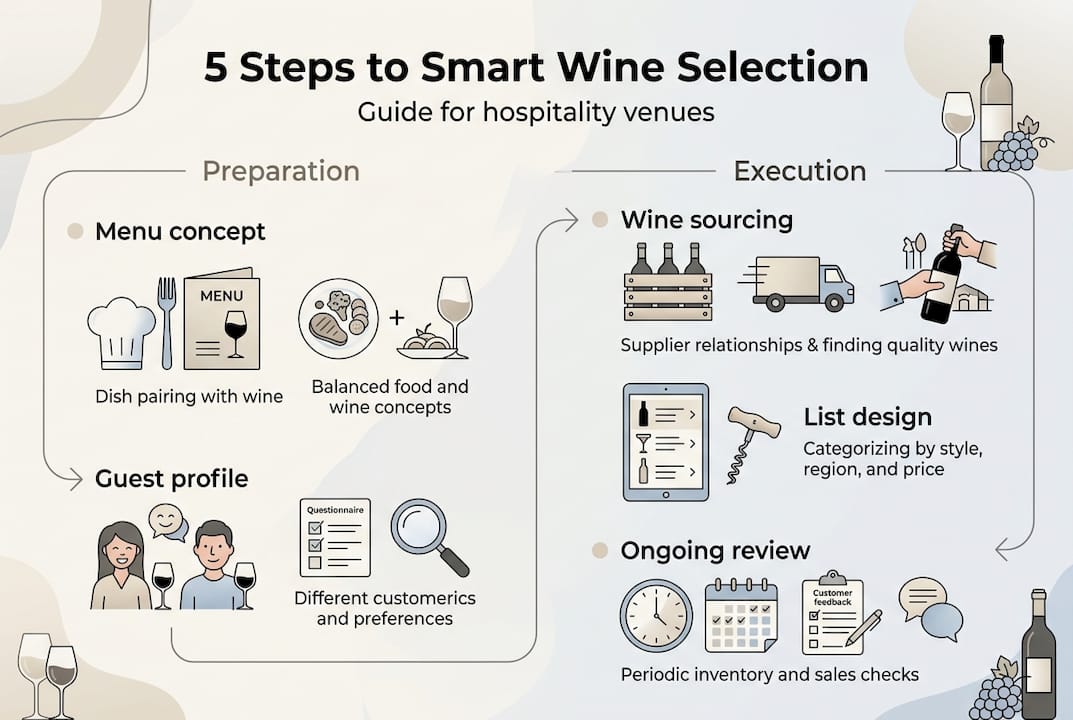
Before you start pulling bottles and building lists, you need a few things locked in. Think of this as your pre-flight checklist. Without it, you’re just guessing.
The essentials are straightforward. You need a clear menu concept, a solid read on your guest profile, defined cost of goods sold (COGS) targets, and at least one or two reliable supplier relationships. These four pillars shape every decision that follows.
Knowing your regulars matters more than most managers realise. A neighbourhood bistro and a CBD steakhouse might both want premium wines, but their guests have very different expectations and price tolerances. Align your list to the room, not just the menu.
| Venue type | Recommended BTG options | Total bottle range | Target markup |
|---|---|---|---|
| Casual dining | 6 to 10 | 20 to 40 | 300 to 350% |
| Full-service restaurant | 12 to 20 | 40 to 80 | 250 to 300% |
| Fine dining | 8 to 14 | 80 to 150+ | 200 to 250% |
| Bar or wine bar | 10 to 16 | 30 to 60 | 280 to 320% |
For full-service restaurants, 12 to 20 by-the-glass options and 40 to 80 bottles total is the sweet spot for avoiding decision fatigue while keeping your cellar manageable. Building a versatile wine portfolio from the start saves you from costly corrections later.
Pro Tip: A shorter, well-curated list almost always outsells a sprawling one. Guests who feel overwhelmed order the cheapest or most familiar option. Give them fewer, better choices and watch your average spend climb. Brush up on wine scoring basics to help you filter quality quickly.
Step 1: Define your concept and clientele
Once the fundamentals are set, it’s time to get specific about who you’re serving and what your venue stands for. This is where your wine list gets its personality.
A modern Australian restaurant with share plates calls for something different from a classic Italian trattoria or a high-end steakhouse. Your wine list should feel like it belongs in the room. Guests notice when it doesn’t.
Think about the mix of people walking through your door. Business diners want confidence and familiarity. Wine enthusiasts want discovery. Locals want value and consistency. The best lists serve all three without trying too hard.
- Match wine styles to your food (acid-driven whites for seafood, bold reds for red meat, versatile rosé for share plates)
- Include at least two or three familiar, trusted labels to anchor guest confidence
- Rotate one or two unique or lesser-known options to create excitement and conversation
- Price across at least three tiers so every guest finds something comfortable
“Selecting wines that align with your menu concept, balancing price tiers and styles, and rotating based on sales velocity consistently drives higher revenue per cover than a static, prestige-heavy list.”
When selecting quality wines for your concept, don’t overlook the impact of vintage. Understanding wine vintage basics helps you make smarter calls on what to feature and when.
Step 2: Sourcing and selecting wines for premium value
Defining your identity and guest profile makes it easier to strategically select the right wines to fit your concept and maximise value. This is where the real opportunity lives.
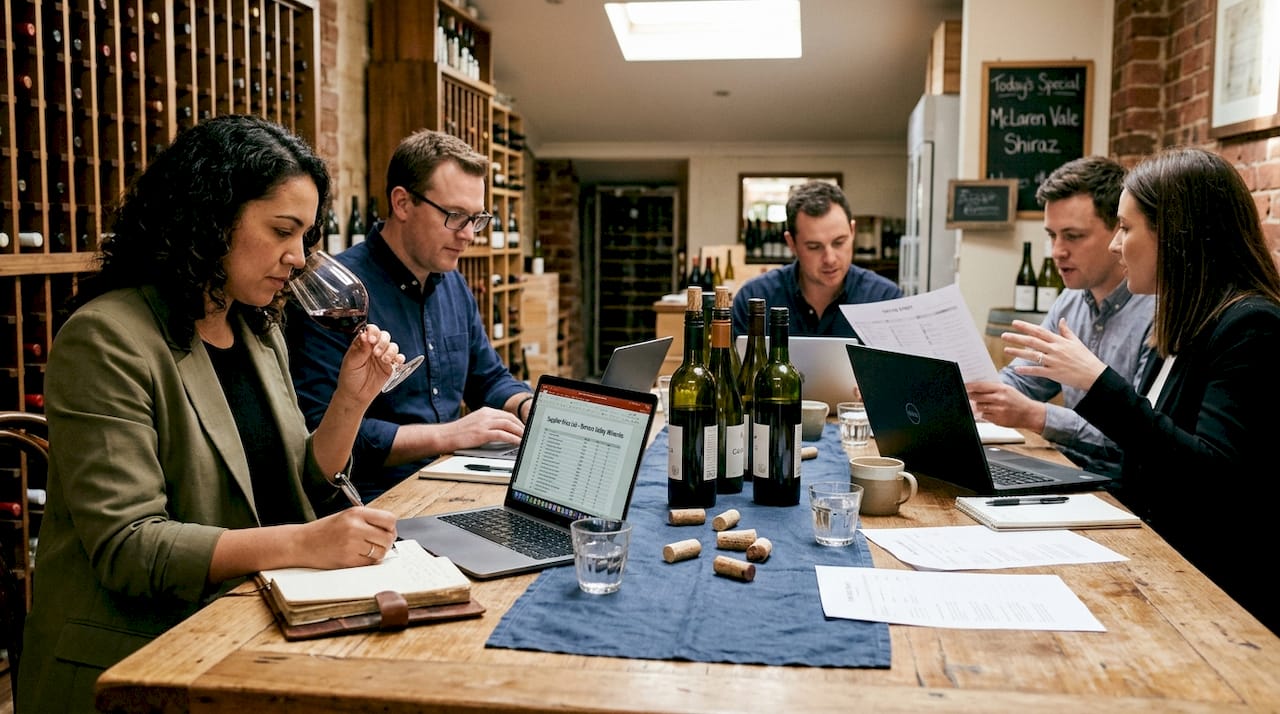
The biggest mistake hospitality buyers make is defaulting to the same big-name regions and producers everyone else is using. Familiar names carry familiar markups. Guests pay for the label, not the liquid. Flip that script.
Lesser-known regions and smaller producers let you deliver genuine quality at a fraction of the cost. Think Rioja over Napa Cabernet, Côtes du Rhône over Châteauneuf-du-Pape, or a boutique Barossa producer over a household name. Choosing lesser-known regions gives you premium appeal without the premium price tag.
| Region/style | Perceived value | Typical retail | Markup potential |
|---|---|---|---|
| Napa Valley Cabernet | Very high | $60 to $120+ | Lower (250%) |
| Rioja Reserva | High | $20 to $45 | Strong (300 to 350%) |
| Côtes du Rhône | Moderate to high | $15 to $30 | Excellent (350%+) |
| Barossa boutique red | High | $25 to $55 | Strong (300%) |
| Marlborough Sauvignon Blanc | High | $18 to $35 | Strong (300 to 350%) |
Here’s a practical sourcing sequence to follow:
- Identify the gaps in your current list by style, price tier, and food pairing
- Brief two or three suppliers on your concept and ask for samples from smaller producers
- Negotiate for by-the-glass rotation deals, which often come with better wholesale pricing
- Lock in a mix of reliable staples and rotating specials to keep the list fresh
- Review supplier portfolios quarterly and stay open to opportunistic buys
Knowing how to spot smart wine deals is a genuine skill. And if you want to add depth and prestige to your list, exploring cellar-aged wine options can set you apart from every other venue on the strip.
Step 3: Smart pricing and profit management without alienating guests
With sourcing done, it’s time to set prices that appeal to your clientele while supporting sustainable profitability. This is where a lot of venues leave money on the table, or worse, on the floor.
The old-school approach of slapping a flat 300% markup on everything is dead. Modern wine pricing uses a graduated scale. Entry-level wines absorb higher markups of 350 to 400%, while super-premium and luxury bottles sit at 250% or below. This keeps your list accessible at the bottom and aspirational at the top.
| Wine tier | Wholesale cost | Recommended markup | Target sell price |
|---|---|---|---|
| Entry-level | $8 to $12 | 350 to 400% | $28 to $48 |
| Mid-premium | $15 to $25 | 300 to 350% | $45 to $88 |
| Super-premium | $30 to $55 | 250 to 300% | $75 to $165 |
| Luxury | $60+ | Below 250% | $150+ |
For by-the-glass, a COGS target of 20 to 28% with a sell price in the $11 to $15 range hits the sweet spot for most venues. Use your POS data to track what’s moving and what’s sitting. Slow sellers eat margin and tie up cash.
Pro Tip: A wine that sells three times as fast at a 50% margin beats a wine sitting on the shelf at 70% margin every single week. Velocity is profit. Check wine pricing benchmarks to calibrate your tiers against industry standards. Understanding wine distribution models also helps you negotiate better wholesale terms.
Step 4: Design your wine list for impact and guest satisfaction
Once your wines and pricing are set, the next step is to present your list for maximum effect. A great list that’s poorly presented is a missed opportunity.
Layout and structure drive behaviour. Guests scan, they don’t read. Make it easy for them to find something they want at a price they’re comfortable with.
- Organise by style or region, not just colour, to help guests navigate confidently
- Highlight two or three sommelier picks or staff favourites to guide decision-making
- Use short, punchy descriptions (two sentences max) that focus on flavour, not jargon
- Display pricing clearly and consistently — hidden costs destroy trust
- Feature rotating or limited options with a small callout to create urgency
For full-service venues, 12 to 20 by-the-glass and up to 80 bottles keeps the list tight and the guest experience clean. Train your floor staff to recommend with confidence. A well-briefed server is your best upselling tool.
Pro Tip: Place your highest-velocity, best-margin wines in the top-right position on your list or at the top of each category. Eye-tracking research consistently shows this is where guests look first. If you’re exploring wine list alternatives or digital formats, the same principle applies.
Step 5: Monitor, rotate, and refine for ongoing profitability
With a strong list in place, ensure ongoing profitability through regular review and smart tweaks. A wine list is never finished — it’s a living thing.
Here’s a simple review cycle that works:
- Pull your POS data monthly and rank wines by volume sold and gross profit contribution
- Flag anything that hasn’t moved in six weeks for removal or repricing
- Brief your suppliers on what’s working and ask for alternatives in the same style or price point
- Gather staff feedback after each service — they hear what guests say in real time
- Review guest feedback from online reviews and comment cards for recurring themes
“Lower margins on faster-selling wines generate more total profit than high margins on slow movers. Volume and velocity are the real drivers of wine profitability in hospitality.”
If a wine consistently underperforms, don’t wait. Pull it, replace it, and move on. Sentiment has no place in inventory management. Exploring wine investment benefits can also open your thinking to longer-term cellar strategies that add prestige without blowing your budget.
Elevate your wine list with specialist support
Mastering every stage of wine selection puts your venue in a strong position. The right partner makes it easier, faster, and a lot more fun.
At FU Wine, we work with hospitality venues that are done paying inflated prices for premium bottles. Our rotating catalogue of rare, high-scoring, and boutique wines gives you access to the kind of premium wine selection that usually requires serious connections or serious cash. We source opportunistically, buy smart, and pass the savings directly to you. Flash deals, limited releases, cellar clearances — it’s all there, ready to drop into your list and impress your guests without wrecking your margins. Every bottle is a small rebellion against the old way of doing things.
Frequently asked questions
What is the ideal size for a restaurant wine list?
Most full-service venues perform best with 12 to 20 by-the-glass and 40 to 80 total bottles to keep choices clear and costs controlled. Going beyond this range typically increases decision fatigue and carrying costs without meaningfully improving guest satisfaction.
How can I keep wine markups appealing while offering premium bottles?
Focus on rotating lesser-known regions and smaller producers, which let you provide premium quality with lower markups. Guests respond to quality and story, not just brand recognition.
What profit margin should I aim for on by-the-glass wine?
A COGS target of 20 to 28% with a sell price in the $11 to $15 range typically delivers a profitable by-the-glass programme. Track velocity alongside margin to get the full picture.
How do I avoid guest decision fatigue with my wine list?
Keep your list focused and balanced, aiming for no more than 80 bottles and mixing familiar styles with unique finds. A tighter list with strong descriptions and staff guidance consistently outperforms a sprawling one.