

Home wine storage sorted: what to buy for your collection size
For most home collectors, a temperature-stable wine fridge or dual-zone cabinet is the smartest balance of preservation, price and convenience. Reserve conditioned cellars for the big, long-haul collections. Home wine storage isn’t about chasing a mythical perfect cellar. It’s about picking one setup that holds a steady temperature and leaving it alone.
Here’s the quick verdict by collection size:
- Small collection (under 24 bottles): a compact freestanding wine fridge does the job. Cheap to run, easy to place, no drama.
- Medium collection (25 to 200 bottles): a dual-zone cabinet or modular racking system in a cool, dark spot. Room to grow without a renovation.
- Large collection (200+ bottles): a proper conditioned cellar or off-site storage. At this volume, temperature swings cost real money.
Stability beats perfection every time. A wine fridge holding a steady 13°C will outperform a “proper” cellar that swings between 10°C and 22°C with the seasons. Jump to the comparison table below or skip straight to the buying checklist if you already know your collection size.
Key Takeaways
Stable temperature, not perfect conditions, is the single biggest factor in preserving a home wine collection over time.
| Point | Details |
|---|---|
| Match storage to collection size | Small collections suit a fridge, medium suits a dual-zone cabinet, large suits a conditioned cellar. |
| Stability beats exact numbers | Keep swings within roughly 1 to 3°C rather than chasing a perfect setpoint. |
| Test before you commit | Run a thermometer and hygrometer in the spot for at least a week before loading bottles. |
| Position depends on the closure | Store corked bottles on their side; screwcapped bottles can stand upright. |
| Buy bottles that suit your setup | FU Wine’s rotating deals on cellar-worthy bottles fit any storage approach, from fridge to conditioned cellar. |
Table of Contents
- What’s the best home wine storage option: fridges, cabinets or racks?
- How do I choose the right wine fridge or cabinet?
- What temperature and humidity does wine actually need?
- Which storage solution suits your collection size?
- How can I display wine without ruining it?
- How do I set up and monitor a home wine storage spot?
- FU Wine’s take: buy for the storage you actually have
- How do I protect my wine collection from theft?
- What does home wine storage actually cost?
- How long does it take to get a wine storage setup running properly?
- How much does it cost to run wine storage day to day?
- Why “good enough and stable” beats “perfect and fragile”
- FU Wine: skip the markup, keep the good bottles coming
- Frequently asked questions
- Sources
What’s the best home wine storage option: fridges, cabinets or racks?
The three main categories split cleanly by what they protect against. Fridges and cabinets control temperature and often humidity. Open racking protects bottles from vibration and gives you display value, but does nothing for heat. Which one you need depends on how long you’re planning to hold the bottles.
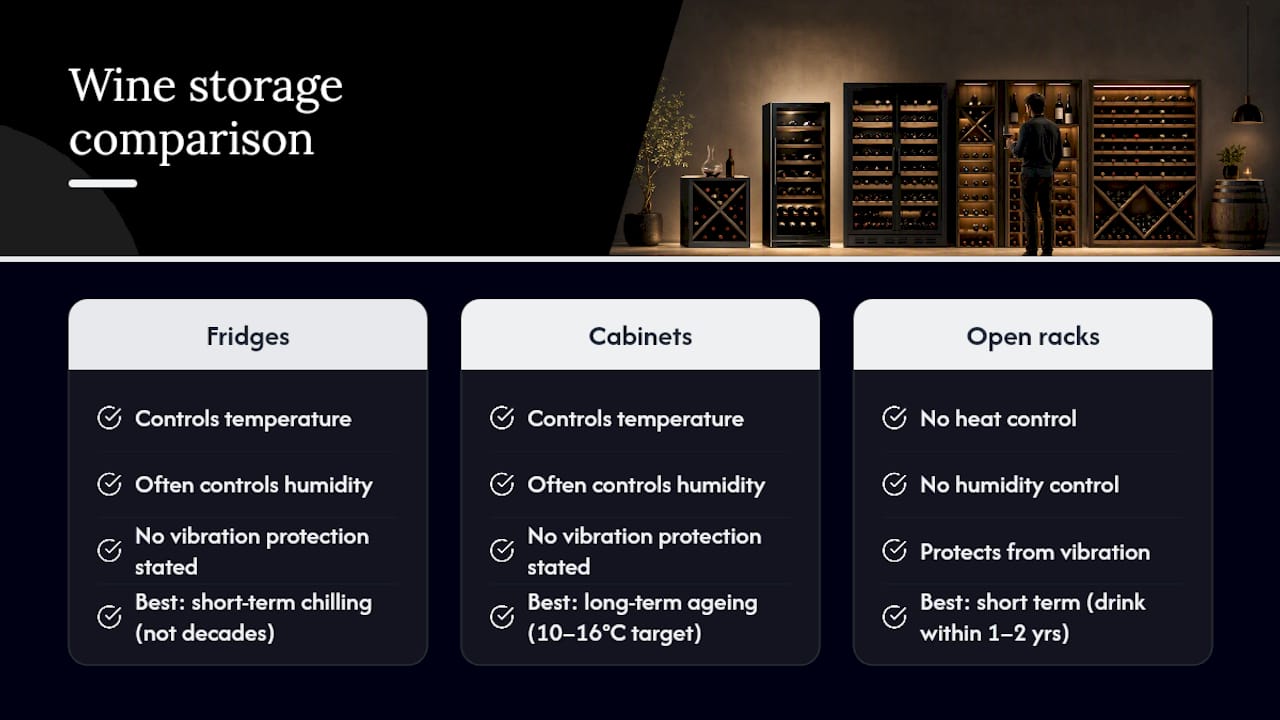
Long-term ageing needs consistency, not just cold. Purdue Extension’s wine storage guidelines put the ideal long-term range at 10 to 16°C, with anything above 24°C causing rapid, undesirable ageing. A cheap bar fridge set to 4°C will chill your whites for tonight, but it’s the wrong tool for a bottle you want to hold for a decade.
Open racking (KingsBottle’s speciality) suits bottles you’re drinking within a year or two, kept somewhere naturally cool and dark. Cabinets and conditioning units from Vintec and EuroCave earn their price tag when you’re building something you intend to hold for real.
How do I choose the right wine fridge or cabinet?
Buying the wrong unit is an expensive mistake, and it’s usually not obvious until six months in when your corks start drying out or your reds show premature browning. Work through this before you hand over money:
- Confirm your target temperature range. Long-term storage sits at 10 to 16°C. Anything you’re drinking within the year has more room to move.
- Check for zoning. If you’re storing both reds and whites, a dual-zone unit saves you buying two separate appliances.
- Ask about humidity handling. Cabinets built for ageing (EuroCave in particular) manage humidity actively. Cheaper fridges often don’t, which dries corks over years.
- Measure your clearance and ventilation. Compressor units need airflow at the back and sides. A cabinet jammed against a wall in a hot garage will work harder and fail sooner.
- Check the door glass. UV-protected glass matters if the unit sits anywhere near natural light.
- Confirm power location and noise levels. Compressor models are noisier than thermoelectric ones. That matters if the unit’s going in a living space.
- Read the warranty scope. Does it cover the compressor specifically, and for how long?
Pro Tip: Ask the dealer what happens to the compressor warranty if the unit is installed in an unventilated cupboard. Some warranties are voided by poor airflow, and that’s the exact spot most people try to squeeze a cabinet into.
Red flag to watch for: a unit with no listed temperature range, or one marketed purely on litres of chilling capacity rather than stability. That’s a fridge dressed up as a cellar.
What temperature and humidity does wine actually need?
Get the environment right and the rest of home wine storage looks after itself. Get it wrong and no amount of nice racking saves you.
Temperature is the big one. Long-term storage wants 10 to 16°C, and stability matters more than hitting an exact number. Fluctuations of more than a couple of degrees on a daily cycle do more damage than sitting slightly warm but steady. Aim to keep swings within roughly 1 to 3°C for anything you plan to hold. USA Today’s rundown on storing wine like a sommelier makes the same point: the main enemy is heat from ordinary household sources, not a lack of a fancy cellar.
- Keep bottles away from ovens, hot water systems, and any wall that cops afternoon sun.
- Target humidity around 55 to 75%. Too dry and corks shrink, letting in air. Too wet and labels peel or mould.
- Store corked bottles on their side to keep the cork swollen and airtight. Screwcapped bottles can stand upright without the same risk.
- Keep bottles dark. Direct sunlight and strong household lighting can cause “light-struck” faults, particularly in lighter styles, according to Forbes’ reporting on common home storage mistakes.
If you want a display cabinet in a bright room, low-heat LED lighting on a timer or motion sensor gives you the visual without the UV exposure; for guidance on pairing your wine with food to enhance your enjoyment, see our partner’s practical guide to pairing wine with tapas.
Which storage solution suits your collection size?
Match the setup to the number of bottles you’re actually holding, not the collection you’re hoping to have in five years.
- Under 24 bottles: a compact wine fridge or a genuinely cool cupboard away from appliances. Cheap, simple, low commitment. The downside is limited zoning, so mixed reds and whites can be a compromise.
- 25 to 200 bottles: this is where a dual-zone upright cabinet or modular racking earns its keep. You get room to grow and can add capacity in stages rather than buying one giant unit upfront.
- 200+ bottles: a conditioned cellar room or professional off-site storage starts making financial sense. At this scale, the cost of a poorly controlled DIY setup (spoiled bottles, premature ageing) usually exceeds what proper conditioning would have cost.
Tight on floor space? Tall, secure racking against a single wall often beats spreading bottles across a house, since it keeps the whole collection out of foot traffic and away from light in one place. Wall-mounted systems and underbench units (KitchenAid’s underbench wine cellar is built exactly for this) suit kitchens and studies where floor space is non-negotiable.
How can I display wine without ruining it?
You don’t have to choose between showing off a collection and protecting it. The trick is picking finishes and lighting that look good without introducing heat, UV or humidity swings.
- Glass-fronted cabinets with UV-filtered doors let you see the collection while blocking the light exposure that causes fading and premature ageing.
- Motion-activated LED strips give you the “wow” moment when someone walks past, without running heat-generating lighting all day.
- A wine wall built into a hallway or dining area works as a design feature, provided it’s insulated and conditioned rather than just an open rack against an exterior wall.
- Timber racking looks warmer than metal but check it’s been treated to resist the higher humidity that ageing wine needs, or labels sitting nearby can absorb moisture and peel.
- Concealed storage behind cabinetry suits collectors who’d rather keep the good stuff out of casual view, particularly for higher-value bottles.
How do I set up and monitor a home wine storage spot?
Before committing a collection to any spot, test it properly.
- Place a max/min thermometer and a hygrometer in the candidate location for at least a week, ideally across a full season, to see how much it actually swings.
- Check ventilation and clearance around any cabinet or fridge, and confirm the power point is close enough that you’re not running an extension cord permanently.
- Test the door seal on any cabinet before loading it. A poor seal lets in warm air and undoes the whole exercise.
- Identify vibration sources nearby, laundry machines and busy stairwells are common culprits.
- Set a maintenance rhythm: check temperature and humidity monthly, book an annual service for compressor units, and clean vents and seals twice a year.
Pro Tip: Don’t trust a single reading. A thermometer that shows 13°C at 9am can hide a spike to 19°C on a hot afternoon. Log readings at different times of day before you decide a spot is safe.
FU Wine’s take: buy for the storage you actually have
Most home collectors are working with a wine fridge or cabinet, not a conditioned cellar. That changes what’s worth buying. A bottle that needs a decade of stable ageing to show its best is wasted in a fridge you’ll reorganise in two years.
Buy premium, drink-soon bottles for fridge storage. Save genuine cellaring candidates, structured reds, high-tannin styles, for a proper cabinet, and check our drinking windows guide before deciding which bin a bottle belongs in. Our guide to evaluating wine for drinking versus holding covers this split in more depth.
How do I protect my wine collection from theft?
A collection worth a few thousand dollars is a target most home insurance policies won’t fully cover unless you’ve specifically listed it, so security is worth thinking through before you’re stacking premium bottles three deep.
Start with visibility. A glass-fronted display cabinet in a front window looks great on Instagram and tells anyone walking past exactly what’s inside. Position display units away from ground-floor windows facing the street, and keep your highest-value bottles in a cabinet or room that isn’t visible from outside.
Lockable cabinets matter more than most buyers realise. Several Vintec and EuroCave models offer lockable doors as standard or as an add-on. It’s a simple deterrent against casual opportunists, tradespeople, house sitters, and anyone else who has legitimate access to your home but no business near your best bottles.
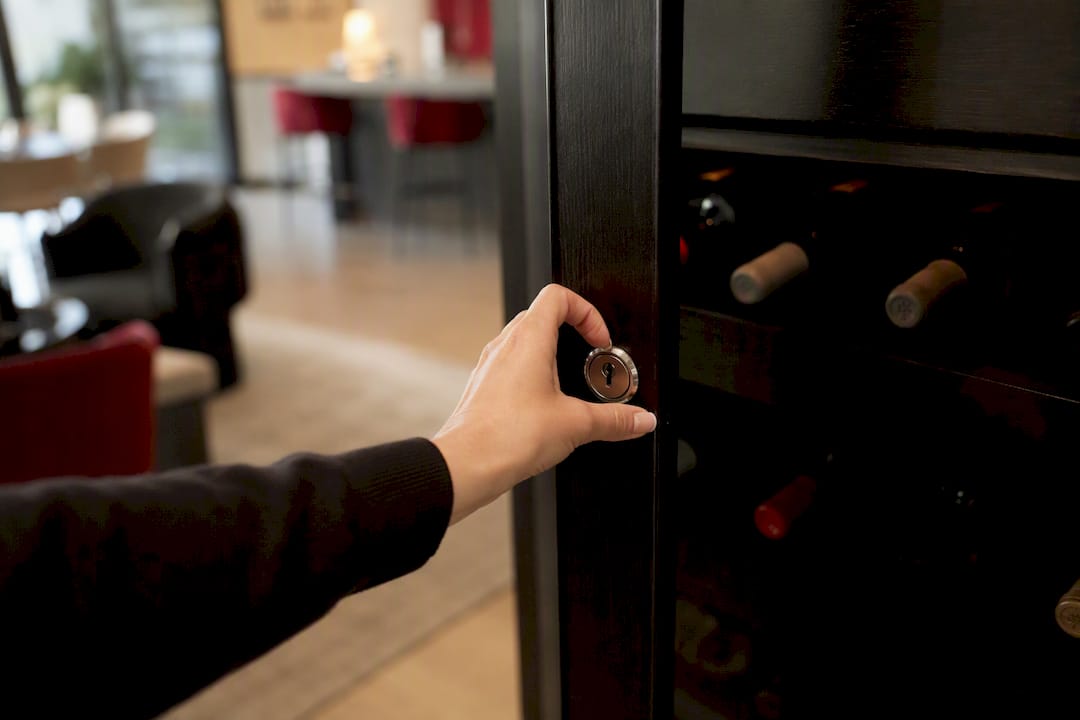
For larger collections, treat the cellar or storage room like any other high-value space. That means a solid door, a lock that isn’t the original builder’s cheap fitting, and ideally its own line on your home and contents insurance rather than an assumption it falls under general contents cover. Photograph your collection periodically, note vintages and approximate values, and keep that record somewhere other than the cellar itself.
If you’re storing genuinely significant volumes, off-site professional storage facilities typically include monitored security, insurance built into the service, and controlled access logs, worth weighing against the convenience of having everything at home.
What does home wine storage actually cost?
Budgets for home wine storage span a wide range, and the right spend depends entirely on collection size and how long you’re planning to hold bottles.
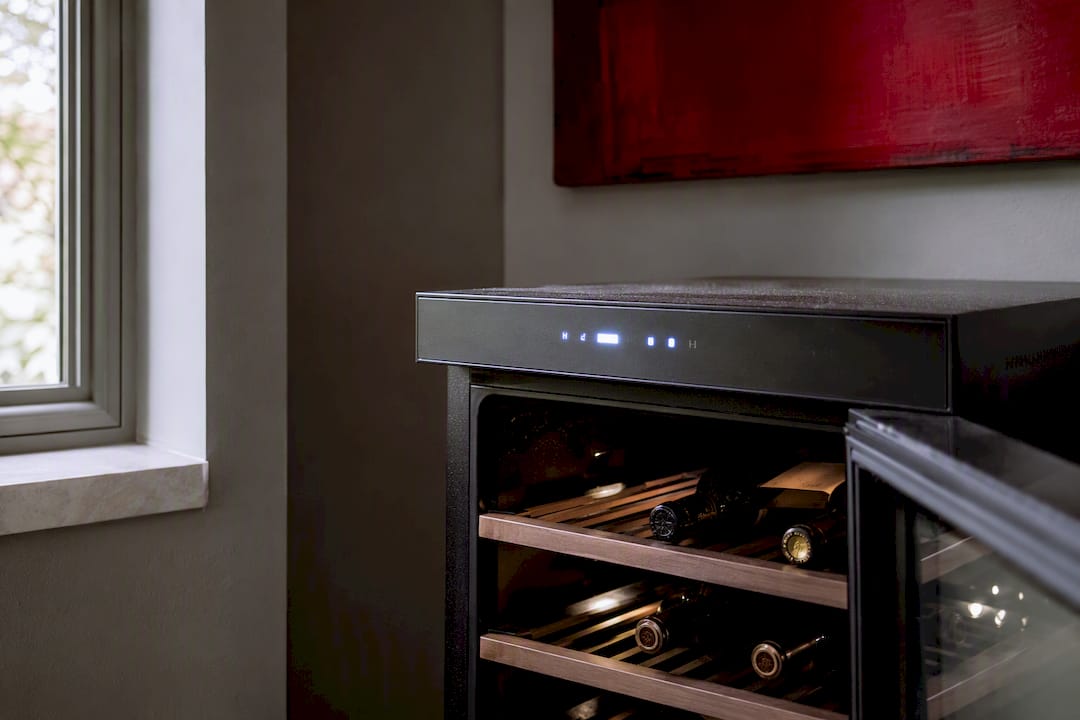
At the entry level, a compact freestanding wine fridge covers small collections without a big outlay, and running costs stay modest since these units are built to hold a narrow temperature band rather than work hard like a kitchen fridge. Move up to a dual-zone cabinet from a brand like Vintec or KitchenAid, and you’re paying for more sophisticated compressor technology, better insulation, and usually UV-protected glass, all of which justify the step up in price if you’re serious about ageing.
EuroCave’s conditioning units sit at the premium end, reflecting the added humidity-control technology built specifically for long-term cellaring rather than short-term chilling. Racking systems from suppliers like KingsBottle offer a cheaper entry point for display and organisation, but remember you’re paying for storage and presentation, not climate control, so factor in the cost of a genuinely cool, dark room to put that racking in.
Beyond the unit itself, budget for installation if you’re going underbench or built-in, ongoing power costs, and eventually a service call for compressor-based units. A conditioned cellar room carries the highest upfront cost of any option here, insulation, vapour barriers and a dedicated cooling unit add up, but it’s the only setup that scales cleanly once you’re past a couple of hundred bottles.
How long does it take to get a wine storage setup running properly?
Buying the unit is the easy part. Getting it performing correctly takes longer than most first-time buyers expect.
A compact wine fridge can be unboxed, positioned, and running within a day, but give it 24 to 48 hours to reach a stable internal temperature before loading it with bottles. Loading a fridge while it’s still stabilising is one of the most common mistakes new owners make, and it throws off the readings you’ll rely on for the first week.
Larger cabinets and dual-zone units follow the same principle on a longer timeline. Expect three to five days of monitoring before you trust the unit with valuable bottles, checking that both zones (if it has them) are holding steady and that the door seal isn’t letting in ambient air.
A conditioned cellar room is the real time investment. Between installation, testing, and letting the space cycle through a full run of its cooling and humidity systems, budget several weeks before committing a serious collection to it. That’s exactly why the testing period in the monitoring checklist earlier in this guide matters. Skipping it to get bottles in sooner is how collectors end up discovering a hot spot or humidity problem after the damage is already done.
How much does it cost to run wine storage day to day?
Running costs vary more than buyers expect, largely driven by compressor type, insulation quality and how consistently the unit holds its set temperature.
Compressor-based units, the type found in most Vintec, EuroCave and KitchenAid cabinets, use more power than thermoelectric coolers but hold temperature more reliably in warmer Australian conditions and larger rooms. Thermoelectric units run quieter and cheaper but struggle in hotter climates or when ambient temperatures swing, meaning they can end up working harder and less efficiently than their compressor counterparts over a full year.
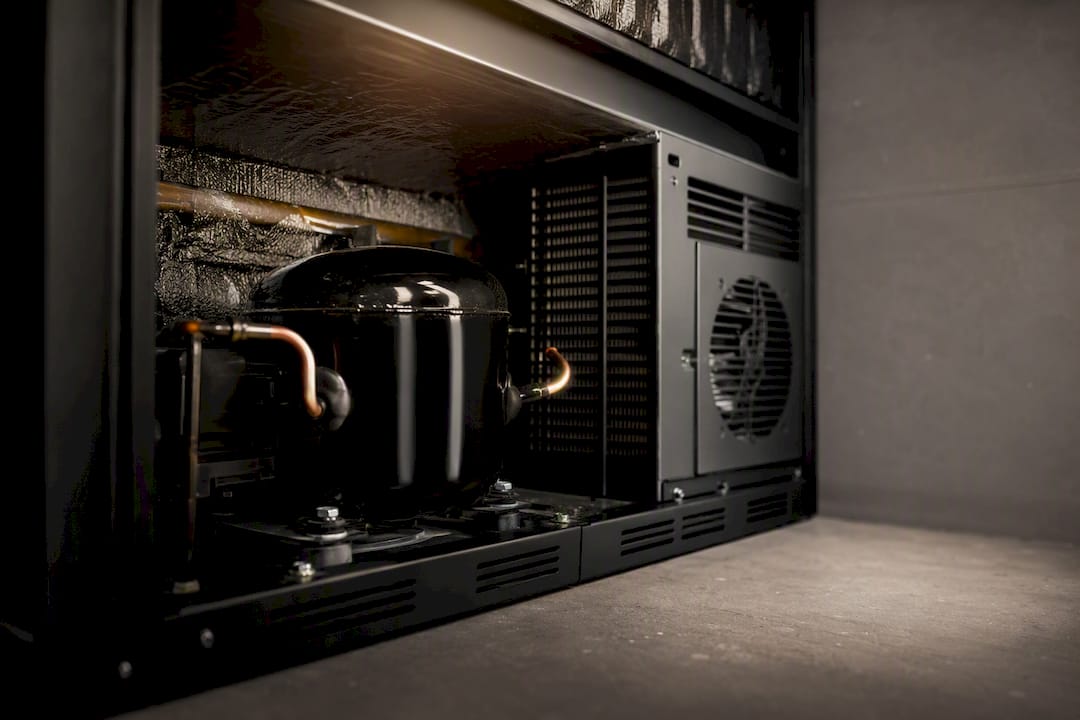
Placement affects running costs as much as the unit itself. A cabinet stuffed into an unventilated cupboard or a garage that bakes in summer will draw more power fighting the ambient heat than the same unit placed in a stable, naturally cool spot. That ventilation clearance from the buying checklist earlier isn’t just about warranty terms, it directly affects your power bill.
For a conditioned cellar room, ongoing costs come down to insulation quality and how airtight the enclosure is. A well-sealed room with a proper vapour barrier holds its conditions with far less energy input than one relying purely on insulation without an airtight seal. Annual servicing, cleaning vents and checking seals, also keeps units running efficiently rather than compensating for a slow leak in cooling performance.
Why “good enough and stable” beats “perfect and fragile”
The conventional advice on home wine storage leans hard into perfection: exact humidity, precise temperature, ideal darkness. That advice isn’t wrong, but it sets an impossible bar for a typical home and quietly discourages people from doing anything at all.
The research backs a more useful priority order. Stability matters more than hitting an exact number, and the biggest threat to most home collections isn’t a cellar that’s slightly warm, it’s a cellar that swings wildly because it sits near an oven or a sunny wall. A steady wine fridge at 15°C will outlast a “proper” setup that lurches between 9°C and 23°C across the seasons.
What I’d tell any collector starting out: solve for stability first, capacity second, and aesthetics last. Buy the smallest unit that comfortably fits your current collection plus room to grow, place it somewhere boring and consistent, and only think about display cabinets and wine walls once the fundamentals are locked in. Chasing the perfect cellar before you’ve nailed the basics is how good bottles end up quietly ruined in a beautiful room.
FU Wine: skip the markup, keep the good bottles coming
Sorted your storage? Good. Now you need bottles actually worth storing. FU Wine exists because premium wine shouldn’t cost premium-wine money just because a label says so.

This isn’t a storage pitch. Whatever fridge, cabinet or racking system you land on from this guide, the same rules apply no matter where the bottle came from. What we’re offering is the bottles worth putting in there. Check our current stock and deals and see what’s landed this week before it’s gone.
Frequently asked questions
What is the best temperature for home wine storage? Aim for 10 to 16°C for long-term storage, with minimal daily fluctuation. Short-term storage, bottles you’ll drink within a year or two, can tolerate a wider range, but consistency still matters more than hitting an exact figure.
Do I need a wine fridge, or will a cupboard work? A genuinely cool, dark, stable cupboard away from appliances and sunny walls can work for small collections held short-term. Once you’re storing bottles for years or holding more than a couple of dozen, a proper fridge or cabinet gives far more reliable control.
Should wine bottles be stored horizontally or vertically? Corked bottles go on their side to keep the cork moist and airtight. Screwcapped bottles can be stored upright without the same risk, which frees up space in racks and cabinets.
How much humidity does home wine storage need? Too dry and corks shrink, letting in air; too wet and labels can peel or grow mould.
Is underground wine storage better than a cabinet? A well-built underground or basement cellar can offer naturally stable temperatures, but only if it’s properly insulated with an airtight vapour barrier and decent air circulation. Without that, a quality cabinet from a brand like Vintec or EuroCave often outperforms a DIY underground space.
Sources
- The worst place to store wine in your home is probably where it’s sitting right now — Forbes
- Wine Storage Guidelines — Purdue Extension (FS-58-W)
- How to store wine — Jancis Robinson