

Guide to discounted wine: how to find premium bottles for less
TL;DR:
- Understanding where genuine value hides allows savvy buyers to find discounted premium wines through market cycles and retailer strategies. Proper preparation, including establishing a budget, verifying prices, and assessing retailer credibility, is essential before purchasing discounted wines. The key to success is buying from reputable sources, verifying authenticity, and storing wines properly to enjoy quality at a fraction of the industry price.
You love great wine. You’re just not willing to pay a small fortune for it every time. That’s not a compromise. That’s smart. The guide to discounted wine you’ve been waiting for isn’t about hunting down cheap plonk. It’s about understanding where genuine value hides, how to spot it before someone else does, and how to buy with confidence. Premium wine is more accessible than the industry wants you to believe. You just need to know the rules of the game.
Table of Contents
- Understanding the wine discount landscape
- Preparing to shop for discounted wines: what you need to know
- Executing your discounted wine purchase smartly
- Verifying and enjoying your discounted wine finds
- A new perspective on discounted wine buying
- Discover discounted premium wines at FU Wine
- Frequently asked questions
Key Takeaways
| Point | Details |
|---|---|
| Expert tastings reveal value | Blind tastings identify premium wines consistently priced under $20 that outperform expectations. |
| Prepare before buying | Set budgets, research pricing, and subscribe to alerts to shop discounted wines smartly. |
| Verify authenticity | Check provenance, seller reputation, and market prices to avoid counterfeit or poor-quality wines. |
| Discounts offer unique finds | Discounted wines often include blends and regional treasures not found in mainstream lists. |
| Trusted sources matter | Buying from reputable merchants ensures both genuine deals and quality assurance. |
Understanding the wine discount landscape
Let’s get one thing clear: discounted wine doesn’t mean damaged wine. The wine industry runs on cycles, relationships, and inventory pressure, and that creates real opportunities for savvy buyers.
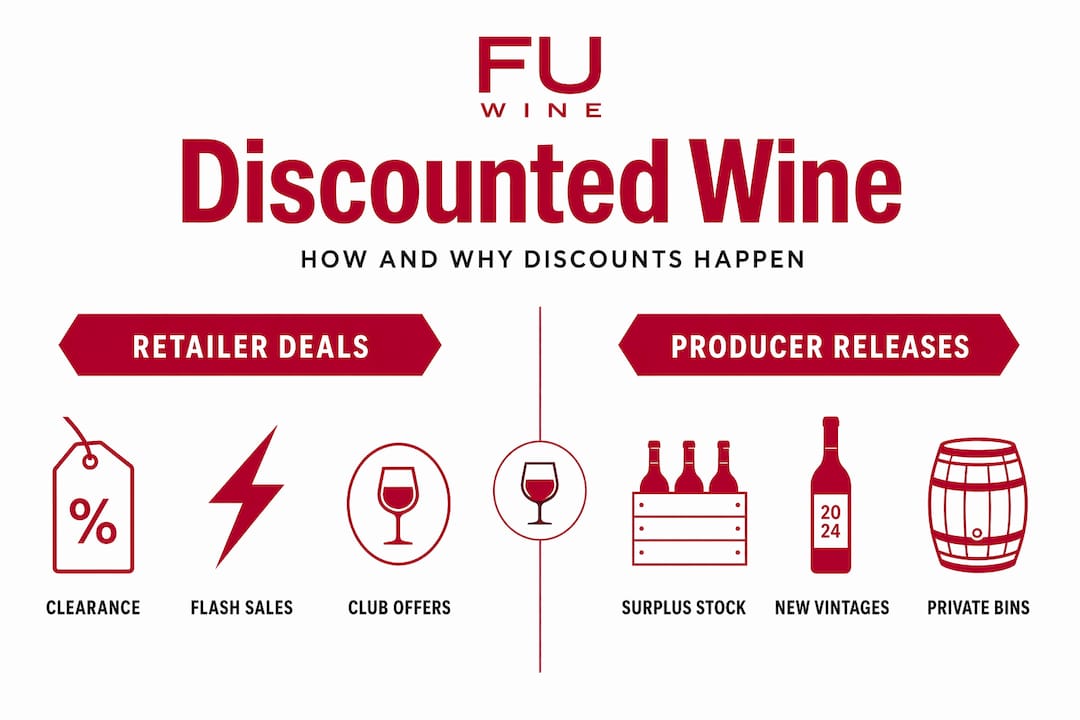
Retailers regularly clear stock to make room for incoming vintages. Producers sometimes release excess allocation when a distributor falls through. Online flash sales move limited stock fast, often at prices well below what you’d find on a standard shelf. These aren’t accidents. They’re structural features of a market that produces more wine than it can sell at full price.
Wine Enthusiast’s 2025 Top 100 Best Buys list features over 100 wines under $20, every single one selected through blind tastings. That means the label, the story, and the price tag were all invisible when the scores were assigned. Quality won. That’s the whole argument for discount wine in a single fact.
If you want to unlock wine discounts with a sharper strategy, understanding what drives pricing in the first place is the foundation.
Key factors that influence wine discounts:
- Vintage pressure: Retailers need to shift older vintages to bring in new stock, especially after a highly rated release year.
- Region reputation: Emerging wine regions price aggressively to compete with established names. That’s your opportunity.
- Inventory cycles: End of quarter and end of financial year often trigger retailer discounting programmes.
- Retailer strategy: Some retailers use loss leaders on well-known labels to drive traffic, then profit on the rest of the range.
| Discount type | Example | Pros | Cons |
|---|---|---|---|
| Retail clearance | End-of-vintage bin ends | Reliable quality, familiar labels | Limited selection, sporadic availability |
| Online flash sales | 24-hour deals on premium stock | Deep discounts, premium labels | Disappear fast, impulse buying risk |
| Producer excess inventory | Allocation releases, cellar door clearances | Rare finds, often cellar-ready | Requires timing and connections |
| Membership deals | Wine club exclusives | Consistent access, curated picks | Commitment required, not always flexible |
The table above is your starting map. Each discount type has a different risk and reward profile. Get familiar with all of them.
Preparing to shop for discounted wines: what you need to know
Buying discounted wine without preparation is like going to a flash sale without knowing what anything is worth. You end up with things you didn’t need at prices you thought were good.
Start with a budget. Not a vague “I want to spend less” intention, but a real number per bottle and per order. This stops you from rationalising a bad deal because the price looks good relative to full retail.
Next, build a price reference. Wine-Searcher is free, fast, and shows you the global market price for almost any bottle. Before you buy anything on sale, check what it actually sells for. A wine “discounted” from $80 that regularly trades at $55 isn’t the deal it looks like.
Then identify your credible retailers. Not every site selling wine at 40% off is trustworthy. Look for established merchants with visible licensing, customer reviews that predate their last big sale, and clear return policies.
Steps to set yourself up for the best deals:
- Subscribe to deal alerts from reputable flash sale platforms. Flash sales with quick deal expiration disappear fast, so alerts are non-negotiable.
- Create a shortlist of wines you actually want at the right price. When a deal drops, you decide in seconds, not minutes.
- Coordinate group buys with friends or fellow enthusiasts to hit free shipping thresholds without overspending on bottles you don’t need.
- Set calendar reminders around known sale periods: end of financial year, post-Christmas clearances, and producer vintage release windows.
Understanding how wine deals work before you’re staring at a countdown timer is what separates the people who score and the people who regret.
Pro Tip: The best flash sale windows in Australia tend to cluster around late June and early January. Retailers are clearing stock and hitting quarterly targets. If you’re flexible on label but firm on quality, this is when you find the gems.
Executing your discounted wine purchase smartly
You’ve done the prep. Now it’s time to actually buy. This is where most people either win big or talk themselves into a bad decision.
Cross-checking is your best friend. When you find a wine at a steep discount, run it through Wine-Searcher or Liv-ex (the global fine wine exchange) to benchmark the price. If the deal holds up against market data, it’s real. If the discount is 70% below a price you can’t actually verify anywhere, that’s a flag.
Red flags that should stop you in your tracks:
- No physical address or contact details for the seller
- Discount described as “one-time only” with no explanation of why
- Provenance details are vague or missing entirely
- Payment methods limited to bank transfer only
- Suspiciously low prices on highly collectable vintages with no certificates
Fake wine in deep discount scenarios is a real risk. Benchmark against Wine-Searcher and Liv-ex, demand provenance documentation, and only buy from merchants with verifiable licensing. That’s the short version of a longer story, but it covers 90% of the risk.
Authenticity verification checks at a glance:
| Check | What to look for | Why it matters |
|---|---|---|
| Price benchmarking | Compare against Wine-Searcher market data | Confirms the discount is real |
| Provenance documentation | Previous storage records, chain of ownership | Protects against fakes and poorly stored bottles |
| Merchant licensing | Visible retailer licence or registration | Legal accountability and consumer protection |
| Label and capsule condition | No damage, clean print, correct font | Physical signs of tampering or counterfeit |
Buying boutique wines smartly also means knowing how to layer deals. Check for “Last Chance” pages alongside active flash sales. Some retailers run both simultaneously, and you can sometimes qualify for additional discounts by hitting a certain order value across both.
Pro Tip: Many reputable online wine retailers offer loyalty or rewards programmes that kick back credits after just a few orders. Stack these with sale pricing and your effective cost per bottle drops further than the headline discount suggests.
Verifying and enjoying your discounted wine finds
The wine arrives. Don’t just crack it open immediately. A quick verification on delivery protects your investment and your palate.
What to check when your order arrives:
- Inspect the outer packaging for damage that could indicate temperature exposure or rough handling during transit
- Check that the label matches the product you ordered, including vintage year and producer spelling
- Examine the capsule and cork area for signs of leakage or tampering
- Review any provenance documents included in the shipment against what was promised at point of sale
- Cross-reference the bottle details against the original listing before storing or opening
Storage matters more than most casual buyers realise. A bargain wine stored badly is a wasted opportunity. Keep your bottles in a stable, cool, dark environment, ideally between 12 and 15 degrees Celsius with consistent humidity. If you don’t have a dedicated cellar or wine fridge, even a cool interior cupboard away from appliances beats a kitchen bench.
Pro Tip: Keep a simple tasting notes journal, even a few lines per bottle. Over time, you’ll identify which discount sources consistently deliver quality and which ones disappoint. That pattern is worth money.
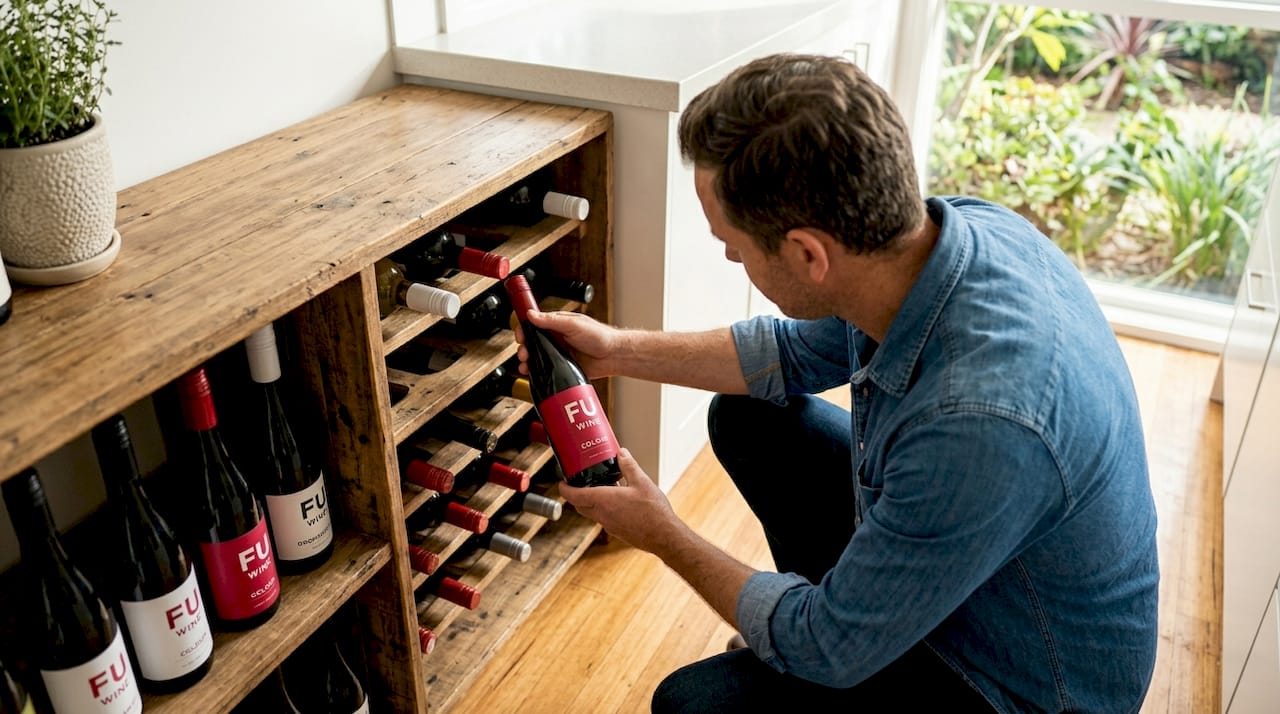
Don’t overlook blends and emerging region wines when you’re shopping for value. Price-quality balance often shows up strongest in these categories, not in the famous appellations. A Grüner Veltliner from a smaller Austrian producer or a blend from Margaret River’s newer estates can outperform bottles three times the price in a blind tasting. That’s not a consolation prize. That’s the actual spot genuine value wines play.
A new perspective on discounted wine buying
Here’s the uncomfortable truth the wine industry doesn’t want you sitting with: price is one of the worst predictors of enjoyment.
Study after study on blind tastings shows that most people, including trained professionals, cannot reliably rank wines by price when they can’t see the label. The $120 bottle does not consistently beat the $28 bottle. What you’re often paying for is marketing, distribution infrastructure, and the social signal of holding a bottle that other people recognise.
“The most dangerous lie in wine is that quality scales with price. It doesn’t. It correlates, loosely, some of the time. The rest is theatre.”
The real edge in discounted wine buying isn’t just finding the cheapest price on a bottle you already know. It’s being willing to unlock rare wine savings by exploring producers and regions that haven’t yet attracted the premium pricing they deserve.
Think about Georgia’s amber wines, South Africa’s Swartland Chenin Blancs, or Australia’s own Clare Valley Rieslings. These are world-class wines that trade at a fraction of their Burgundy or Napa equivalents. Not because they’re inferior, but because they haven’t been picked up by the machinery that inflates prices: high-profile critics, export demand, and collector speculation.
The savvy move isn’t just chasing discounts on famous bottles. It’s building taste knowledge that lets you find value before the crowd does. And when you do find those producers, buying with intent rather than impulse. Exclusive allocations, cellar release memberships, and direct producer relationships often deliver more genuine value than even the deepest flash sale.
Discount shopping done well isn’t about being cheap. It’s about being a better buyer than someone who equates price with quality.
Discover discounted premium wines at FU Wine
You’ve got the strategy. Now you need the right place to use it.
FU Wine exists for exactly this. We source rare, high-scoring, and hard-to-find wines directly, cutting out the middlemen and the markups that come with them. These aren’t clearance bottles. They’re premium and collectible wines, cellar-aged releases, boutique producer runs, and sought-after vintages, made available at prices that make the traditional wine industry deeply uncomfortable.
What you get with FU Wine:
- Curated premium selections you won’t find on standard retail shelves
- Rotating flash deals and limited-time offers with genuine discounts of 30 to 70 percent
- Access for both everyday drinkers and serious collectors
- No pretension. No gatekeeping. Just great wine at honest prices.
Head to FU Wine and start exploring. Your next favourite bottle is probably already on sale.
Frequently asked questions
How can I find genuine discounted premium wines online?
Look for reputable retailers with verifiable licensing, compare prices on Wine-Searcher before buying, and sign up for deal alerts to catch flash sales before they expire on premium stock.
What are signs of a wine list or retailer overcharging customers?
Irregular pricing, heavy reliance on mainstream labels, and absence of lesser-known producers are all warning signs. Wine lists heavy on popular regions with inconsistent glass prices often signal poor value for money.
How do I avoid buying counterfeit wines at big discounts?
Verify the seller’s credentials and licence, request provenance documentation, and cross-check prices on market tracking platforms. Detailed provenance and merchant reputation are your strongest protections against fakes.
What is the best way to store discounted wines to maintain quality?
Store bottles in a cool, dark, humid environment with minimal temperature fluctuation, ideally between 12 and 15 degrees Celsius. Consistency matters more than perfection when it comes to preserving quality.
Are discounted wines typically lower quality?
Not at all. Many discount wines outperform expensive bottles in blind tastings. Wine Enthusiast’s Best Buys list selects wines under $20 that consistently score above their price point, proving that quality and cost are not the same thing.