

Explaining wine market disruption: 2026 guide
TL;DR:
- Wine market disruption involves a structural collapse in consumption, distribution, and pricing models globally.
- It features falling wine volume amid rising dollar values, driven by consumer shifts, supply decisions, and industry fragmentation.
Wine market disruption is defined as the concurrent structural collapse in consumption volume, traditional distribution effectiveness, and pricing assumptions that is reshaping the global wine industry from the ground up. The 2026 BMO Wine Market Report puts it plainly: dollar values are rising while bottles sold are falling. That gap is not a sign of health. It is a warning. If you work in wine or simply love drinking it, understanding wine market shifts right now is not optional. The old rules around pricing, distribution, and who buys what are being rewritten fast.
What is explaining wine market disruption in 2026?
Wine market disruption, in industry terms, is often called a structural reset. It describes a moment when the forces holding a market together, volume growth, reliable distribution, predictable consumer habits, stop working in sync. The U.S. wine market is the clearest example. Market value surpassed US$115 billion in 2025, yet volume dropped 12% since 2018 to 362 million nine-litre cases. Rising prices are masking a real and serious decline in how much wine people are actually drinking.
This is not a blip. The Morningstar analysis behind the BMO Wine Market Report and data from IWSR and Silicon Valley Bank all point to the same conclusion. The impact of wine industry changes is being felt across every tier of the market, from boutique producers in the Barossa Valley to major négociants in Bordeaux. The disruption is structural, not cyclical. Waiting for it to pass is not a strategy.
What are the main factors driving disruption in the wine market?
Several forces are hitting the wine industry at once. No single cause explains the reset. The combination is what makes it so confronting.

Consumption is falling, not just shifting. Younger generations are drinking less alcohol overall. Wine’s share of the total beverage alcohol market is shrinking as beer, spirits, and non-alcoholic options compete harder for the same occasions. The trend is not confined to one country or demographic.
Direct-to-consumer channels are under pressure. The DtC model was supposed to be the industry’s lifeline. Instead, DtC shipment volume fell 15% to 5.4 million cases, with value declining 6% to US$3.7 billion. Logistics costs rose sharply, and consumers pulled back on discretionary spending. The channel still matters, but it is no longer the growth engine producers banked on.
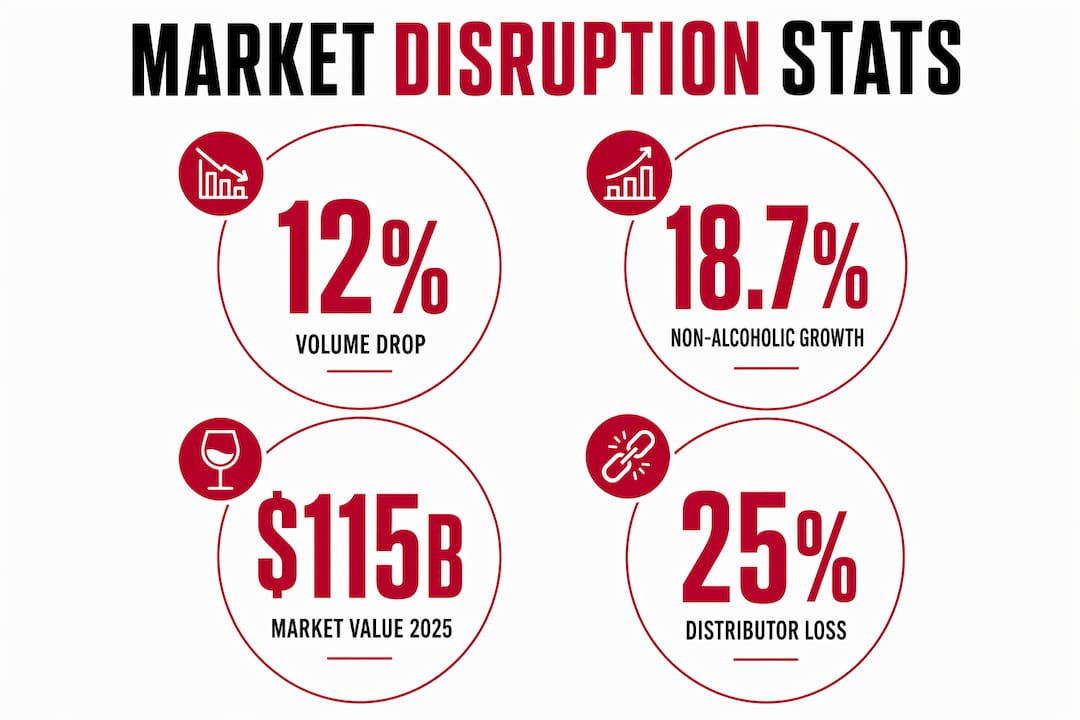
Distributor relationships are fracturing. Nearly 25% of wineries lost their primary distributor in the year to May 2026. That is a staggering number. It means a quarter of producers woke up without their main route to market, forcing urgent pivots to direct retail and consumer sales.
Alternative products are stealing occasions. Non-alcoholic wine grew 18.7% and wine-based ready-to-drink products jumped 30% in dollar sales to US$1.2 billion. These are not niche categories anymore. They are capturing the casual, low-commitment drinking occasions that traditional wine once owned.
Supply-side decisions are changing too. Producers are now making deliberate ‘drop fruit’ decisions to reduce crop yields and manage surplus inventory. This is active supply management, not weather-driven misfortune. It signals how seriously the industry is taking the oversupply problem.
Pro Tip: If you are a winery or retailer, track your DtC conversion rates monthly, not annually. The channel is volatile enough now that quarterly reviews will miss critical turning points.
How is pricing evolving within the disrupted wine market?
Pricing is where the disruption becomes most visible to consumers and most painful for producers. The market is splitting cleanly into two tiers.
| Price tier | Volume trend | Value trend |
|---|---|---|
| Below AUD$12 | Steep decline | Falling |
| AUD$12–$15 | Flat to declining | Flat |
| Above AUD$15 | Stable to growing | Growing |
Volume collapse is concentrated below the $12 price point, while premium-tier wines are holding or growing. This is premiumisation in action. But premiumisation alone does not save a business. Pricing must reflect genuine value and match the occasion the consumer has in mind.
The traditional wholesale markup model is also cracking. Restaurants adopting retail-style pricing instead of the standard 3–4x markup are seeing volume recover. That is a profound shift. It means the old assumption that wine lists could carry enormous margins is no longer reliable. Consumers know what a bottle costs. They have smartphones. They will not pay four times retail for a wine they can find at their local bottle shop for $28.
Climate risk is now a direct pricing input. Wildfire insurance premiums have risen from roughly $40,000 to $300,000 per year for some producers. That cost lands somewhere. It lands in the bottle price. Understanding what you are really paying for in a wine’s retail price now includes climate risk management, not just fruit and oak.
Pro Tip: When evaluating a wine’s price, look at the producer’s region and recent vintage conditions. A $40 bottle from a fire-affected appellation may represent better value than it appears, because the producer absorbed real cost increases to maintain quality.
In what ways is wine distribution being transformed by market disruption?
Distribution is the part of the wine business most people outside the industry never think about. Right now, it is the part changing fastest.
-
Distributor consolidation is accelerating. Republic National Distributing Company (RNDC) exited California, one of the world’s largest wine markets. When a distributor of that scale pulls out of a state, hundreds of producers lose their shelf presence overnight. Smaller distributors are filling some gaps, but not all.
-
Wholesalers are becoming logistics partners, not growth drivers. The old model had distributors actively selling your wine to restaurants and retailers. That role is shrinking. Wineries that cling to distributor-centric models risk liquidity crises as traditional sales channels fragment. Wholesalers now move product. Producers have to create the demand themselves.
-
Direct retailer relationships are becoming standard. Wineries are going around distributors and selling directly to independent retailers and hospitality groups. This requires more sales infrastructure but delivers better margins and more control over brand positioning.
-
Retailer-exclusive labels and club stores are growing. Costco is already the largest single wine retailer in the United States. Retailer-exclusive labels give producers guaranteed volume in exchange for pricing transparency. For some producers, that trade-off is now worth making.
Understanding how distribution channels are evolving is no longer just useful for collectors. It directly affects which wines you can access and at what price.
What consumer behaviour trends are influencing wine market disruption?
Consumer behaviour is the engine underneath all of this. The trends in wine market disruption are not happening in a vacuum. They reflect real changes in how people live, socialise, and spend.
-
Younger drinkers are choosing less, not more. Millennials and Gen Z are drinking alcohol less frequently than previous generations at the same age. When they do drink, they want quality and experience over volume. This is a structural shift in demand, not a phase.
-
Convenience is winning. Wine-based RTDs are growing because they fit modern consumption occasions. A canned wine at a picnic or a festival is not competing with a bottle of Penfolds Grange. It is competing with a beer or a hard seltzer. Wine is losing that fight with traditional formats.
-
The daily drinking habit is fading. The cultural norm of a glass of wine with dinner every night is less common among people under 40. Consumption is becoming more occasion-driven and more deliberate. That is actually good news for premium producers, but terrible news for high-volume, low-price brands.
-
Packaging and format innovation is accelerating. Cans, pouches, and smaller bottle formats are growing because they match how people actually want to drink. Producers who stay ahead of hospitality trends are already experimenting with these formats rather than waiting for the market to force their hand.
Consumer preference shifts towards convenience and experience are forcing producers to rethink not just what is in the bottle, but how the bottle looks, how much it holds, and where it is sold. That is a complete rethink of the product, not just the marketing.
Key takeaways
Wine market disruption is a structural reset driven by volume decline, distribution fragmentation, and shifting consumer behaviour, not a temporary correction that pricing growth can paper over.
| Point | Details |
|---|---|
| Value masks volume decline | The U.S. wine market exceeded US$115 billion in 2025, but volume fell 12% since 2018. |
| Distribution is fracturing | 25% of wineries lost their primary distributor by mid-2026, forcing direct-to-market pivots. |
| Pricing bifurcation is real | Wines below AUD$12 are in steep decline; wines above AUD$15 are holding or growing. |
| Consumer habits are changing structurally | Younger drinkers choose quality over quantity, and convenience formats are taking casual occasions. |
| Climate costs are now pricing inputs | Wildfire insurance for some producers has risen from $40,000 to $300,000 annually. |
Damien’s read on where this is all heading
The wine industry has a long history of talking about disruption and then doing very little about it. I have watched producers spend years defending their distributor relationships, their price points, and their traditional formats while the market quietly moved on without them.
What strikes me about the current moment is that the forces at play are not going to reverse. Price inflation masking volume declines is a temporary comfort. The moment pricing power softens, the underlying volume problem becomes impossible to ignore.
The producers who will come out of this well are the ones treating it like a retail business, not a heritage institution. That means understanding their consumer’s actual purchase psychology, pricing for the occasion rather than the prestige, and building direct relationships that do not depend on a middleman staying solvent.
The premium versus mass market divide is also sharper than most people in the industry want to admit. There is no middle ground left. You are either making wine that justifies its price through quality, story, and experience, or you are competing on cost in a race you cannot win against bulk producers.
My honest read is that the next three years will see more winery exits, more consolidation, and more genuinely exciting wines reaching consumers at fair prices as distressed inventory finds its way to market. For drinkers who know what they are looking for, that is actually a brilliant time to be buying.
— Damien
How FU Wine fits into a disrupted market
The disruption described in this article is exactly the kind of market condition that FU Wine was built for. When distributors exit, when producers need cash flow, and when traditional pricing models collapse, premium wine becomes available at prices that would have been unthinkable five years ago.
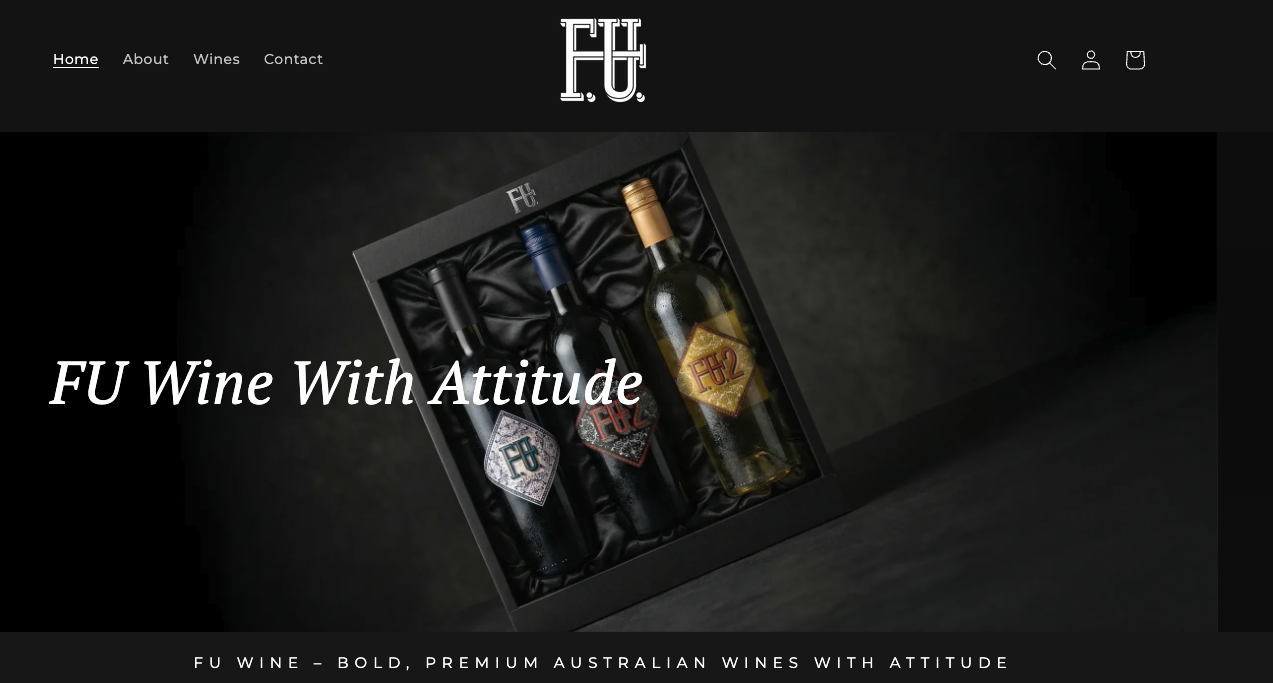
FU Wine moves fast on those opportunities. Flash deals on high-scoring vintages, access to cellar clearances, and direct relationships with boutique producers mean you get the good stuff without the inflated markup. Every bottle is a small rebellion against the idea that quality wine has to cost a fortune. Browse the current FU Wine deals and see what the disruption has shaken loose. Life is genuinely too short for ordinary wine at extraordinary prices.
FAQ
What is wine market disruption?
Wine market disruption refers to the structural breakdown of traditional volume growth, distribution models, and pricing assumptions in the global wine industry. It is driven by falling consumption, distributor consolidation, and shifting consumer behaviour rather than any single event.
Why is wine volume falling while market value rises?
Volume dropped 12% since 2018 while value grew because price inflation and premiumisation pushed average bottle prices higher. The value growth masks a real and ongoing decline in how many bottles consumers are buying.
How does distributor consolidation affect wine buyers?
When distributors exit markets or consolidate, fewer wines reach retail shelves and restaurant lists. Buyers see reduced variety and producers lose shelf presence, which can push more wines into direct-to-consumer channels where prices are often more transparent.
Are non-alcoholic wines a serious part of the market now?
Yes. Non-alcoholic wine grew 18.7% and wine-based RTDs reached US$1.2 billion in dollar sales. These categories are capturing casual drinking occasions that traditional wine formats are losing, particularly among younger consumers.
What price point is most at risk in the current market?
Wines priced below AUD$12 are experiencing the steepest volume declines. Premium wines above AUD$15 are holding or growing, which reflects a broader consumer shift toward quality and occasion-driven drinking over everyday volume purchases.