

Ex-cellar wine prices: what the number actually means
An ex-cellar price is the producer’s cellar price. It excludes freight, insurance, import duties and local taxes, so the advertised figure is never the landed cost. Think of it as the wine’s starting line, not the price you’ll actually pay once the bottle reaches your door.
TL;DR:
- Ex-cellar prices exclude freight, insurance, import duties, and taxes, meaning the actual landing cost can be significantly higher than the quoted figure.
- Paying a premium for provenance makes sense only when it is modest and aligns with secondary market prices; large premiums often lack value.
- Always request a detailed landed-cost quote and provenance documentation before comparing or purchasing ex-cellar wines.
- Auctions and direct estate sales provide better provenance assurance, often justifying small premiums over generic retail prices.
Table of Contents
- What does “ex cellar” actually mean?
- What costs sit outside an ex-cellar quote?
- Does an ex-cellar premium actually mean better value?
- How do you turn an ex-cellar quote into a landed cost?
- What can auction and ex-château examples teach buyers?
- When should you buy ex-cellar, and when should you wait?
- Ready to buy smarter? Here’s how Com fits in
- Sources
What does “ex cellar” actually mean?
‘Ex cellar(s)’ is the trade shorthand for a producer’s quoted price before anyone touches transport, insurance or duty. The Oxford Companion to Wine’s entry on ex cellar(s) confirms this is the professional definition, not a marketing spin. Familia Morgan’s glossary puts it in plainer terms: ex-cellars means the wine is priced from the producer’s cellar before freight, insurance, duties, taxes and merchant margin get added on top.
You’ll see the same idea dressed up in a few different outfits:
- Ex-château and ex-domaine mean the same thing at the property level, mostly used in Bordeaux and Burgundy.
- Ex works (EXW) is the formal Incoterm equivalent. Some trade dictionaries, including Global Negotiator, flag “ex cellar” itself as non-standard and recommend EXW when contracts need precision.
- You’ll spot the term most often in producer releases, en primeur campaigns and auction house listings, where it signals the wine hasn’t yet picked up a middleman’s margin.
Knowing which variant you’re looking at matters, because the fine print behind each one can differ slightly depending on who’s quoting the price.
What costs sit outside an ex-cellar quote?
The ex-cellar number is the floor, not the finish line. Here’s what typically stacks on top before a bottle lands in your glass:
- Freight and logistics — sea or air freight from the producer’s region to your country.
- Insurance — covering breakage, spoilage or loss in transit.
- Import duties and GST/VAT — calculated on the landed value, not the ex-cellar price alone.
- Customs clearance fees — paperwork and brokerage charges at the border.
- Local delivery and bonded storage — the last leg, plus any time the wine spends in a bonded warehouse before duty is paid.
- Merchant margin — whatever the seller adds for sourcing, handling and risk.
Wine can move “in bond,” meaning duty and tax are deferred until it clears bonded storage, which is common for cellared or investment-grade stock. Once it leaves bond for delivery, duty becomes payable.
Pro Tip: Always ask for a landed-cost quote in writing before comparing two ex-cellar offers. A cheaper cellar price can easily lose to a rival offer once freight and duty are added.
Does an ex-cellar premium actually mean better value?
Provenance is worth paying for, but only up to a point. Market commentary from The Drinks Business makes the case plainly: ex-château releases only stack up as an investment when they’re priced at or near what the secondary market already pays for the same wine. Pay a steep premium above that, and you’re funding someone else’s margin, not buying better wine.
Here’s the pattern worth watching for:
- A modest premium for verified provenance (clean storage history, estate paperwork) is generally reasonable.
- A large premium on top of an already-inflated release price is a red flag, especially for wines with plenty of secondary-market comps.
- Wines with thin trading history are harder to benchmark, so the premium claim deserves more scrutiny, not less.
The rule of thumb: provenance can justify a modest premium because it lowers fraud risk and confirms storage quality, but it shouldn’t be used to justify doubling a price that the open market wouldn’t support. Community pricing threads on WineBerserkers show collectors routinely stress test ex-château offers against retail-minus-VAT figures and secondary-market listings before committing. That habit is worth copying.
How do you turn an ex-cellar quote into a landed cost?
Converting the headline number into something you can actually compare across sellers takes five steps.
- Start with the ex-cellar amount and currency — note the exact figure and whether it’s per bottle or per case.
- Get a freight and insurance quote for your specific destination and shipment size.
- Calculate duty and GST/VAT based on the landed value, not the ex-cellar figure alone.
- Add customs clearance and local delivery charges, which vary by broker and postcode.
- Factor in merchant fees and bonded storage if the wine will sit in bond before release.
A worked example makes it concrete. Say a case is quoted at $600 ex-cellar. Freight and insurance add roughly $80. Duty and GST/VAT might add another $150 depending on classification and rate. Customs clearance and local delivery add $40. That $600 headline figure can land closer to $870, a gap worth knowing before you compare two offers side by side.
| Cost element | Applies when | Who to ask |
|---|---|---|
| Freight and insurance | Always, unless collecting in person | Freight forwarder or merchant |
| Duty and GST/VAT | Always, on landed value | Customs broker |
| Customs clearance | Always, on import | Customs broker or merchant |
| Bonded storage | If holding wine before release | Bonded warehouse operator |
| Merchant margin | Always, built into final price | The seller directly |
Ask any seller for provenance and storage documentation upfront. It’s a fair question, and a legitimate one will answer it without hesitation.
What can auction and ex-château examples teach buyers?
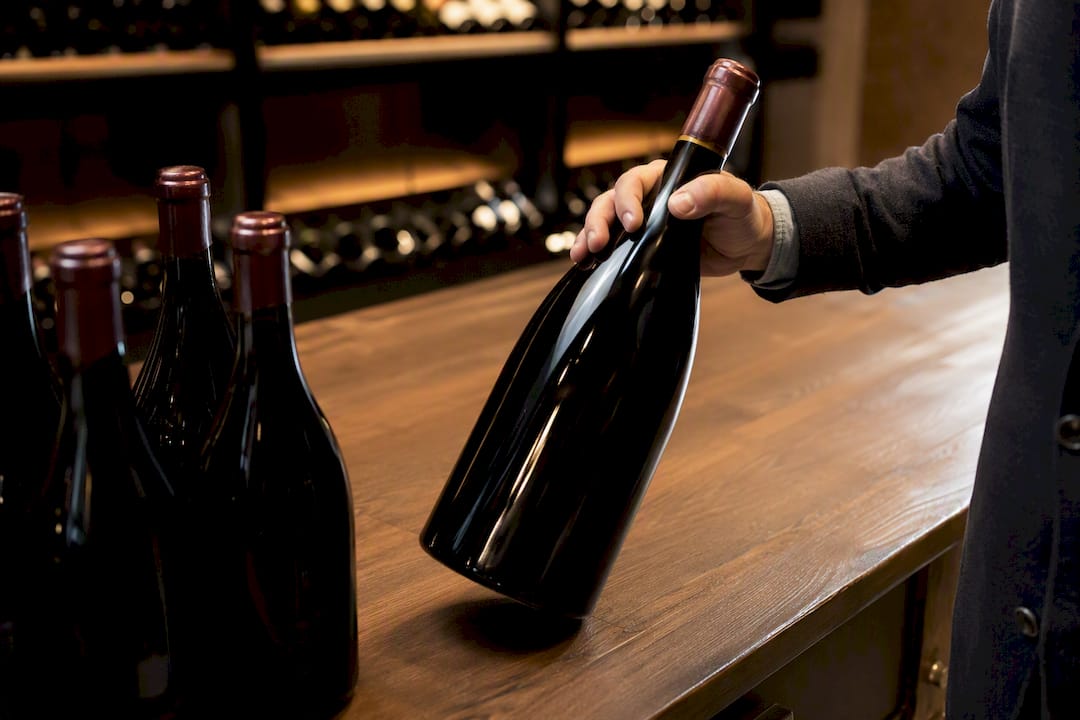
Ex-producer auctions work because the wine has never left the estate’s own cellars, and that unbroken chain matters more than most buyers realise. iDealwine’s coverage of ex-château auctions shows lots with verified estate provenance regularly selling above their estimate, purely because bidders trust the storage history.
The Vinfolio blog on ex-château wines makes a similar point: buying direct from the producer sharply reduces counterfeit risk, and that reassurance is often worth a small premium on its own.
Before bidding on or buying an ex-château lot, check:
- Confirmed cellar exit date and storage conditions since bottling.
- Original estate paperwork or certificates of provenance.
- Whether the lot includes anything unusual, like a signed label, that a genuine estate release would document clearly.
When should you buy ex-cellar, and when should you wait?
Buy when the provenance is documented, the premium is modest, and the landed cost still beats comparable retail. Pass when the seller can’t produce storage history, or when the “deal” only looks good before duty and freight get added. Before you commit to anything ex-cellar, get a full landed-cost quote and the provenance paperwork in writing. Everything else is guesswork dressed up as a bargain.
— Damien
Ready to buy smarter? Here’s how Com fits in
Every case study above points to the same problem: an ex-cellar number on its own tells you almost nothing until you add freight, duty and provenance checks. Com is built around solving exactly that gap, sourcing rare and cellar-aged bottles directly and doing the provenance legwork before a wine ever gets listed, so you’re comparing a real landed price against real market value, not a headline figure dressed up to look cheap.
Every bottle on Com has been checked for storage history and benchmarked against market comps before it goes live, and bonded shipping options are available if you’d rather hold stock before it lands. Browse the current wine deals or head to the Com store to see what’s on offer this week and get a straight answer on shipping and provenance before you buy.
Sources
Com goes hunting for the stock most people never see, cellar clearances, allocation releases, distressed inventory, and passes the saving straight through, typically landing bottles at 30 to 70 percent below traditional retail. That’s not clearance-bin wine. It’s the good stuff, minus the middleman markup.
Before anything gets listed, Com checks storage history, hunts down producer paperwork, and benchmarks the deal against real market comps, so you’re not just trusting a nice label and a story. If you’re weighing up shipping or bonded storage for a bigger order, that’s worth asking about directly, because the right setup depends on how long you plan to hold the bottles before drinking them.
- ex cellar(s) (Oxford Companion to Wine) | Jancis Robinson
- Ex-cellars: meaning in wine – Familia Morgan Wine
- Ex-château auctions on iDealwine – iDealwine blog