

Developing your personal wine preferences: a practical guide
Your palate is yours. Nobody else’s. And the best part about developing personal wine preferences? There are no wrong answers. You either liked it or you didn’t, and both reactions tell you something useful.
Here’s the short version of what this whole process actually involves:
- Wine taste is shaped by six core elements: body, sweetness, acidity, tannins, alcohol, and flavour
- Preferences develop through active tasting, honest reflection, and recording your reactions
- The 5 S’s tasting method (See, Swirl, Smell, Sip, Savour) gives you a repeatable framework
- Australian varietals and regions offer brilliant diversity for building your palate
- Tasting journals and apps help you spot patterns across multiple bottles
- There are no industry rules about what you should enjoy
That’s it. Everything else is just detail.
What do the core wine taste components actually mean?
Before you can articulate what you like, you need to know what you’re reacting to. Six elements drive almost every preference you’ll ever form.
- Body is the weight and texture of wine in your mouth. Think full-fat milk versus skim. Tannin, sweetness, and alcohol all increase body, while acidity and carbonation reduce it. Oak ageing pushes it fuller and rounder.
- Sweetness means residual sugar left after fermentation, not fruitiness. Most table wines are technically dry even when they smell like a fruit bowl.
- Acidity is that mouth-watering, tangy sensation. High-acidity wines refresh the palate and make them brilliant with food.
- Tannins create that grippy, drying feeling in bold reds. They come from grape skins, seeds, stems, and oak barrels, and they’re the reason some reds feel structured while others feel smooth.
- Alcohol affects perceived warmth and weight. More ripe grapes mean more sugar, which means higher potential alcohol.
- Flavour is mostly aroma. About 80% of what you taste is actually smell, which is why swirling and sniffing before you sip genuinely changes the experience.
Once you can name what you’re reacting to, you can start asking for more of it.
How the 5 S’s help you develop your wine preferences
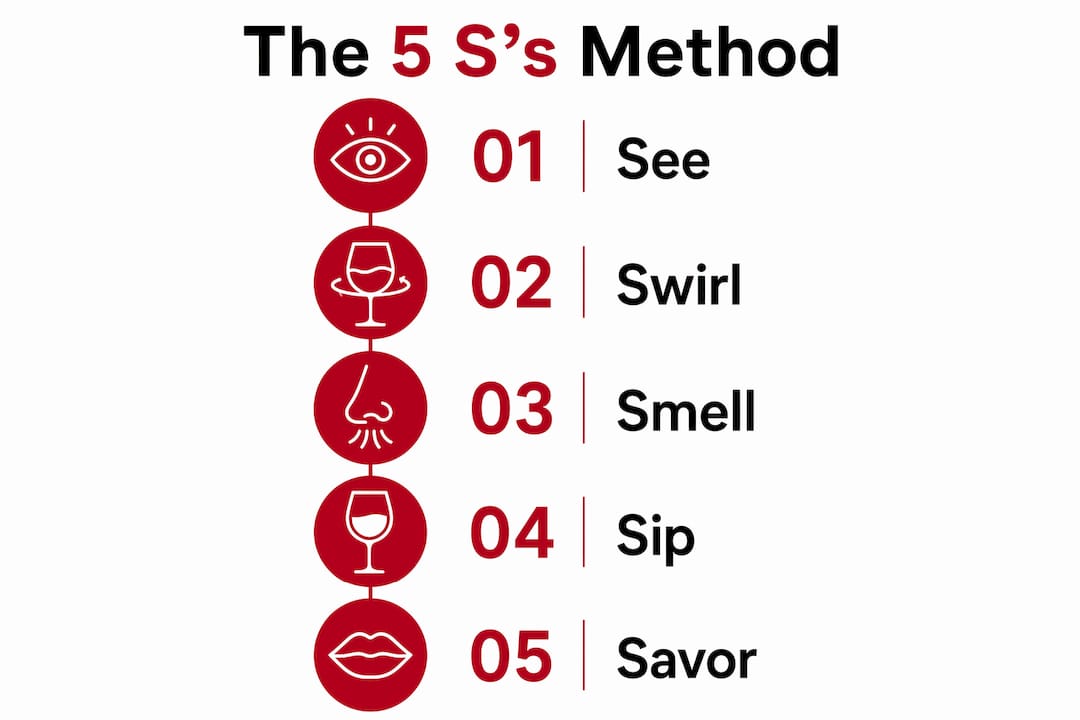
The 5 S’s of wine tasting are the standard method used by professionals and curious drinkers alike. They work because they slow you down and make you pay attention.
- See — Hold the glass against a white background. Colour and clarity hint at age, grape variety, and winemaking style.
- Swirl — Releases aromatic compounds. More surface area, more smell, more information.
- Smell — Take two or three short sniffs. What do you notice? Fruit, earth, spice, oak? Don’t overthink it. Your first instinct is usually right.
- Sip — Let the wine coat your whole mouth. Notice body, acidity, tannins, sweetness. Where do you feel it most?
- Savour — What’s the finish like? Long and warming, or short and sharp? Do you want another sip?
Apply this method every time, even casually. The repetition is the point. After five or ten wines, patterns start showing up in your reactions.
Pro Tip: Write one sentence after each tasting. “Too grippy, would prefer smoother” or “loved the citrus, very refreshing.” That’s enough. Over time, recording simple tasting notes across multiple bottles reveals your palate far more clearly than any quiz or critic score ever will.
Australian varietals and regions worth exploring
Australia produces world-class wine across a genuinely diverse range of styles. Exploring local options is one of the fastest ways to refine your personal wine style without paying import premiums.
- Barossa Valley Shiraz is bold, rich, and jammy with dark fruit and pepper. If you like weight and intensity, start here.
- Margaret River Cabernet Sauvignon shows blackcurrant and cedar with firm tannins and elegant structure. Classic food wine.
- Yarra Valley Pinot Noir is lighter, cooler-climate, with cherry and earthiness. Great entry point for red wine drinkers who find big reds overwhelming.
- Clare Valley Riesling is bone dry with high acidity, lime zest, and a steely mineral edge. Polarising for beginners, beloved by converts.
- Hunter Valley Semillon is uniquely Australian: low alcohol, high acid, and transforms dramatically with age into something toasty and complex.
- Adelaide Hills Chardonnay sits between the buttery, oaked style and the leaner, crisper approach. A good benchmark for understanding how winemaking choices shape flavour.
Regional diversity here is a genuine advantage. Visiting local wine retailers and tasting experiences lets you compare styles side by side, which teaches you more in one afternoon than a month of solo bottles at home.
Building your personal wine profile through experimentation
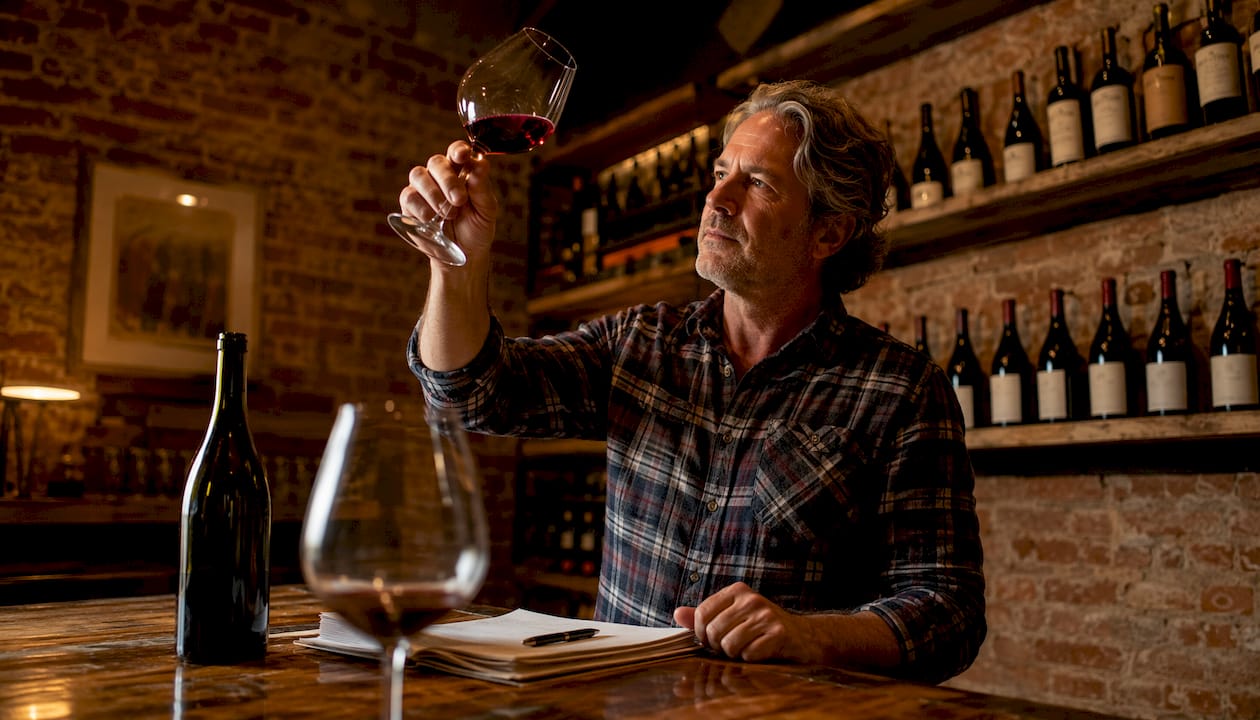
Finding your wine taste is a process, not a revelation. You build it gradually, bottle by bottle, with a bit of honest attention.
Master of Wine Barbara Drew advises collecting and exploring wines from genuine excitement and personal connection, never because you feel you “should” like something. That applies equally to casual drinkers. If you’re forcing yourself through a wine you don’t enjoy because someone told you it’s prestigious, you’re wasting a perfectly good Tuesday night.
- Keep a simple journal or use a wine app to record impressions after each bottle
- Track the four taste dials: sweetness, body, acidity, and tannins, in plain language
- Note the price, occasion, and what you ate alongside it
- Start within familiar styles before jumping to something radically different
- Do comparative tastings: two Shiraz from different regions side by side teaches you more than two different grapes
Pro Tip: Balance your wine portfolio with bottles for immediate enjoyment alongside a few you’re holding for later. Buying only to age means nothing good to drink tonight.
How food pairing sharpens your palate
Pairing wine with food isn’t just about etiquette. It’s one of the most practical tools for understanding what you actually like. When a pairing works, both the food and the wine taste better. When it doesn’t, you notice immediately.
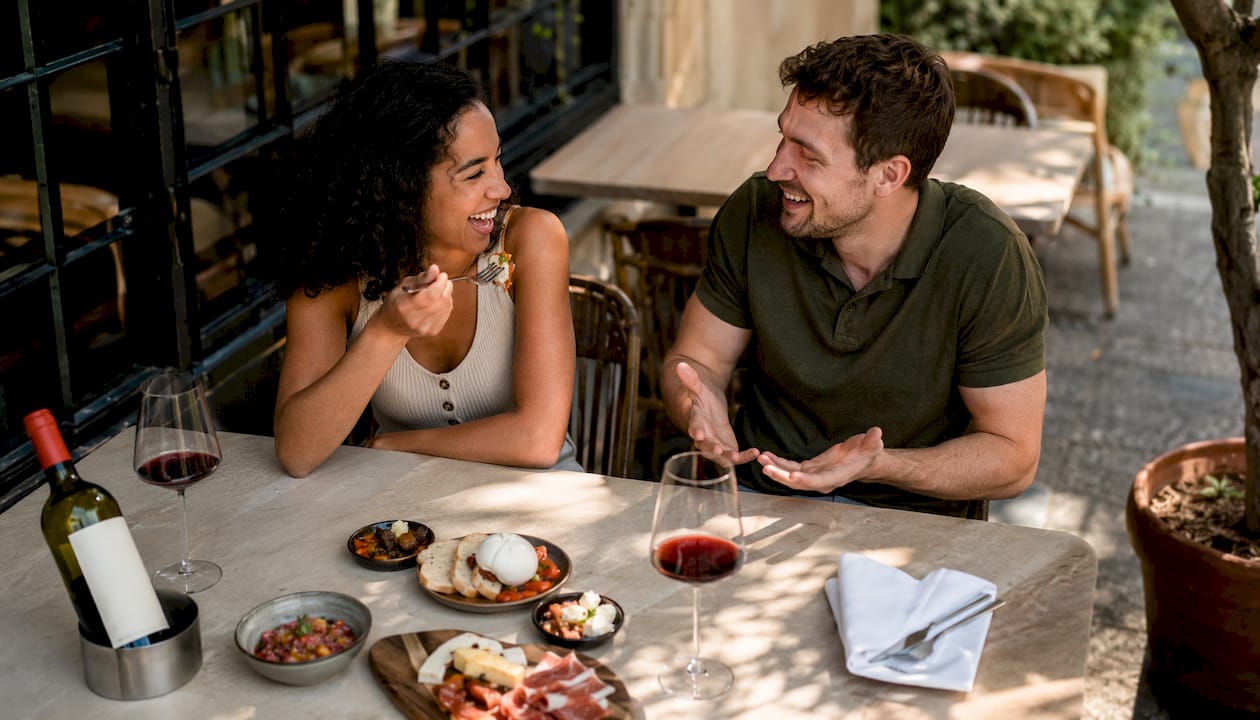
The core principle is matching weight. Light food with light wine, rich food with fuller wine. A crisp Clare Valley Riesling with grilled fish is refreshing. The same wine with a slow-cooked lamb shoulder feels thin and sharp. That contrast teaches you something about acidity and body that no amount of reading can replicate.
Tannins need protein. A grippy Barossa Cabernet Sauvignon softens beautifully alongside a ribeye because the fat and protein bind the tannins. Drink the same wine without food and it can feel harsh. High-acidity wines cut through creamy sauces and fatty dishes, which is why a Hunter Valley Semillon works so well with a rich pasta. For a deeper look at white wine and food combinations, the white wine pairing guide covers the specifics.
Tracking how your preferences change over time
Your palate isn’t static. What you loved two years ago might bore you now, and wines you dismissed early on might suddenly click. Tracking this evolution is genuinely useful.
The simplest approach: date your tasting notes. After three or four months of consistent recording, look back at your earliest entries. You’ll often find your tolerance for tannins has grown, or your preference for acidity has sharpened. That’s your palate developing in real time.
Revisit wines you previously disliked. Context matters enormously. A wine that felt too acidic on its own might be exactly right with the right food. A wine that seemed too light might be perfect on a warm afternoon. Noting what changed, and why, builds a far more nuanced picture of your preferences than a simple “liked it / didn’t like it” record.
How to access diverse wine types and regions
Broader exposure is the single fastest way to develop a confident personal wine style. The challenge is knowing where to look.
Local wine retailers are your best starting point. Good bottle shop staff taste through their stock and can direct you toward styles that match what you already enjoy, plus adjacent options worth trying. Tell them what you liked last time and ask what’s similar but different. That conversation is worth more than any algorithm.
Structured tastings, whether at a cellar door, a local wine bar, or at home with friends, let you compare multiple wines side by side. That format accelerates learning faster than opening one bottle at a time. Explore one region or variety at a time rather than jumping between five countries in one sitting.
Starting a small rotating collection, even just six bottles at a time, gives you variety without commitment. Focus on producer discovery and style diversity rather than volume.
Using tasting notes and apps to support your wine journey
You don’t need a leather-bound journal and a fountain pen. A notes app on your phone works perfectly. The goal is consistency, not elegance.
For every bottle, jot down a few words on each taste dial, a quick verdict (“buy again” or “skip”), the price, and what you ate with it. After five to ten wines, patterns emerge that tell you far more about your palate than any quiz. Apps like Vivino or CellarTracker add label scanning and community ratings, which are useful reference points, though remember that critic scores reflect one person’s taste on one day. Use them as a starting point, not a verdict.
The data you collect from your own reactions is the most valuable thing you’ll build. It’s specific to you, honest, and gets more useful the longer you keep it.
Key takeaways
Developing personal wine preferences comes down to understanding what you’re tasting, recording your honest reactions, and exploring broadly enough to spot the patterns.
| Point | Details |
|---|---|
| Know the six elements | Body, sweetness, acidity, tannins, alcohol, and flavour shape every preference you form. |
| Use the 5 S’s consistently | See, Swirl, Smell, Sip, Savour gives you a repeatable framework to evaluate any wine. |
| Record simple tasting notes | Five to ten wines with honest notes reveals your palate faster than any quiz or critic score. |
| Explore Australian regions | Barossa, Margaret River, Yarra Valley, Clare Valley, and Hunter Valley each offer distinct styles worth comparing. |
| Let excitement guide you | Master of Wine Barbara Drew advises building your exploration from genuine personal connection, never obligation. |