

Decanting aged Bordeaux properly: a collector's guide
Yes, decant your aged Bordeaux — but do it for one reason above all others: to separate sediment, not to “air out” a fragile bottle. Jancis Robinson’s guidance is clear: bottles older than 20 years should be decanted immediately before serving, while those in the 10–20 year range need only a short decant. Anything longer risks stripping the tertiary aromas that make a mature Bordeaux worth opening in the first place.
Do this:
- Stand the bottle upright for at least 24 hours before opening so sediment settles firmly to the base.
- Use a focused light (LED torch or candle) under the neck while you pour.
- Stop the moment you see the first trace of sediment in the neck. Accept leaving the final glassful behind.
Don’t do this:
- Don’t chase every last drop. That murky final pour ruins the glass and the mood.
- Don’t leave a fragile, aged bottle sitting in a wide-bowl decanter for hours. The French Wine Authority is explicit: mature wines need gentle handling to protect their tertiary aromas from oxidative loss.
Table of Contents
- How long should you decant Bordeaux by age?
- Why sediment removal matters more than aeration for mature Bordeaux
- Step-by-step: how to open and decant an aged Bordeaux safely
- Which decanter shape actually works best for fragile, aged Bordeaux
- Common decanting mistakes and how to fix them fast
- When you should skip decanting altogether
- Key takeaways
- The case for doing less, not more
- Cellar-aged Bordeaux without the guesswork
- Useful sources
How long should you decant Bordeaux by age?
The single biggest variable is age. A 2018 Pauillac with firm tannins can handle an hour of air. A 1998 Pomerol cannot. Get this wrong and you’ll watch a beautiful wine fade in the glass before the first course is finished.
| Age band | Primary purpose | Recommended action |
|---|---|---|
| Under 5 years | Aeration (soften tannins) | a longer decant in a wide decanter |
| 5–10 years | Aeration + light sediment check | a moderate decant with visual sediment check |
| 10–20 years | Sediment removal, minimal aeration | 20–45 minutes; narrow-neck decanter |
| 20+ years | Sediment removal only | Decant immediately before serving; serve within minutes |
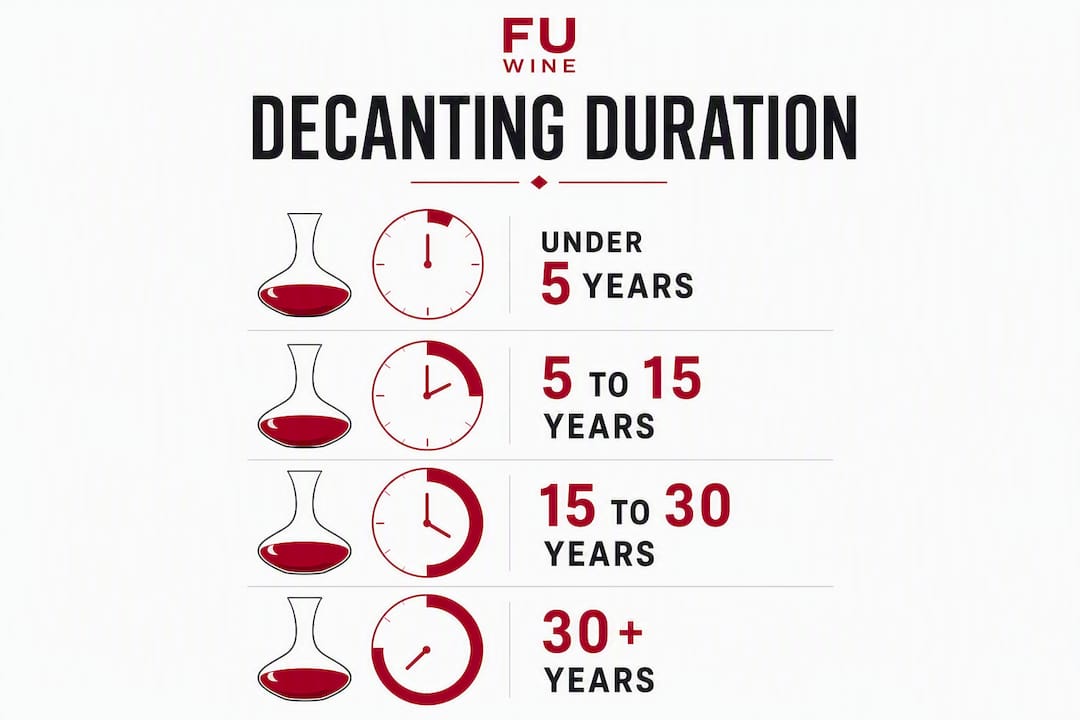
The logic behind those windows is structural. Younger Bordeaux carries dense, grippy tannins that genuinely benefit from oxygen exposure. As a wine ages, those tannins polymerise and soften on their own, and the wine’s pleasure shifts to fragile tertiary notes — leather, dried flowers, forest floor, tobacco. Oxygen is now the enemy, not the ally.
Pro Tip: Before committing to any decant window, check the producer’s style and the specific vintage’s reputation. A structured, classified-growth Saint-Émilion from a warm year will handle more air than a lighter, cooler-vintage Margaux of the same age. Vintage charts and producer notes are worth five minutes of your time before you pull the cork.
Why sediment removal matters more than aeration for mature Bordeaux
Decanting does two separate things, and conflating them is the most common mistake collectors make. The French Wine Authority puts it plainly: aeration softens tannin structure in young wines; sediment separation delivers a clean mouthfeel and clear appearance in older ones. For a mature Bordeaux, you are almost always doing the second job, not the first.
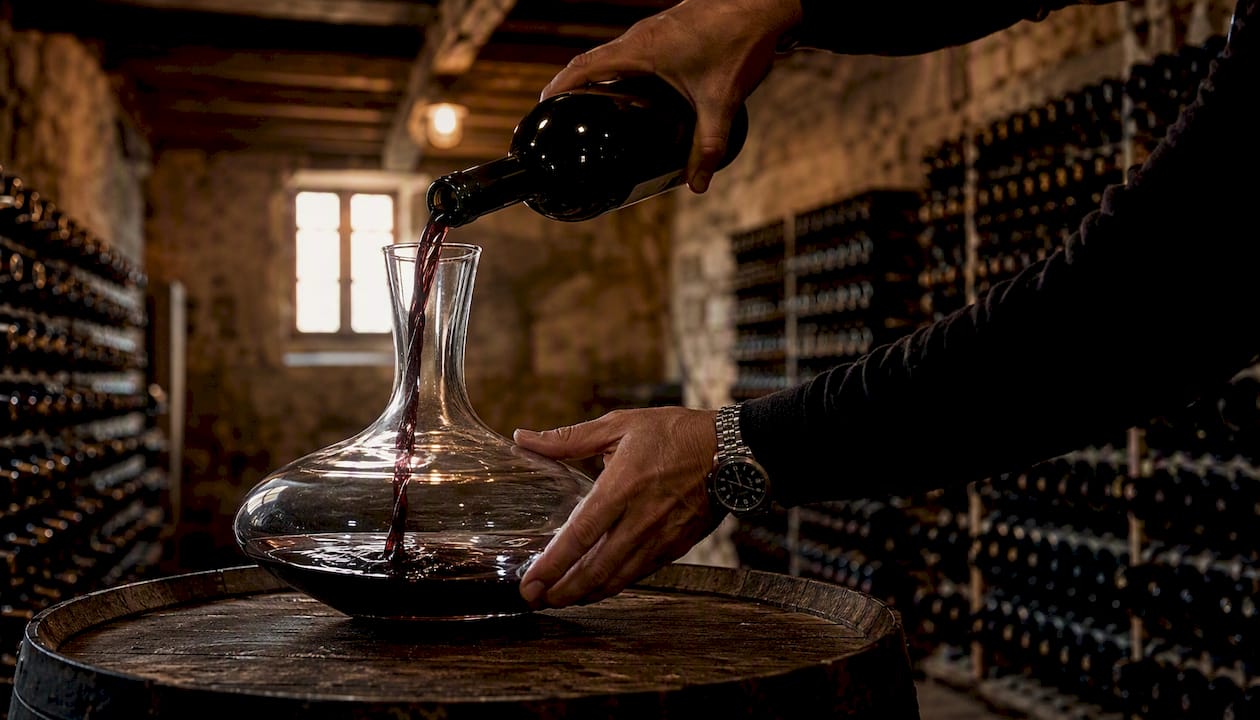
Sediment forms naturally as a wine ages. Pigments, tannins, and tartrate crystals bind together and drop out of solution over years in the bottle. The result is a gritty, bitter mouthfeel if it ends up in the glass. Understanding what makes wine red at a molecular level helps explain why this happens, but the practical takeaway is simple: sediment is normal, expected, and manageable.
The risk of over-aeration is real and irreversible. A 25-year-old Bordeaux exposed to too much oxygen will lose its most complex aromas within minutes. You might open the bottle to a gorgeous nose of cedar, cigar box, and dried cherry — then watch it flatten to nothing by the time the second glass is poured. This is not a theoretical risk; it is what happens when you treat an aged bottle like a young one.
Signs that sediment is likely present:
- The bottle is 10 years old or more.
- The wine is from a producer known for minimal filtration (many classified Bordeaux châteaux filter lightly or not at all).
- You can see visible particles when you hold the bottle up to a light source.
- The wine has been stored horizontally for years, meaning sediment will have settled along the side of the bottle.
Step-by-step: how to open and decant an aged Bordeaux safely
Preparation
Stand the bottle upright for at least 24 hours before opening. If the bottle has been moved recently or transported, give it longer. Sediment that has re-suspended will cloud the wine and defeat the entire exercise.
Gather your tools before you touch the cork: an ah-so or Durand opener, a narrow-neck decanter, a clean piece of muslin or the finest sieve you own, and a small LED torch. Check the fill level and capsule condition while the bottle is still sealed.
Opening the cork
- Cut the capsule cleanly below the lip of the bottle.
- Wipe the cork and bottle mouth with a clean, damp cloth.
- Insert an ah-so or Durand opener — not a standard worm. Old corks are often saturated and brittle; a conventional corkscrew will shred them. Work the prongs of the ah-so down each side of the cork with a gentle rocking motion, then pull straight up.
- If the cork breaks anyway, don’t panic. Decant through a fine muslin-lined sieve and the fragments will stay behind.
The pour
- Hold the bottle at a steady, single angle over the decanter mouth. Do not tilt back and forth.
- Position your torch or candle directly under the neck of the bottle so light passes through the glass.
- Pour slowly and continuously. Watch the neck, not the decanter.
- Stop the moment you see the first wisp of sediment moving toward the neck. That’s it. Leave the rest.
After the pour
- Serve immediately for bottles over 20 years old. For 10–20 year bottles, allow 20–45 minutes before serving.
- Keep the decanter away from heat sources and direct light while it rests.
- If guests are delayed, cover the decanter mouth loosely with cling wrap to slow further oxidation.
Pro Tip: The double decant technique is worth knowing. Pour the wine from bottle to decanter (separating sediment), then quickly and gently pour it back into the rinsed bottle for serving. This gives you a controlled, brief dose of aeration while keeping the serving vessel familiar and minimising further agitation. Use it when a wine needs just a touch of opening but prolonged exposure in a decanter would be risky.
Serve aged Bordeaux at 16–18°C. Too cold and the aromas shut down; too warm and the alcohol dominates. If the bottle has been stored at cellar temperature (around 12–14°C), give it 20–30 minutes at room temperature before opening.
Which decanter shape actually works best for fragile, aged Bordeaux
Not all decanters are equal, and for mature Bordeaux the shape genuinely matters. A wide-bowl decanter maximises the wine’s surface area contact with oxygen — exactly what you want for a young, tannic Barossa Shiraz, and exactly what you don’t want for a 30-year-old Pauillac. A narrow-neck decanter limits that surface area and slows oxidation while still allowing reliable sediment separation.
Your core toolkit:
- Narrow-neck decanter: the non-negotiable choice for anything over 15 years old.
- Ah-so or Durand opener: protects brittle corks from crumbling.
- Small LED torch: brighter and steadier than a candle; easier to hold one-handed.
- Fine muslin or cheesecloth: backup filtration if the cork breaks or sediment is heavy.
- Decanting cradle: holds the bottle at a consistent angle during the pour; useful if your hands aren’t steady.
A plain glass carafe is acceptable for wines in the 5–10 year range where you want moderate aeration and sediment is light. For anything older, use a proper narrow-neck decanter.
Pro Tip: Rinse your decanter with a small splash of the wine itself before the main pour. Any residual soap, dishwasher rinse-aid, or storage odour will destroy a delicate aged bouquet faster than oxygen will. Smell the decanter before you use it — if it smells of anything other than clean glass, rinse again.
Common decanting mistakes and how to fix them fast
Even experienced collectors make these errors. The good news: most are recoverable.
- Over-aerating a fragile bottle. You’ve left a 25-year-old Bordeaux in a wide decanter for 90 minutes and the nose has gone flat. Fix: pour it into a smaller, narrow vessel immediately and serve without delay. You can’t undo the damage, but you can stop it getting worse.
- Missing sediment because the light was inadequate. Gritty wine in the glass. Fix: next time, use a brighter torch and pour more slowly. For this bottle, decant the remainder through a muslin-lined sieve.
- Crumbling the cork with a standard corkscrew. Cork fragments floating in the wine. Fix: decant through a fine muslin sieve. The fragments are harmless but unpleasant; the sieve catches them cleanly.
- The wine smells wrong on opening. Nail polish (volatile acidity), wet cardboard (cork taint/TCA), or vinegar. These are wine faults, not decanting problems. A brief sniff at the bottle mouth before you pour tells you whether to proceed. If it smells like wet dog or nail polish remover, open a different bottle. No amount of decanting fixes a corked or oxidised wine.
Quick troubleshooting checklist:
- Cloudy wine after decanting: sediment was disturbed during the pour; next time stand the bottle longer and pour more slowly.
- Flat nose immediately after opening: over-aeration or the wine is past its peak; serve quickly and enjoy what’s there.
- Bitter finish: sediment made it into the glass; filter the remainder through muslin.
- Cork won’t budge: use an ah-so; if it still won’t move, carefully push it into the bottle and decant through a sieve.
When you should skip decanting altogether
Sometimes the best thing you can do for a very old bottle is leave it alone. Jancis Robinson’s advice is worth taking seriously here: for bottles where tertiary aromas are the primary pleasure, conservative handling sometimes outperforms any decant. The act of pouring from bottle to decanter introduces oxygen whether you want it to or not.
Skip decanting entirely when:
- The bottle is extremely old (think 35+ years) and the bouquet is the whole point.
- The wine is a lighter-structured vintage where the tannins have long since resolved.
- You are unsure of the bottle’s storage history and don’t want to risk accelerating any existing oxidation.
Safer alternatives worth knowing:
- Stand the bottle upright and pour carefully and slowly directly into glasses, stopping before the sediment reaches the neck.
- Use a muslin-lined funnel placed directly over the glass for micro-filtration without a full decant.
- Try a short double decant: bottle to decanter and back, completed in under two minutes, to separate sediment with minimal air exposure.
Pro Tip: Pour a small sample into a glass first and give it 60 seconds. If the nose is already complex, expressive, and fragrant, serve from the bottle. If it smells closed or muted, a brief decant may help it open. That one small pour tells you more than any general rule.
Key takeaways
Decanting aged Bordeaux properly means prioritising sediment removal over aeration, using a narrow-neck decanter, and serving within minutes for bottles over 20 years old.
| Point | Details |
|---|---|
| Stand upright first | Keep the bottle upright for 24+ hours before opening so sediment settles to the base. |
| Match decant time to age | 10–20 year bottles: 20–45 minutes; 20+ year bottles: decant immediately and serve within minutes. |
| Use the right opener | An ah-so or Durand protects brittle corks; a standard corkscrew risks cork fragments in the wine. |
| Narrow neck beats wide bowl | A narrow-neck decanter limits oxygen exposure and is the correct choice for fragile, aged Bordeaux. |
| FU Wine for sourced bottles | FU Wine supplies cellar-aged Bordeaux with provenance and storage history, so you know exactly what you’re opening. |
The case for doing less, not more
Most collectors err on the side of doing too much. They read about decanting, buy a beautiful wide-bowl decanter, and give every bottle two hours of air because it feels like the right, attentive thing to do. With young wine, that instinct is mostly harmless. With a 20-year-old Bordeaux, it’s the fastest way to ruin something irreplaceable.
The conservative default is almost always the smarter call. Decant for sediment. Use a narrow neck. Serve quickly. If you’re genuinely unsure, pour a small sample first and let the wine tell you what it needs. A bottle that smells extraordinary straight from the cork doesn’t need your intervention — it needs your glass.
There’s also a provenance angle that doesn’t get enough attention. How a bottle was stored matters as much as how you decant it. A wine that spent 15 years in a temperature-stable cellar at 12–14°C will be in a fundamentally different condition to one that bounced between a garage and a spare room. Before you even think about decanting technique, check the storage and provenance history of the bottle. That context changes every decision you make at the table.
Cellar-aged Bordeaux without the guesswork
FU Wine sources cellar-aged Bordeaux with documented provenance and storage history, so you’re not opening a bottle and hoping for the best. These are premium bottles acquired through direct relationships, cellar clearances, and allocation releases — the kind of stock that usually stays locked behind industry doors.
Every bottle comes with the context you need: producer, vintage, and storage background. No inflated retail markups, no pretension, no mystery about what’s been sitting in that bottle for the last two decades. Just quality wine at prices that make sense.
Check provenance and storage history before any purchase — it’s the single most important factor in deciding how to handle an aged bottle at the table. When that information is clear and the bottle is sound, the decanting decisions practically make themselves.
Browse current cellar-aged stock at FU Wine and see what’s available before it’s gone.
Useful sources
- Jancis Robinson — Decanters and decanting: the most authoritative single reference on decanting timing and technique for aged wines.
- Christie’s — How to decant fine wine: expert guidance on the pour technique and light method from a fine wine auction house.
- Sommy — How to decant wine: practical age-banded timing guidance and the double decant technique explained clearly.
- French Wine Authority — Decanting French wine: authoritative explanation of aeration versus sediment separation and decanter shape selection.
- Forbes — When to decant wine: accessible editorial summary of conservative timing for older Bordeaux.
- WineFolly — When to decant wine: visual guide to opener selection and cork handling for fragile bottles.
- FU Wine — Cellar-aged wines for enthusiasts: concrete bottle examples and sommelier pouring notes for cellar-aged stock.