

How to create a personal wine journal: quick templates
Your wine journal can start tonight with four fields you can log in under a minute. Wine identity (name, vintage, region), date, one-line impression, and a buy-again verdict. That’s it. No sommelier certification required.
Here’s the quick-entry template you can copy right now:
- Wine: Penfolds Bin 389 Cabernet Shiraz, 2021, Barossa Valley
- Date: 14 June
- Impression: Dark fruit, firm tannins, long finish — serious but drinkable now
- Buy again? Yes
Thirty seconds. Done. That’s the whole system at its most stripped-back, and it’s enough to build a habit on. Sommo’s quick-entry approach backs this up: a minimal identity-impression-decision format is the most reliable starter habit, because it scales up when you want more detail without demanding it every time.
Pro Tip: Write your entry before you finish the glass. Memory fades fast, and so does the aroma.
Key takeaways
A personal wine journal works best when it starts with the smallest possible entry and grows from there — four fields, 30 seconds, and a consistent weekly review is all it takes to build a habit that genuinely improves your palate and your buying decisions.
| Point | Details |
|---|---|
| Start with four fields | Wine identity, date, one-line impression, and buy-again verdict — log it in under a minute. |
| Choose your format honestly | Paper for ritual and reflection, digital for speed and searchability; both work if you use them. |
| Use the 5 S’s for fuller notes | See, swirl, sniff, sip, savour — each step maps to a field in the standard tasting template. |
| Weekly review builds the habit | A 15-minute Sunday review of recent entries is where pattern recognition and palate training happen. |
| Context is core data | Always log food, location, and company — they shape how you perceive a wine and make pairings replicable. |
Table of Contents
- Why keep a wine journal — and what you actually get out of it
- Choosing a format: paper or digital, and what supplies you need
- What to write for a full tasting note
- Three ready-to-use templates and short sample entries
- How to organise entries so the journal stays useful
- Simple scoring systems and tasting heuristics that actually work
- Practical digital workflow tips for faster, safer logging
- How to make journalling stick: the 30-day starter plan
- The four-field quick-entry system: why it prevents abandonment
- How food pairings and context make your journal more useful
- Using your journal to track wine ageing and cellaring insights
- The journal habit is the point, not the notes
- Sources
Why keep a wine journal — and what you actually get out of it
A personal wine log turns a pleasant evening into a learning curve. Without notes, you’re relying on memory to recall why that Burgundy blew your mind or why the Shiraz from the same producer disappointed. Memory is terrible at this. Your journal isn’t.
The payoffs are real and they compound:
- Memory anchor. You’ll remember the wine, the moment, and the detail — not just “I think I liked it.”
- Pattern recognition. After sufficient entries, you’ll start seeing your own preferences clearly: you love high-acid whites, you’re bored by over-oaked Chardonnay, you keep reaching for Grenache.
- Smarter buying. No more repeat mistakes. No more buying the same disappointing label twice because you forgot.
- Travel and tasting records. A tasting room visit in the Yarra Valley or a cellar door in McLaren Vale becomes a searchable archive, not a blurry memory.
- Cellaring insights. Track how a wine evolves across multiple bottles over years, and you’ll know when to pull the trigger on your best bottles.
A weekly 15-minute review of your entries is where the real learning happens. Sommy Wine Coach notes that patterns tend to emerge clearly after a moderate number of entries, and that without periodic review the journal is just an archive. The review is what turns it into a tool for developing your personal wine preferences over time.
Choosing a format: paper or digital, and what supplies you need
The honest answer: choose whatever you’ll actually use. Paper suits people who like ritual and reflection. Digital suits people who want speed, searchability, and the ability to pull up a note at a bottle shop in 10 seconds. Many people use both — a pocket notebook at the table, then a quick transfer to an app later.
| Feature | Paper notebook | Digital app |
|---|---|---|
| Searchability | Manual index only | Instant keyword search |
| Speed of entry | Slower, more deliberate | Fast with templates and autofill |
| Label storage | Glue or tape labels in | Photo attachment, label scanning |
| Archival safety | Risk of loss or damage | Cloud backup, exportable |
| Battery required | No | Yes |
| Sensory experience | High — tactile, personal | Lower — screen-based |
Wine Folly’s tasting notebook is a good example of what a well-designed paper journal looks like: indexed pages, many entries, structured prompts. For digital, apps like Vivino, Delectable, and Sommo offer label scanning, autofill, and cloud storage.
Supplies worth having:
- A pocket-sized notebook (A6 or smaller) for on-the-go entries
- A fine-tip pen that won’t bleed through pages
- Your phone camera for label photos
- A label-lifting product (Wineskin or similar) if you want physical labels in a paper journal
- A simple backup routine: export your digital journal to PDF every few months
What to write for a full tasting note
When you want more than the quick entry, a structured tasting note gives you a repeatable framework. The WSET systematic tasting approach covers appearance, nose, palate, and conclusion — a scaffold that works whether you’re a beginner or a seasoned taster.
Here’s how to move through it at the glass:
- See. Colour, clarity, depth. Is it pale lemon or deep ruby? Cloudy or brilliant? Jot one descriptor.
- Swirl. Get the aromas moving. Note the legs — they hint at alcohol and body.
- Sniff. Primary aromas (fruit, floral, herbal), secondary (yeast, dairy), tertiary (oak, earth, leather). Pick two or three that stand out.
- Sip. Sweetness, acidity, tannin (for reds), body, alcohol. Does it feel light or full? Sharp or soft?
- Savour. The finish. How long does the flavour linger? What’s the last thing you taste?
These are the 5 S’s — a practical tasting method used by educators and blind tasting practitioners alike.
Micro-prompts to stop you freezing:
- Colour: “pale gold / medium ruby / deep purple”
- Aroma: “citrus, stone fruit, floral / red berries, spice, earth / dried fruit, leather, tobacco”
- Palate: “crisp / round / grippy / silky / hot”
- Finish: “short (under 5 seconds) / medium / long (over 10 seconds)”
Add context fields near the top of the entry: what you ate, where you were, who you shared it with. Drinkist’s guidance treats context as core data, not optional colour, because it directly shapes how you perceive and remember a wine. For identifying quality cues in the glass, these structural fields are exactly what you need.
Three ready-to-use templates and short sample entries
Pick the level you’ll sustain. Start simple. Upgrade when you’re ready.
Quick template (1 minute)
Copy this into your notebook or app:
- Wine / Vintage / Region:
- Date:
- One-line impression:
- Buy again? Yes / No / Maybe
Sample entry:
- Wine: Yalumba Y Series Viognier, 2023, Eden Valley
- Date: 3 May
- Impression: Peach and apricot, lush but not heavy, good with Thai food
- Buy again? Yes
Standard template (2–3 minutes)
- Wine / Vintage / Region / Price:
- Date / Location / Food:
- Appearance:
- Nose:
- Palate (acidity / tannin / body):
- Finish:
- Overall rating (1–5 stars):
- Buy again?
Sample entry:
- Wine: Henschke Keyneton Euphonium, 2020, Eden Valley / $55
- Date: 18 July / Home / Lamb shoulder
- Appearance: Deep ruby, clear
- Nose: Blackberry, dark chocolate, cedar
- Palate: Full body, firm tannins, bright acidity
- Finish: Long, savoury
- Rating: ★★★★½
- Buy again? Yes — cellar 3–5 years
Advanced template (sommelier-style)
This level draws on the Court of Master Sommeliers deductive tasting grid, which moves logically from condition and appearance through to a reasoned conclusion about grape, region, and vintage.
- Wine / Vintage / Region / Producer / Price:
- Date / Location / Glassware / Serving temp:
- Condition (clean or faulty?):
- Appearance (colour, depth, clarity, rim variation):
- Nose (intensity, primary / secondary / tertiary aromas):
- Palate (sweetness, acidity, tannin, alcohol, body, flavour intensity, finish):
- Conclusion (quality assessment, drinking window, food match):
- Score (20-point scale):
- Cellaring notes:
Pro Tip: For everyday bottles, the quick template is enough. Save the advanced format for wines you plan to cellar or study seriously. Burnout is the enemy of a good journal.
How to organise entries so the journal stays useful
Organisation is what turns a pile of notes into a tool. The simplest approach: chronological as your primary order, with tags as your secondary system. Chronological means you never have to decide where something goes. Tags mean you can find it later.
Here’s a practical filing workflow:
- Write the entry in chronological order (date first, always).
- Add 2–3 tags at the bottom: grape variety, style, occasion (e.g. “Shiraz / full-bodied / dinner party”).
- Photograph the front and back label immediately — before you pour the second glass.
- Name the photo file: Producer_Vintage_Region (e.g. “Henschke_2020_EdenValley”).
- For physical notebooks, add a simple index page at the front: date, wine name, page number.
Winetravelguides recommends photographing both label sides and tagging by producer and vintage for fast lookup later — especially useful when you’re at a tasting room and logging multiple wines in a session.
Useful tags to start with:
- Grape variety (Shiraz, Riesling, Pinot Noir)
- Style (sparkling, rosé, full-bodied red, dessert)
- Occasion (weeknight, special occasion, restaurant, cellar door)
- Verdict (loved it, avoid, cellar-worthy)
- Region (Barossa, Margaret River, Yarra Valley)
For physical journals, a sticky-tab index by region or grape works well. For digital, a consistent tag vocabulary from day one saves hours of cleanup later.
Simple scoring systems and tasting heuristics that actually work
Ratings are personal. The goal isn’t to replicate a critic’s 100-point scale — it’s to give future-you a fast signal about whether a wine is worth buying again.
Three scales worth knowing:
- 1–5 stars. Fast, intuitive, universally understood. Use half-stars for nuance (★★★½). Best for everyday logging.
- 20-point scale. More granular. Scores of 15–16 = good, 17–18 = excellent, 19–20 = exceptional. Useful when you want to compare bottles seriously.
- Buy / Try / Skip. No numbers at all. Just a gut verdict. Surprisingly useful for quick decisions at the bottle shop.
The 5 S’s (see, swirl, sniff, sip, savour) are the tasting heuristic most educators use, and they map directly onto the structured note fields above. Another useful rule of thumb: wines that score consistently in your top tier across 3–4 bottles are worth cellaring or buying in quantity.
Pro Tip: Pick one rating scale and stick with it. Switching between systems mid-journal makes comparison impossible. Consistency beats precision every time.
Practical digital workflow tips for faster, safer logging
Digital journals shine when the workflow is set up right. The friction points — opening an app, typing a long note, losing data — are all solvable.
Fast-entry tactics that work:
- Use a saved template. Most note apps (Apple Notes, Notion, Evernote) let you duplicate a template entry. One tap and you’re filling in fields, not formatting.
- Photo first, words later. Snap the label the moment you open the bottle. The photo is your fallback if you forget to write anything else.
- Voice notes. Speak your impression into your phone’s voice memo app while the wine is in your glass. Transcribe it into the journal later — most phones do this automatically now.
- Nightly consolidation. After a tasting session or dinner, spend five minutes transferring quick notes into your main journal while the details are still fresh.
- Label scanning apps. Vivino and Delectable both scan labels and autofill producer, vintage, and region data. That alone saves 30 seconds per entry.
On backups: export your journal to PDF or CSV every few months. If you’re using a dedicated wine app, check whether it allows data export before you commit to it. Losing three years of tasting notes because an app shuts down is a genuinely painful experience. For tips on running efficient at-home tasting sessions where you’re logging multiple wines at once, the FU Wine guide to hosting tastings covers the workflow well.
How to make journalling stick: the 30-day starter plan
The journal only works if you use it. The simplest path to habit is a 30-day starter and a weekly 15-minute review.
Daily routine (takes under 2 minutes):
- Open a bottle.
- Write the quick entry (four fields) before you finish the first glass.
- Snap the label photo.
- Done.
Weekly routine (15 minutes on Sunday):
- Re-read the week’s entries.
- Note any patterns: styles you loved, prices that felt worth it, pairings that worked.
- Flag any bottles worth buying again or cellaring.
Monthly routine (30 minutes):
- Review the month’s entries as a whole.
- Identify your top 3 wines and your biggest surprise.
- Update your “buy again” shortlist.
30-day starter challenge:
- Days 1–7: Quick entry only, every bottle you open.
- Days 8–14: Add a rating and one food pairing note.
- Days 15–21: Try one standard template entry per week.
- Days 22–30: Do your first weekly review and flag patterns.
By day 30, you’ll have a personal wine log with real data about your own palate. That’s more useful than any critic’s score.
The four-field quick-entry system: why it prevents abandonment
The four-field system works because it removes the decision fatigue that kills most journalling habits. You don’t have to think about what to write. You just fill in the fields.
The case for keeping it minimal is strong. Sommy Wine Coach cites five fields as the practical minimum for consistent practice, and notes that too many fields is the most common reason people stop journalling. The Sommo approach frames the quick entry as a habit that scales — you start with three or four fields and add depth when the wine warrants it, not as a default requirement.
Two example quick entries to model the habit:
Entry 1:
- Wine: Grosset Polish Hill Riesling, 2022, Clare Valley
- Date: 2 August
- Impression: Laser-sharp lime, slate minerality, bone dry — needs 5 more years
- Buy again? Yes — cellar
Entry 2:
- Wine: d’Arenberg The Stump Jump Grenache Shiraz Mourvèdre, 2023, McLaren Vale
- Date: 9 August
- Impression: Juicy red fruit, easy tannins, great value for a Tuesday
- Buy again? Yes
That’s the whole system. Two entries, two minutes total, and future-you has a searchable record of two very different wines and exactly why you liked them.
How food pairings and context make your journal more useful
Context isn’t decoration in a tasting note. It’s data. What you ate, where you were, and who you shared the bottle with all shape how you perceive a wine — and that information is exactly what you need when you’re trying to recreate a great pairing or avoid a clash.
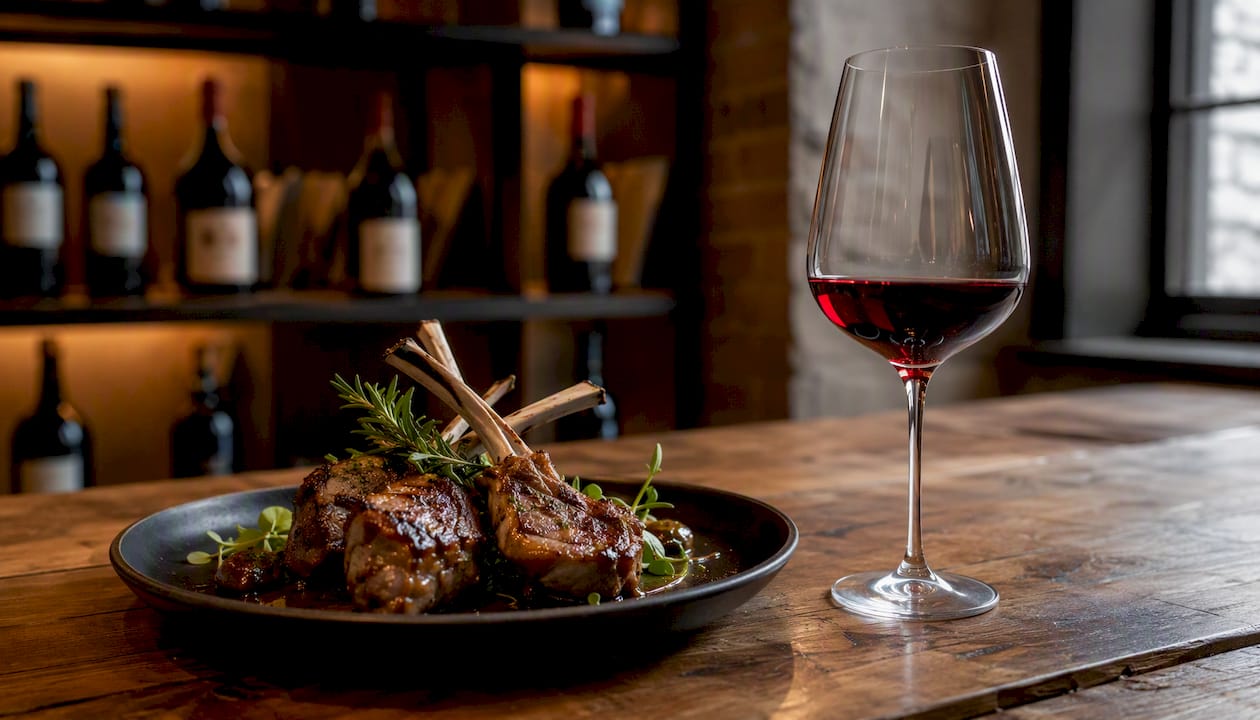
Drinkist’s tasting journal framework treats food, location, and company as core fields, not optional extras, because they directly influence hedonic response. A wine that tastes sharp and thin with a rich pasta dish might be perfect with grilled fish. Without the context note, you’d never know.
Add a pairing field to every entry — even a quick one. “Lamb chops / great match” or “Creamy pasta / too acidic” takes five seconds and builds a personal pairing database over time. For deeper guidance on matching wine to food, the FU Wine white wine pairing guide is worth bookmarking alongside your journal.
Contextual notes also capture the intangibles: the cellar door visit where the winemaker poured you something off-menu, the birthday dinner where a bottle of aged Semillon stopped the conversation. Those moments are worth recording. They’re part of what makes a personal wine journal genuinely personal.
Using your journal to track wine ageing and cellaring insights
A wine journal becomes a cellaring tool the moment you start tracking bottles across multiple vintages and tastings. The key is adding a few extra fields when you log a wine you plan to cellar.
Add these fields for any bottle going into the rack:
- Cellaring potential: “Drink 2026–2032” or “Peak around 2029”
- Drinking window: Your best estimate, updated each time you open a bottle from the same case
- Provenance: Where you bought it, storage conditions, purchase price
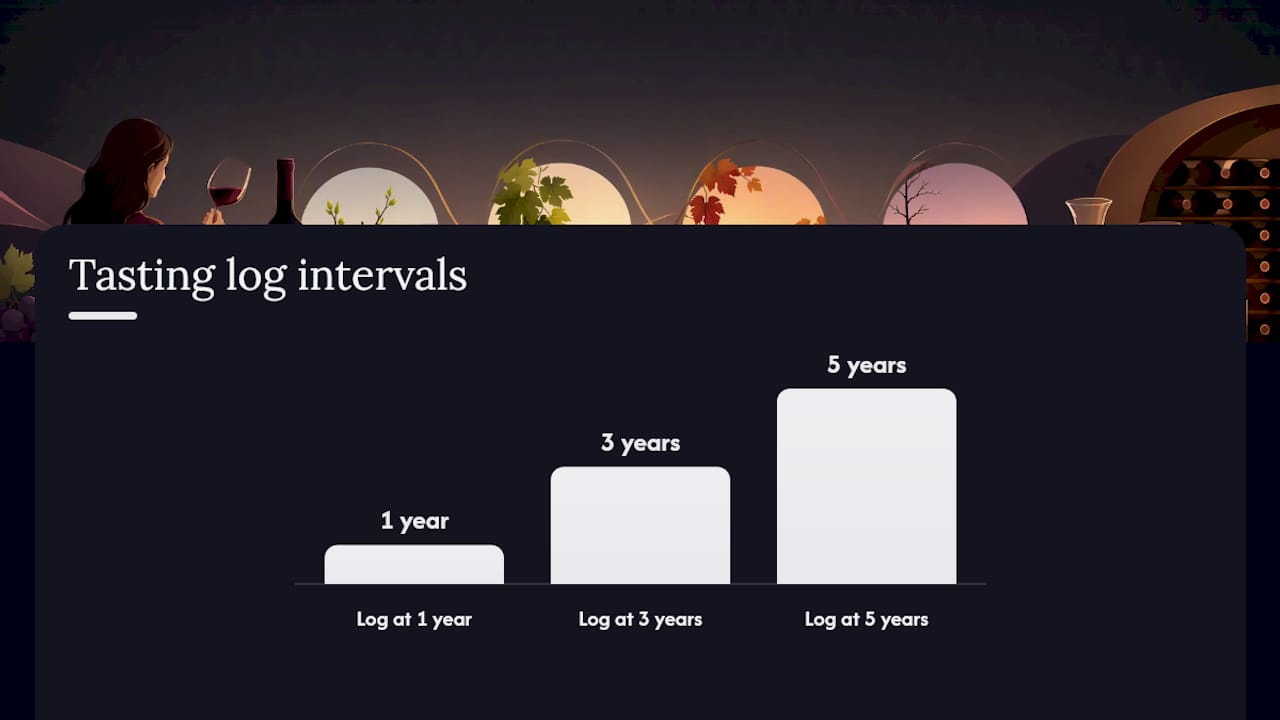
- Tasting notes over time: Log the same wine at 1 year, 3 years, 5 years and watch it evolve
When you open a bottle from a case you’re cellaring, write a full standard note and compare it to your previous entry. The difference between a 2020 Cabernet at two years and at five years is the kind of insight no critic can give you — because it’s your cellar, your conditions, your palate.
For guidance on building a collection worth tracking, the FU Wine portfolio guide covers which styles age well and how to structure a cellar for both drinking and collecting. And for mastering the tasting process on premium bottles, the structured note format is exactly the right tool.
A practical tip: use a separate section or tag (“Cellar”) for these entries so you can pull them up quickly when you’re deciding what to open. A wine that’s been logged three times across five years tells a story. That story is your most valuable buying guide.
The journal habit is the point, not the notes
Here’s an opinion you won’t find in most wine guides: the quality of your tasting notes matters far less than the consistency of writing them.
A three-word impression written every night beats a beautifully structured sommelier note written twice a year. The habit is the mechanism. The notes are the output. And the output only gets better when the habit is solid.
Most people who start a wine journal quit because they set the bar too high. They buy a beautiful leather notebook, write two immaculate entries, then miss a week and feel like they’ve failed. They haven’t. They’ve just picked the wrong entry format for their actual life.
The four-field quick entry exists precisely for this. It’s not a compromise — it’s a design choice. A journal you actually use is worth infinitely more than a perfect system you abandon. Start with the minimum. Add complexity only when you want it, not because you think you should.
And one more thing: don’t journal to impress anyone. Your descriptors don’t need to sound like a critic. “Tastes like a rainy afternoon in a library” is a better personal note than “tertiary aromas of petrichor and aged paper” if the first one actually means something to you. The whole point of a personal wine journal is that it’s yours.
Sources
These are the resources worth bookmarking alongside your journal:
- WSET Global
- Court of Master Sommeliers – Deductive tasting grid
- How to Build a Personal Wine Tasting Journal (And Why It Changes Everything) | Sommo
- Your First Wine Tasting Journal: A Step-by-Step Guide | Drinkist