

When Cold Chain Shipping at 13°C Pays for Collectible Wine
Cold chain is worth it if your bottles are collectible, irreplaceable, or worth crying over if they arrive cooked. For everyday drinkers heading somewhere mild, a decent insulated shipper and an ice pack usually does the job. The industry target is roughly a mild cellar temperature, and the trade-off is simple: better protection costs more and takes longer. Keep reading for how the whole system actually works.
TL;DR:
- Full refrigerated linehaul provides the highest protection for irreplaceable wines but is costly and slower due to fixed schedules and longer transit times.
- Most shipments aim to maintain a consistent temperature around 13°C, with fluctuations risking cork stress and seal integrity, especially during last-mile delivery.
- Proper packing, including pre-chilling bottles and insulating with ice packs against a thermal liner, significantly reduces temperature stress during transit.
- Scheduling shipments during cooler months and confirming departure dates, hub locations, and final-mile handling can prevent heat damage and reduce risks.
- Monitoring options range from basic location updates to real-time temperature sensors; high-value bottles benefit from detailed logs and signed hand-off records.
Table of Contents
- How does cold chain wine shipping work?
- What cold chain services can you actually book?
- How should you pack wine before shipping it?
- When should you schedule a wine shipment?
- What monitoring options protect high-value wine?
- A collector’s checklist for sending or receiving bottles
- Editorial perspective: balancing cost, speed and preservation
- How Com supports you in shipping and receiving collectible wine
- Sources
How does cold chain wine shipping work?
Cold chain wine shipping is temperature-controlled logistics built specifically to stop bottles cooking or freezing between the cellar door and your doorstep. It’s not one truck with a fridge in the back. It’s a relay.
Here’s the typical journey a bottle takes:
- Origin pickup: your wine gets collected and loaded, often pre-chilled, straight into a refrigerated vehicle.
- Refrigerated linehaul: reefers (temperature-controlled trucks or containers) carry pallets over the middle mile, the longest and riskiest leg.
- Hub transfer: shipments get consolidated and sorted at a temperature-controlled hub, sometimes with ice packs added before the next leg.
- Final-mile handoff: the last stretch to your door, where insulation and ice packs do the heavy lifting since a courier van rarely runs refrigerated.
Most cold chain programs hold roughly 13°C throughout that chain, a benchmark Wineshipping’s temperature-control service uses across its scheduled linehaul network. Consistency matters more than the exact number. A bottle that swings between 8°C and 30°C over a week suffers more than one held steady at 18°C, because repeated expansion and contraction stresses the cork and pushes wine past the seal.
What cold chain services can you actually book?
Not every shipment needs the full treatment. The right service depends on what’s in the box and what happens if it arrives damaged.
- Full refrigerated linehaul: reefer trucks end to end, the gold standard for collectible consignments, auction lots, and anything irreplaceable.
- Temperature-verified courier: standard freight network, but with monitored handling and documented temperature checks at key points.
- Hub-based ice insertion: your shipment rides ambient freight for part of the journey, then gets ice packs added at a temperature-controlled hub before final delivery.
- Standard insulated shipping: no refrigeration at all, just a quality insulated carton and maybe an ice pack, suited to lower-value bottles on short, mild routes.
Full linehaul costs the most and takes the longest because it runs on fixed schedules rather than next-flight-out speed. Hub-based ice insertion splits the difference: cheaper than full reefer, still meaningfully better than a bare cardboard box. Ground-based temperature control also tends to be cheaper and lower-emission than air freight, which matters if you’re shipping regularly rather than as a one-off.
Before booking anything, ask the provider three things: which days their refrigerated trucks depart, where their hubs are located, and what protection covers the final mile specifically. That last one trips people up constantly. A provider can run a flawless reefer network for 2,000 kilometres and still lose the plot in the last 20, handing your wine to a courier who leaves it on a hot verandah for six hours.
How should you pack wine before shipping it?
Packing well matters even when you’ve booked full cold chain, because insulation buys you a margin of error the truck’s climate control can’t cover on its own.
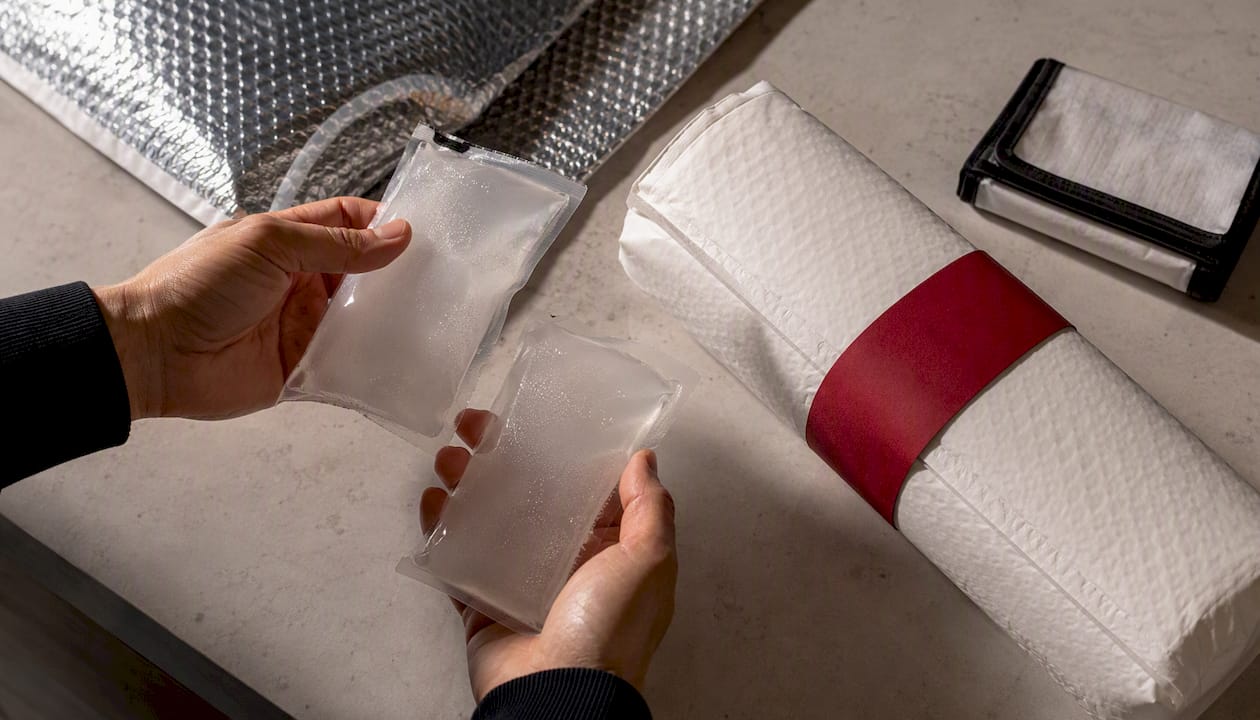
- Pre-chill your bottles to cellar temperature (around 15 to 20°C) before packing, so you’re not asking insulation to fight a head start of warm wine.
- Wrap each bottle individually in bubble wrap or a foam sleeve to cushion movement and add a thin layer of thermal buffer.
- Line the shipper with an insulated liner rated for the season and route, not a generic cardboard box.
- Place ice packs against the liner, not against bottles directly, to avoid localised cold spots that can stress glass or corks.
- Seal the box fully to stop warm air seeping in through gaps, particularly around flaps and corners.
Pro Tip: Pack ice packs frozen solid, not slushy. A partially melted pack has already spent half its cooling capacity before the courier’s even touched it.
Keep expectations realistic. Ice packs are designed to buffer the final mile, not refrigerate a whole journey, and they’ll often arrive fully melted even when they’ve done their job perfectly. A limp, thawed ice pack on delivery isn’t a failure. It’s the ice pack working as intended.
When should you schedule a wine shipment?
Timing affects both risk and cost more than most senders realise. Temperature-controlled programs run on fixed schedules, not on-demand pickups.
- Scheduled departures: reefer linehaul networks typically depart on set days weekly, so missing a cut-off can add several days to your lead time.
- Volume consolidation: shipments get grouped to fill trucks efficiently, which is cost-effective but means your parcel waits for others before it moves.
- Seasonal route risk: temperature swings on long routes can exceed 40°C between origin and destination depending on climate and season, so summer shipments across hot inland routes carry more risk than the same trip in cooler months.
- Pre-shipment questions worth asking: confirm the next departure date, the estimated transit time through hubs, and whether the route crosses any known heat corridors.
Booking a week ahead of a heatwave forecast is a genuinely bad idea if you have a choice. Shifting the shipment by a few days can matter more than any amount of extra insulation.
What monitoring options protect high-value wine?
Not all “temperature-controlled” shipping actually monitors temperature. Some services just move your wine through a climate-controlled network and call it done. Others prove it.
- Tracking-only shipments: you get location updates, but no evidence of what temperature the wine actually experienced.
- Data-logged shipments: a physical logger travels with the box, recording temperature at intervals for later download.
- Bluetooth or telematics-monitored shipments: real-time sensors feed live temperature data back to the carrier or sender throughout transit.
For anything genuinely valuable, ask for temperature logs, signed hand-off records at each transfer point, and an incident report process if something goes wrong. This is the difference between a courier’s word and actual evidence.
Wine that suffers heat exposure doesn’t always show it immediately. Heat damage often shows up as jammy, stewed fruit characters and accelerated ageing, sometimes weeks after delivery, which makes a documented chain of custody the only real leverage you have in a claim. Contracts and shipping labels that explicitly state “temperature-verified” carry more weight in a dispute than a carrier’s general assurance that “we handle it carefully.”
A collector’s checklist for sending or receiving bottles
Whether you’re the one shipping a case or the one waiting on delivery, a few habits catch most problems before they start.
- Pre-chill bottles to cellar temperature before packing, never straight from a warm room.
- Match the service to the value: full linehaul for anything irreplaceable, insulated shipping for everyday drinking wine.
- Request temperature logs or monitored handling for anything you’d genuinely miss if it arrived ruined.
- Let arriving wine rest before opening it, since travel disturbs sediment and temperature stability even when the shipment went perfectly.
- Keep documentation on provenance and handling, because a clear custody chain protects a collection’s resale value as much as it protects a single bottle’s quality.
Tell the buyer or carrier upfront what you expect. Vague instructions like “handle carefully” achieve nothing. Naming the service tier, the temperature target, and the rest period you expect after delivery does.
Editorial perspective: balancing cost, speed and preservation
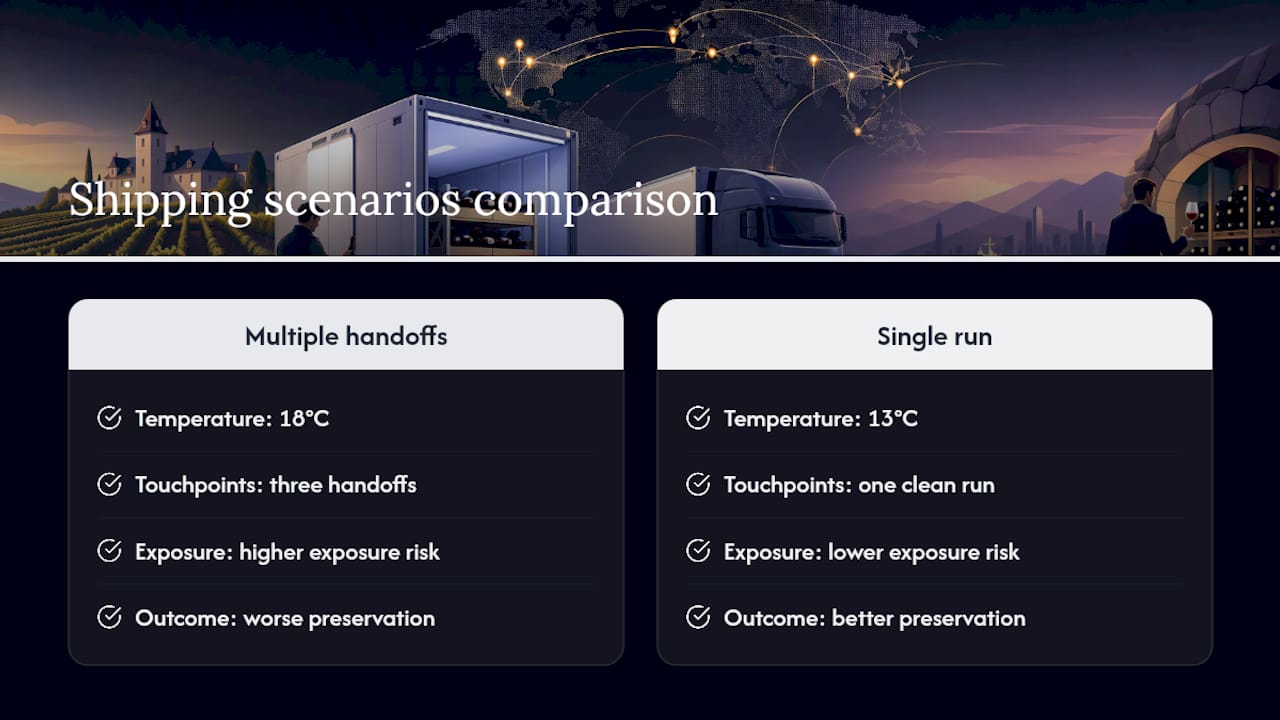
Everyone obsesses over the temperature number and misses the bigger variable: touchpoints. A bottle held at a steady 18°C through three handoffs usually fares worse than one held at 13°C through one clean run. Every transfer point is a chance for someone to leave a pallet on a loading dock in the sun.
My rule of thumb: pay for full cold chain when the bottle’s replacement cost or sentimental value clearly exceeds the shipping premium, and don’t when it doesn’t. A $40 shiraz doesn’t need the same protection as a cellar-aged icon.
What actually prevents disputes isn’t fancier packaging. It’s both sides agreeing, before the box ships, on the service tier, the expected transit window, and what “temperature-verified” means in practice.
— Damien
How Com supports you in shipping and receiving collectible wine
This business is centered on rare, high-scoring, cellar-aged bottles, which means shipping questions often come up and are well understood. We can’t run your own refrigerated linehaul network for a bottle you’re sending to a mate. But we can point you to the right reading and the right conversation before you pack a box.

There are practical guides available on letting wine rest after shipping and on understanding provenance for premium collections, topics commonly raised after receiving allocation drops and cellar-clearance lots. If you’re planning an event around a shipment, The Sensory Chef’s guide to wine pairing for hosts is worth a read too.
| What this business can help with | What this business can’t help with |
|---|---|
| Guidance on resting and handling wine after delivery | Arranging or booking a carrier’s cold chain service |
| Provenance and authenticity questions on purchased bottles | Third-party shipment tracking or claims on other retailers’ orders |
| Answering questions about order dispatch processes | Custom refrigerated logistics for private collections |
Got a question about a specific order? Reach out to the customer support team through Fuwine for assistance before the next bottle leaves the warehouse.
Sources
- Wine temperature: how to protect your wines from shipping damage — Hillebrand Gori
- Temperature-controlled shipping — Wineshipping
- 2026 temperature controlled shipping schedules — WineDirectFulfillment