

Build a premium corporate wine program for lasting value
TL;DR:
- Many corporate wine programs fail by offering overwhelming choices and poorly trained staff.
- Success depends on defining clear goals, understanding guest preferences, and curating an accessible, focused list.
- Regular staff training and mindful refinement ensure the program remains engaging, profitable, and genuinely impressive.
Corporate wine programs sound great on paper. In reality, many end up as a forgettable list of bottles nobody ordered, money tied up in slow-moving stock, and staff who go blank when a guest asks for a recommendation. It’s a frustrating waste of budget and opportunity. The good news? Getting it right isn’t about spending more or stocking more. It’s about being smarter, bolder, and a whole lot more intentional. This guide walks you through every step of building a corporate wine program that genuinely excites guests, empowers your team, and delivers real returns.
Table of Contents
- Define your goals and audience
- Choose wines and structure your list for accessibility
- Equip and train your team for seamless service
- Launch, monitor, and refine your wine program
- What most guides miss about building corporate wine programs
- Take your corporate wine program further with expert support
- Frequently asked questions
Key Takeaways
| Point | Details |
|---|---|
| Start with clear goals | Define your program’s purpose and audience before making purchasing decisions. |
| Curate with accessibility | Choose versatile and approachable wines that appeal to a broad corporate crowd. |
| Empower your team | Provide practical training and resources to help staff recommend and serve wine confidently. |
| Monitor and refine | Regular feedback and sales data help optimise your corporate wine program for ongoing success. |
Define your goals and audience
With the challenges outlined, the next step is to clarify your intent and understand your guests’ needs. You can’t build something great if you don’t know what “great” looks like for your situation. This is where most programs quietly fall apart before they even launch.
Start by pinning down the primary purpose of your program. Are you trying to elevate the guest experience during client dinners? Build a distinctive brand identity for your venue? Drive profitability through margin-friendly selections? Or maybe it’s about rewarding and engaging employees at internal events. Each goal shapes every decision that follows, from which varieties you stock to how you train your team.
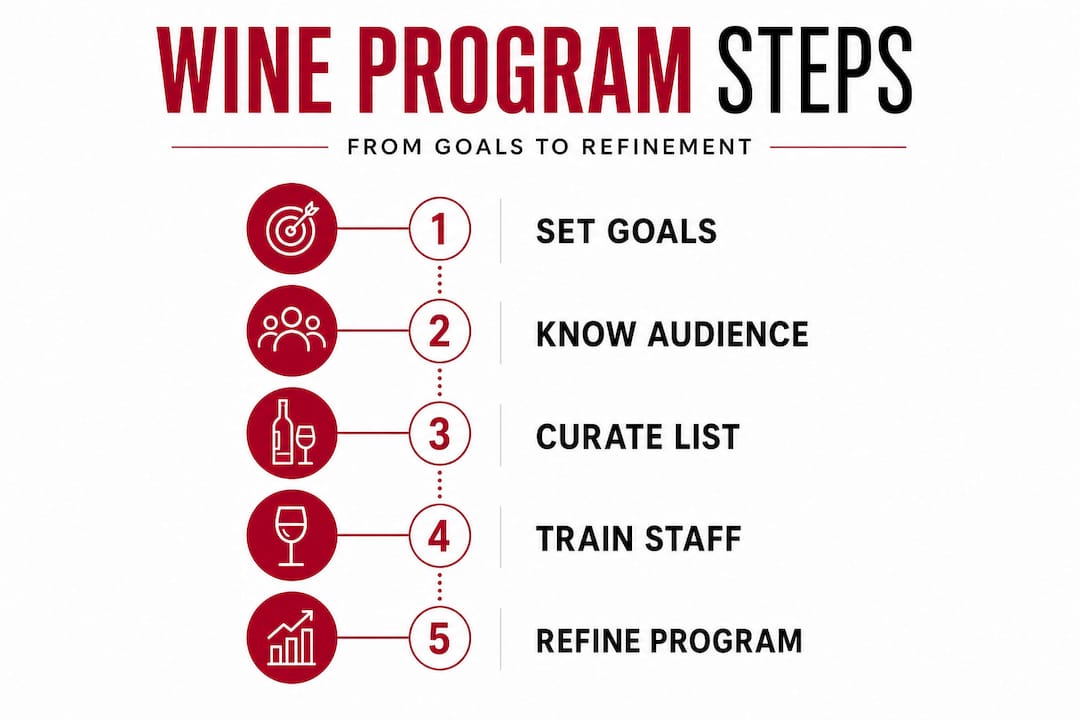
Once you know your “why,” turn your attention to your audience. Consider their experience level, their expectations, and how adventurous they’re likely to be with their choices. Corporate guests are not a single type. A table of seasoned executives at a private dining event will have very different expectations to a team of marketing professionals at an end-of-year celebration.
A few key things to nail down upfront:
- Define your primary objective whether that’s profit, prestige, guest satisfaction, or a combination.
- Segment your audience into broad categories such as novice, intermediate, or enthusiastic wine drinkers.
- Set measurable success markers like average spend per head, bottle sales per service, guest satisfaction scores, or repeat bookings.
- Identify risk tolerance because corporate audiences often lean conservative. Niche or unusual wines may impress some but alienate many others.
As wine list development research shows, if your audience is mostly first-time wine buyers (very common in corporate settings), you should emphasise clarity and approachable options, because lists optimised for deep wine knowledge often underperform when guests feel uncertain or overwhelmed.
“The best wine programme is the one that fits your guests, not the one that impresses your sommelier.”
Understanding your audience’s comfort level lets you build a programme that feels effortlessly inviting rather than intimidating. Check out these premium wine selection tips and guidance on choosing wines to impress to sharpen your thinking. Keeping a close eye on 2026 wine trends also helps you stay relevant and exciting throughout the year.
Pro Tip: Run a quick survey or informal chat with key stakeholders before you launch. Knowing that 70% of your regular corporate guests prefer white and sparkling wines tells you exactly where to focus your buying budget.
Building on a solid foundation of clear goals and guest understanding means every bottle you select, every price point you set, and every training session you run has a clear purpose behind it.
Choose wines and structure your list for accessibility
Once you know your goals and the type of guests you’ll host, it’s time to build the right wine selection. This is where the real magic happens. And also where a lot of programmes go wrong by trying to do too much.
Here’s a hard truth: a longer wine list is not a better wine list. As restaurant wine list research confirms, smaller, tightly edited lists frequently outperform because longer lists increase decision fatigue and tie up capital and cash flow. When guests feel overwhelmed by choices, they default to the cheapest or most familiar option, which is rarely good for anyone.
Aim for a list that feels curated, not crowded. Focus on crowd-pleasing varieties first. Think Sauvignon Blanc, Chardonnay, Pinot Noir, Shiraz, and a reliable sparkling option. These are the workhorses of corporate entertaining because they appeal broadly without asking guests to take a gamble.
Balancing local and international options adds genuine interest without overcomplicating things. A confident Australian Barossa Shiraz sitting alongside a well-chosen French Burgundy tells a story and gives guests something to talk about. That’s worth more than fifteen indistinguishable mid-range bottles.
Structure your list by style and then by price band. Here’s a simple framework to consider:
| Style | Approachable pick | Step-up option |
|---|---|---|
| Sparkling | Prosecco or local sparkling | Champagne or premium Tasmanian fizz |
| White | Sauvignon Blanc or Pinot Gris | Aged Chardonnay or White Burgundy |
| Red | Pinot Noir or light Shiraz | Full-bodied Barossa Shiraz or Cabernet |
| Rosé | Dry Provence-style rosé | Premium Australian rosé |
| Dessert | Moscato or late harvest Riesling | Botrytis Semillon |
Every tier should deliver clear value. Guests should feel that moving up a price point rewards them with something noticeably better, not just a fancier label.
A few practical tips for building a sharp list:
- Keep your by-the-glass selection to six to eight wines maximum.
- Ensure at least two of your by-the-glass options sit at an accessible price point.
- Rotate two or three feature bottles seasonally to keep regulars engaged and curious.
- Lean on versatile styles that pair well across a variety of food options.
Exploring versatile wine portfolios and understanding wine quality and value will help you build a list that punches above its weight. And brushing up on wine basics is a smart move if your team needs a refresher on the fundamentals before they start making purchasing recommendations.
Getting confident with wine choices early in the process means you make fewer costly mistakes and more decisions that actually resonate with your guests.
Equip and train your team for seamless service
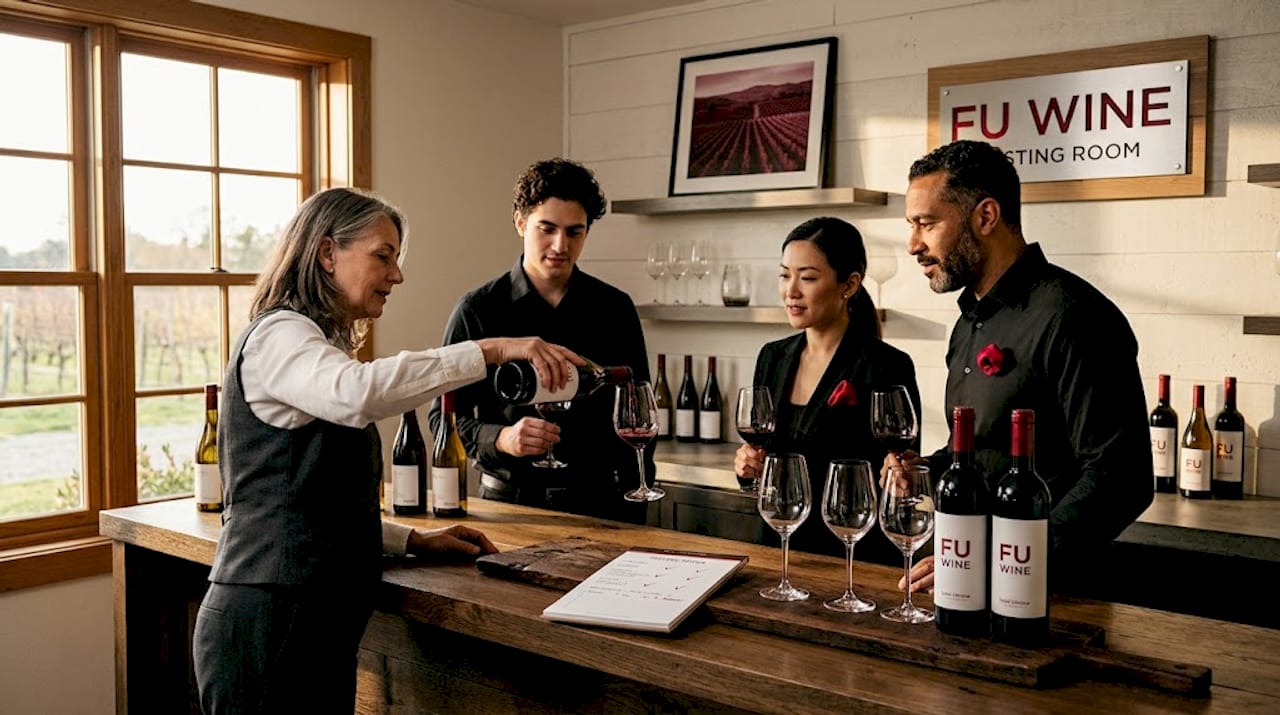
With your list built, optimising the guest experience means empowering your team to deliver it confidently. A brilliant wine selection sitting behind uncertain, hesitant staff is a programme that quietly underperforms every single service.
Here’s the reality of wine programme success. As list performance research makes clear, staff selling capability is a core dependency of list performance, and training and execution determine whether a curated programme actually moves inventory. Your team is not a secondary consideration. They are the programme in action.
“You can have the greatest wine list in the world. If your team can’t tell the story, it’s just a piece of paper.”
Regular staff tastings are the single best investment you can make. When your team tastes the wines on the list, they develop genuine opinions, real enthusiasm, and the language to describe what they’re pouring. Guests pick up on authenticity instantly.
Here’s a practical training framework to get your team singing from the same sheet:
- Monthly tasting sessions covering every wine currently on the list, with tasting notes and food pairing suggestions discussed as a group.
- Role-play exercises where staff practise recommending wines in different guest scenarios, such as a business dinner versus a casual networking event.
- Printed talking points for each wine covering two or three sentences on flavour profile, origin, and a food pairing suggestion.
- Upselling language training focused on framing step-up wines as a treat or a discovery rather than a push for more money.
- FAQ preparation covering common guest questions like “what’s the difference between these two reds?” or “which wine goes best with the fish?”
| Training activity | Frequency | Outcome |
|---|---|---|
| Group tastings | Monthly | Product knowledge and confidence |
| Role-play scenarios | Quarterly | Consistent guest experience |
| Talking points update | With each list update | Accurate, current information |
| FAQ review | Bi-annually | Smooth handling of guest questions |
Building staff confidence transforms your programme from something passive on a menu into an active, engaging part of the guest experience. Dive into your wine service process to tighten the operational side of delivery, and share this ordering wine guide with front-of-house staff as a starting point for building baseline knowledge.
Launch, monitor, and refine your wine program
After team preparations, rolling out your programme and refining it over time is the final piece. A great launch creates momentum. Ongoing refinement keeps the programme alive and relevant.
Don’t just swap in a new list overnight. Make a moment of it. A launch event or tasting session for key stakeholders, regular guests, or even internal staff gives you instant feedback and builds excitement around what you’ve created. It also signals that your venue takes its wine programme seriously, which elevates the whole brand perception.
Here’s a practical approach to launching and maintaining programme performance:
- Host a launch tasting featuring five to eight wines from your new list, paired with food and presented with brief talking points from your best-trained team member.
- Collect immediate feedback through informal conversation or a simple comment card, focusing on what guests enjoyed and what felt unfamiliar or confusing.
- Review sales data monthly tracking which wines are moving, which are stagnant, and whether your by-the-glass versus bottle split reflects your goals.
- Gather staff input fortnightly because your front-of-house team hears guest reactions firsthand and their observations are often more useful than raw data.
- Adapt the list quarterly by retiring slow-movers, introducing seasonal features, and adjusting price points where the market or your costs have shifted.
- Celebrate wins loudly when a new feature wine sells out or guest satisfaction scores climb. Recognition keeps the team engaged and the culture alive.
As programme performance research reinforces, staff selling capability is a core dependency of list performance, which means your refinement process should always include a training component, not just a purchasing one. When you update the list, you update the training in parallel.
Pro Tip: Set up a simple monthly “wine report” that tracks your top five selling wines, your slowest movers, and any guest feedback highlights. Share it with your team. Transparency builds ownership, and ownership builds a culture that genuinely cares about the programme’s success.
Hosting engaging wine tastings doesn’t have to be complicated or expensive. Even a relaxed 30-minute session before service can sharpen your team’s enthusiasm and remind everyone why the programme matters.
What most guides miss about building corporate wine programs
Here’s the perspective that industry experience keeps confirming, even when it runs against common assumptions.
Most corporate venues fall into the same trap. They equate scale with quality. A longer wine list feels safer. It looks impressive. It signals effort and investment. But it often delivers the opposite of its intention. When guests face a wall of options, the joy of discovery turns into quiet anxiety. They default. They disengage. They order the same thing every time.
The programmes that genuinely succeed are usually the smallest and most considered. A tightly edited list of eight to twelve wines, chosen with genuine care for the audience, served by a team who actually knows and loves what they’re pouring, consistently outperforms a sprawling catalogue of fifty forgettable bottles.
As restaurant wine list research confirms, smaller, tightly edited lists can outperform because longer lists increase decision fatigue and tie up capital and cash flow. That’s not a minor operational note. It’s a fundamental insight about how people make decisions under uncertainty, which is exactly the situation most corporate guests find themselves in.
The other thing most guides sidestep is culture. Staff confidence isn’t built through a single training session or a laminated cheat sheet. It builds through regular exposure, honest conversation, and a management team that genuinely values wine as part of the guest experience, not just a line item on the P&L.
And here’s the most contrarian take of all: prestige labels are often a poor investment in corporate settings. A guest who doesn’t know the difference between a well-chosen boutique Barossa Shiraz and a globally recognised trophy wine will not pay a premium for the latter. They’ll pay for the experience of feeling like they’re drinking something special. That experience is created by your team, your curation, and your storytelling, not by the label on the bottle.
The role of wine curators is precisely to cut through the label game and surface bottles that deliver genuine excitement at prices that make sense. That’s the smart play for any corporate programme that wants to impress without haemorrhaging budget on inflated markups.
Take your corporate wine program further with expert support
You’ve got the framework. Now it’s time to fill it with bottles that actually deliver. That’s where FU Wine comes in, and we’re not here to give you the usual sales pitch.
FU Wine sources premium, hard-to-find bottles at prices that would make traditional wine buyers do a double-take. We’re talking 30 to 70% below standard retail on wines that belong on exceptional corporate programmes, not gathering dust in a warehouse. Our rotating selection of rare releases, boutique producer runs, and cellar-aged bottles means you’re always working with something fresh, exciting, and conversation-worthy. If you’re ready to build a programme that genuinely impresses guests without overpaying for the privilege, explore our current selection and see what’s available right now. Life’s too short for ordinary wine, and your guests deserve better.
Frequently asked questions
What makes a corporate wine program successful?
A successful programme focuses on guest experience, carefully tailored selections, accessible options at multiple price points, and strong staff training. As list performance research confirms, staff selling capability is a core dependency of programme performance.
How do I select wines for a diverse corporate audience?
Choose approachable, versatile varietals across a range of price points to suit different palates and experience levels. As wine list development guidance highlights, if your audience includes first-time wine buyers, emphasise clarity and approachable options above all else.
Is a bigger wine list better for corporate programs?
No. Smaller, well-chosen lists prevent decision fatigue, free up cash flow, and consistently deliver better guest outcomes. Restaurant wine list research is clear that list size alone is not a measure of quality or performance.
How important is staff wine training?
Extremely important. Knowledge, confidence, and consistency from your team directly drive programme performance and guest satisfaction. As programme performance data shows, training and execution determine whether a curated list actually moves inventory and generates returns.